
Dumpster Services
Dumpster Rental
Tell us about your project and we match you with an independent local hauler who has the right roll-off size, schedule, and disposal access for your area.
One quick call to a real person. You approve the price before anything ships.
- All 50 states + DC
- Price confirmed before delivery
- Pricing explained up front
- 10–40 ydRoll-off sizes
- 50 + DCStates served
- 7–14 daysTypical rental period
- Same-dayDelivery when available
How does dumpster rental work?
You pick a container size and rental window, the local hauler drops an open-top roll-off at your site, you load it, and the hauler picks it up and takes the debris to a licensed landfill, transfer station, or recycler. Haul & Hygiene coordinates the match with an independent provider in our network; size options, weight allowances, and terms vary by provider and location.
Common roll-off dumpster sizes
| Size | Typical dimensions | Approx. pickup loads | Good for |
|---|---|---|---|
| 10-yard | ~12 ft L × 8 ft W × 3.5 ft H | 3–4 | Bathroom remodel, garage or small cleanout, heavy debris such as dirt or concrete |
| 15-yard | ~16 ft L × 8 ft W × 4 ft H | 4–6 | Small kitchen remodel, deck removal, single-room flooring |
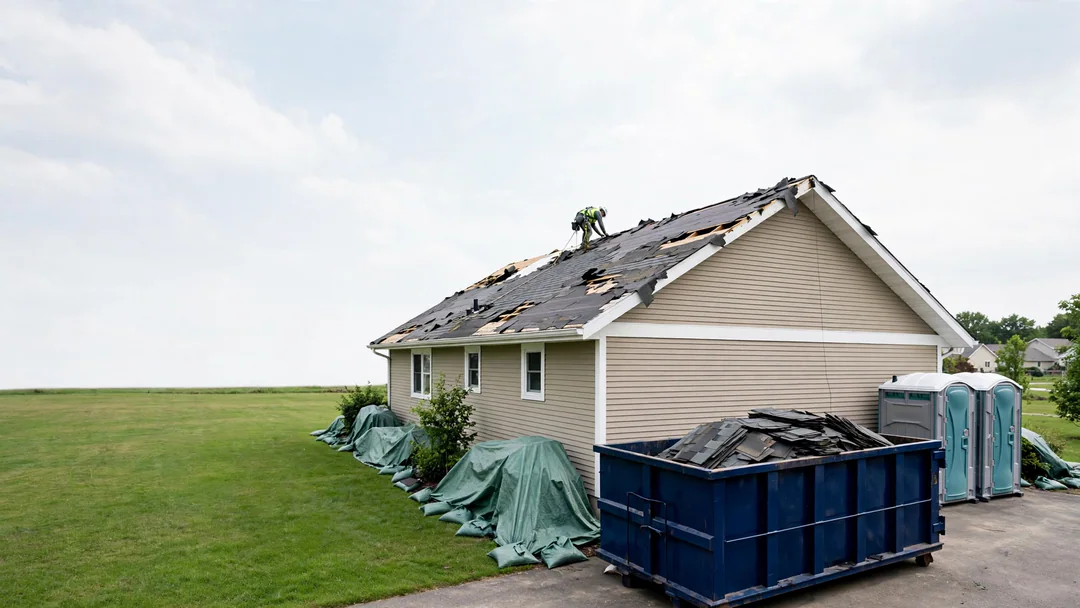
| 20-yard | ~22 ft L × 8 ft W × 4.5 ft H | 6–8 | Most roof tear-offs, whole-room renovations, mid-size home cleanouts |
| 30-yard | ~22 ft L × 8 ft W × 6 ft H | 9–12 | Additions, whole-home cleanouts, new construction framing waste |
| 40-yard | ~22 ft L × 8 ft W × 8 ft H | 12–16 | Commercial projects, demolition of large structures, bulky light debris |
Sizes and dimensions are typical industry figures. Your provider will confirm the exact container, footprint and included weight. See the full size guide.
Which dumpster size fits your project?
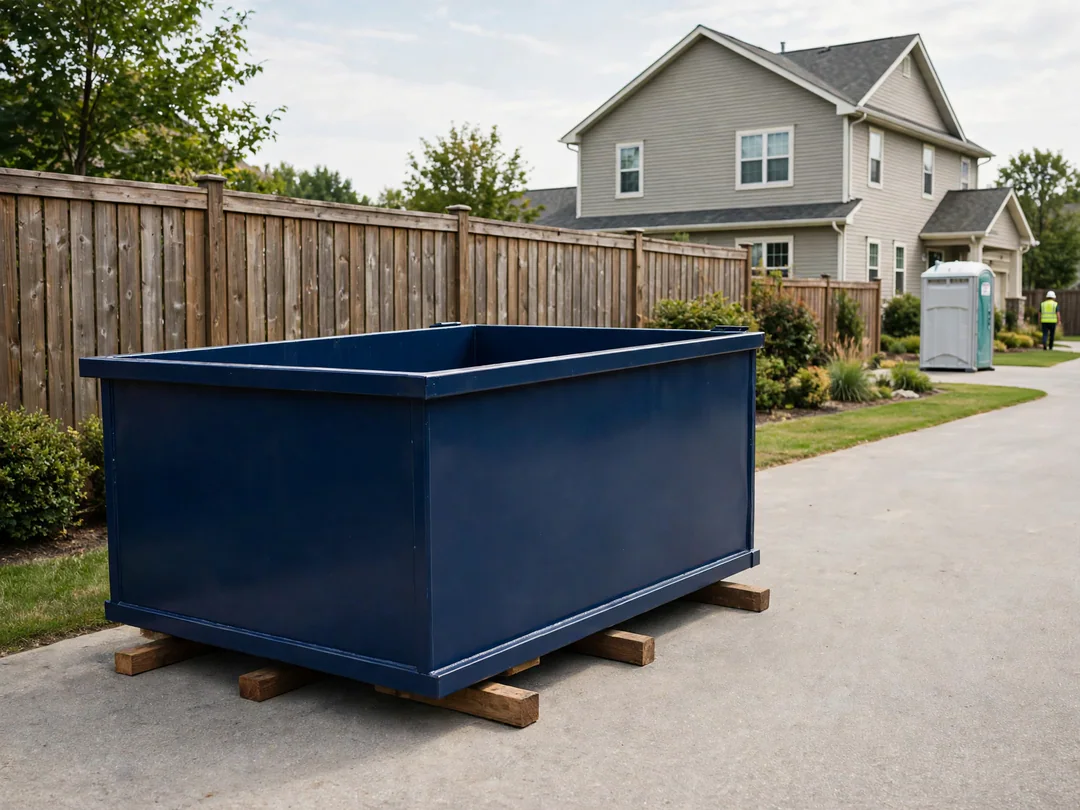
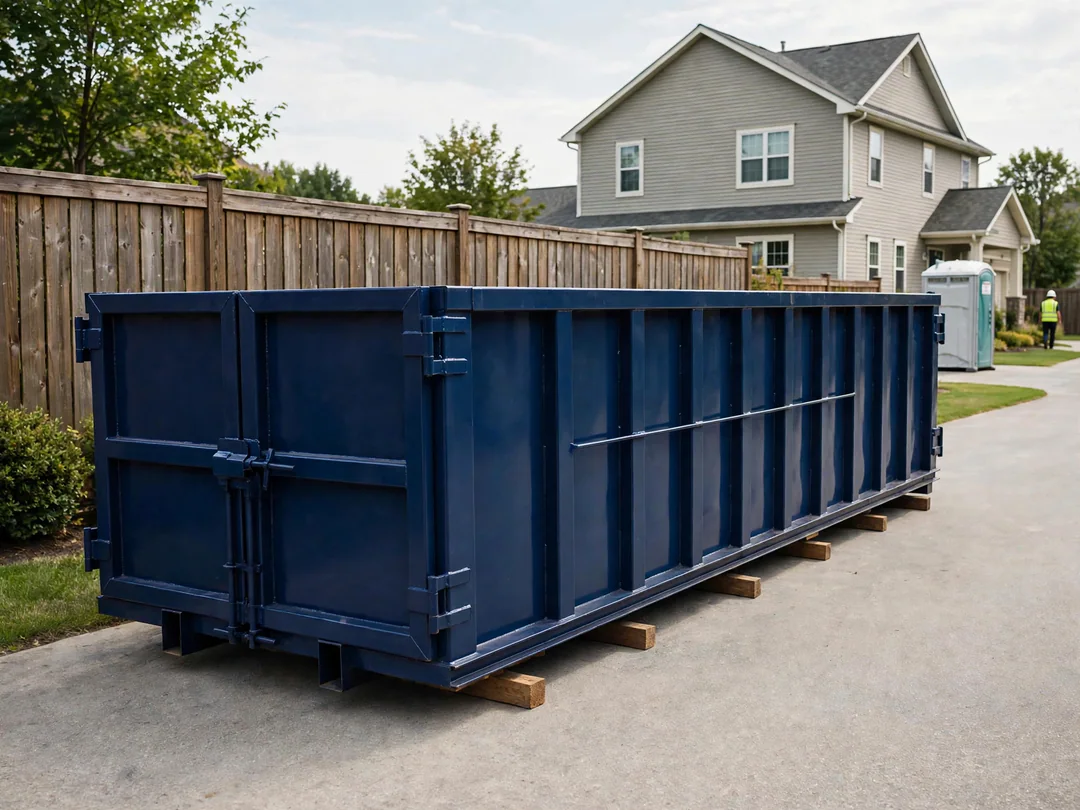
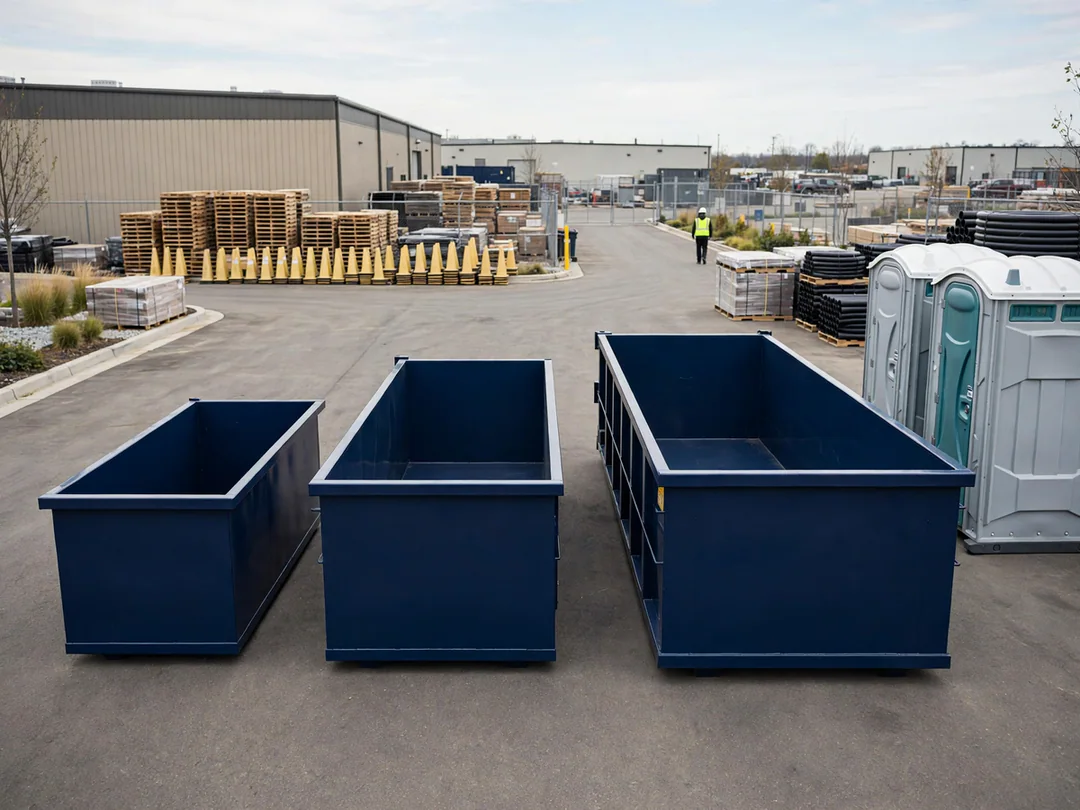
Roll-off containers are measured in cubic yards of volume. The five sizes below cover nearly every residential and commercial job. Dimensions are typical approximations: exact length, width, and wall height vary by hauler and container manufacturer, so confirm the specs with your provider before you plan placement.
Pickup-truck loads assume a standard 8-foot bed loaded roughly level with the sides, which holds about 2 to 3 cubic yards of loose debris. Treat these as rough planning numbers, not guarantees.
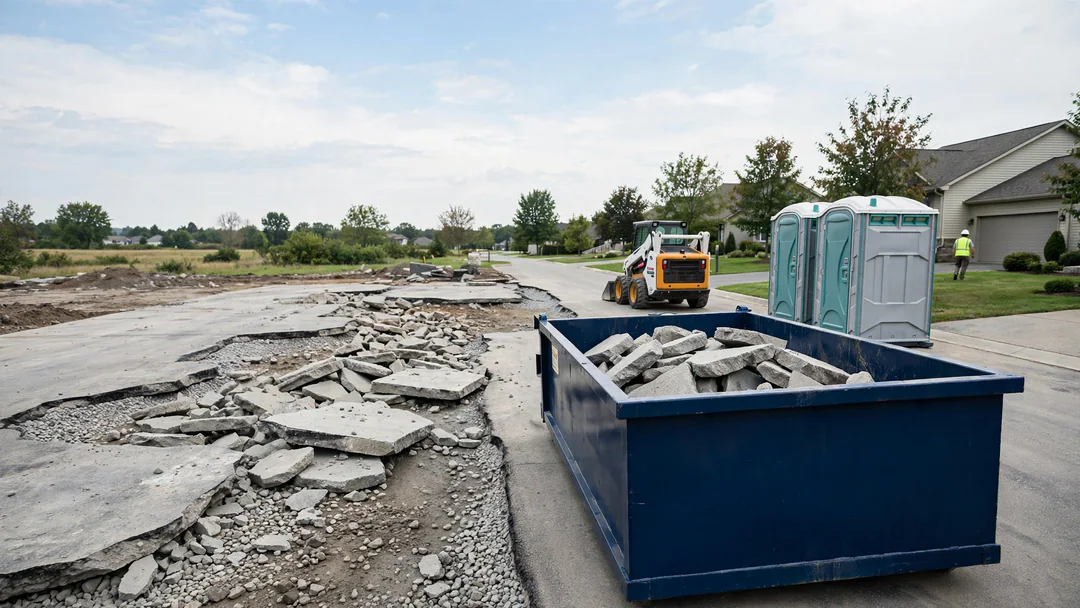
- Heavy materials (concrete, brick, dirt, roofing) are limited by weight long before volume. See concrete dumpster rental.
- For full per-size detail including footprint and weight considerations, see dumpster sizes.
| Size | Typical dimensions (L × W × H) | Approx. pickup-truck loads | Typical projects |
|---|---|---|---|
| 10-yard | About 12–14 ft × 7–8 ft × 3–4 ft | About 3–4 | Small bathroom remodel, garage cleanout, concrete or dirt in small amounts |
| 15-yard | About 14–16 ft × 7–8 ft × 4–4.5 ft | About 5–6 | Kitchen remodel, small roof tear-off, deck removal |
| 20-yard | About 20–22 ft × 7–8 ft × 4–4.5 ft | About 6–8 | Whole-house cleanout, mid-size roof, flooring and drywall replacement |
| 30-yard | About 20–22 ft × 7–8 ft × 5.5–6 ft | About 9–12 | Additions, multi-room renovation, new construction framing waste |
| 40-yard | About 20–22 ft × 7–8 ft × 7–8 ft | About 12–16 | Commercial cleanouts, large demolition, bulky light debris |
How the rental process works
Most rentals follow the same arc: request, confirm, deliver, load, haul. You tell us the project, debris type, address, and dates. We pass that to a provider in our network who serves your area, and the provider confirms size availability, the rental window, weight allowance, and any site requirements.
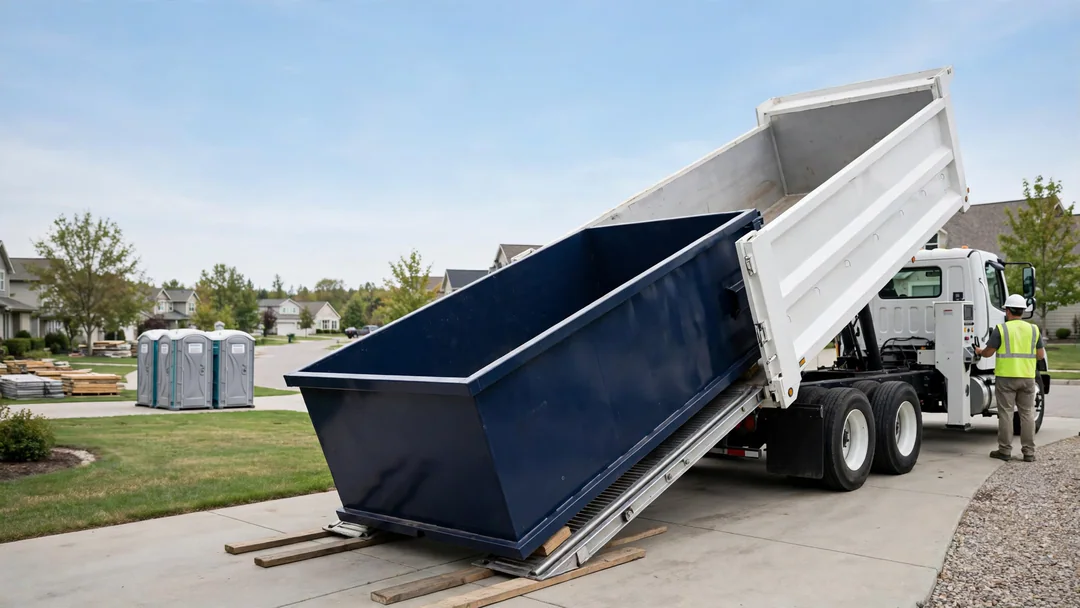
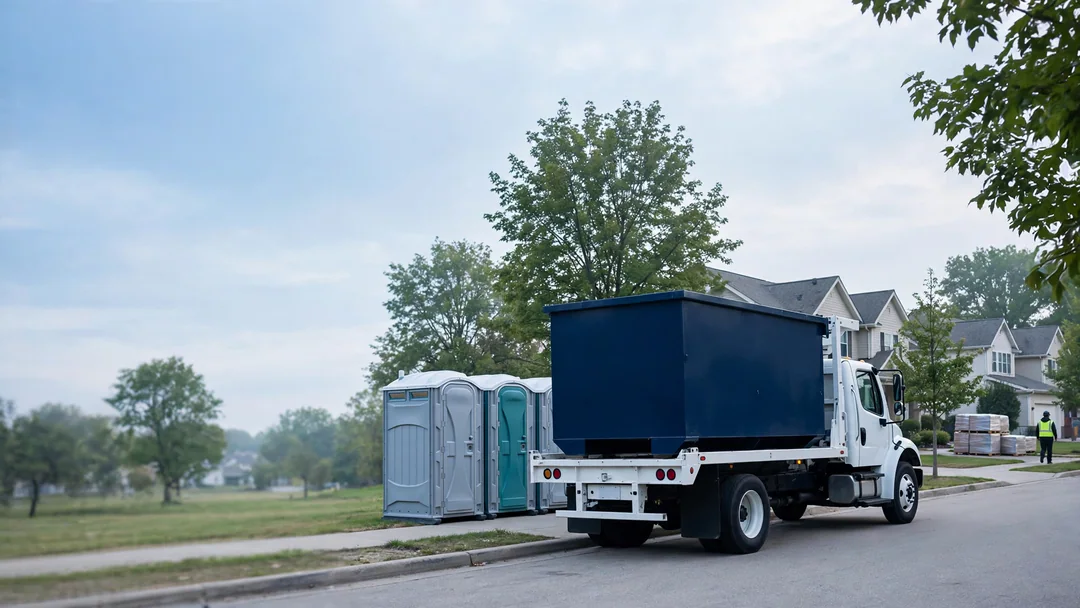
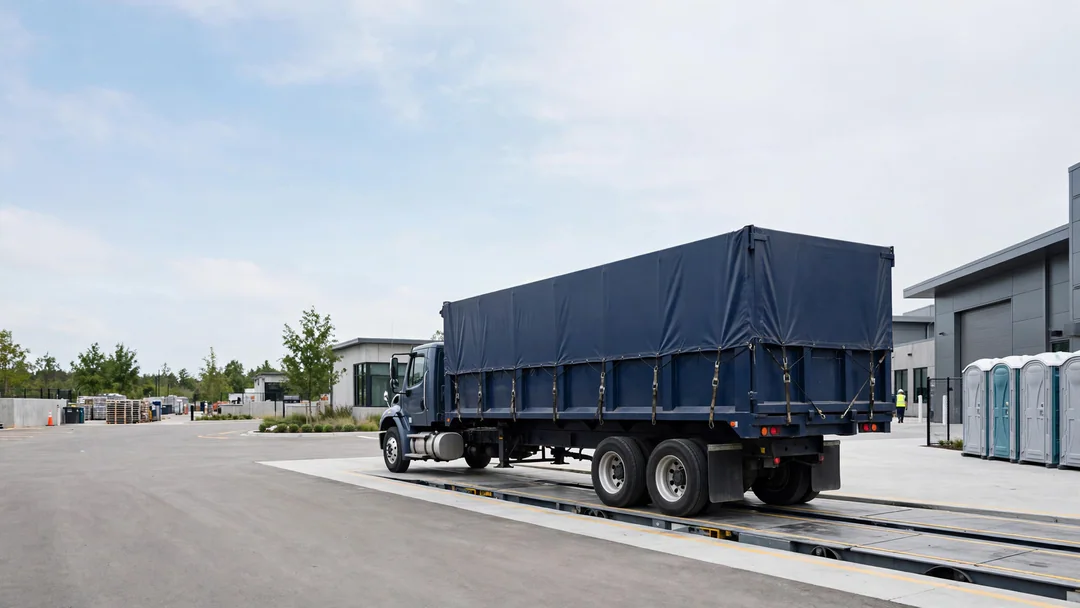
On delivery day the driver backs the roll-off truck to your chosen spot and slides the container off the rails. You load it within the rental window, and when you call for pickup, the hauler takes the box to an appropriate disposal or recycling facility. The step-by-step version, including what to have ready, is on our how dumpster rental works page.
What affects the cost of a dumpster?
There is no single national price for a dumpster, and we do not publish one. Your quote is set by the local hauler and reflects real costs in your market. The biggest factors are:
- Container size: larger boxes cost more to haul and dispose of.
- Disposal or tipping fees at the local landfill or transfer station, which vary widely by region.
- Weight allowance included in the quote, and the overage rate if you exceed it.
- Debris type: clean concrete, yard waste, and mixed construction debris are often priced differently.
- Rental length and any extra days beyond the standard window.
- Delivery distance from the hauler, plus permits if the box sits on a public street.
Choosing a dumpster by project type
Different jobs create different waste streams, and that changes which box and which terms make sense. A homeowner clearing a basement needs something different from a framing crew or a roofer.
- Homeowners: residential dumpsters, home cleanouts, and yard waste.
- Contractors: construction dumpsters, roofing, and demolition.
- Businesses: commercial dumpsters and temporary dumpsters for one-time events or overflow.
- Bulky household items: junk removal dumpsters.
What can and cannot go in the container
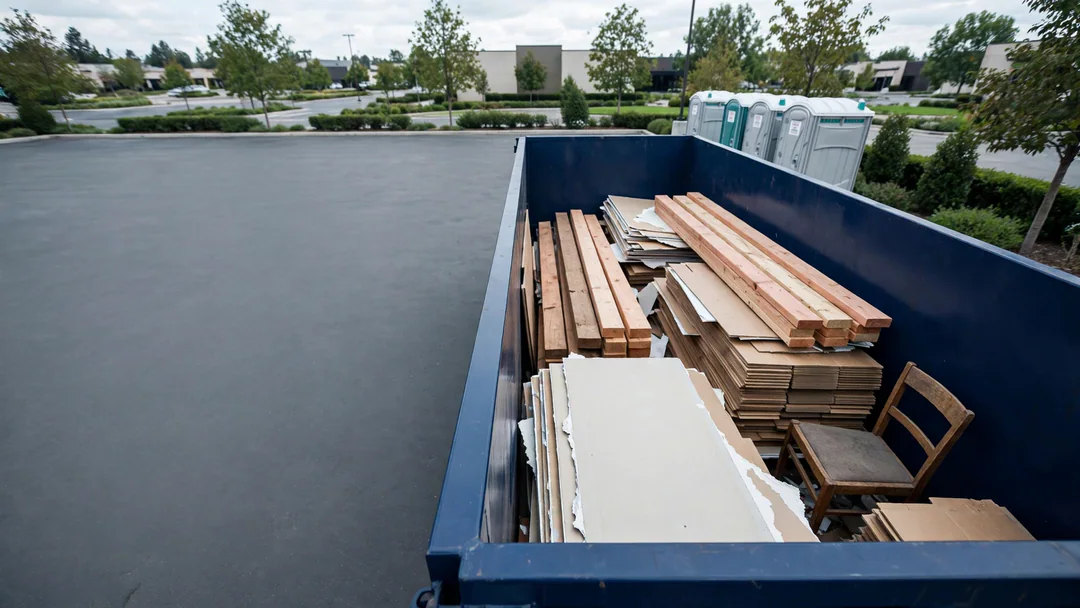
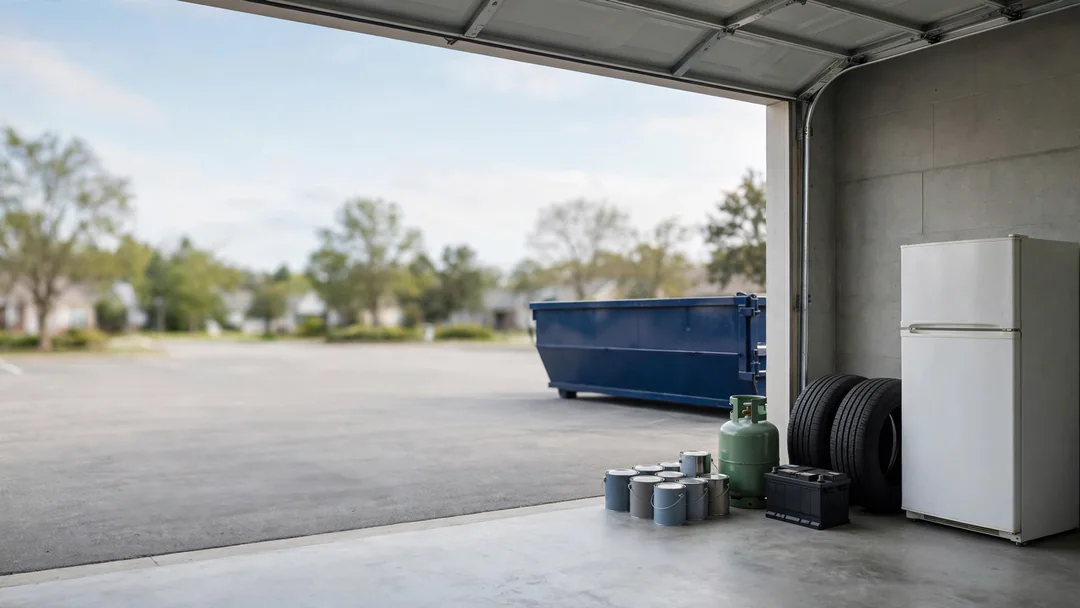
Most household junk, furniture, construction and demolition debris, and yard waste is accepted. Hazardous materials, wet paint, liquids, tires, lead-acid batteries, and appliances containing refrigerant are commonly restricted or banned, and many states prohibit some of these from landfills entirely. Rules come from the disposal facility and local regulators, so they differ by location.
Read what you can put in a dumpster and what you cannot put in a dumpster before loading. Prohibited items are the most common source of surprise charges.
Placement, permits, and protecting your property
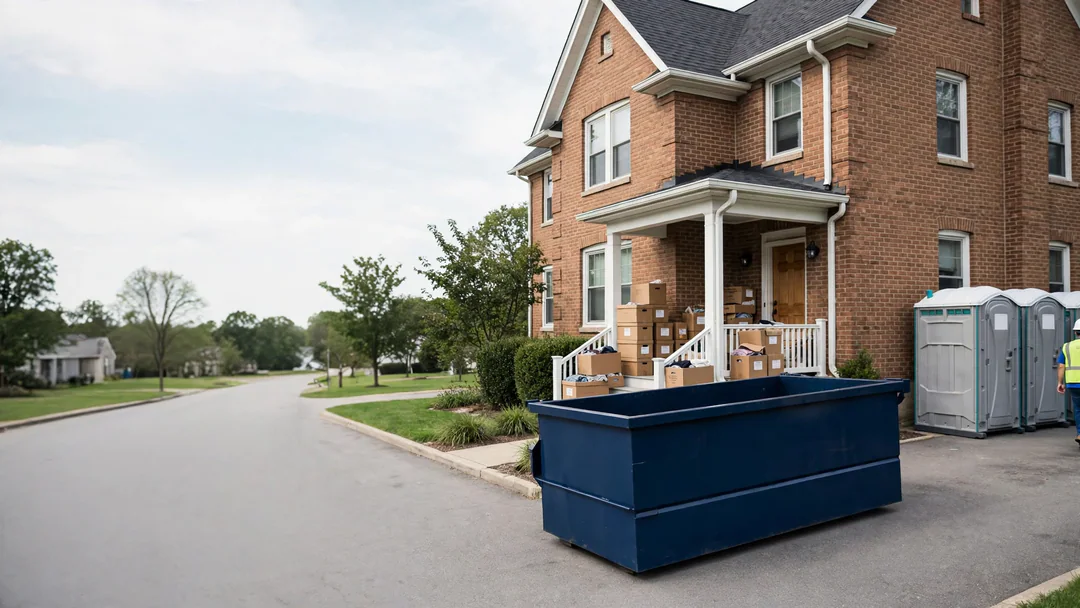
A roll-off truck needs a long, straight approach and overhead clearance to set the container down and tilt it back up. Plan for roughly 60 feet of straight access and keep the spot clear of low wires and tree limbs. A container on your own driveway usually needs no permit; one on a street, sidewalk, or alley often does. Check with your city or county, and see our dumpster permit guide and driveway prep guide.
Every dumpster rental service we coordinate
Browse by container type, project, timing, or topic:
Services
Projects and audiences
Planning resources
Frequently asked questions
Does Haul & Hygiene own the dumpsters?
No. Haul & Hygiene is a coordination network. We match your request with an independent local hauler, and that provider owns the equipment, delivers it, and handles disposal under its own terms.
How far in advance should I book?
A few days ahead is usually enough outside peak season. Spring and summer weekends fill up faster in many markets, so book earlier if your dates are fixed. Some providers can deliver the same or next day.
How long can I keep the dumpster?
Standard windows are often around a week, with extensions available from many providers for an added daily charge. Terms vary by hauler. Our guide on how long you can rent a dumpster covers this in depth.
Will the truck damage my driveway?
A loaded roll-off truck is heavy, and any surface can be marked. Ask the provider to set the container on boards or plywood, avoid freshly poured concrete, and keep the box off soft lawn after rain.
Is a dumpster better than hiring junk removal?
A dumpster usually suits projects where you will load over several days or have a lot of debris. A crew that loads for you can make more sense for a few heavy items. See dumpster vs. junk removal.
Related pages
Ready to book a dumpster?
Share your ZIP code and project details. We will route it to an available provider near you.