Porta Potty Rental Guide
Portable Toilet vs. Restroom Trailer
Both solve the same problem. The right choice depends on your guests, your site, and whether you have power and level ground.
One quick call to a real person. You approve the price before anything ships.
- All 50 states + DC
- Price confirmed before delivery
- Pricing explained up front
Should you rent a portable toilet or a restroom trailer?
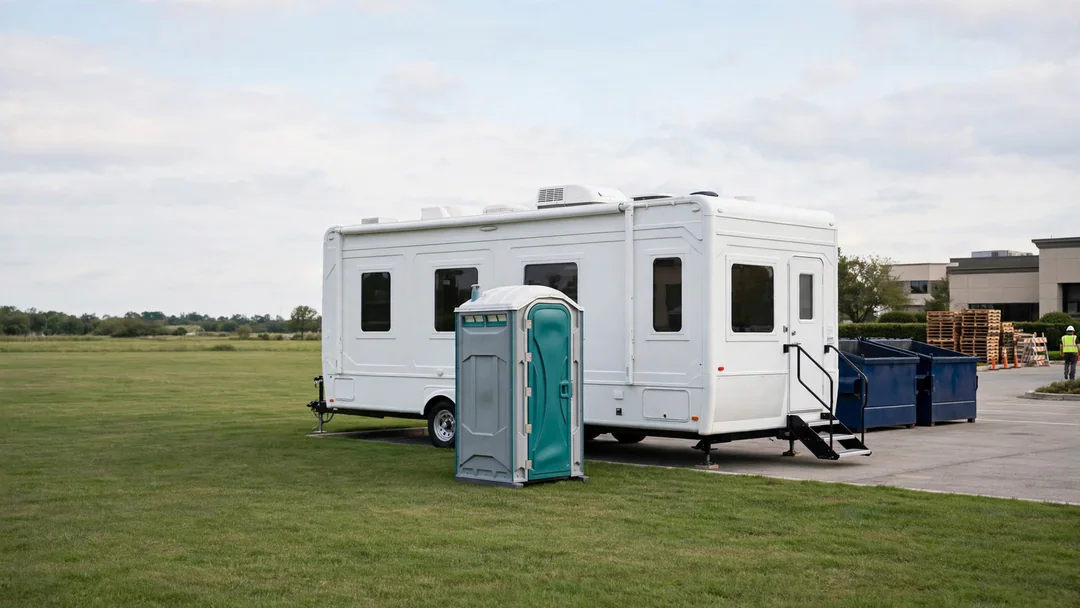
Standard portable toilets are self-contained, easy to place almost anywhere, and suit job sites and casual events. Restroom trailers offer flushing toilets, running-water sinks, lighting, and climate control, which suits weddings and formal events, but they usually need level ground, truck access, and often a power source. Many events combine both.
The core difference
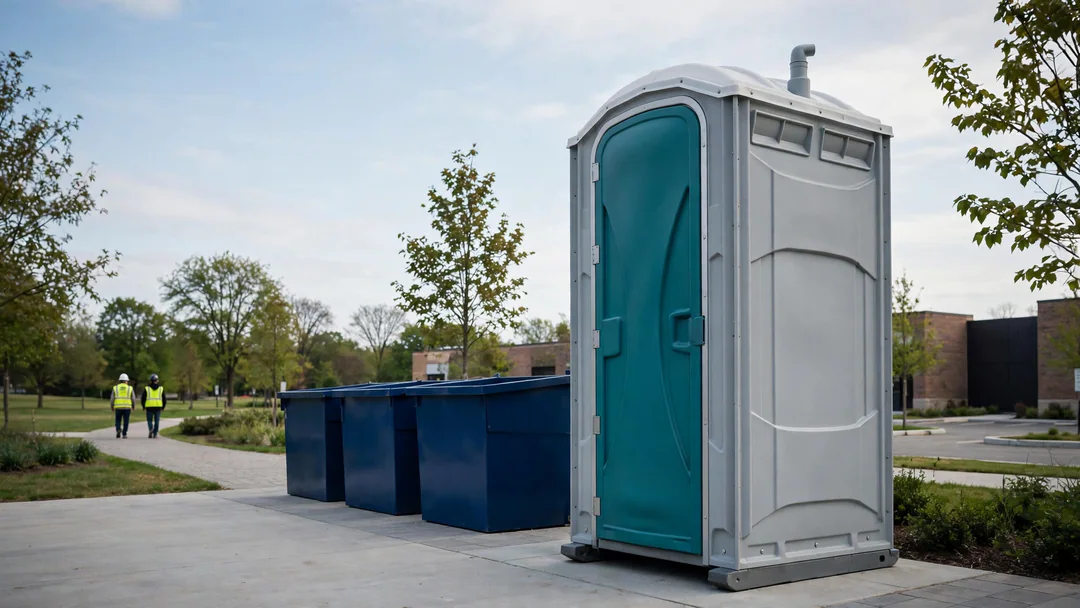
A standard porta potty is a single, self-contained unit with a holding tank, a seat, a urinal in many models, and a hand sanitizer dispenser. It needs no utilities and can be set on almost any firm, level spot.
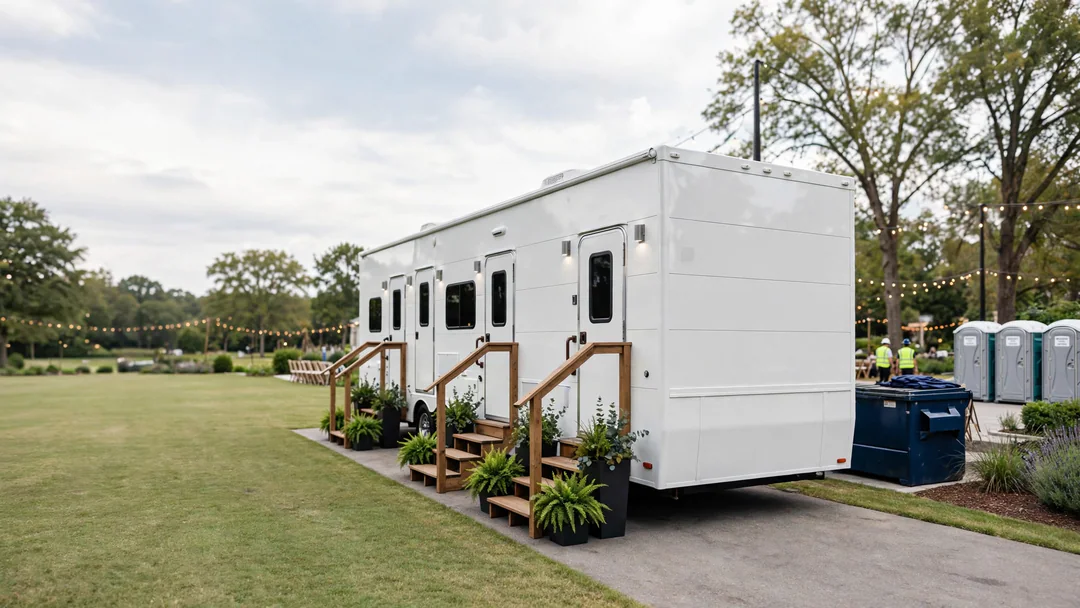
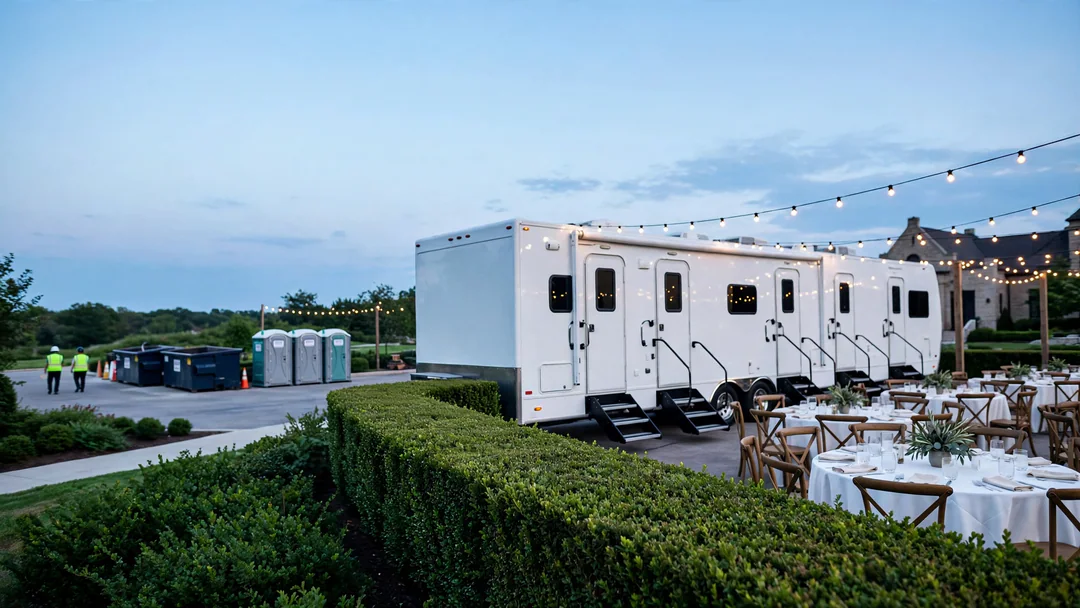
A luxury restroom trailer is a towed unit with separate stalls, flushing fixtures, sinks with running water, mirrors, and interior lighting. Many include heating or air conditioning. That comfort comes with site requirements: a tow vehicle needs to reach the spot, the trailer must be leveled, and most models need electrical power.
Side-by-side comparison
| Factor | Standard portable toilet | Restroom trailer |
|---|---|---|
| Guest experience | Basic and functional | Closer to an indoor restroom |
| Handwashing | Sanitizer; sinks via separate stations | Built-in sinks with running water in most models |
| Power | None needed | Often needed, from a generator or outlet |
| Site access | Small truck or dolly; fits tight spots | Towed; needs a clear route and level pad |
| Water | None needed | Onboard tanks or a hose connection, depending on model |
| Best fit | Job sites, festivals, parks, casual events | Weddings, corporate events, VIP areas, long-term facility needs |
When a standard portable toilet makes sense
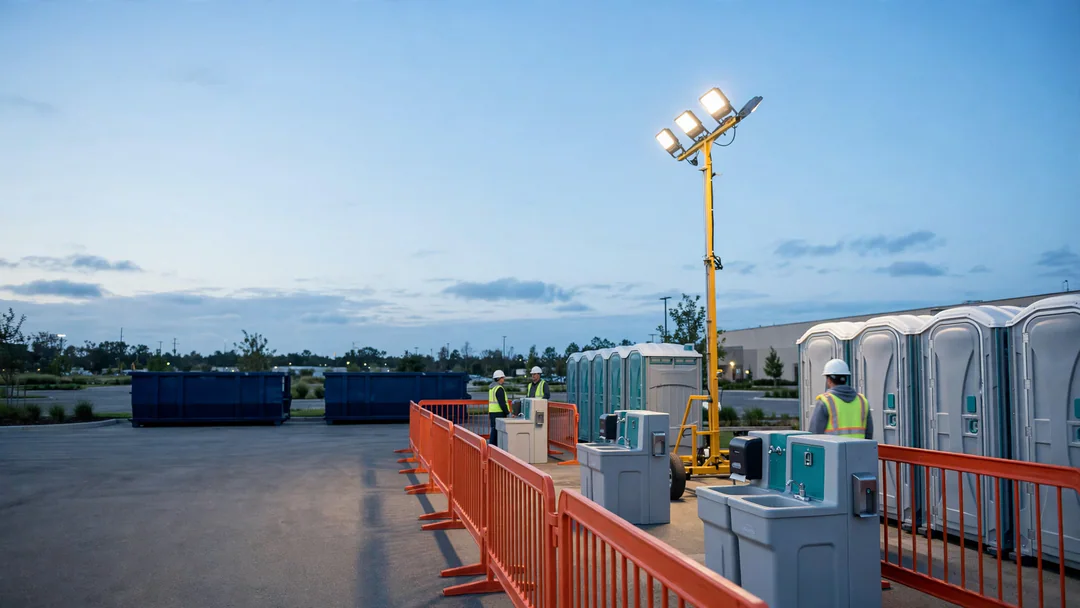
Standard units are the default for construction sites, outdoor festivals, sports fields, and casual gatherings. They are easy to scale: add units as headcount grows, and spread them across a large site so lines stay short. Because they need no utilities, they work in remote spots. Pair them with hand washing stations where food is served or where guests expect running water.
- Sites without power or with rough ground
- Large, spread-out venues where many small clusters work better than one location
- Ongoing jobsite service with weekly pumping
- Events where cost-efficiency matters more than comfort
When a restroom trailer is worth it
Trailers shine at events where guests are dressed up, stay for hours, or expect indoor-quality facilities. Weddings, galas, corporate events, and VIP sections are typical. They are also used as temporary facilities during building renovations or after a restroom outage. See wedding restroom rentals for event-specific planning.
- Formal events or long receptions
- Venues with level, accessible parking areas or lawns
- Situations where running water and lighting are important
- Hot or cold weather, where climate control improves comfort
Site checks before you choose a trailer
- Measure the route
Confirm the tow vehicle can reach the spot without tight turns, low branches, or soft ground.
- Check the ground
A level, firm surface is ideal; the provider will level the trailer but cannot fix a steep slope.
- Plan power
Ask the provider what electrical supply the model needs and whether a generator is included or separate.
- Plan water
Some trailers run from onboard tanks and others connect to a hose. Ask which applies.
- Consider accessibility
Trailer steps can be a barrier. Ask about accessible models or add an ADA portable unit nearby.
Accessibility for both options
Whichever you choose, plan for guests with mobility needs. Many events add one or more ADA portable toilets on a firm, accessible route, since standard trailers often have steps. Some providers offer trailers with ramps or lifts. Confirm what local event permits expect; our portable toilet permits guide explains the usual questions.
Combining both
Mixing the two is common. A wedding might place a trailer near the reception and standard units by the parking area. A festival might reserve a trailer for performers and staff while rows of standard units serve the crowd. Combining gives comfort where it matters most and capacity where volume matters most. For overall planning, see our event sanitation checklist. For headcount questions, the how many porta potties do I need page covers that topic.
Servicing differences
Standard units are pumped and restocked by a service truck, usually on a set schedule for long rentals or between days at multi-day events. Trailers are also pumped, and their freshwater tanks may need refilling. For multi-day events, ask how often service visits happen and when, so they do not interrupt peak hours. The portable toilet maintenance page covers service in more depth.
Choose your restrooms
Compare standard units, restroom trailers, and portable toilet trailers on our porta potty rental page, then find providers on the locations page.
Frequently asked questions
Do restroom trailers need electricity?
Most do, for lighting, pumps, and climate control. Requirements vary by model, so ask the provider what power is needed and whether a generator can be supplied.
Can a restroom trailer go on grass?
Often, if the ground is firm, fairly level, and reachable by the tow vehicle. Soft or wet lawns can be a problem, so walk the route with the provider in mind before booking.
Are restroom trailers accessible?
Many standard trailers have steps, but some providers offer models with ramps or lifts. Adding an ADA portable toilet on an accessible route is a common alternative.
Is a restroom trailer better for long events?
For long, formal events, guests generally appreciate the comfort. For large, casual crowds, standard units spread around the site may handle volume better. Many planners use both.
Do portable toilets have sinks?
Some models include a small sink, but most rely on hand sanitizer. Standalone hand washing stations add running water wherever you need it.
Related pages
Ready to book a dumpster?
Whatever the project, start with your ZIP code. We will check provider availability for your dates.