Job Site & Event Guide
Securing Dumpsters and Portable Toilets Before a Storm
High winds and flooding can tip portable toilets and blow debris out of open dumpsters. Planning before the storm protects your site, your neighbors and the equipment.
One quick call to a real person. You approve the price before anything ships.
- Lower 48 states + DC
- Price confirmed before delivery
- Pricing explained up front
How do you secure dumpsters and portable toilets before a storm?
Before a hurricane or severe storm, ask your provider to service or remove portable toilets and to pick up full dumpsters. Anything left on site should be emptied, covered, moved away from buildings, drains and low ground, and secured as the provider recommends. Never leave loose, light debris in an open dumpster where wind can carry it.
When to call your provider before a storm
Call your dumpster and portable toilet providers as soon as a hurricane watch or severe storm warning is likely for your area. Providers have limited trucks and schedule pre-storm pickups and servicing in the order requests arrive. Ask whether they want units removed, emptied, strapped or left in place, and when they expect to return after the storm.
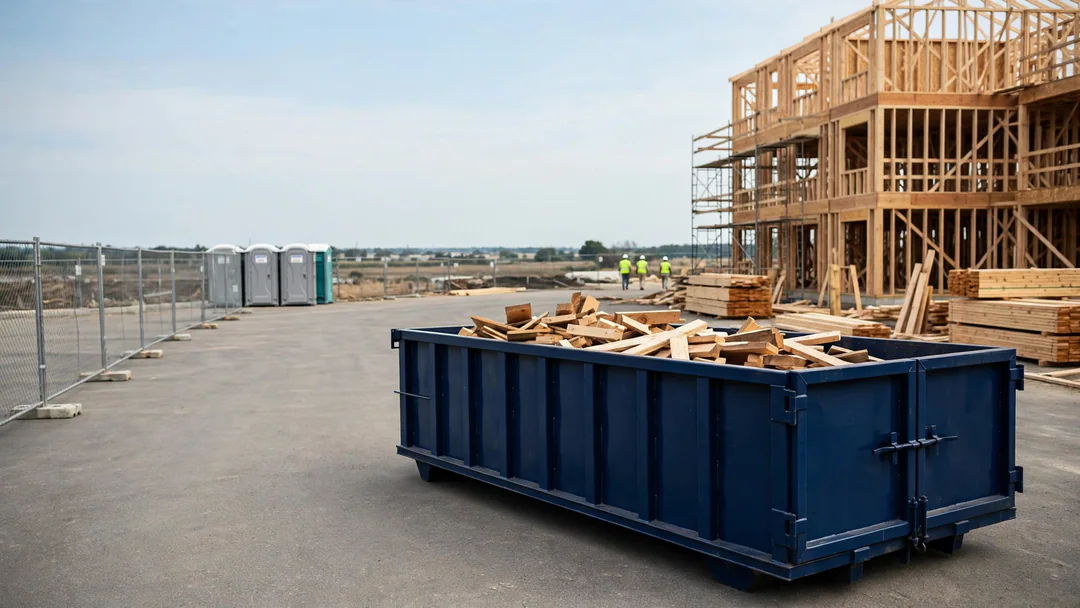
Preparing a dumpster for high winds and heavy rain
- Schedule a swap or pickup if the dumpster is close to full; a full load of wet debris after a storm can exceed the weight allowance.
- Remove or tie down light, loose debris such as insulation, packaging and roofing paper that wind can carry.
- Cover the load with a secured tarp to limit rain soaking into porous debris.
- Keep the container clear of storm drains and low spots where water collects.
- Latch the rear door.
Preparing portable toilets for a hurricane or severe storm
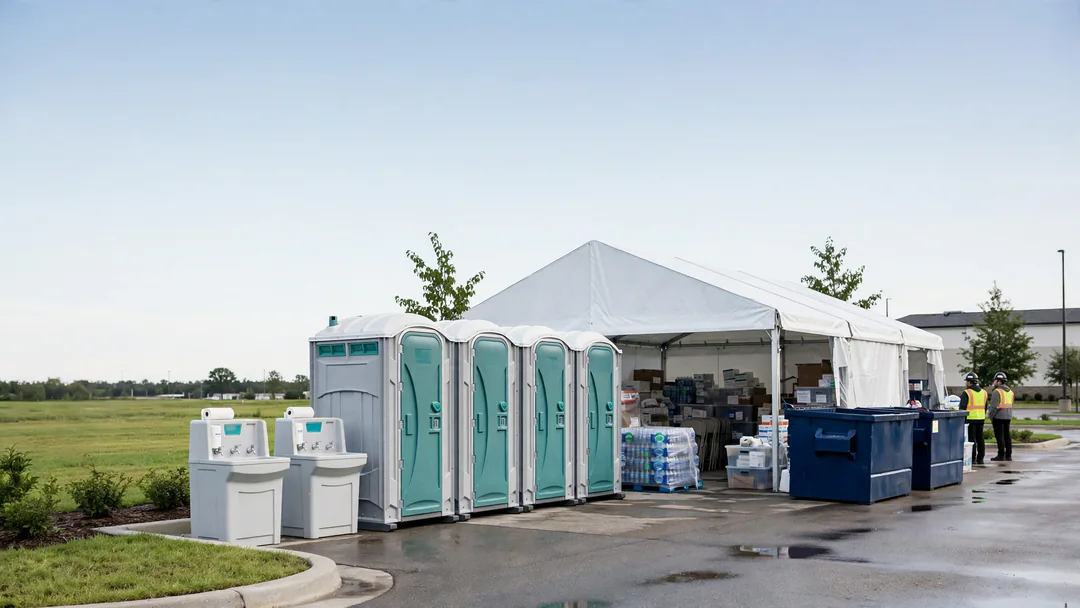
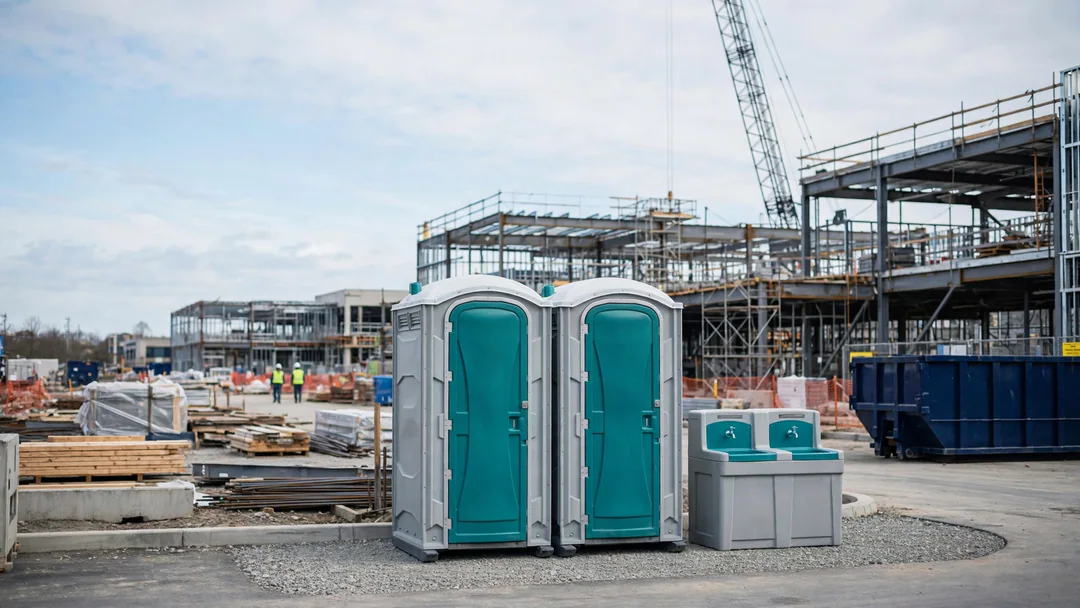
Portable toilets are light when empty and can tip or shift in high winds. Ask the provider to service units just before the storm so tanks are not full, or to remove them. If units stay, the provider may stake or strap them, group them in a sheltered spot, or lay them down; follow their instructions rather than improvising. Keep units away from building walls, windows and slopes.
After the storm: inspecting dumpsters and portable toilets
After the storm, check for tipped or damaged portable toilets and any leaks before anyone uses them, and report problems to the provider. Do not stand an overturned unit up yourself. Look for debris that blew out of the dumpster and water standing in the container. For cleanup debris, see storm debris cleanup dumpsters; for temporary restrooms during recovery, see emergency porta potty rental.
Storm preparation checklist for job sites
- Watch the forecast
Track official forecasts and set a trigger, such as a hurricane watch, for starting site shutdown.
- Call your providers
Request pre-storm dumpster pickups and portable toilet servicing or removal early, because trucks book up quickly.
- Secure loose materials
Tie down or store lumber, sheeting, packaging and roofing materials that wind can turn into debris.
- Clear drains and low ground
Move equipment, dumpsters and toilets away from storm drains, ditches and low spots that flood.
- Document the site
Photograph the site and equipment before the storm to help with any insurance or provider claims.
Outdoor events and venues before severe weather
For outdoor events, decide in advance who will call off or pause the event and when. If severe weather is forecast for the event day, tell the portable toilet provider early; they may delay delivery, service units before the storm, or remove them. Keep restroom areas clear of tents and temporary structures that could blow over.
Flood-prone sites: dumpsters and portable toilets
On sites that flood, rising water can float empty portable toilets and wash debris out of open dumpsters into storm drains and waterways. If your site is in a low-lying or flood-prone area, ask the provider to remove portable toilets before the storm rather than secure them in place, and schedule a dumpster pickup so the container is not left full of debris in standing water. Move equipment to the highest firm ground on the site if anything must stay.
Restarting the site after a storm
Once it is safe to return, walk the site before crews start work. Check that dumpsters and portable toilets are upright, undamaged and not sitting in water, and keep everyone away from tipped or leaking units until the provider inspects them. Schedule deliveries and servicing early, because providers across the region will be busy. For cleanup debris, a dedicated storm debris dumpster keeps building-material waste separate from normal job-site waste.
Documenting rented equipment before and after a storm
Photograph each dumpster and portable toilet, with its location on the site, before the storm and again when you return. Note anything moved, tipped or damaged and report it to the provider promptly. Clear records make it easier to settle questions about damage or missing equipment with the provider and your insurer.
Your next steps
- Plan how many units you needWork out a count from guests or crew size, hours and food or alcohol.
- Choose your portable toiletsStandard, ADA-accessible, restroom trailers and handwashing stations.
- Check coverage in your stateLocal permits, seasons and the cities we serve.
- Call to bookOne call reaches a provider that serves your ZIP code.
Storm Prep for Dumpsters & Toilets FAQs
Who is responsible for securing rented equipment before a storm?
Typically the renter is responsible for the site, while the provider advises on or performs pickups, servicing and securing. Check your rental agreement and follow the provider's instructions.
Should portable toilets be removed before a hurricane?
Often, yes. Many providers prefer to service or remove units before a hurricane. If units stay, follow the provider's instructions for securing them; light, empty units can tip in high winds.
Can I leave a dumpster on site during a hurricane?
Sometimes, but ask your provider. A full dumpster should usually be picked up first, loose debris should be removed or tied down, and the load should be covered and kept away from drains and low ground.
Related pages
Ready to book a dumpster?
Whatever the project, start with your ZIP code. We will check provider availability for your dates.