
Dumpster Rental Guide
How to Load a Dumpster the Right Way
Loading a roll-off dumpster well fits more debris in the container, keeps the load legal to haul, and avoids return trips and overage charges.
One quick call to a real person. You approve the price before anything ships.
- Lower 48 states + DC
- Price confirmed before delivery
- Pricing explained up front
How should you load a dumpster?
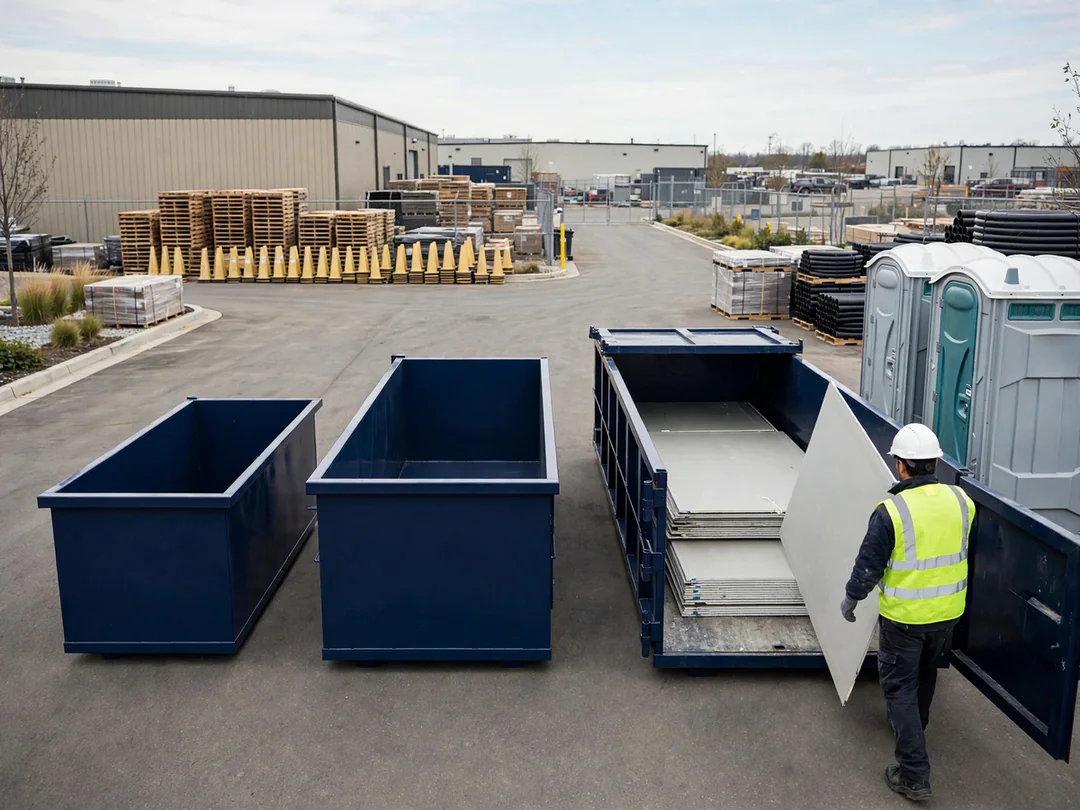
Load a roll-off dumpster heavy-first and flat: put dense debris like tile, plaster and wet drywall on the floor and spread it evenly from front to back, then add bulky items, break them down, and fill gaps with smaller debris. Keep everything level with the top rim and never load above it, because overfilled containers cannot be tarped or hauled safely.
Dumpster loading order
A planned loading order fits noticeably more debris into the same roll-off container and keeps the weight balanced for the truck.
- Heavy and flat items first
Lay heavy, flat debris such as tile, plaster, wet drywall and shingles across the floor, spread evenly from front to back so the weight is not all at one end.
- Bulky items next
Break down furniture, cabinets and doors before loading. Lay long items like lumber and pipes flat along the length of the container.
- Fill the gaps
Use bagged debris, small scraps and loose material to fill spaces between bulky items instead of stacking them on top.
- Finish level
Stop at the top rim. Spread the last layer evenly so nothing sticks up above the sides.
Dumpster fill line: how full is too full
Most haulers will not move a roll-off dumpster loaded above its top rim, because debris can fall onto the road and the container cannot be covered. If the load is over the rim at pickup, the driver may ask you to remove material or schedule a return trip, which can add a fee. When a project produces more debris than expected, ask for a swap-out rather than overfilling.
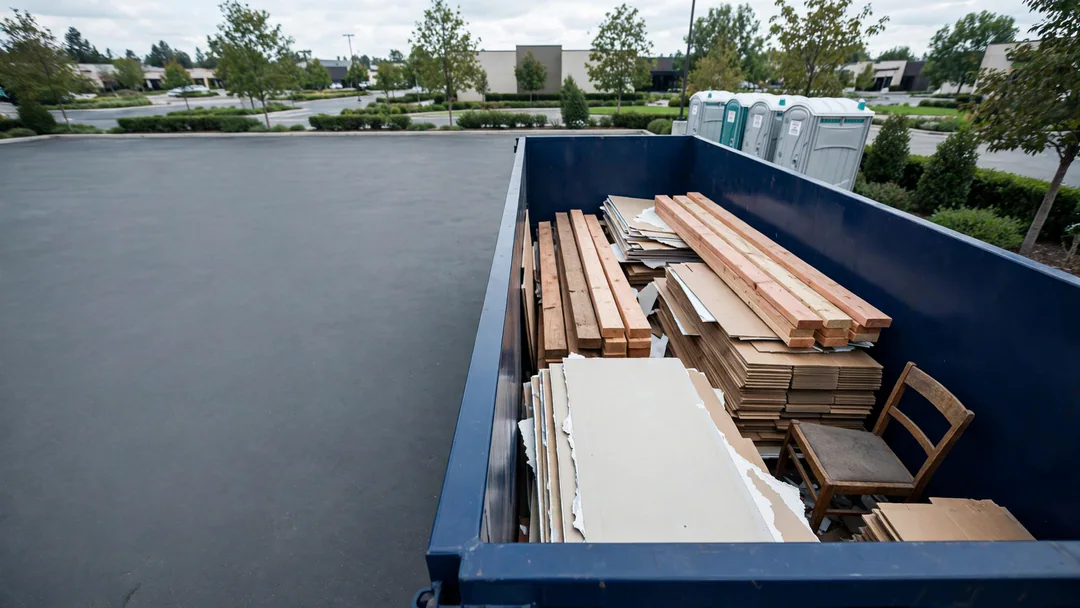
Using the rear door of a roll-off dumpster
Many roll-off dumpsters have a swing door at the back. Walk heavy items and wheelbarrow loads in through the door first while the floor is still clear, then close and latch it once debris reaches the door height. Always latch the door before loading from the sides.
Keeping a dumpster load under the weight allowance
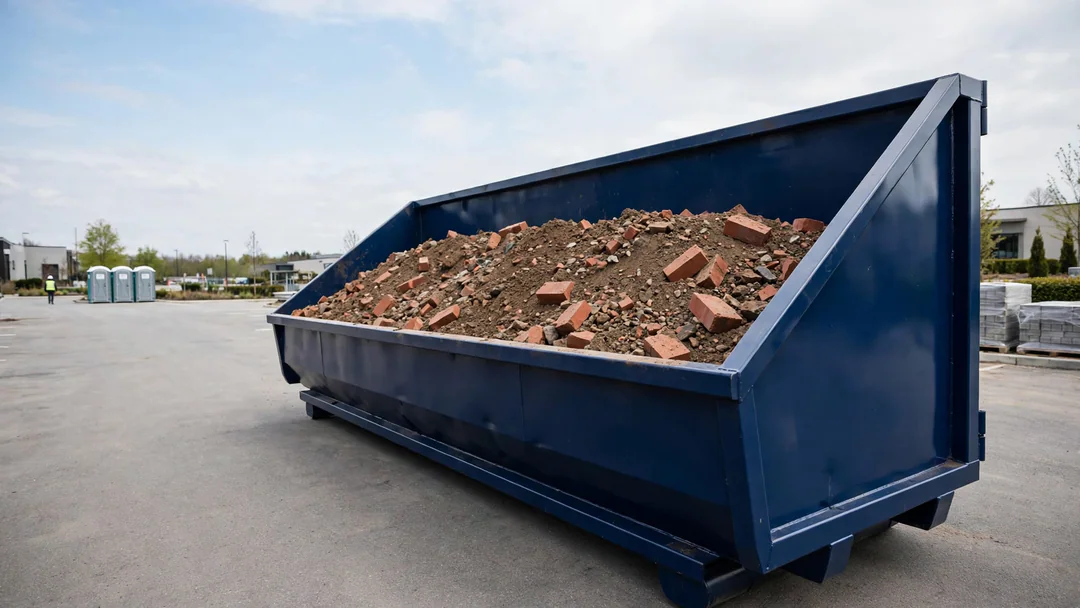
A dumpster can be within its volume and still be over its weight allowance. Dense material such as concrete, brick, dirt, roofing and wet debris reaches the allowance quickly, so keep it in a smaller or dedicated container and do not top up a full load of heavy debris with more. See dumpster weight limits.
Dumpster loading mistakes that cause extra fees
- Loading above the top rim, which can mean a refused pickup or a return trip.
- Putting prohibited items in the container, such as paint, batteries, tires or appliances with refrigerants. See what cannot go in a dumpster.
- Piling all the heavy debris at one end, which unbalances the load.
- Leaving the dumpster uncovered before rain, which adds water weight to porous debris.
- Letting neighbors add their own trash, which uses space and allowance you are paying for.
How much debris fits in each dumpster size
A well-loaded roll-off dumpster holds roughly the number of pickup-truck loads below. Poor loading, with unbroken furniture and gaps, can cut that capacity noticeably. Sizes and dimensions vary by hauler.
- Compare sizes on the dumpster size guide.
| Dumpster size | Typical dimensions | Holds about |
|---|---|---|
| 10-yard | ~12 ft L × 8 ft W × 3.5 ft H | 3–4 pickup-truck loads |
| 15-yard | ~16 ft L × 8 ft W × 4 ft H | 4–6 pickup-truck loads |
| 20-yard | ~22 ft L × 8 ft W × 4.5 ft H | 6–8 pickup-truck loads |
| 30-yard | ~22 ft L × 8 ft W × 6 ft H | 9–12 pickup-truck loads |
| 40-yard | ~22 ft L × 8 ft W × 8 ft H | 12–16 pickup-truck loads |
Loading a dumpster for common projects
- Roof tear-off: shingles are heavy; spread them evenly across the floor and stop well before the rim if the weight allowance is tight. See roofing dumpsters.
- Kitchen or bath remodel: tile, mortar and plaster first, then cabinets broken into panels, then drywall and packaging.
- Yard cleanup: cut branches to lie flat and pack brush tightly; wet green waste is heavier than it looks.
- Home cleanout: disassemble furniture, bag small items, and fill the spaces between bulky pieces.
Covering and protecting a loaded dumpster
Between loading sessions, cover the dumpster with a tarp tied to the container rails. A cover keeps rain from soaking into drywall, carpet and insulation, which adds weight you pay for; it stops light debris such as packaging and insulation from blowing into the street; and it discourages neighbors and passersby from adding their own trash. Remove the tarp before pickup unless the driver asks you to leave it on.
Your next steps
How to Load a Dumpster FAQs
How do I fit more in a dumpster?
Break down furniture and boxes, lay long items flat, put heavy flat debris on the floor, and fill gaps with small debris instead of stacking. A tightly packed dumpster can hold noticeably more than a loosely loaded one.
Can I load a dumpster above the top?
No. Debris above the top rim cannot be covered or hauled safely, and most haulers will not pick up an overfilled container until it is level.
Should I put heavy items in a dumpster first?
Yes. Heavy, flat debris goes on the floor first and is spread evenly, so the load is balanced and bulky items can sit on top.
Can I walk into a dumpster to load it?
Many roll-off dumpsters have a rear swing door for walking in heavy items while the floor is clear. Keep the door latched once debris reaches it, and wear gloves and boots.
Related pages
Ready to book a dumpster?
Whatever the project, start with your ZIP code. We will check provider availability for your dates.