
Georgia · Southeast
Dumpster & Porta Potty Rental in Georgia
Plan a roll-off dumpster or portable toilet rental anywhere in Georgia, with state-specific guidance on permits, disposal and seasons.
One quick call to a real person. You approve the price before anything ships.
- All 50 states + DC
- Price confirmed before delivery
- Pricing explained up front
Can I rent a dumpster or porta potty in Georgia?
Yes. We coordinate roll-off dumpster and portable toilet rentals across Georgia through independent local providers. Pricing, sizes and delivery windows depend on the provider serving your ZIP code, and permits are handled at the city or county level when equipment goes on a public street.
Dumpster and portable toilet rental in Georgia
Georgia rental demand centers on metro Atlanta, a region that sprawls across many counties and dozens of cities, each with its own rules. Outside Atlanta, Savannah and the coast, Augusta, Columbus, Macon and Athens anchor their own markets, and North Georgia's mountains bring steep, rural sites.
The state's red clay soil is a practical factor on almost every job. It holds water after rain, turns slick and soft, and can leave ruts when a loaded truck or container sits on unpaved ground. Planning placement around that is one of the most useful things you can do.
Haul & Hygiene coordinates with independent local haulers and sanitation providers across Georgia. Your provider confirms container sizes, access and scheduling for your address, which matters in a metro where traffic and jurisdiction lines can affect delivery timing.
Dumpster rental in Georgia: what to know
Most Georgia homeowners use 10- or 20-yard containers for remodels, cleanouts and roofing, while 30- and 40-yard containers are common on new construction and commercial sites. Specs vary by provider; see our dumpster sizes page.
Red clay is the key placement issue. When wet, it gets soft and slippery, so placing a loaded container on a lawn or dirt pad risks ruts, sinking and a truck that cannot pull it out. A paved driveway is usually best, with boards under the wheels to protect the surface. On new-construction lots, a gravel construction entrance helps. See how to prepare your driveway.
Metro Atlanta traffic can affect delivery windows, so flexible timing helps. Wooded lots often generate heavy limb and brush loads after storms.
Portable toilet rental in Georgia
Hot, humid summers increase odor and usage, so many providers recommend more frequent servicing, shaded placement and extra hand-wash stations on busy sites and at long events.
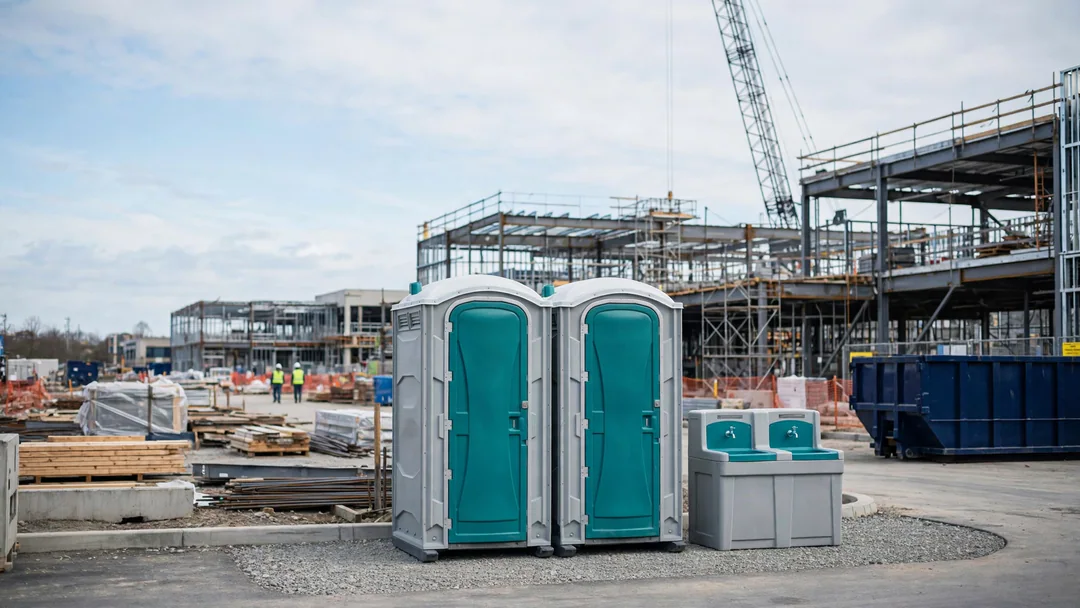
Place units on firm, level ground. On clay jobsites, a gravel pad or plywood base keeps units from tilting or sinking after rain and keeps the service truck's access route usable. On construction sites, federal OSHA rules at 29 CFR 1926.51 set minimum toilet counts by crew size; see our OSHA jobsite toilet guide.
Large metro Atlanta builds often use long-term rentals with a set weekly schedule. Along the coast, units should be secured before a named storm. Include at least one ADA-accessible unit at public events.
Climate and seasonal considerations
Most of Georgia has a humid subtropical climate, with long, hot and humid summers and mild winters. Summer heat increases odor and usage in portable toilets, so busy sites and events often need more frequent servicing and shaded placement.
Heavy thunderstorms are common, and rain is the main factor for placement. Saturated clay softens quickly, so containers on lawns or dirt pads can sink, and trucks may be unable to reach soggy sites. Rain also adds weight to open loads; see our dumpster weight limits guide.
The coast around Savannah and Brunswick is exposed to hurricanes and tropical storms during the Atlantic season, June 1 through November 30. North Georgia gets occasional ice and snow that can delay deliveries; our winter portable toilet guide covers freeze precautions.
Construction activity and common projects
Metro Atlanta's continued growth drives much of Georgia's construction. Suburban counties north and east of the city have seen extensive subdivision and townhome development, and intown neighborhoods see infill homes, teardowns and renovations of older houses.
Atlanta is a major logistics hub, with Hartsfield-Jackson Atlanta International Airport and an extensive interstate network, so warehouses and distribution centers are a common commercial project type. Film and television production has also brought studio construction and set work to the region.
The Savannah area has seen port-related industrial and logistics development, and new manufacturing facilities have been built in several parts of the state. Large jobs usually pair construction dumpsters with jobsite portable toilets, while homeowners lean on home renovation dumpsters.
- New subdivision and townhome construction in metro Atlanta
- Intown infill, teardowns and older-home renovations
- Warehouse and logistics center buildouts
- Storm and fallen-tree cleanup
- Roof replacement after wind and hail
- Coastal storm cleanup around Savannah
- Estate cleanouts and move-outs
- Studio and production set construction
Disposal rules and restricted materials
The Georgia Environmental Protection Division (EPD) regulates solid waste handling facilities in the state, including municipal solid waste landfills, construction and demolition landfills, and transfer stations. Counties and cities operate many disposal and recycling sites, and private operators run others.
Like many states, Georgia restricts certain items from regular landfill disposal. Whole tires, lead-acid batteries, used motor oil and appliances containing refrigerant typically need separate handling, and yard trimmings are commonly kept out of municipal solid waste landfills. Household hazardous waste should go to a local collection event or program.
Accepted materials vary by facility and county, so ask your hauler before loading anything unusual. Review what you cannot put in a dumpster and use a yard waste dumpster for brush and limbs.
Permits in Georgia
Georgia has no statewide dumpster permit, and in metro Atlanta the right office depends on exactly where you are. The City of Atlanta, cities such as Sandy Springs, Alpharetta and Marietta, and unincorporated county areas each set their own rules for containers in streets or right-of-way.
A container fully on your own driveway usually does not need a permit, but confirm that locally. HOAs are common in suburban subdivisions and often limit how long a container or portable toilet can stay visible. Historic districts, including parts of Savannah and intown Atlanta, may have added considerations.
Check with your city or county and HOA before delivery. Our dumpster permit guide and portable toilet permit guide explain what to ask.
Event sanitation planning
Georgia's outdoor event season runs from spring through fall, with mild spring and autumn weather being especially popular. Metro Atlanta hosts music festivals, arts festivals, neighborhood street festivals, races and major professional and college sports.
College football Saturdays bring large tailgating crowds to Athens and Atlanta. The Masters Tournament is held in Augusta each April, and Savannah hosts a well-known St. Patrick's Day celebration. County fairs, agricultural shows and harvest festivals fill the fall calendar, and outdoor weddings at barns, farms and North Georgia mountain venues are common.
Plan units with our porta potty calculator guide, add hand-washing stations where food is served, and see our wedding restroom page and event sanitation checklist.
Cities in Georgia
- Atlanta
- Savannah
- Augusta
- Columbus
- Macon
- Athens
- Alpharetta
- Marietta
- Sandy Springs
Major metro areas: Atlanta–Sandy Springs–Alpharetta · Augusta–Richmond County · Savannah · Columbus · Macon–Bibb County · Athens–Clarke County
Services in Georgia
Georgia rental FAQs
Can a dumpster be placed on red clay or a yard in Georgia?
It is possible in dry weather, but wet clay gets soft and slippery, and a loaded container can sink or leave deep ruts. Most providers prefer a paved driveway or a firm gravel pad. Describe your site to the provider before delivery.
Do I need a permit for a dumpster in Atlanta?
A container on your own driveway usually does not need one, but placement in a street or right-of-way typically requires a permit. Metro Atlanta includes many separate cities and counties with different rules, so confirm with the jurisdiction where your property sits and with your HOA.
What items cannot go in a dumpster in Georgia?
Hazardous waste, tires, lead-acid batteries, used oil and refrigerant appliances are commonly restricted, and yard trimmings are often kept out of household-waste landfills. Accepted items vary by facility, so check with your hauler before loading.
How do I plan portable toilets for a football tailgate or fall festival?
Base the count on expected headcount, event length and whether alcohol is served, then add hand-wash stations near food. Fall weekends book up quickly in Athens and Atlanta, so reserve early and confirm the service plan with your provider.
Can I rent a dumpster for fallen trees after a storm?
Yes, many providers offer containers for limbs and brush, though some facilities require yard debris to be kept separate from other trash. Large trunks may need to be cut down. Ask your provider about size and weight limits.
Sources and official resources
Neighboring states
Ready to book a dumpster?
Planning a project in Georgia? Share your ZIP code and dates to check provider availability.