
Contractor Services
Roofing Dumpster Rental
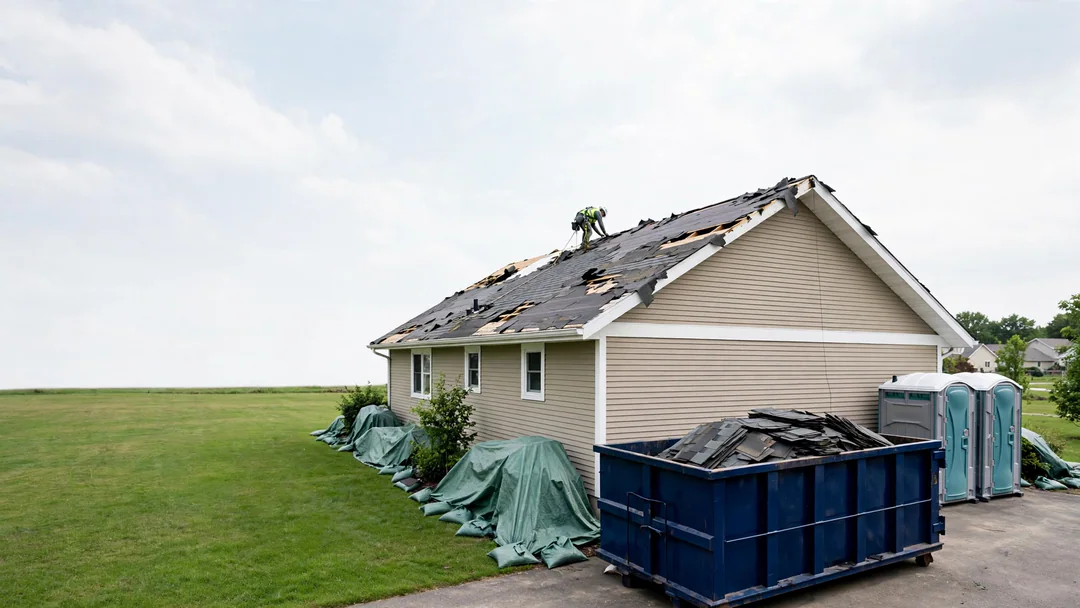
Old shingles are heavy, sharp, and come off fast. A container placed close to the roofline keeps crews efficient and the yard clean.
One quick call to a real person. You approve the price before anything ships.
- All 50 states + DC
- Price confirmed before delivery
- Pricing explained up front
- 10–40 ydRoll-off sizes
- 50 + DCStates served
- 7–14 daysTypical rental period
- Same-dayDelivery when available
What size dumpster do I need for a roof replacement?
Many single-layer residential tear-offs fit in a 10 to 20 yard container, depending on roof size and how many layers are coming off. Shingles are heavy, so weight usually limits the load before volume does. Share the roof size in squares, the number of layers, and the material with your provider for a recommendation. Options vary by hauler.
Sizing by roof squares and layers
Roofers measure in squares, where one square covers 100 square feet of roof. Two factors drive container size: how many squares are being removed and how many layers of old roofing are on the deck. A second or third layer roughly multiplies the debris. Underlayment, flashing, drip edge, and damaged decking add to the total.
Rather than relying on a general rule, give your provider the square count, layer count, pitch, and material. They can suggest a size and tell you whether one container is enough or a swap will be needed.
Why weight is the main concern
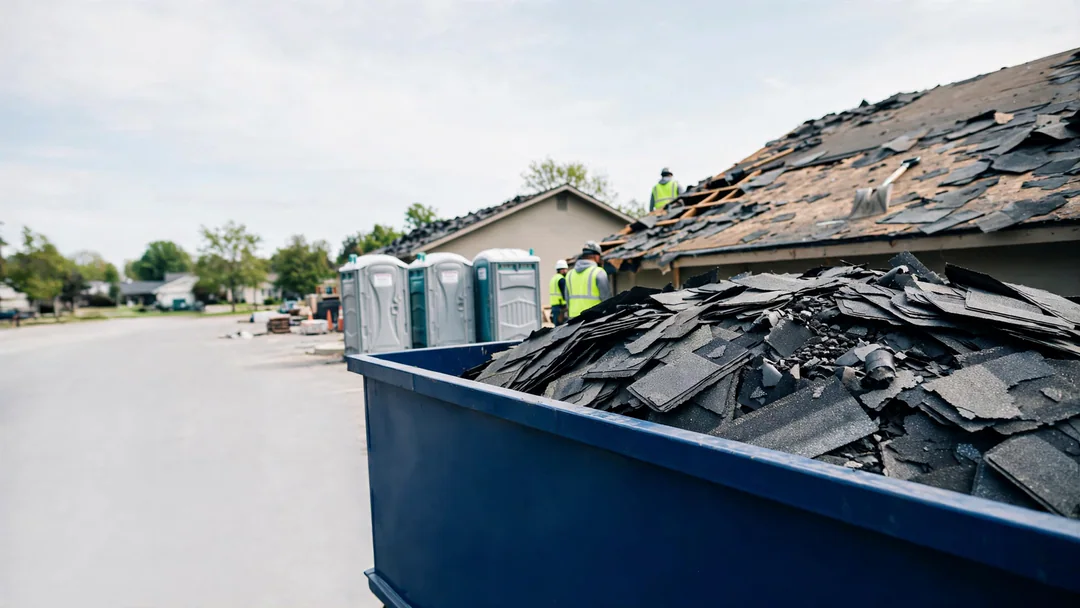
Asphalt shingles are dense, and a container full of them can be much heavier than the same volume of household junk. Many haulers recommend smaller containers for roofing or set fill limits so the load stays within what the truck can carry. Quotes typically include a weight allowance with overage charges beyond it. Rain makes shingles and decking heavier, so tarp the container when work stops. See dumpster weight limits.
Placement close to the roofline
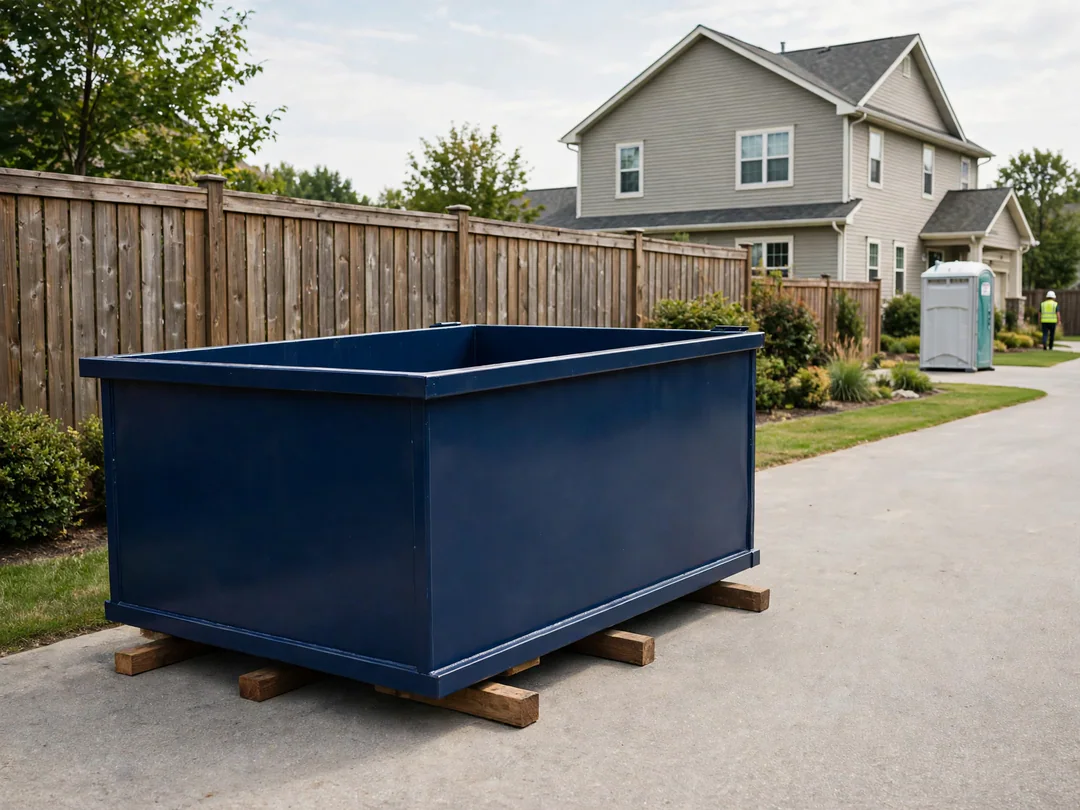
Positioning the container where crews can toss debris directly from the roof edge saves hours of carrying. That usually means setting it along the driveway side of the house, within reach of the eaves, while keeping overhead clearance for the truck. Avoid placing it under power lines or over the septic field.
- Lay tarps over landscaping and along the foundation to catch stray nails and granules.
- Use a magnetic sweeper on the lawn and driveway when the job wraps up.
- Protect windows, AC units, and gutters near the drop zone.
- Keep a clear walkway away from the toss zone for anyone on the ground.
Materials that typically go in a roofing dumpster
Most standard tear-off debris is accepted in a roofing load. Tile, slate, and metal roofing may need different handling.
- Asphalt shingles and ridge caps
- Felt and synthetic underlayment
- Damaged plywood or OSB decking
- Flashing, drip edge, and roofing nails
- Wood shakes, and in some cases tile or slate, which are even heavier
Shingle recycling
In some areas asphalt shingles can be recycled into paving materials. Recycling generally requires a clean load of shingles without wood, trash, or other debris. Whether it is available depends on the facilities near you. If recycling matters to you or your client, ask the provider whether a shingle-only load can be routed to a recycler. Our construction debris recycling guide has more background.
Timing delivery and pickup with the crew
Schedule delivery the day before tear-off so the crew can start immediately. On multi-day jobs or larger roofs, line up a swap in advance so a full container does not stall the work. Request pickup as soon as tear-off is finished; leaving a loaded box through rainy days adds weight. Contractors managing several roofs at once can find more planning tips on our construction dumpsters page.
Frequently asked questions
Can homeowners rent a roofing dumpster?
Yes. Many homeowners rent the container directly, while others let their roofing contractor arrange it. Either way, confirm who is responsible for overage charges.
Can I put old gutters in the roofing dumpster?
Gutters and downspouts are usually accepted. Metal can also be recycled separately at many scrap yards.
Is a 40-yard good for roofing?
Usually not. A large box full of shingles can exceed weight limits. Many haulers steer roofing jobs toward smaller containers.
What about roofs with asbestos?
Older roofing materials may contain asbestos, which must not go in a standard dumpster. If you suspect it, have the material tested and follow state and local abatement rules.
How do I keep nails off my driveway?
Use boards under the container, tarp the surrounding area, and run a magnetic sweeper after each workday.
Should the dumpster arrive before the shingles are delivered?
Ideally, yes. Coordinate so the empty container and new materials do not compete for the same driveway space, and so the crew can start tear-off right away.
Related pages
Ready to book a dumpster?
Share your ZIP code and project details. We will route it to an available provider near you.