Event Sanitation Guide
Event Sanitation Checklist
A step-by-step checklist for planning restrooms, handwashing, and trash so guests stay comfortable and your site stays clean.
One quick call to a real person. You approve the price before anything ships.
- All 50 states + DC
- Price confirmed before delivery
- Pricing explained up front
What should an event sanitation plan include?
An event sanitation plan should cover the type and mix of restroom units, accessible units, handwashing or sanitizer stations, placement and lighting, delivery and pickup access, servicing during multi-day events, trash and recycling containers, and any permit or health department requirements. Confirm local rules early, since they can affect layout and unit counts.
Eight to twelve weeks out: define the event
Sanitation decisions flow from a few basic facts. Write these down before you contact providers:
- Expected attendance, including staff, vendors, and performers
- Event length in hours and number of days
- Whether food and drinks, especially alcohol, will be served
- Venue type: lawn, parking lot, park, street, or private estate
- Available power and water on site
- Guest expectations: casual, family, or formal
Choose the unit mix
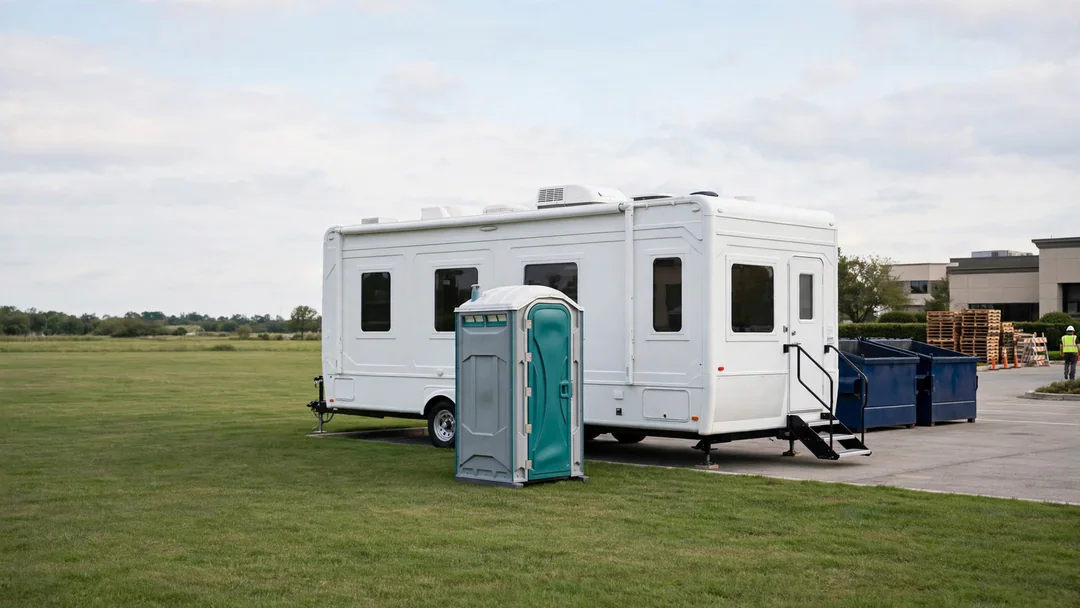
Most events use some combination of standard units, ADA portable toilets, and, for formal events, restroom trailers. Our portable toilet vs. restroom trailer guide compares the two. For calculating unit counts, use the how many porta potties do I need page; this checklist focuses on everything around the count.
Plan handwashing
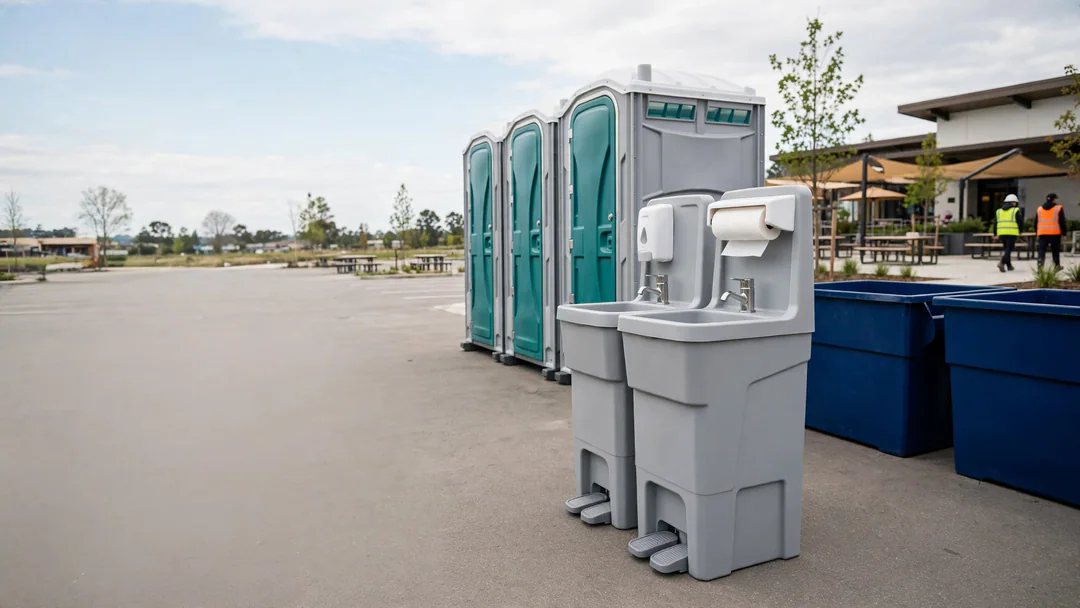
Handwashing is easy to underplan. Many standard units have sanitizer dispensers, but guests and health inspectors often expect running water near food. Hand washing stations can be placed at restroom clusters, food courts, and staff areas. If food vendors are involved, ask the local health department what temporary food permits require.
Six weeks out: check rules and permits
Public events often need a city or county event permit, and some jurisdictions ask for a sanitation plan with it. Parks, streets, and public land may require separate approvals. Accessible units are generally expected where restrooms serve the public. Read our portable toilet permits guide, then contact the permitting office to confirm what applies.
Four weeks out: map placement
Mark locations on your site map and share it with the provider before delivery day.
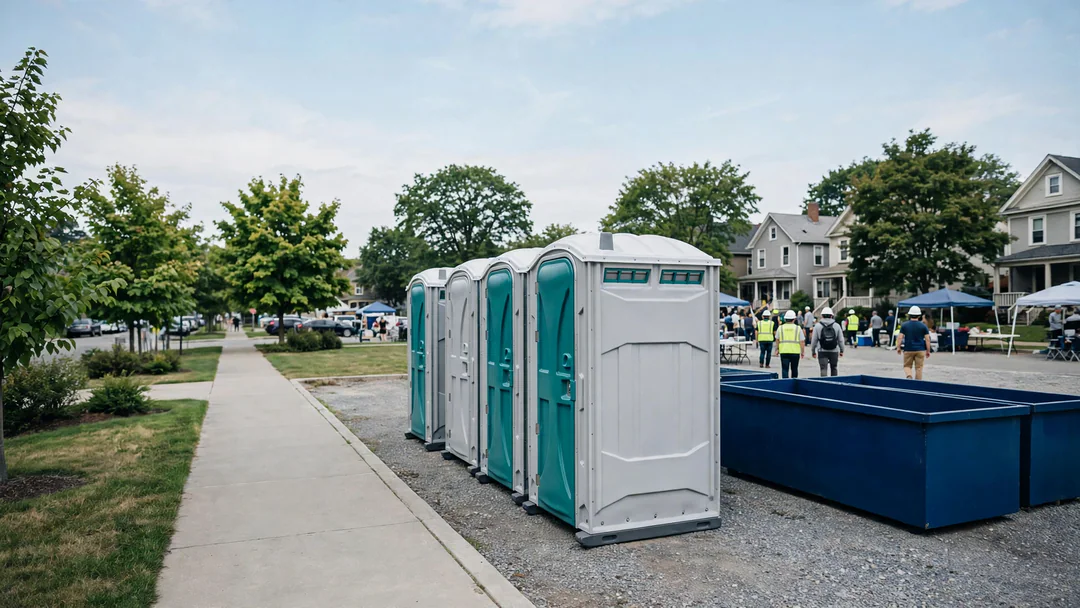
- Spread clusters across large sites so no guest walks too far
- Put units near, but not right next to, food and seating areas
- Place accessible units on firm, level, accessible routes
- Keep units clear of emergency lanes, exits, and hydrants
- Choose spots the service truck can reach without crossing crowds
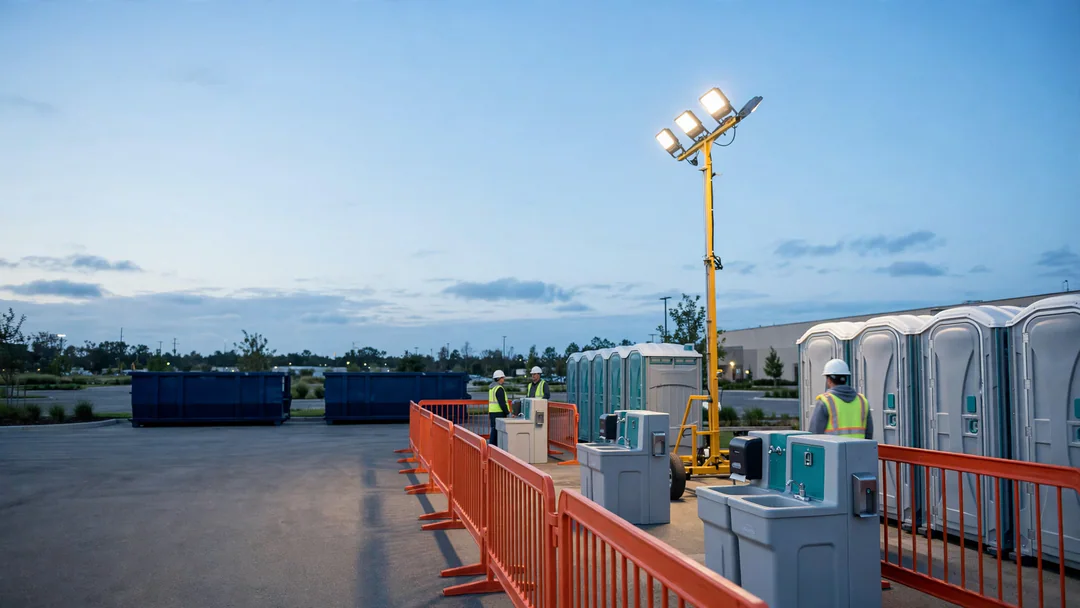
- Add lighting for evening events, either from the venue or portable lights
- Consider wind, slope, and drainage; avoid low spots that flood
Two weeks out: confirm logistics
- Delivery window
Confirm when units arrive and whether someone needs to be on site.
- Access
Make sure gates are open and routes are clear of vendors and vehicles.
- Servicing
For multi-day events, schedule pumping and restocking for off-peak hours.
- Supplies
Ask how much toilet paper, sanitizer, and soap is included and how restocking works during the event.
- Pickup
Confirm the pickup time and whether units need to be emptied first.
Plan trash and recycling, too
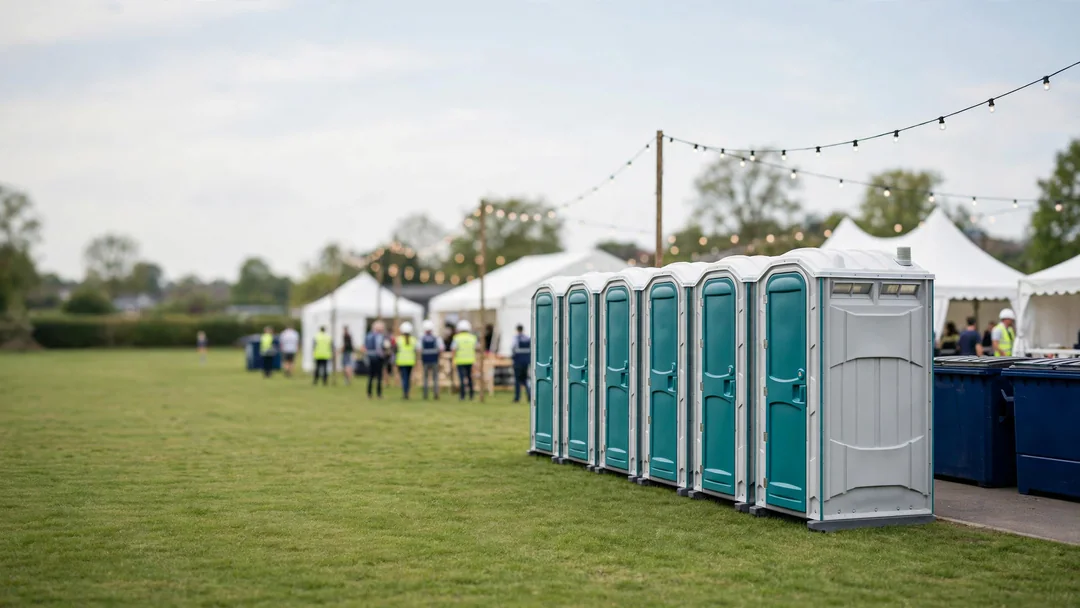
Restrooms are only half of event sanitation. Overflowing trash cans are one of the most visible problems at outdoor events. Plan bins near food, seating, and exits, assign volunteers or staff to empty them, and arrange a larger container for bagged trash. A temporary dumpster can collect bags behind the scenes. Separate recycling bins work best when they are clearly labeled.
Event day: monitor and respond
A staff member or volunteer assigned to restroom checks can catch problems before guests notice them.
- Walk restroom clusters regularly to check supplies and cleanliness
- Keep the provider phone number handy for urgent service
- Watch lines at peak times such as intermissions or after meals
- Keep lighting on after dark and paths clear
- Report any damaged or tipped units right away
Special considerations by event type
Different events stress sanitation in different ways. Weddings and formal dinners tend to concentrate restroom use around toasts and the end of dinner, so placement near the reception matters more than raw capacity. Festivals and concerts see heavy use between sets, so spreading clusters across the grounds prevents long lines in one place. Sporting events and races often need units near the start area and parking. Events serving alcohol generally see more restroom use per guest, so plan generously and service more often.
After the event
Confirm all units and containers are accessible for pickup, collect any leftover supplies, and walk the site for litter. Note what worked and what did not, such as long lines or poorly placed units, and keep those notes for your next event.
Book event sanitation
Compare event porta potties, festival restrooms, and wedding restrooms, then find providers in your area on the locations page.
Frequently asked questions
How far ahead should I book event restrooms?
Earlier is better, especially for peak seasons, holiday weekends, accessible units, and restroom trailers. Booking several weeks ahead gives you more choice and time to resolve permit questions.
Do I need handwashing stations if units have sanitizer?
Sanitizer helps, but running water is often expected near food and may be required by local health rules for food service. Adding a few stations at clusters and food areas is common.
Where should portable toilets go at an event?
Place them in clusters that are easy to find and reach, away from food prep, on level ground, with truck access for service, and clear of emergency routes.
Will units be serviced during a multi-day event?
Most providers offer servicing between days or at set times. Ask when visits will happen and plan them for off-peak hours.
Do I need a permit for event restrooms?
Public events often need an event permit that covers sanitation. Requirements vary by city and county, so confirm with the local permitting office.
Related pages
Ready to book a dumpster?
Whatever the project, start with your ZIP code. We will check provider availability for your dates.