
Planning Guide
How Many Porta Potties Do I Need?
Running short on restrooms is one of the most common planning mistakes for events and jobsites. Use these rules of thumb and requirements to build a solid estimate, then confirm it with your provider.
One quick call to a real person. You approve the price before anything ships.
- All 50 states + DC
- Price confirmed before delivery
- Pricing explained up front
How many porta potties do I need?
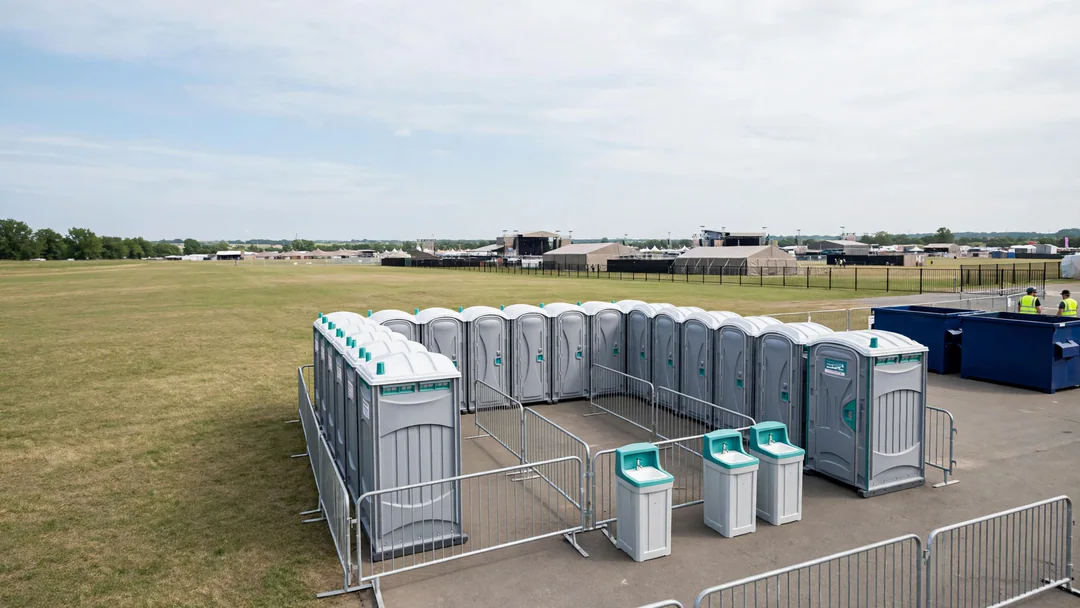
For events, a common rule of thumb is about one unit per 50 guests for an event of around four hours, with more units for longer events, alcohol or food. For construction, OSHA 29 CFR 1926.51(c) requires one toilet for 20 or fewer employees and one toilet seat and one urinal per 40 workers above that. Always confirm with your provider and any permit requirements.
Start with people and hours
Headcount alone does not tell you enough. A hundred guests at a two-hour ceremony use restrooms very differently from a hundred guests at a ten-hour festival with a beer garden. The two numbers that matter most are how many people will be on site at peak and how many hours they will be there. From there, adjust for drinks, food, weather and who is attending.
The tables below are rules of thumb used for planning, not regulations. Unit capacity varies by model and provider, and local permits or venue contracts may set their own minimums. Treat these as a starting estimate and confirm with your provider.
Event rule-of-thumb table
This table assumes standard units, a mix of guests and no service during the event. It is a planning guide only.
| Guests | Up to 4 hours | 4 to 8 hours | 8 to 12 hours |
|---|---|---|---|
| 50 | 1 | 2 | 2 to 3 |
| 100 | 2 | 3 to 4 | 4 to 5 |
| 250 | 5 | 6 to 8 | 8 to 10 |
| 500 | 10 | 12 to 15 | 15 to 20 |
| 1,000 | 20 | 24 to 30 | 30 to 40 |
Adjustments for alcohol, food and duration
Once you have a base number, adjust it for the factors that drive restroom use. These adjustments are also rules of thumb.
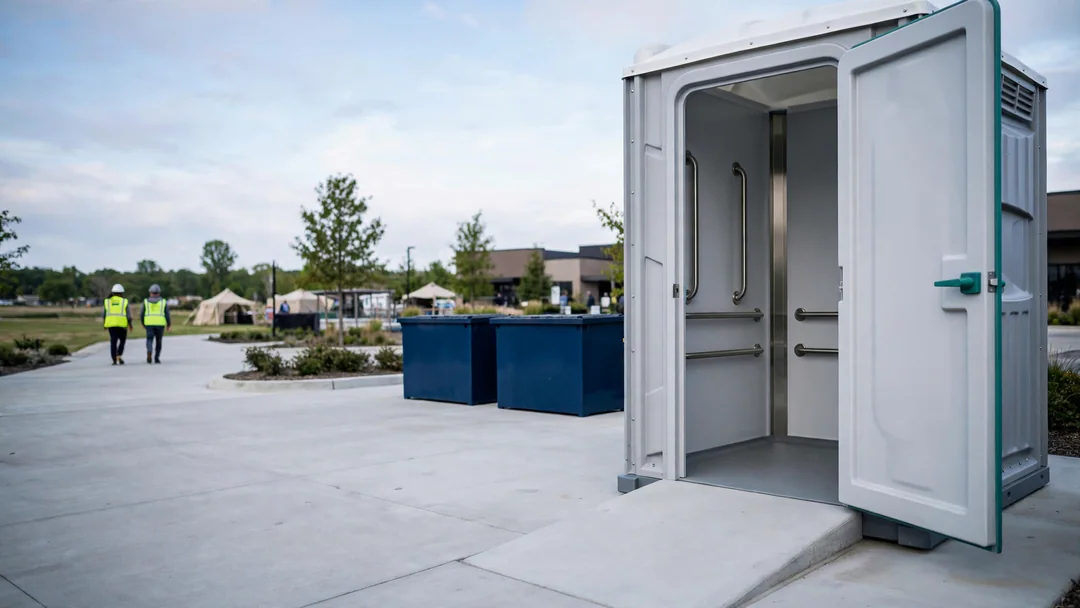
- Add at least one ADA accessible unit, with commonly cited guidance of at least 5 percent of clustered units.
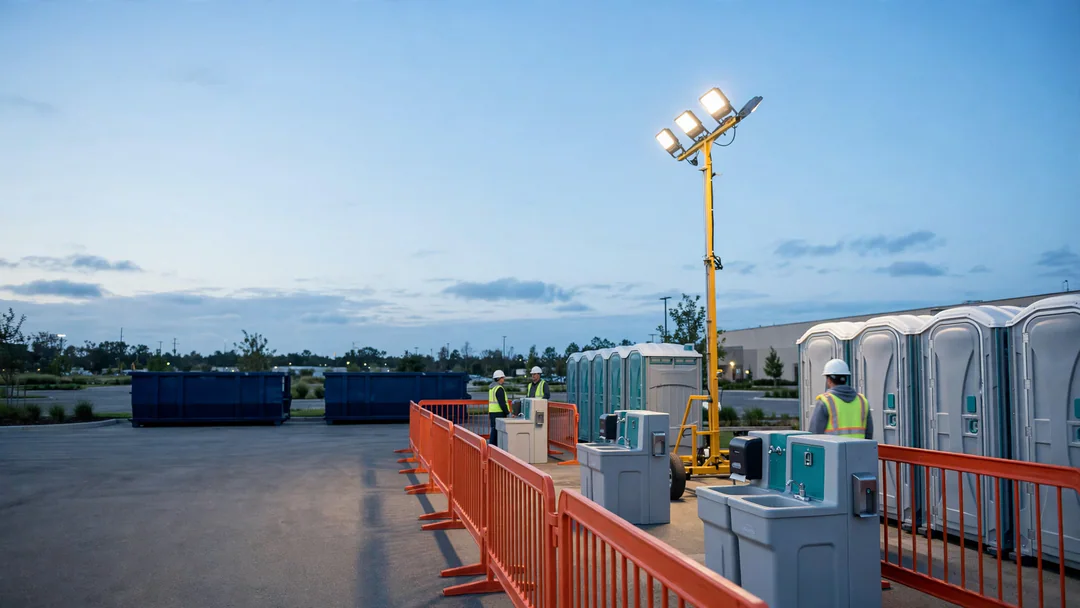
- Add hand washing stations near food and every restroom bank.
- For multi-day events, plan daily servicing rather than simply adding units.
| Factor | Suggested adjustment |
|---|---|
| Alcohol served | Add roughly 15 to 20 percent more units |
| Full meal or heavy drinks service | Add units and place hand washing near food |
| Event over 8 hours or multi-day | Add units or schedule service during the event |
| Hot weather | Plan for more use from higher water consumption |
| Mostly female attendance | Add units, since toilet stalls are used longer than urinals |
| Peak rush, like intermissions | Add units near the main crowd area |
Construction: OSHA 29 CFR 1926.51(c) ratios
On construction sites, the number of toilets is set by regulation, not just comfort. OSHA 29 CFR 1926.51(c) sets minimum toilet facilities based on the number of employees. Our OSHA jobsite toilet guide covers the rule in more depth.
| Number of employees | Minimum facilities |
|---|---|
| 20 or fewer | 1 toilet |
| 20 or more | 1 toilet seat and 1 urinal per 40 workers |
| 200 or more | 1 toilet seat and 1 urinal per 50 workers |
Jobsite examples
Here is how the OSHA ratios play out on a few typical crews. These examples show minimums; many contractors add units for comfort, privacy or a spread-out site.
- Crew of 12: at least 1 toilet.
- Crew of 60: at least 2 toilet seats and 2 urinals (60 divided by 40, rounded up).
- Crew of 120: at least 3 toilet seats and 3 urinals.
- Crew of 250: at least 5 toilet seats and 5 urinals (250 divided by 50).
Other factors that change the count
Site layout matters. A large festival ground or a sprawling jobsite may need more units simply so no one has to walk too far. Service frequency also changes the math: adding a mid-event or twice-weekly service can sometimes replace additional units, while infrequent service means you need more capacity. If units cannot be serviced during a long event, size up.
Unit type matters too. Restroom trailers and deluxe units serve guests differently from standard units, and their capacity depends on tank size and number of stalls. Ask the provider for guidance specific to the units they will deliver.
Audience also matters. Family events with young children, events with older guests and gatherings where people arrive at the same time all create peaks that a simple average misses. Staff, vendors and performers count as users too, so include them in your headcount. If you expect people to stay on site overnight, such as at a camping festival, plan for morning peaks and consider separate facilities near the camping area.
Turning the estimate into an order
Bring your guest count, hours, food and alcohol plans, or crew size and shift length to the request. The provider will review your estimate against their unit capacity and service options. Confirm any permit or venue requirements before finalizing. When you are ready, request a quote by calling us, or read event porta potties and construction porta potties for more planning detail.
Frequently asked questions
How many porta potties for 100 guests?
As a rule of thumb, about two standard units for an event of up to four hours, more for longer events or if alcohol is served. Confirm with your provider.
How many porta potties for a wedding?
Use the same guest and hours approach, then adjust for alcohol and a meal. Many weddings choose a restroom trailer for guest comfort.
What does OSHA require for a jobsite?
OSHA 29 CFR 1926.51(c) requires one toilet for 20 or fewer employees, one toilet seat and one urinal per 40 workers for 20 or more, and one per 50 for 200 or more.
How many ADA units should I include?
Commonly cited guidance is at least 5 percent of clustered units, with a minimum of one. Local rules may require more.
Can more frequent servicing reduce the number of units?
Sometimes. Servicing resets tank capacity, but it does not shorten lines at peak times. Your provider can help balance the two.
Related pages
Need portable toilets on site?
Share your ZIP code and project details. We will route it to an available provider near you.