
Dumpster Rental Guide
Dumpster Safety Tips
A roll-off dumpster on your driveway or job site is heavy steel equipment. A few simple habits keep the people around it safe from delivery to pickup.
One quick call to a real person. You approve the price before anything ships.
- Lower 48 states + DC
- Price confirmed before delivery
- Pricing explained up front
How do you use a dumpster safely?
Keep people and vehicles clear while the roll-off truck delivers or picks up the container, wear gloves, boots and eye protection when loading, never climb on the walls or ride inside, keep children and pets away, keep hazardous materials out, and never load above the top rim. Latch the rear door whenever you are not using it.
Dumpster safety during delivery and pickup
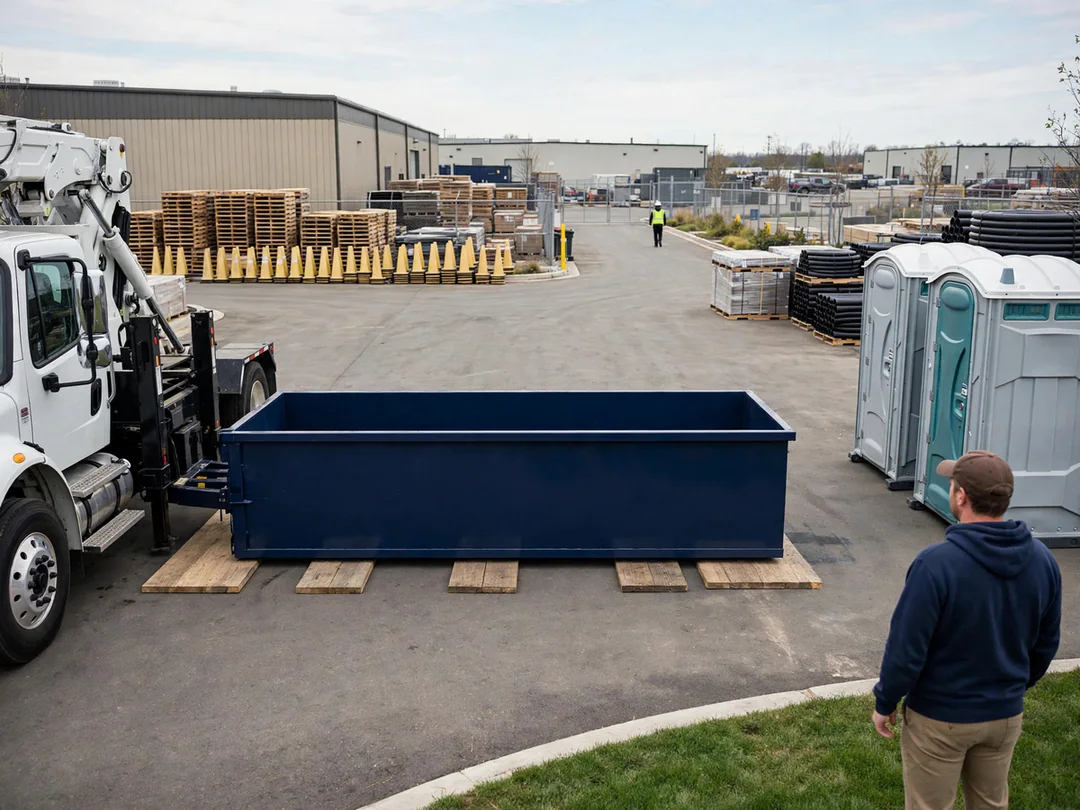
A roll-off truck tilts its bed high and slides the container down its rails. Keep everyone, including children and pets, well away from the truck and the drop zone until the driver finishes, and do not stand behind the truck while it backs up. Clear the path of vehicles and overhead obstacles before the truck arrives. See preparing your driveway.
Safe dumpster loading
- Wear work gloves, sturdy boots and eye protection; renovation debris often has nails, glass and sharp edges.
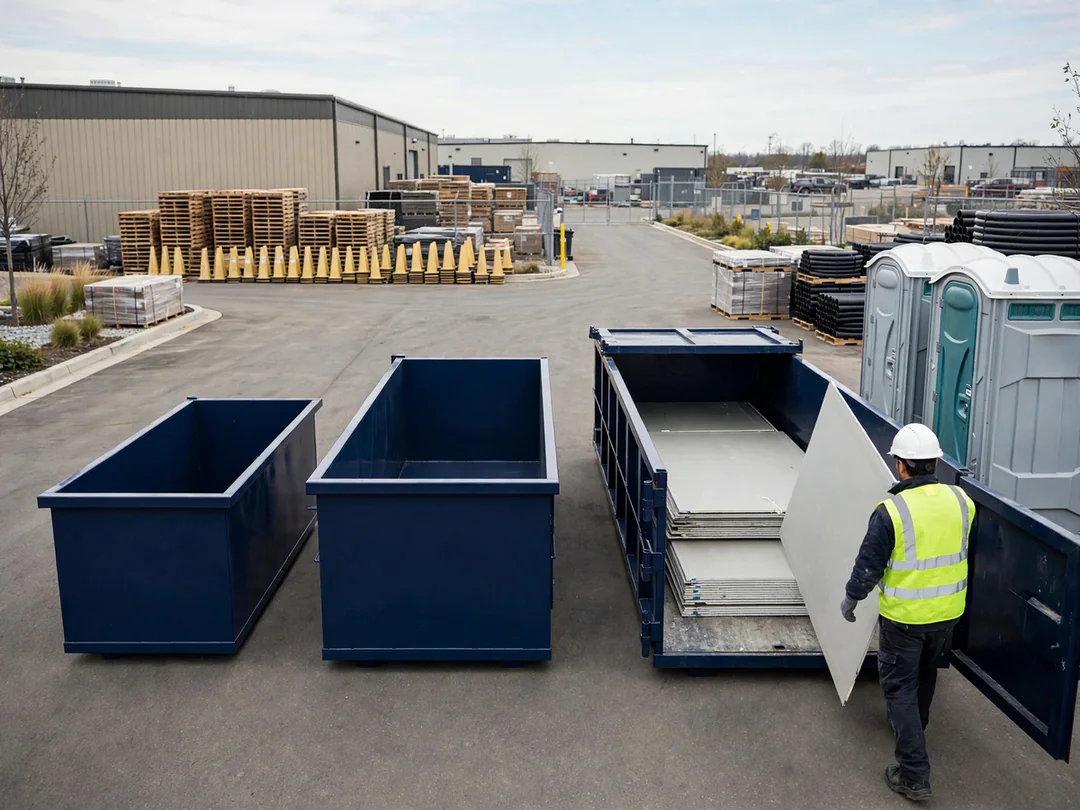
- Lift with your legs and get help with heavy items; slide heavy debris through the rear door instead of lifting it over the wall.
- Never climb on the container walls or stand on debris inside a full container.
- Do not throw debris from upper floors or roofs unless the area below is closed off and you are using a chute.
- Keep the load level with the top rim.
Keeping children and pets away from a dumpster
A dumpster attracts curious children and pets. Keep the rear door closed and latched, cover the load with a tarp when you are not working, and tell children the container is off-limits. Nails, broken glass and shifting debris inside a dumpster cause injuries quickly.
Hazardous materials and fire safety
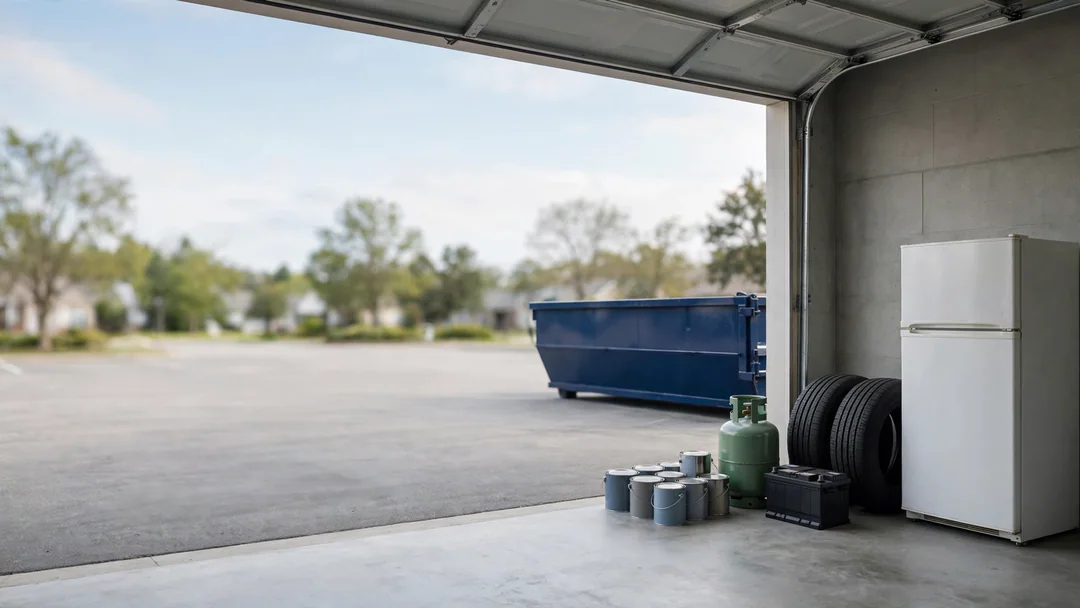
Never put paint, solvents, fuel, propane tanks, batteries or hot ashes in a dumpster. Some of these can leak or ignite, and they are restricted by most providers and many local rules. Keep anyone from smoking near a loaded dumpster. See what cannot go in a dumpster.
Dumpster safety in bad weather
Cover the load before rain to stop porous debris from soaking up water, and secure loose, light debris before high winds. If a major storm is forecast, ask your provider whether to schedule an early pickup. See securing dumpsters and portable toilets before a storm.
Job site dumpster safety rules
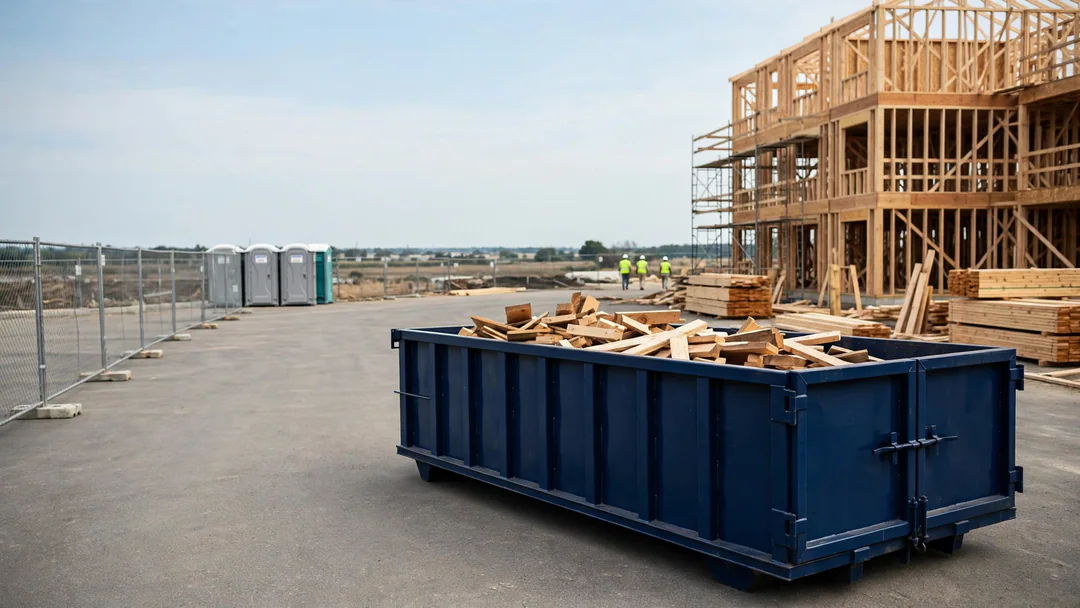
On construction sites, federal OSHA rules set the baseline. 29 CFR 1926.25 requires that scrap and debris be kept cleared from work areas and that containers be provided for collecting waste. 29 CFR 1926.252 requires an enclosed chute when material is dropped more than 20 feet to any point outside the exterior walls of a building. State OSHA plans and site rules can add requirements.
- Place the dumpster where trucks can reach it without crossing active work zones.
- Use a chute for upper-floor debris instead of throwing it from windows or roofs.
- Keep the area around the dumpster clear of loose nails and scrap.
- Assign someone to check that hazardous materials stay out of the container.
Street and neighbor safety for a dumpster
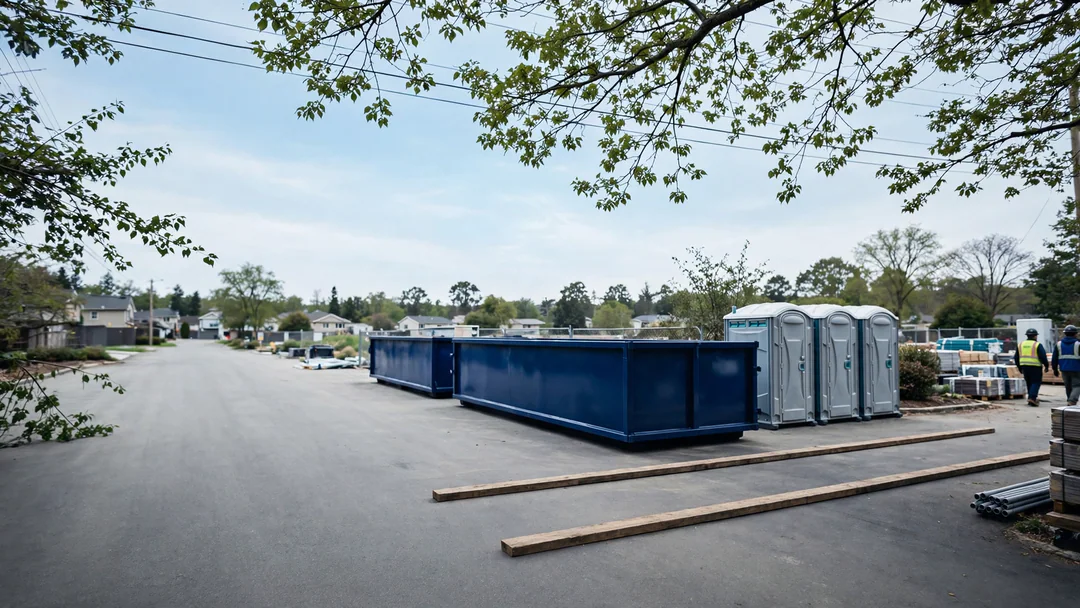
A dumpster placed on a street or alley must be visible to drivers at night. Cities that permit street placement often require reflective markers or cones at both ends and may limit how long the container can stay. Keep sidewalks open for pedestrians and do not block hydrants, driveways or crosswalks. See dumpster permits.
Dumpster placement safety: surfaces, slopes and overhead lines
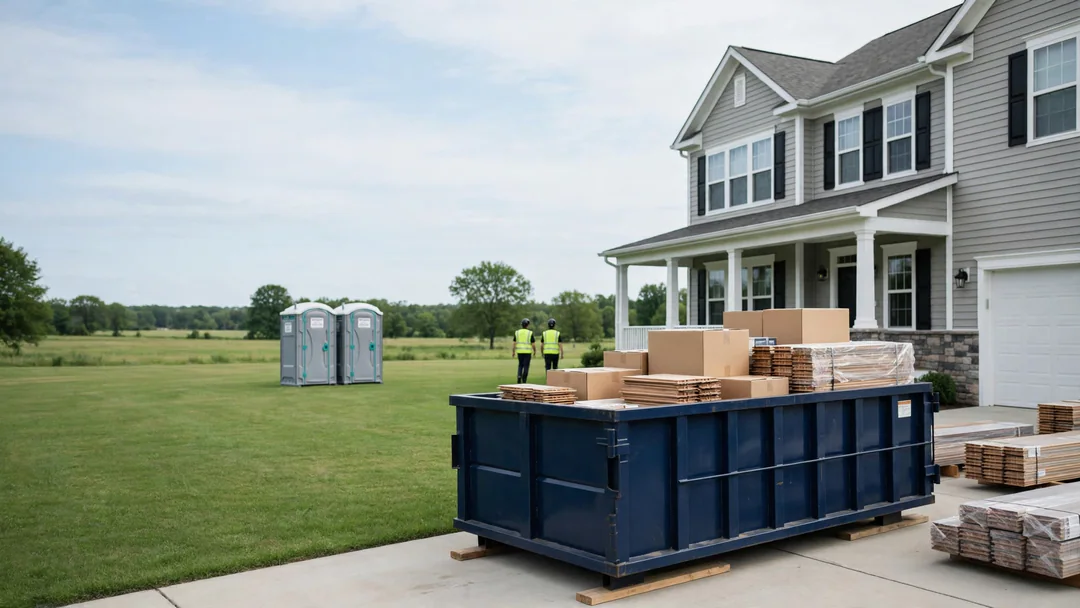
Place the dumpster on firm, level ground that can carry a loaded container, such as a paved driveway, with wooden boards under the rails if your provider recommends them. Avoid steep slopes, soft lawns and areas over septic systems or buried utilities. Check that no power lines, phone lines or tree limbs hang over the spot, because the truck bed rises high during delivery and pickup. Leave space around the container so people can load from the rear door without stepping into traffic or onto unstable ground.
Dumpster safety on pickup day
On pickup day, make sure the load is level with the rim, the rear door is latched, and the tarp is off unless the driver asks for it. Move cars, bikes and trash cans out of the path, and keep everyone clear while the truck winches the container onto its bed. Check the driveway afterwards for nails and small debris left where the container stood.
Your next steps
Dumpster Safety Tips FAQs
Do I need cones or reflectors around a dumpster?
On private driveways usually not, but a dumpster on a public street often needs reflective markers or cones under the city permit. Check your local permit conditions.
Is it safe for kids to play near a dumpster?
No. Keep children away from the dumpster and the delivery zone. Latch the rear door and cover the load when you are not working.
Can I climb into a dumpster to make more room?
Avoid it. Standing on debris inside a dumpster risks cuts and falls. Spread debris evenly while loading instead, and ask for a swap-out if it fills up.
Should I cover my dumpster?
Yes, cover it with a tarp before rain and when you are not working. It keeps water weight down, keeps debris from blowing out, and discourages others from adding trash.
Related pages
Ready to book a dumpster?
Whatever the project, start with your ZIP code. We will check provider availability for your dates.