
Dumpster Use Cases
Dumpster Rental for Property Management
Turnovers, cleanouts, and capital projects all generate debris. A repeatable process keeps vacancy time short.
One quick call to a real person. You approve the price before anything ships.
- All 50 states + DC
- Price confirmed before delivery
- Pricing explained up front
- 10–40 ydRoll-off sizes
- 50 + DCStates served
- 7–14 daysTypical rental period
- Same-dayDelivery when available
How do property managers use roll-off dumpsters?
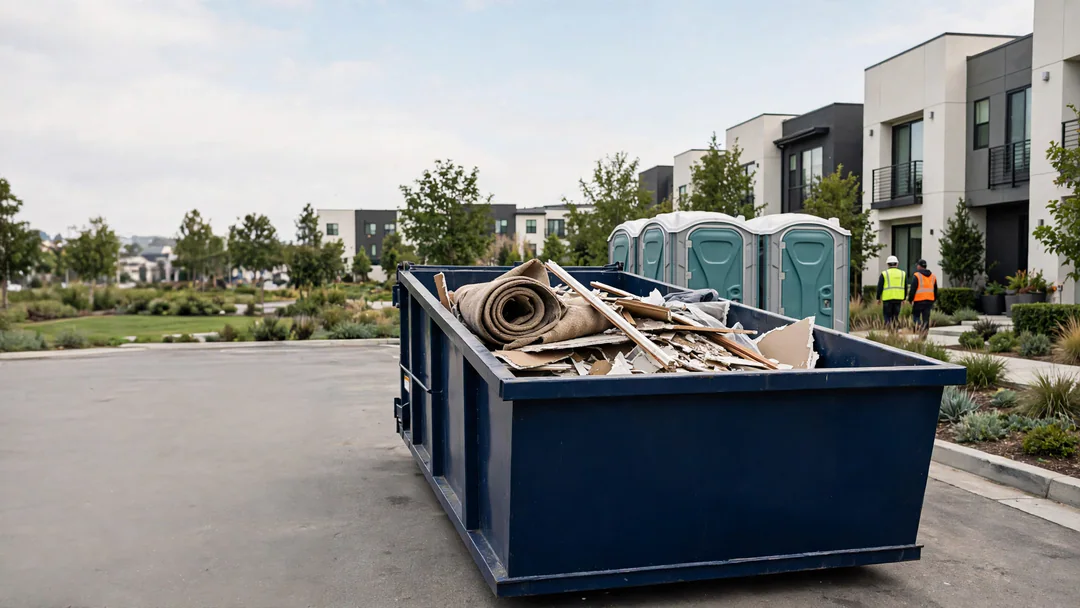
Property managers book roll-offs for unit turnovers, eviction cleanouts, renovations, and seasonal cleanups across their portfolio. A good setup includes standard sizes for common jobs, a clear request process for site staff, approved placement spots at each property, and billing coded by property or work order. Availability and terms vary by provider and location.
Property Management: dumpster sizes at a glance
| Size | Typical dimensions | Holds about |
|---|---|---|
| 10-yard | ~12 ft L × 8 ft W × 3.5 ft H | 3–4 pickup-truck loads |
| 20-yard | ~22 ft L × 8 ft W × 4.5 ft H | 6–8 pickup-truck loads |
| 30-yard | ~22 ft L × 8 ft W × 6 ft H | 9–12 pickup-truck loads |
- Weight: every quote includes a weight allowance; going over it adds a per-ton charge. See dumpster weight limits.
- Permits: a dumpster on your own driveway usually needs no permit; one on a street or sidewalk often does. See dumpster permits.
Common property management jobs
Standardizing sizes for common jobs makes it easier for site teams to order without approval delays.
| Job | Typical debris | Size often considered |
|---|---|---|
| Single-unit turnover | Carpet, pad, abandoned furniture | 10-yard |
| Eviction cleanout | Household contents and trash | 15- to 20-yard |
| Multi-unit renovation | Cabinets, flooring, fixtures, drywall | 20- to 30-yard, often with swaps |
| Community cleanup day | Bulky items from residents | 20- to 30-yard |
| Landscaping or storm cleanup | Branches, yard debris | Depends on volume; see yard waste options |
Turnovers: keeping vacancy time short
A container that arrives after the cleaning crew is ready costs days of vacancy. Build the request into the move-out checklist so the dumpster is ordered the moment a notice to vacate is confirmed.
- Notice received
Add the unit to the turnover calendar and flag whether a container is likely needed.
- Move-out inspection
Photograph the unit and estimate debris volume.
- Order container
Request delivery to the approved spot for that property, timed to the cleaning crew.
- Pickup
Request pickup as soon as the unit is cleared, before the make-ready work finishes.
Eviction cleanouts
Eviction rules on abandoned property vary by state and sometimes by city. Many jurisdictions require notice and a holding period before belongings can be removed or discarded. Follow the court order and your attorney's guidance, document the unit with photos, and keep personal documents and valuables aside if the law requires storage. Only then load the container.
Recurring and on-call scheduling
Large portfolios often have steady debris demand. Some providers offer recurring arrangements or priority on-call service; others handle each request separately. Ask what is available in each market.
- Set one approved container location per property, noted in your site files.
- Give site managers a short request template: address, unit, size, dates, and contact.
- Let residents know when a container is on site and that it is not for personal dumping.
- Track how often each property needs containers to plan budgets.
Multi-property billing and records
Accounting teams usually want each invoice tied to a property, unit, or work order. Include those codes in every request so they appear on the provider's invoice. If you manage properties in several states, expect different providers in different markets, each with their own terms. Keep certificates of insurance on file if your management agreement requires them.
Placement at apartment and HOA communities
Pick spots that avoid fire lanes, accessible parking, and resident walkways. Protect pavement with boards if the provider recommends it. Placement on a public street usually requires a permit; see the permits guide.
Building a standard request process
When several site managers order containers independently, details get missed. A short internal process keeps requests consistent and makes it easier to compare costs across properties. Decide who can approve a container, which sizes are pre-approved for routine jobs, and what information must be included every time: property address, unit number, approved placement spot, delivery and pickup dates, work order number, and an on-site contact.
Keep a list of restricted items posted for maintenance staff and cleaning vendors so they know what must be handled separately, such as paint, batteries, tires, and refrigerant appliances. Reviewing that list once a year helps catch changes in local rules. Rules on accepted materials vary by provider and location.
Property Management FAQs
Can site staff order containers directly?
Yes, if your internal policy allows. A standard request template makes orders consistent across properties.
How do we stop residents from using the dumpster?
Keep it on site only as long as needed, tarp or lock it if the provider offers that option, and notify residents.
Is this different from a commercial dumpster?
Yes. Permanent front-load trash service is covered on the commercial dumpsters page. This page covers temporary roll-offs for projects.
Can we get one invoice for several properties?
It depends on the providers involved. Different markets often mean different providers, so ask about billing when you request quotes.
What about refrigerators left in units?
Appliances with refrigerant usually need special handling and are banned from landfills in many states. Keep them out of the roll-off.
Related pages
Ready to book a dumpster?
Share your ZIP code and project details. We will route it to an available provider near you.