
Dumpster Use Cases
Dumpster Rental for Storm and Disaster Debris Cleanup
After a hurricane, flood, tornado or severe storm, a roll-off dumpster lets you clear damaged materials on your own schedule. A little planning protects your insurance claim and keeps the cleanup safe.
One quick call to a real person. You approve the price before anything ships.
- Lower 48 states + DC
- Price confirmed before delivery
- Pricing explained up front
- 10–40 ydRoll-off sizes
- 50 + DCStates served
- 7–14 daysTypical rental period
- Same-dayDelivery when available
Can I rent a dumpster for storm or flood cleanup?
Yes. A roll-off dumpster is commonly used after hurricanes, floods, tornadoes and severe storms to remove soaked drywall, flooring, furniture and damaged building materials. Before you throw anything away, photograph the damage for your insurance claim. Expect high demand after a regional storm, so request a dumpster as soon as it is safe; your local provider confirms the delivery window, size and what can go in the container.
Storm Debris Cleanup: dumpster sizes at a glance
| Size | Typical dimensions | Holds about |
|---|---|---|
| 20-yard | ~22 ft L × 8 ft W × 4.5 ft H | 6–8 pickup-truck loads |
| 30-yard | ~22 ft L × 8 ft W × 6 ft H | 9–12 pickup-truck loads |
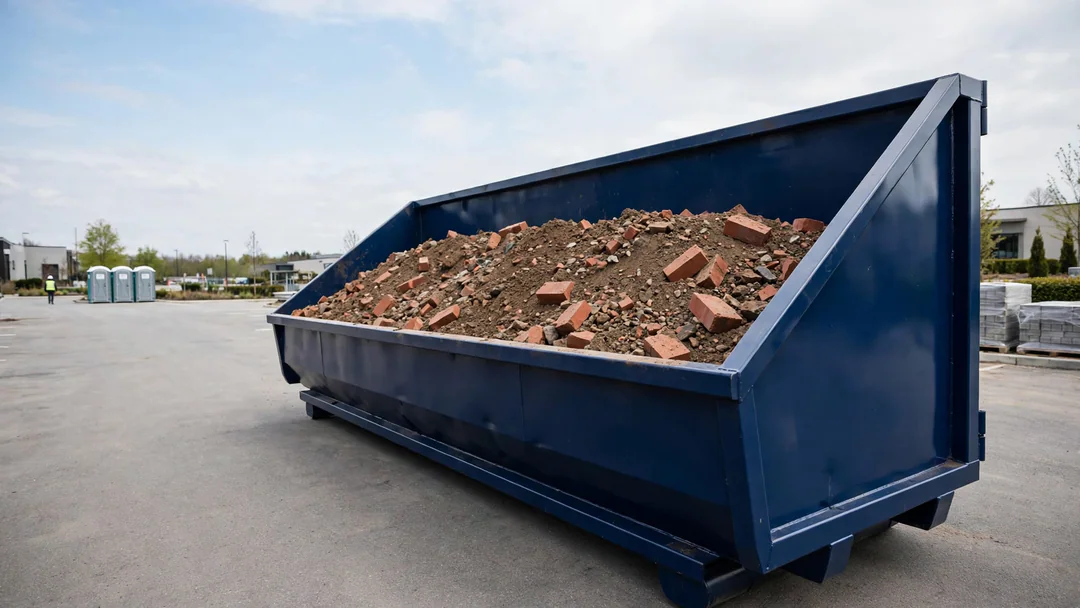
- Weight: heavy debris like concrete, dirt or shingles reaches the weight allowance before the container is full, so it usually goes in a smaller container. See dumpster weight limits.
- Permits: a dumpster on your own driveway usually needs no permit; one on a street or sidewalk often does. See dumpster permits.
What is storm debris?
Storm debris is the waste left after a hurricane, tropical storm, flood, tornado, hailstorm or severe thunderstorm. It usually includes water-damaged building materials such as drywall, insulation, carpet and flooring; damaged furniture and household contents; roofing and siding; fallen trees and branches; and spoiled appliances. Storm debris is often wet, mixed and heavy, which is why it needs more planning than ordinary renovation waste when you rent a roll-off dumpster.
When a storm debris dumpster is the right choice
A roll-off dumpster is the right choice when you are gutting flood-damaged rooms, tearing off a storm-damaged roof, or clearing a large volume of debris over several days at your own pace. It is usually not the best choice for hazardous materials, for a few bags of debris that curbside collection will take, or when your city has announced free curbside disaster debris pickup for the material you have. Many households use both: a dumpster for building materials and curbside piles for vegetation and appliances.
| Option | Best for | Limits |
|---|---|---|
| Roll-off dumpster | Large volumes of wet building debris, furniture, roofing; work over several days | Weight allowance; hazardous items not accepted; needs truck access |
| Municipal curbside disaster pickup | Sorted piles after a declared disaster, especially vegetation and appliances | Only where announced; strict sorting and timing rules; schedule set by the city |
| Junk removal crew | Small loads you do not want to lift yourself | Priced per load; limited availability right after a regional storm |
| Drop-off at a transfer station | Small loads you can haul | Requires a truck or trailer; facility rules and hours vary |
Hurricane debris cleanup
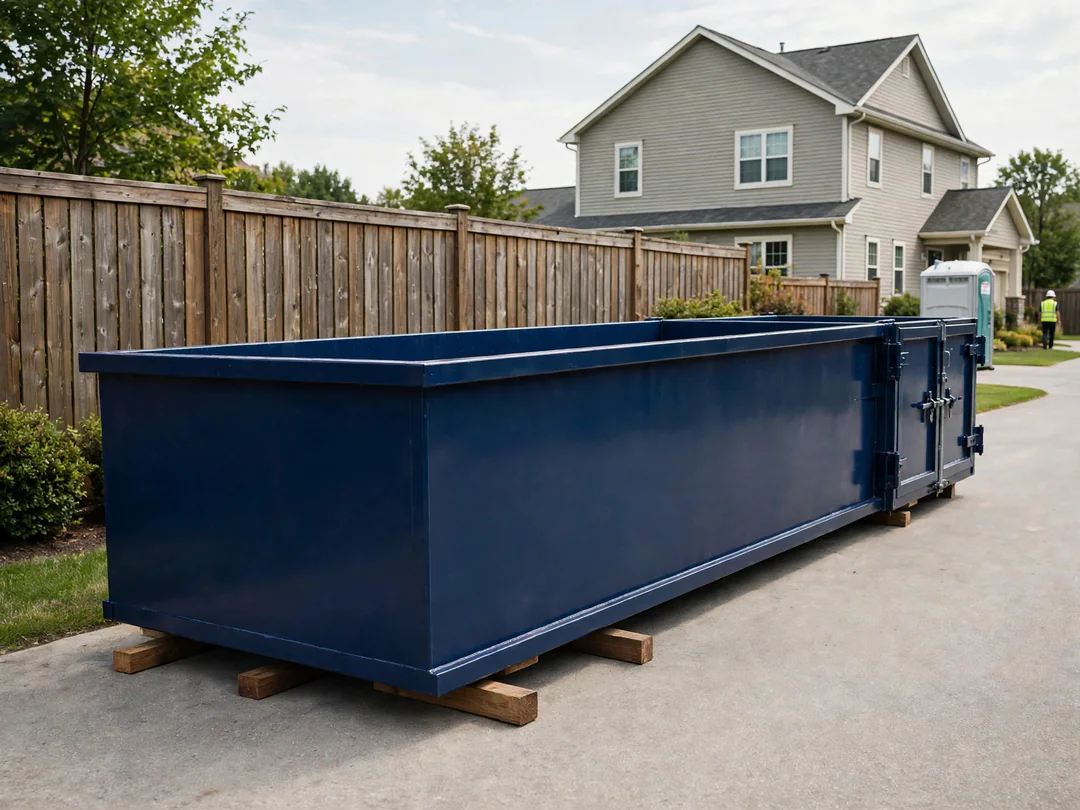
Hurricane cleanup usually combines wind damage (roofing, siding, fences, fallen trees) with flood or storm-surge damage inside the home. Expect high regional demand for dumpsters in the first weeks after landfall. Many coastal counties announce curbside debris collection with specific sorting rules, so check your county or city emergency management announcements before deciding which debris goes in a rented dumpster and which goes to the curb.
Flood damage cleanup
Flood cleanup centers on removing soaked porous materials quickly, because wet drywall, insulation, carpet and padding can grow mold within days. Waterlogged materials are much heavier than when dry, so a flooded room fills a dumpster weight allowance long before it fills the container. Keep appliances, electronics and anything containing fuel or chemicals out of the dumpster unless your provider confirms they are accepted.
Tornado debris cleanup
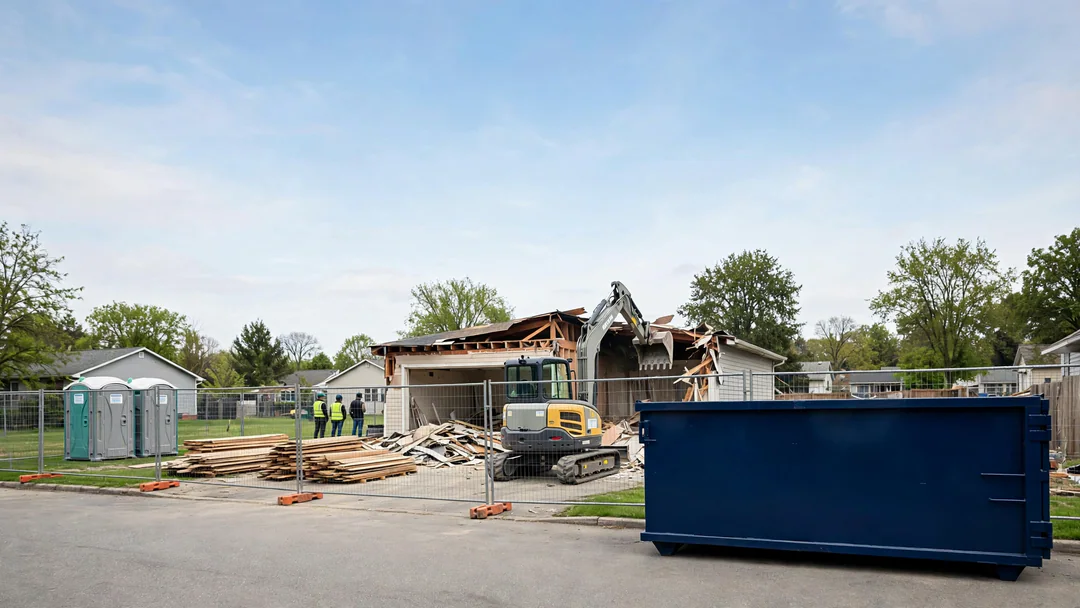
Tornado debris is often scattered and mixed: broken framing lumber, roofing, glass, sheet metal, insulation and tree debris across a wide area. Sharp and nail-studded material makes gloves, boots and eye protection essential. Because tornado damage can block streets, confirm that a roll-off truck can reach your placement spot before scheduling delivery.
How to stage storm debris for a dumpster
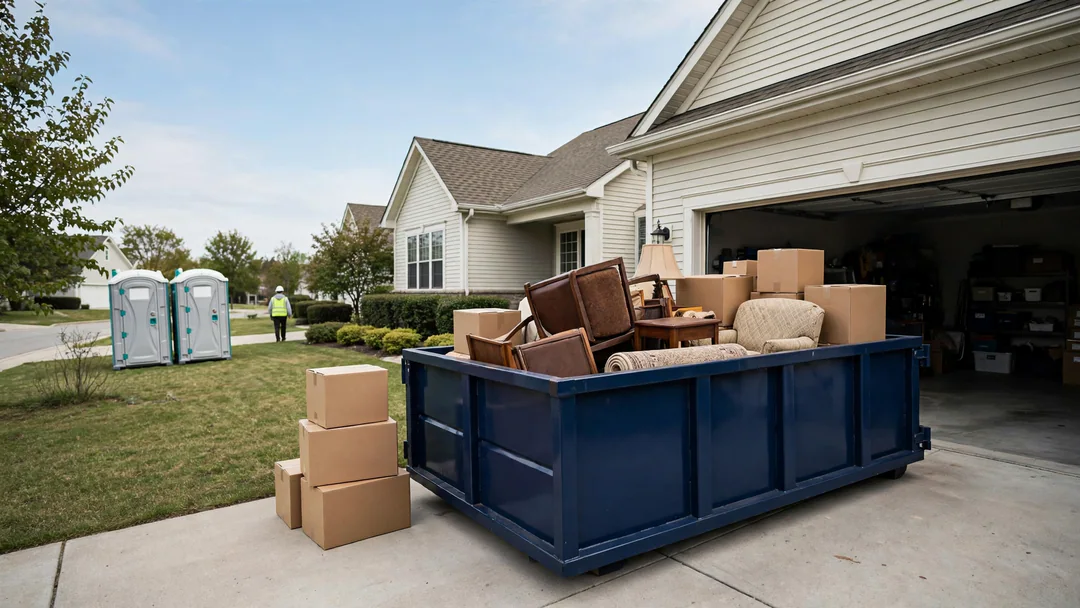
- Pile debris near the dumpster spot, not in the street, so loading is quick once it arrives.
- Keep separate piles for building materials, tree debris, appliances, electronics and hazardous items.
- Load heavy wet debris first and spread it evenly across the floor of the container.
- Break down furniture and cut long branches so they lie flat.
- Keep the load level with the top rim; overfilled containers cannot be hauled safely.
Before you throw anything away after a storm
Storm debris is also evidence for an insurance claim. Most insurers and FEMA advise documenting damage before removal, so the order of work matters.
- Make it safe first
Stay out of flooded areas until utilities are shut off, and keep clear of downed power lines. Wear gloves, boots and eye protection when handling debris.
- Document the damage
Photograph and video every damaged room and item before removal, including serial numbers on appliances. Keep a list of what you discard.
- Check with your insurer
Ask your adjuster whether to keep samples of damaged materials, such as a piece of carpet or drywall, before disposal.
- Then book the dumpster
Once documentation is done, a roll-off dumpster lets you clear wet materials quickly, which helps limit mold growth.
Storm debris that goes in a dumpster vs. curbside pickup
After a declared disaster, many cities and counties run curbside debris collection and ask residents to sort debris into separate piles. A rented roll-off dumpster and municipal curbside pickup are different services with different rules, so check your local announcements before deciding.
- See what cannot go in a dumpster for restricted items.
| Debris type | Rented roll-off dumpster | Typical curbside pile after a declared disaster |
|---|---|---|
| Wet drywall, flooring, carpet, insulation, furniture | Usually accepted | Construction and demolition debris pile |
| Tree limbs, branches, leaves | Often accepted; heavy when wet; some providers want it separate | Vegetative debris pile |
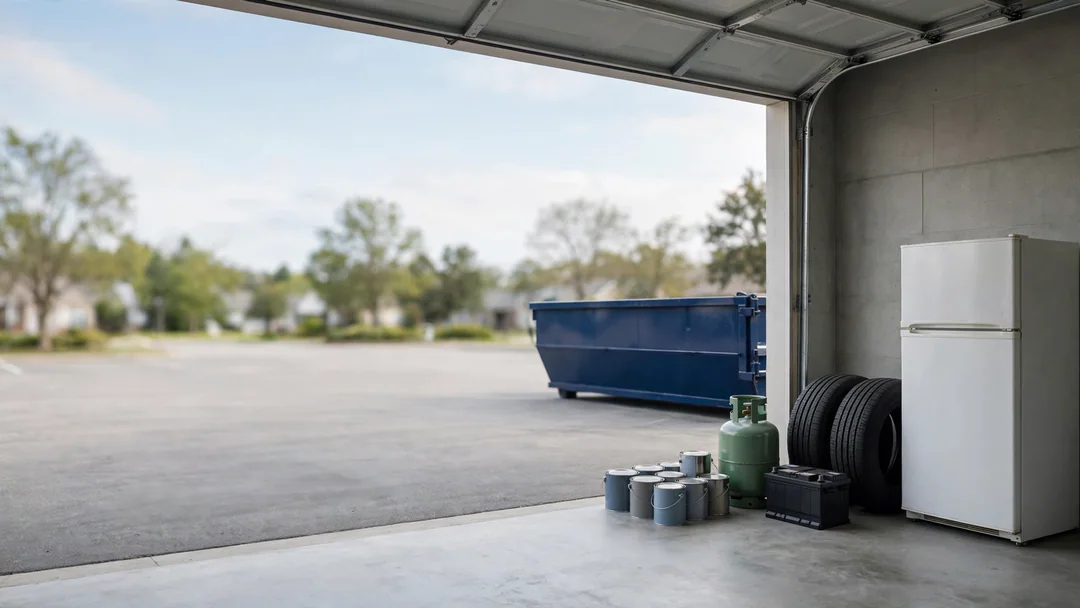
| Refrigerators, freezers, washers, water heaters | Often restricted (refrigerants, metal recycling) | Appliance / white goods pile |
| TVs, computers, electronics | Often restricted | Electronics pile |
| Paint, chemicals, fuel, batteries, pesticides | Not accepted | Household hazardous waste: separate drop-off |
Choosing a dumpster size for storm and flood debris
Storm debris is heavier than ordinary renovation waste because it is wet. Soaked drywall, carpet, padding and insulation can weigh several times their dry weight, and green tree limbs are dense. Size the dumpster for weight as well as volume: a 20-yard dumpster is a common choice for a flooded room or two, while a whole-house flood gut-out often needs a 30-yard dumpster or a swap. Ask how the weight allowance works before loading, because overweight containers can be refused or charged per ton.
- Compare sizes on the dumpster size guide.
- Read how weight allowances work in dumpster weight limits.
Delivery access and permits after a storm
Storms change the delivery path. A roll-off truck needs a firm, clear approach and open space overhead, so remove fallen limbs and make sure no sagging power lines hang over the placement spot. Saturated lawns and soft ground cannot support a loaded container; a paved driveway is safer. If the dumpster has to sit on a public street, a city permit may still be required, though some cities relax or speed up permits after a disaster. See dumpster permits and preparing your driveway.
Availability of dumpsters after a regional storm
After a major hurricane or tornado outbreak, demand for roll-off dumpsters spikes across the whole affected region, and providers schedule deliveries in the order requests arrive. Haul & Hygiene routes your request to independent providers that serve your ZIP code; the provider confirms when a container can be delivered. Requesting early, being flexible on size, and having your address and debris type ready give you the best chance at a quick delivery. Same-day delivery is sometimes possible but never guaranteed during a disaster response. See same-day dumpster rental.
What to tell the provider when you request a storm cleanup dumpster
A storm cleanup dumpster request moves faster when the provider can size and route it on the first call. Have these details ready:
- Delivery address and the exact placement spot (driveway, yard, street).
- What happened: flood, wind, hail, tornado, or fallen trees.
- The main debris types and whether they are wet; mention tree debris, roofing and any concrete or brick.
- Rough volume: number of rooms gutted, roof squares, or truckloads of branches.
- Access problems: blocked streets, soft or flooded ground, low or damaged power lines, gates.
- Whether the dumpster will sit on a public street, which may need a permit.
Preparing the property for dumpster delivery after a storm
Clear a firm, level placement spot with a straight approach for the roll-off truck. Move vehicles and debris piles out of the path, and check that no damaged or sagging power lines hang over the spot, because the truck bed tilts high during delivery. Lay boards where your provider recommends them to protect the driveway. If the ground is saturated, choose pavement over lawn.
Portable toilets for storm recovery sites
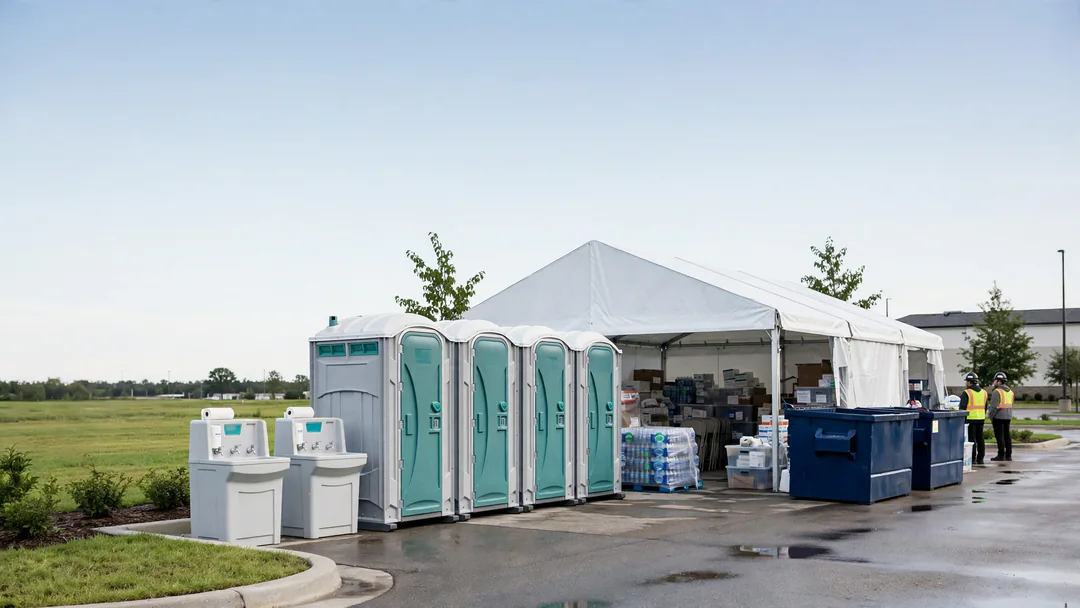
When a home or business has no working plumbing after a flood or storm, crews and residents may need temporary restrooms on site during cleanup. Portable toilets and handwashing stations can be delivered alongside a dumpster. See emergency porta potty rental.
Storm Debris Cleanup FAQs
How soon can I get a dumpster after a hurricane or flood?
It depends on local demand and the provider serving your ZIP code. After a regional storm, providers schedule deliveries in the order requests arrive, so request a dumpster as soon as it is safe and be flexible on size. Your provider confirms the delivery window.
Should I wait for the insurance adjuster before using a dumpster?
Document all damage with photos and video first, and ask your insurer whether they want samples kept. Many insurers let you remove wet materials promptly to prevent mold once damage is documented.
Can I put tree branches from a storm in a dumpster?
Often yes, but green tree debris is heavy and some providers ask for it to be kept separate from building debris. Tell your provider how much tree debris you have so they can size the container for weight.
Is wet drywall and carpet heavier in a dumpster?
Yes. Waterlogged drywall, carpet, padding and insulation weigh much more than dry materials, so flood debris reaches a dumpster weight allowance sooner. Plan for weight, not just volume.
Related pages
Ready to book a dumpster?
Share your ZIP code and project details. We will route it to an available provider near you.