Loading Guide
What You Cannot Put in a Dumpster
Some materials are dangerous to haul or banned from landfills. Keeping them out of your container protects workers, the environment, and your final bill.
One quick call to a real person. You approve the price before anything ships.
- All 50 states + DC
- Price confirmed before delivery
- Pricing explained up front
What can you not put in a dumpster?
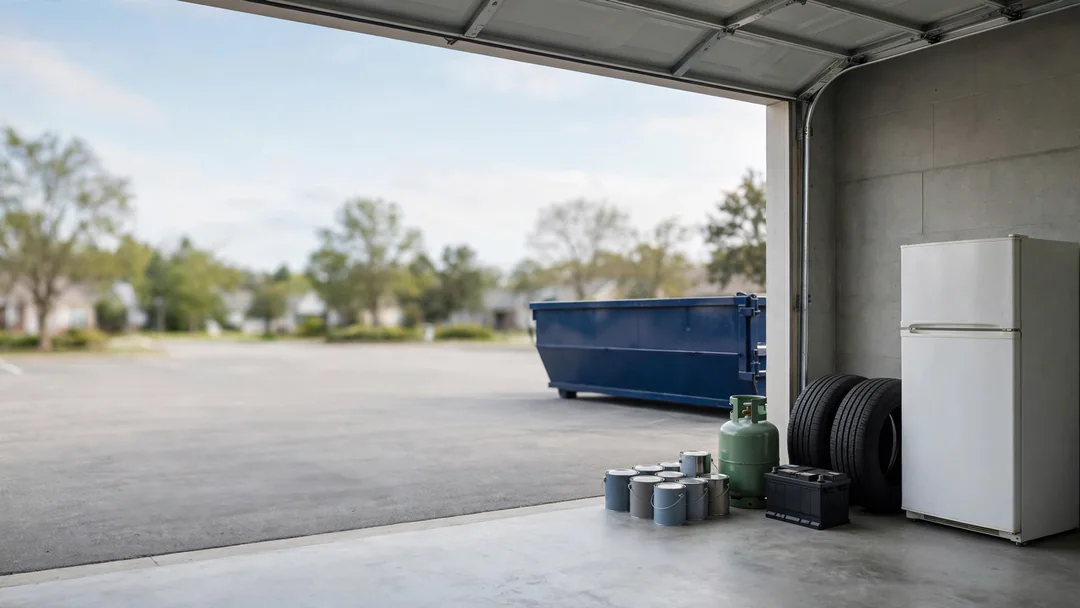
Hazardous materials are commonly prohibited, including wet paint, solvents, chemicals, pesticides, fuel, motor oil, and asbestos. Many states also ban tires, lead-acid batteries, and appliances containing refrigerant from landfills. Medical waste, propane tanks, and electronics are often restricted. Rules vary by provider, facility, and state, so confirm locally.
Prohibited Items: dumpster sizes at a glance
| Size | Typical dimensions | Holds about |
|---|---|---|
| 10-yard | ~12 ft L × 8 ft W × 3.5 ft H | 3–4 pickup-truck loads |
| 20-yard | ~22 ft L × 8 ft W × 4.5 ft H | 6–8 pickup-truck loads |
| 30-yard | ~22 ft L × 8 ft W × 6 ft H | 9–12 pickup-truck loads |
- Weight: heavy debris like concrete, dirt or shingles reaches the weight allowance before the container is full, so it usually goes in a smaller container. See dumpster weight limits.
- Permits: a dumpster on your own driveway usually needs no permit; one on a street or sidewalk often does. See dumpster permits.
Commonly prohibited items
These materials are almost universally restricted in standard roll-off containers.
- Wet paint, paint thinner, stains, and solvents
- Pesticides, herbicides, and pool chemicals
- Gasoline, motor oil, antifreeze, and other automotive fluids
- Propane tanks, gas cylinders, and fire extinguishers
- Asbestos-containing materials
- Medical waste, sharps, and biohazards
- Liquids of any kind, and sealed drums
Items many states ban from landfills
Many states prohibit certain items from municipal landfills, which means haulers cannot accept them in a standard load. Common examples include tires, lead-acid batteries such as car batteries, and appliances with refrigerant like refrigerators, freezers, and air conditioners. Under federal rules, refrigerant must be recovered before these appliances are disposed of. Some states also ban electronics, yard waste, or used oil from landfills. Check with your provider and your state environmental agency for local rules.
Universal waste and electronics
The EPA classifies certain common hazardous items as universal waste, including many batteries, some pesticides, mercury-containing equipment, and certain lamps such as fluorescent bulbs. These items have their own collection and recycling systems. Electronics such as TVs, computers, and monitors are restricted in many states because of the metals they contain. Retail take-back programs and local e-waste recyclers are common alternatives.
Why prohibited items matter
Hazardous materials can injure drivers and facility workers, start fires during transport, and contaminate soil and groundwater. Disposal facilities inspect loads, and if they find prohibited items, the hauler may be charged or the load may be rejected. Those costs are often passed on to the renter. In some cases, items must be removed from the container before it can be picked up.
Where to take restricted items instead
Most restricted items have a safe, dedicated disposal path.
- Household hazardous waste programs: many counties and cities run drop-off sites or collection days for paint, chemicals, and pesticides.
- Auto parts retailers: many accept used motor oil and lead-acid batteries.
- Tire retailers: often take old tires, sometimes for a fee.
- Appliance retailers and utility programs: some offer refrigerator and freezer pickup.
- Propane exchange locations: accept used cylinders.
- E-waste recyclers: handle electronics.
Asbestos and lead paint
Asbestos may be present in older insulation, flooring, siding, and roofing. Disturbing it can release fibers, so suspect material should be tested before removal and handled by licensed professionals where required. Lead-based paint debris is also regulated in many situations. Do not place either in a standard dumpster without confirming the rules with your state and local agencies. See demolition dumpsters for planning around older buildings.
Plan ahead to keep restricted items out
Before your container arrives, walk through the area and pull out anything questionable: paint cans, cleaning products, batteries, cylinders, and electronics. Store them separately and look up the nearest collection option. Tell everyone helping with the project which items stay out of the box. If you find something unexpected mid-project, set it aside and ask your provider rather than guessing.
Prohibited Items FAQs
What happens if I put a prohibited item in the dumpster?
The hauler may refuse pickup until it is removed, or you may be charged a fee if it is found at the facility. Ask your provider about their policy.
Can I put a refrigerator in a dumpster?
Generally not unless the refrigerant has been professionally recovered and documented. Many providers do not accept them at all.
Can I throw away car batteries?
Lead-acid batteries are banned from landfills in many states. Auto parts stores and recyclers commonly accept them.
Are tires allowed in dumpsters?
Tires are restricted in many states. Tire retailers and local programs can usually take them.
Can I put empty propane tanks in a dumpster?
No. Even empty tanks can contain residual gas. Return them to a propane exchange or local collection site.
Can I put old paint in a dumpster?
Wet or liquid paint is typically prohibited. Many areas allow fully dried latex paint, and some states run paint take-back programs at retailers. Oil-based paint usually goes to household hazardous waste collection.
Related pages
Ready to book a dumpster?
Share your ZIP code and project details. We will route it to an available provider near you.