
Local Regulations Guide
OSHA Jobsite Toilet Requirements
Federal OSHA sets minimum toilet facilities for construction sites based on crew size. Here is what the standard says and how to plan for it.
One quick call to a real person. You approve the price before anything ships.
- All 50 states + DC
- Price confirmed before delivery
- Pricing explained up front
What does OSHA require for jobsite toilets?
Under 29 CFR 1926.51(c), construction employers must provide toilets based on crew size: at least one toilet for 20 or fewer employees; one toilet seat and one urinal per 40 workers for 20 or more; and one seat and one urinal per 50 workers for 200 or more. Handwashing is addressed in 1926.51(f). State plans may add requirements.
Which OSHA standard applies
OSHA has two main sanitation standards. 29 CFR 1926.51 applies to construction work, and it is the one most jobsites follow. 29 CFR 1910.141 covers general industry workplaces, such as factories, warehouses, and many permanent facilities. Each has its own toilet table and rules.
About half of U.S. states and territories run OSHA-approved state plans. These must be at least as effective as federal OSHA and can set stricter or more detailed rules, so check your state program as well. This guide summarizes the federal text; it is not legal advice.
The 1926.51(c) toilet table
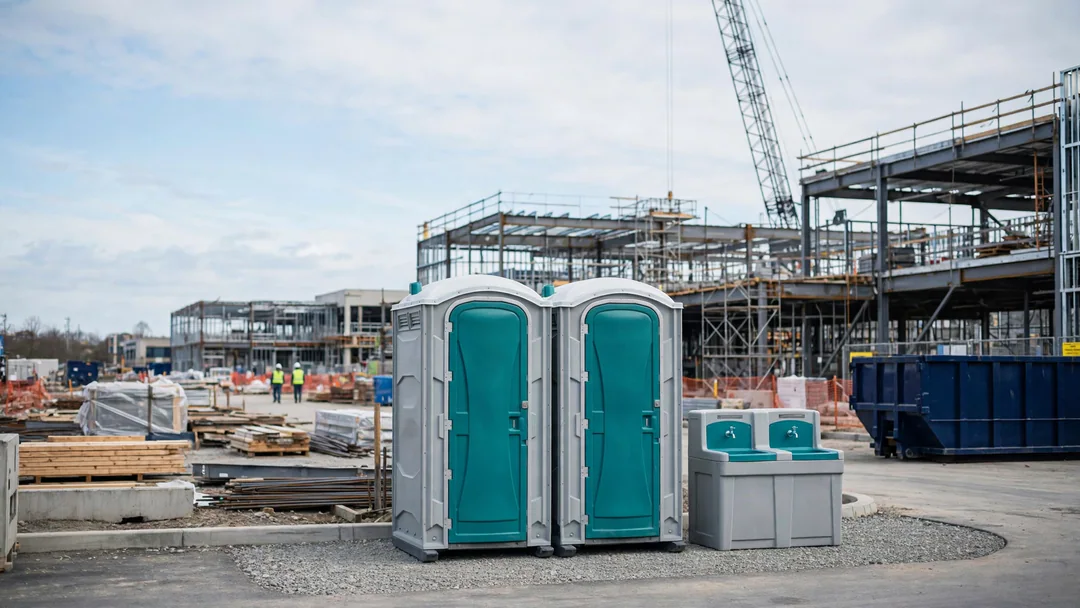
The construction standard sets minimum toilet facilities by the number of employees on the site:
| Number of employees | Minimum number of facilities |
|---|---|
| 20 or less | 1 |
| 20 or more | 1 toilet seat and 1 urinal per 40 workers |
| 200 or more | 1 toilet seat and 1 urinal per 50 workers |
Key points in the construction standard
Read the full text on the OSHA website for exact wording. Your provider can help you translate crew size into a unit count and service schedule.
- Separate facilities. Toilets are to be provided separately for each sex, unless the toilet room is occupied by no more than one person at a time, can be locked from the inside, and contains at least one toilet seat.
- Unsewered sites. Where there is no sanitary sewer, the employer must provide privies, chemical toilets, recirculating toilets, or combustion toilets, unless prohibited by local codes. Portable chemical toilets are the common solution.
- Mobile crews. The toilet requirements do not apply to mobile crews that have transportation readily available to nearby toilet facilities.
- Potable water. Section 1926.51(a) separately requires an adequate supply of potable drinking water.
Handwashing: 1926.51(f)
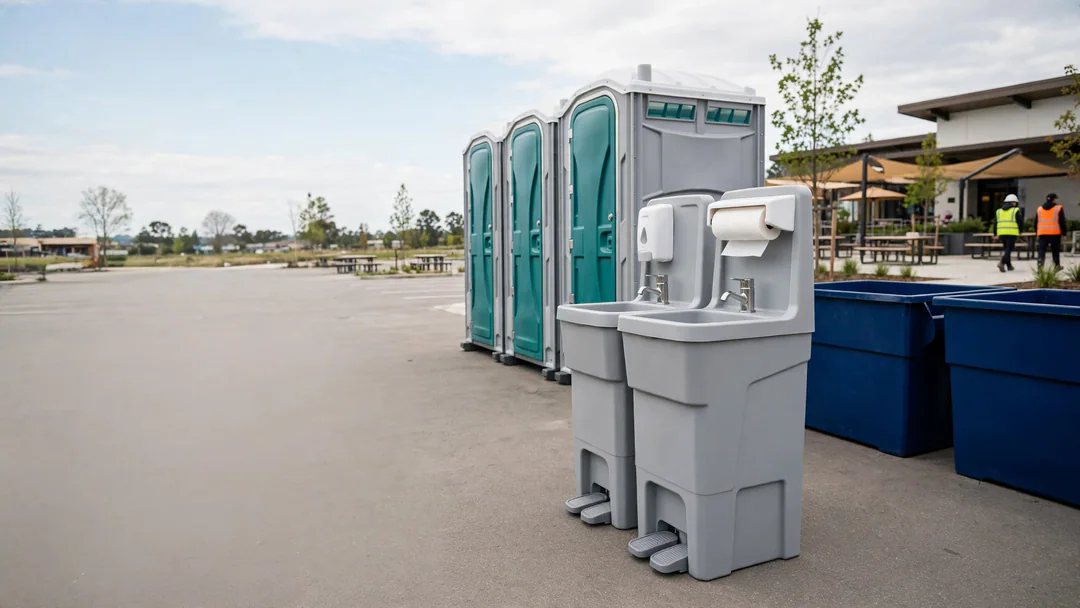
Section 1926.51(f) requires employers to provide adequate washing facilities for employees engaged in the application of paints, coatings, herbicides, or insecticides, or in other operations where contaminants may be harmful. These facilities must be in near proximity to the worksite and equipped so employees can remove such substances. Beyond the minimum, many contractors provide hand washing stations on every site as good practice, and some state plans have broader requirements.
How 1910.141 differs
The general industry standard, 29 CFR 1910.141, has its own toilet table in paragraph (c) that scales with the number of employees and includes lavatory requirements, generally expecting running water, soap, and towels or dryers. OSHA has also issued interpretations under 1910.141 stressing that employees must be able to use toilet facilities promptly, without unreasonable restrictions. If your work is not construction, such as a temporary facility at a permanent workplace, check which standard applies.
Planning beyond the minimum
The OSHA table is a floor, not a target. Several real-world factors usually push sites to add units or service:
- Long shifts or overtime increase use
- Large or multi-level sites mean longer walks; distribute units so workers can reach them promptly
- Hot weather and hydration programs increase demand
- Mixed crews benefit from separate or single-occupancy lockable units
- Service frequency matters; a dirty or full unit is not adequate in practice
Service and maintenance
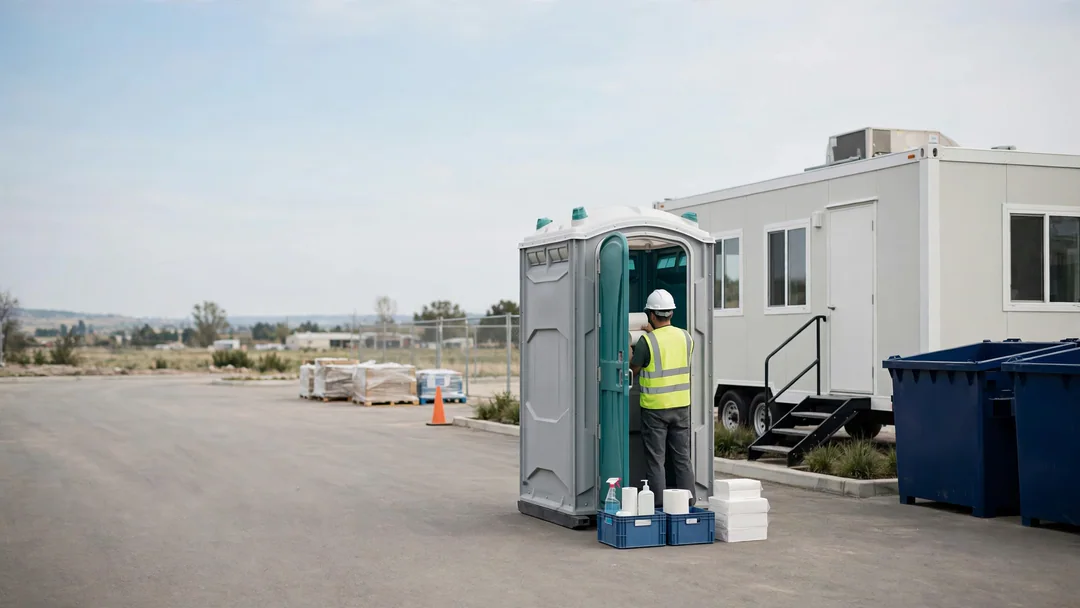
OSHA expects sanitation facilities to be kept sanitary. On construction sites, that usually means a regular pumping and restocking schedule, often weekly, with more frequent visits for large crews or heavy use. Discuss frequency with your provider and adjust as headcount changes. The portable toilet maintenance page covers what a typical service visit includes, and winter portable toilet rental covers cold-weather needs.
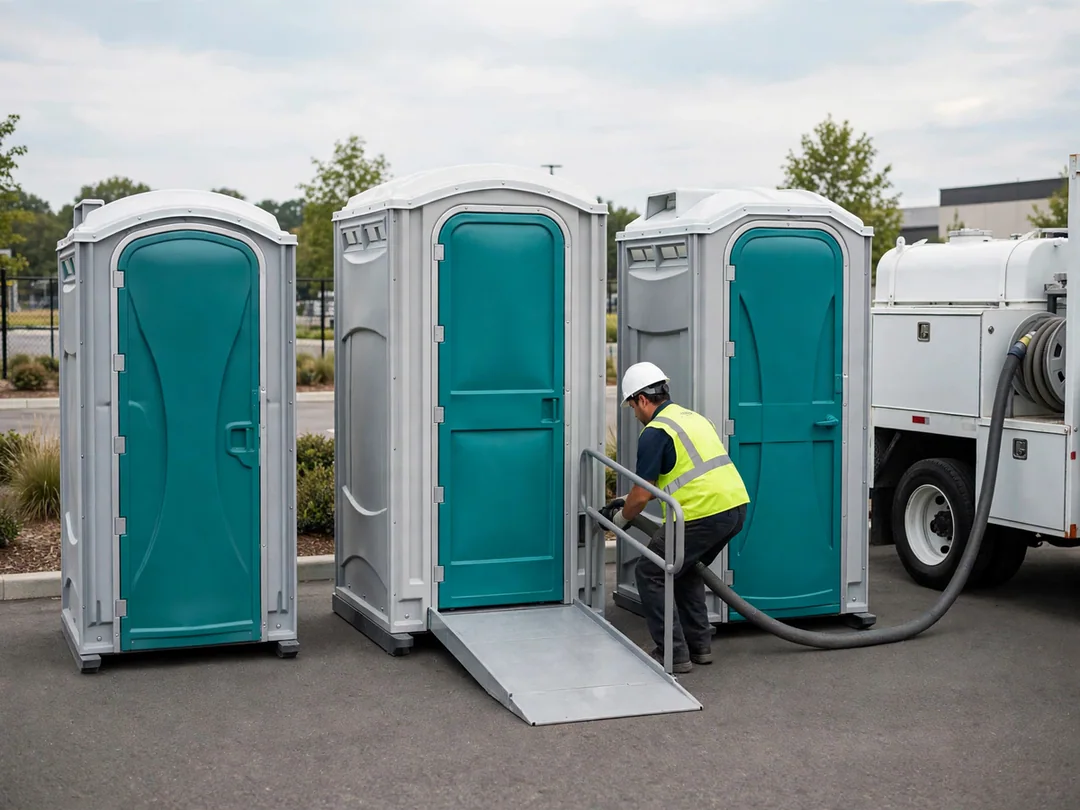
Accessibility on jobsites
OSHA's sanitation standard does not itself require ADA units, but employers have obligations to accommodate workers with disabilities, and many general contractors include at least one ADA portable toilet on larger sites. Ask your project owner or counsel what applies.
A simple compliance checklist
- Count your peak crew
Include subcontractors on site at the same time.
- Apply the table
Use 1926.51(c) as the minimum and adjust for site layout and shift length.
- Check state rules
If you are in a state-plan state, review its sanitation standard.
- Add washing facilities
Provide handwashing where 1926.51(f) applies, and consider it everywhere.
- Schedule service
Set a pumping and restocking frequency and revisit it as the crew grows.
Set up jobsite sanitation
Compare construction porta potties and long-term porta potty rental, review construction site waste management for scheduling, and find providers on the locations page.
Frequently asked questions
What toilet ratio does OSHA set for construction sites?
Under 29 CFR 1926.51(c), at least one toilet for 20 or fewer employees, one toilet seat and one urinal per 40 workers for 20 or more, and one seat and one urinal per 50 workers for 200 or more. State plans may differ.
Does OSHA require handwashing stations on jobsites?
Section 1926.51(f) requires washing facilities for employees working with paints, coatings, herbicides, insecticides, or other harmful contaminants. Many contractors provide them on all sites, and some state plans go further.
Are mobile crews exempt?
The construction standard says the toilet requirements do not apply to mobile crews that have transportation readily available to nearby toilet facilities.
Do men and women need separate jobsite toilets?
The standard calls for separate facilities for each sex unless the toilet room is single-occupancy, lockable from the inside, and has at least one toilet seat. Most portable units meet that description.
Does 1910.141 apply to construction?
Generally no. 1910.141 covers general industry, while 1926.51 covers construction. Confirm which applies if your work blends the two.
How often should jobsite toilets be serviced?
OSHA expects facilities to be sanitary but does not set a single frequency. Weekly service is common, with more frequent visits for large crews or heavy use.
Related pages
Ready to book a dumpster?
Whatever the project, start with your ZIP code. We will check provider availability for your dates.