
Florida · Southeast
Dumpster & Porta Potty Rental in Florida
Plan a roll-off dumpster or portable toilet rental anywhere in Florida, with state-specific guidance on permits, disposal and seasons.
One quick call to a real person. You approve the price before anything ships.
- All 50 states + DC
- Price confirmed before delivery
- Pricing explained up front
Can I rent a dumpster or porta potty in Florida?
Yes. We coordinate roll-off dumpster and portable toilet rentals across Florida through independent local providers. Pricing, sizes and delivery windows depend on the provider serving your ZIP code, and permits are handled at the city or county level when equipment goes on a public street.
Dumpster and portable toilet rental in Florida
Florida rentals are shaped by three things more than anything else: hurricanes, heat and fast population growth. Almost every part of the state sits close to a coastline, and storm preparation and recovery affect scheduling for both dumpsters and portable toilets.
Demand is concentrated in South Florida, the Tampa Bay area, Central Florida around Orlando, and Jacksonville in the northeast, with fast-growing communities along the Southwest Gulf Coast. Many neighborhoods are governed by HOAs or condominium associations, which often matter as much as city rules when you place a container.
Haul & Hygiene coordinates with independent local haulers and sanitation providers throughout Florida. Your provider confirms sizes, placement and timing for your address, which is especially important during hurricane season, when local availability can change quickly.
Dumpster rental in Florida: what to know
For single-family homes, 10- and 20-yard containers cover most remodels, cleanouts and roofing jobs, while 30- and 40-yard containers are common on new construction and storm cleanup. Options vary by provider; compare them on our dumpster sizes page.
Wet storm debris is heavy. Soaked drywall, carpet and furniture can push a container past its weight allowance quickly, so a smaller container swapped out more often may work better. After a major storm, availability tightens and road access may be limited.
Sandy soils and soft lawns do not support heavy trucks well, so most placements go on a driveway or paved pad. Boards under the wheels help protect pavers and hot asphalt; see how to prepare your driveway. Ask your association about placement before delivery.
Portable toilet rental in Florida
Heat and humidity speed up odor and usage, so many Florida providers recommend more frequent servicing, shaded placement and extra hand-wash stations on busy sites and at outdoor events. Level, firm ground matters too, since units can settle or lean on loose sand.
Wind is a real concern. Providers may anchor units with stakes or tie-downs, and ahead of a named storm they may lay units down, secure them or remove them. After a storm, emergency portable toilets are often needed where water or sewer service is disrupted.
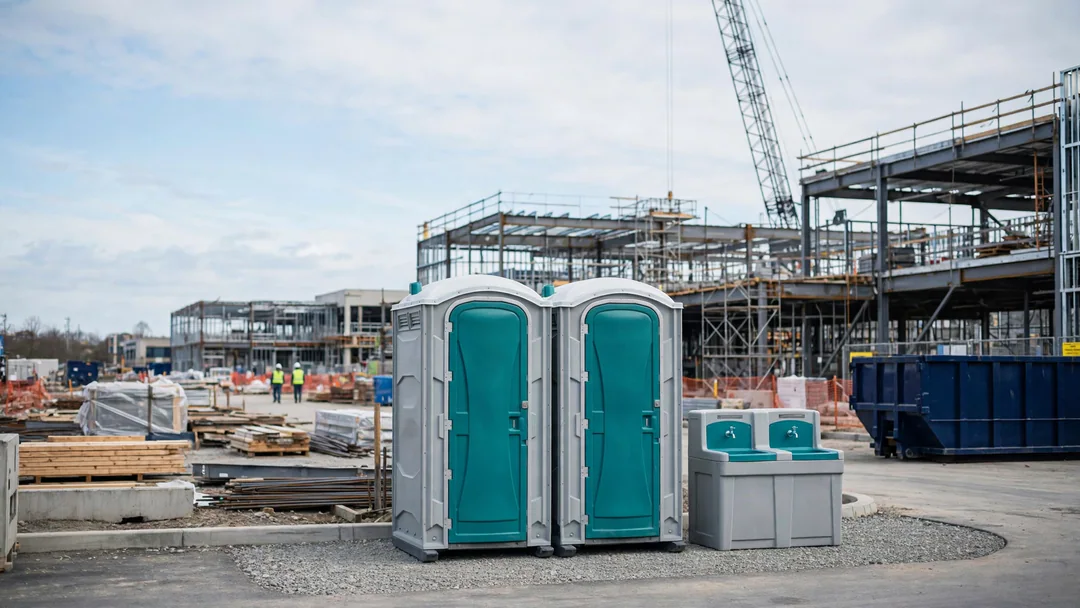
On construction sites, federal OSHA rules at 29 CFR 1926.51 set minimum toilet counts by crew size; see our OSHA jobsite toilet guide. Include at least one ADA-accessible unit at public events.
Climate and seasonal considerations
Florida is hot and humid for much of the year, with a rainy season roughly from late spring through early fall that brings frequent afternoon thunderstorms. South Florida is tropical, while the Panhandle and north Florida get occasional winter freezes.
The Atlantic hurricane season runs June 1 through November 30, and any part of the state can be affected. High winds can move or tip portable toilets and scatter loose debris from open dumpsters, so providers may secure units with tie-downs or stakes, or pick them up ahead of a storm.
Frequent rain adds weight to uncovered loads, so tarping helps you stay within your hauler's limits; see our dumpster weight limits guide. Constant heat also means portable toilets typically need more frequent service than in cooler states.
Construction activity and common projects
Steady population growth keeps Florida construction busy. Central Florida, the Tampa Bay region and the Southwest Gulf Coast see large amounts of new single-family and multifamily housing, while South Florida has ongoing high-rise, condominium and commercial work.
Storm recovery is a recurring source of demand. After a hurricane, homeowners and contractors replace roofs, tear out water-damaged drywall and flooring, and repair docks, pool enclosures and screen rooms. Older condominium buildings also undergo structural repair and renovation work.
Tourism and hospitality drive hotel, theme park area and restaurant renovations, especially around Orlando. Larger jobs usually pair construction dumpsters with jobsite portable toilets, and property managers often use property management dumpsters for unit turnovers.
- Hurricane debris and water-damage cleanup
- Roof replacement after wind damage
- New residential construction in Central and Southwest Florida
- Condominium repair and renovation
- Pool enclosure, screen room and dock replacement
- Seasonal home turnovers and cleanouts
- Landscaping and yard trash removal
- Hotel and restaurant renovations
Disposal rules and restricted materials
The Florida Department of Environmental Protection (Florida DEP) regulates solid waste management facilities, including landfills, transfer stations and construction and demolition debris facilities. Counties play a large role, and many run their own landfills, transfer stations and drop-off centers with their own accepted-materials lists.
Like many states, Florida restricts certain items from regular landfill disposal. Whole tires, lead-acid batteries, used oil and appliances containing refrigerant typically require separate handling, and yard trash is often managed separately from household waste. Household hazardous waste should go to a county collection program, not a dumpster.
Facility rules vary by county, so ask your hauler before loading anything uncertain. See what you cannot put in a dumpster and our yard waste dumpster page for landscaping debris.
Permits in Florida
Florida has no single statewide dumpster permit. Cities and counties typically regulate containers placed on streets, sidewalks or other right-of-way, and the process differs between places like Miami-Dade County, Orlando, Tampa and Jacksonville. A container fully on private property often does not need a permit, but confirm locally.
HOAs and condominium associations are very common in Florida and frequently set their own rules about where a container can sit, how long it can stay and whether it must be screened. Some require approval before delivery. Gated communities may also need advance notice for the delivery truck.
During an approaching storm, local governments may ask that containers be secured or removed. Check with your city or county and your association first. Our dumpster permit guide and portable toilet permit guide explain what to ask.
Event sanitation planning
Florida's main outdoor event season runs from late fall through spring, when temperatures are milder and seasonal residents, often called snowbirds, are in town. That window is busy for art shows, seafood and food festivals, farmers markets, boat shows, golf tournaments and community events.
Spring training baseball brings crowds to the Gulf Coast and Central Florida each February and March. Beach weddings, outdoor receptions and college football tailgates add demand, and summer events need extra planning for heat and afternoon storms.
Size units by headcount and duration with our porta potty calculator guide, add hand-washing stations near food, and consider restroom trailers for weddings. Peak-season dates can fill early, so book ahead. See our event sanitation checklist.
Cities in Florida
- Orlando
- Tampa
- Miami
- Jacksonville
- St. Petersburg
- Fort Lauderdale
- Fort Myers
- Sarasota
- Tallahassee
Major metro areas: Miami–Fort Lauderdale–West Palm Beach · Tampa–St. Petersburg–Clearwater · Orlando–Kissimmee–Sanford · Jacksonville · North Port–Sarasota–Bradenton · Cape Coral–Fort Myers · Tallahassee
Services in Florida
Florida rental FAQs
What happens to my dumpster or portable toilet when a hurricane is coming?
Contact your provider as soon as a storm is forecast. Depending on the forecast, they may secure units with tie-downs, empty them or pick them up. Loose debris in an open container can become dangerous in high winds, so avoid filling it right before a storm.
Do I need a permit for a dumpster in Florida?
There is no statewide permit. Containers on streets or right-of-way typically need a city or county permit, and rules vary between jurisdictions. Many Florida HOAs and condo associations also have their own approval process, so check with both before delivery.
Can a dumpster be placed on my lawn in Florida?
It is usually not recommended. Sandy soil and irrigated lawns can be soft, and heavy trucks may rut or get stuck. Most providers prefer a driveway or paved surface. Ask your provider about your specific site.
Is it harder to book portable toilets during snowbird season?
Late fall through spring is the busiest stretch for Florida outdoor events, so popular dates and restroom trailers can book up early. Reserve several weeks ahead when you can, and confirm the service schedule with your provider.
Can storm-damaged drywall and carpet go in a dumpster?
Generally yes, but wet materials are heavy and may exceed weight allowances. After a storm your county may also run separate curbside debris collection with sorting rules. Confirm with your hauler and county before loading.
Who regulates landfills and solid waste in Florida?
The Florida Department of Environmental Protection (Florida DEP) regulates solid waste facilities, while counties operate many landfills and transfer stations. What a specific facility accepts varies, so your hauler is the best source for container rules.
Sources and official resources
Neighboring states
Ready to book a dumpster?
Planning a project in Florida? Share your ZIP code and dates to check provider availability.