
Business Services
Commercial Dumpster Rental
Businesses rent roll-offs for renovations, cleanouts, inventory purges, and overflow. We match you with independent haulers who understand commercial sites.
One quick call to a real person. You approve the price before anything ships.
- All 50 states + DC
- Price confirmed before delivery
- Pricing explained up front
- 10–40 ydRoll-off sizes
- 50 + DCStates served
- 7–14 daysTypical rental period
- Same-dayDelivery when available
What is a commercial dumpster rental?
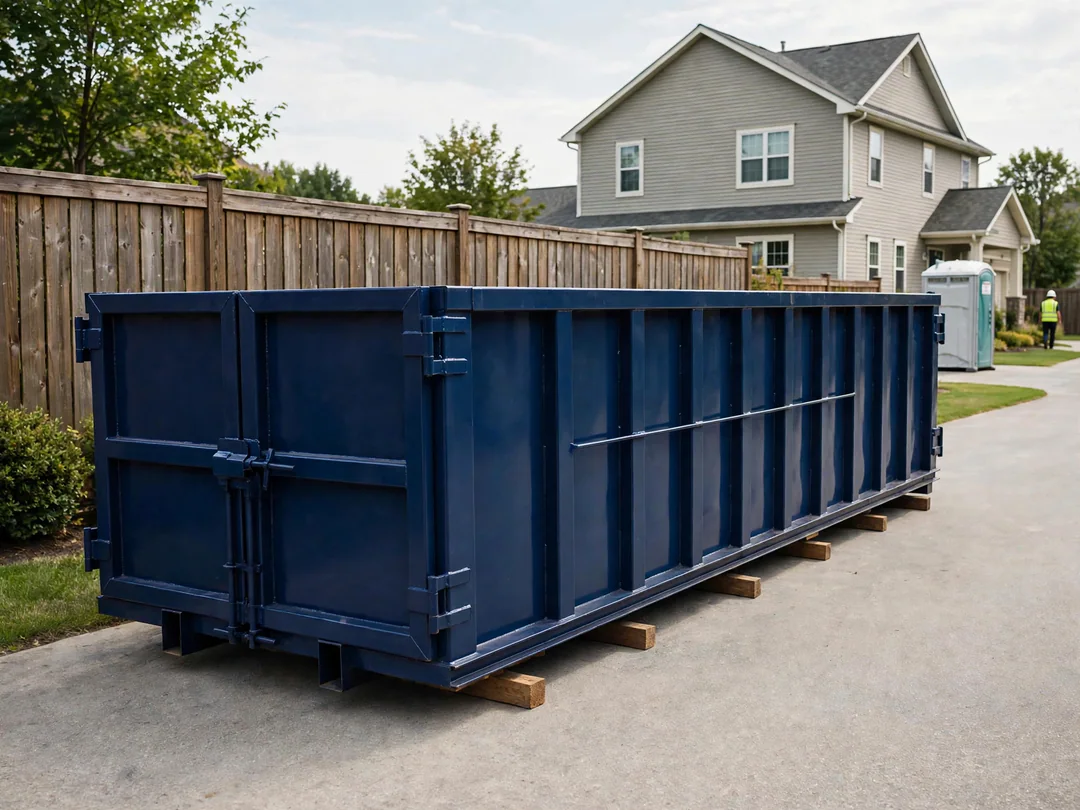
A commercial dumpster rental is a roll-off container placed at a business property for a defined project such as a tenant improvement, store remodel, warehouse cleanout, or equipment disposal. It differs from ongoing trash service, which uses smaller front-load bins on a weekly schedule. Sizes, terms, and scheduling vary by local provider.
Roll-off rentals vs. ongoing trash service
Businesses often have two different waste needs. Everyday trash and recycling is usually handled by a contracted service with smaller front-load or rear-load bins emptied on a set schedule. Project waste, such as a remodel or a one-time purge, is better suited to a roll-off container that is delivered, filled, and removed.
Haul & Hygiene focuses on project-based roll-off rentals. If you need regular collection, your provider can tell you whether they offer it or point you in the right direction.
Common commercial uses
Commercial roll-offs show up anywhere a business needs to clear a large volume of material in a short time.
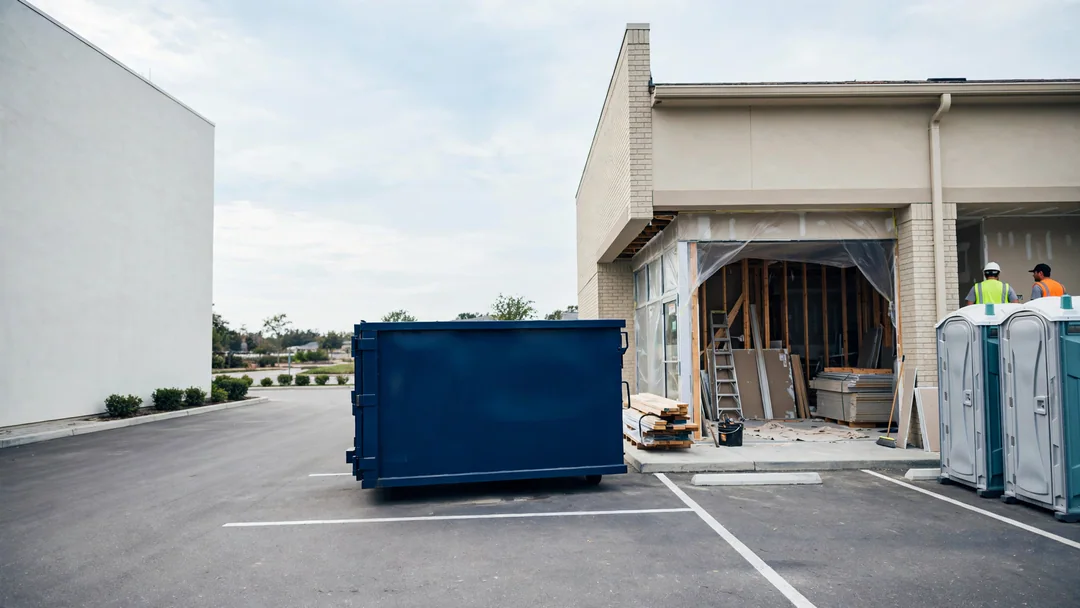
- Retail and restaurant remodels or fixture replacement
- Office moves, furniture liquidation, and cubicle removal
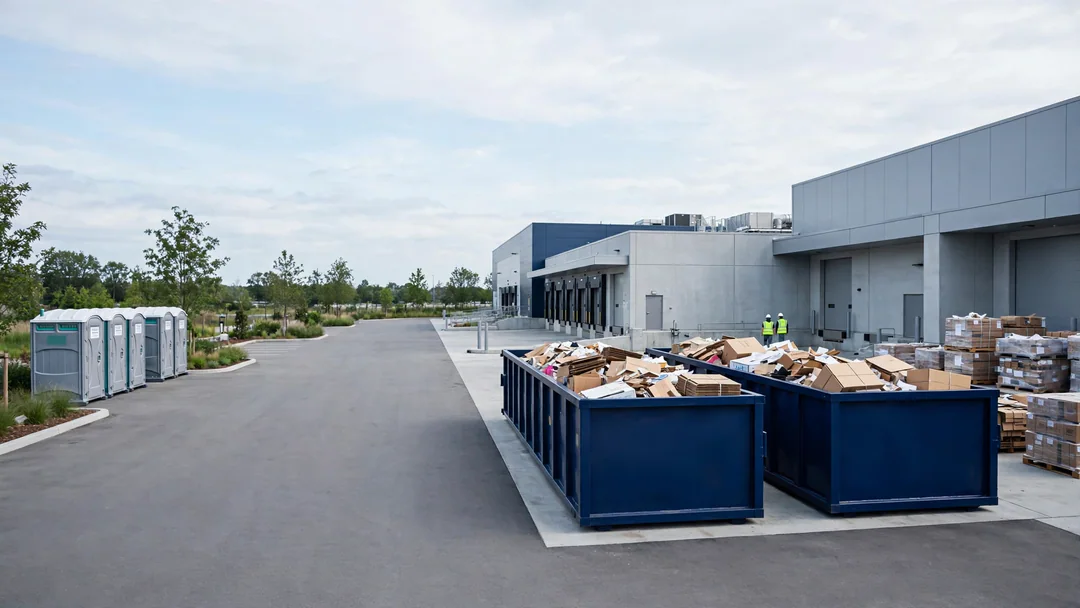
- Warehouse and stockroom cleanouts
- Tenant turnovers in commercial and multifamily buildings. See property management dumpsters.
- Manufacturing line changes or equipment decommissioning. See industrial projects.
- Seasonal overflow when regular service cannot keep up
Placement on commercial properties
Parking lots and loading areas are typical placements. Choose a spot that does not block fire lanes, accessible parking, drive aisles, or delivery docks. Check with your property manager or landlord before booking, since many leases restrict where containers can sit and for how long. Overhead canopies, signs, and light poles can interfere with the truck bed as it tilts, so measure clearance ahead of time.
Scheduling around business hours
Deliveries and pickups during peak hours can disrupt customers and staff. Ask whether your provider can deliver early, late, or on a day you are closed. Some haulers can coordinate after-hours placement for sites with clear access. If the project runs in stages, a swap schedule keeps a working container on site without letting a full one sit in view of customers.
Security, liability, and unauthorized dumping
An open container in a busy lot invites others to toss their trash, which can add weight or prohibited items you are responsible for. Practical steps include placing the box in a less visible area, using a tarp or lid if available, and loading it only during the project. Confirm with your provider who is responsible for damage to pavement and what documentation they need from you. Business documents with sensitive information should go to a shredding service, not an open dumpster.
Materials businesses need to handle separately
Electronics, fluorescent lamps, batteries, refrigerated equipment, and chemicals are commonly restricted. Under EPA rules, many batteries, certain lamps, and mercury-containing equipment are managed as universal waste rather than regular trash. Rules vary by state, so check with your provider and see what you cannot put in a dumpster.
Frequently asked questions
Can I get invoices billed to my company?
Billing is handled by your provider. Many haulers work with businesses regularly and can invoice a company account. Ask about payment terms when you request a quote.
Do I need landlord approval?
If you lease the property, check your lease and ask your landlord or property manager. Many commercial leases address container placement and duration.
Can the container be locked?
Some haulers offer lidded or lockable containers in certain sizes. Availability varies, so mention security needs when you book.
What size do most businesses rent?
It depends on the project. Office cleanouts with furniture often use 20 to 30 yards, while large warehouse purges may need 40-yard containers. Your provider can help estimate.
Can I keep the container for several weeks?
Many providers offer extended rentals or recurring swaps for longer projects. Terms vary, so discuss your timeline up front.
Related pages
Ready to book a dumpster?
Share your ZIP code and project details. We will route it to an available provider near you.