
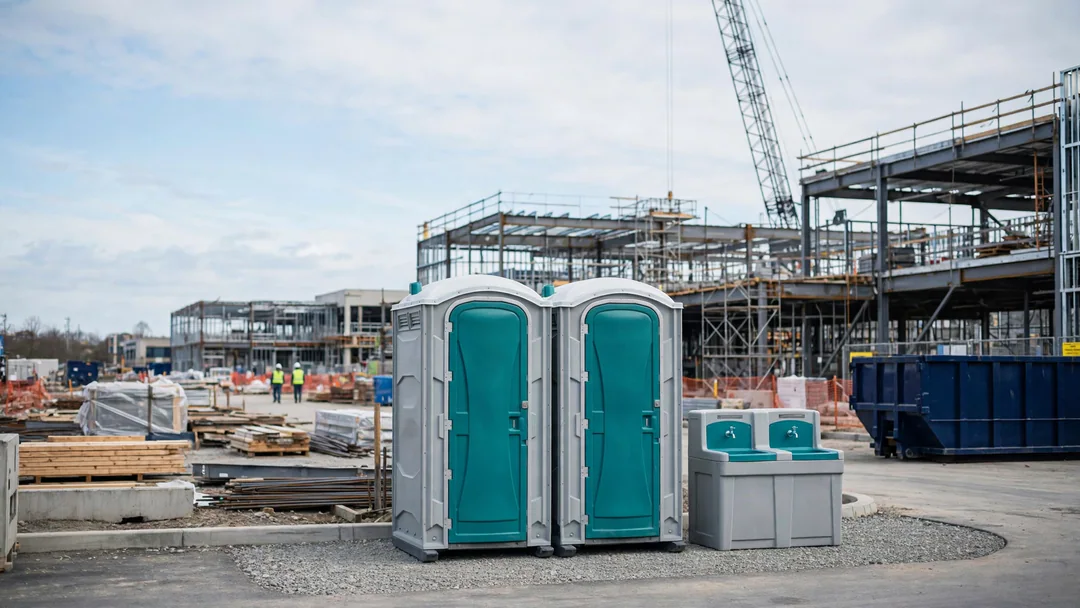
Jobsite Sanitation
Construction Porta Potty Rental
Crews need clean, reachable toilets from the first day of site work to final punch list. Providers in our network deliver durable jobsite units and keep them serviced for the life of the project.
One quick call to a real person. You approve the price before anything ships.
- All 50 states + DC
- Price confirmed before delivery
- Pricing explained up front
- 50 + DCStates served
- ADAAccessible units available
- WeeklyTypical servicing for job sites
- 1 day+Event to long-term rentals
What makes a construction porta potty different?
A construction porta potty is a durable portable toilet built for daily use by work crews over weeks or months. Many have reinforced shells, and some models include a lifting hook so a crane can place them on upper floors. They are serviced on a recurring schedule, usually weekly, and the number of units is based on crew size under OSHA 29 CFR 1926.51.
Why jobsites need their own sanitation plan
Federal rules require employers in construction to provide toilet facilities for workers, and the number depends on how many employees are on site. Beyond compliance, a well-placed, well-serviced unit keeps crews on the job instead of driving off site, and a dirty one is a fast way to lose good workers and draw complaints from neighbors.
Construction units take more abuse than event units. They get dirt, dust and mud tracked in all day, and they stay in place through rain, heat and cold. Providers typically supply heavier-duty models and set a recurring service schedule that matches crew size.
OSHA jobsite ratios at a glance
OSHA 29 CFR 1926.51(c) sets minimum toilet facilities based on the number of employees. The table summarizes it; our OSHA jobsite toilet guide covers the details, and the quantity guide walks through examples.
| Number of employees | Minimum facilities |
|---|---|
| 20 or fewer | 1 toilet |
| 20 or more | 1 toilet seat and 1 urinal per 40 workers |
| 200 or more | 1 toilet seat and 1 urinal per 50 workers |
Common jobsite unit options
Your provider will recommend a mix based on the project. Availability varies by provider and location.
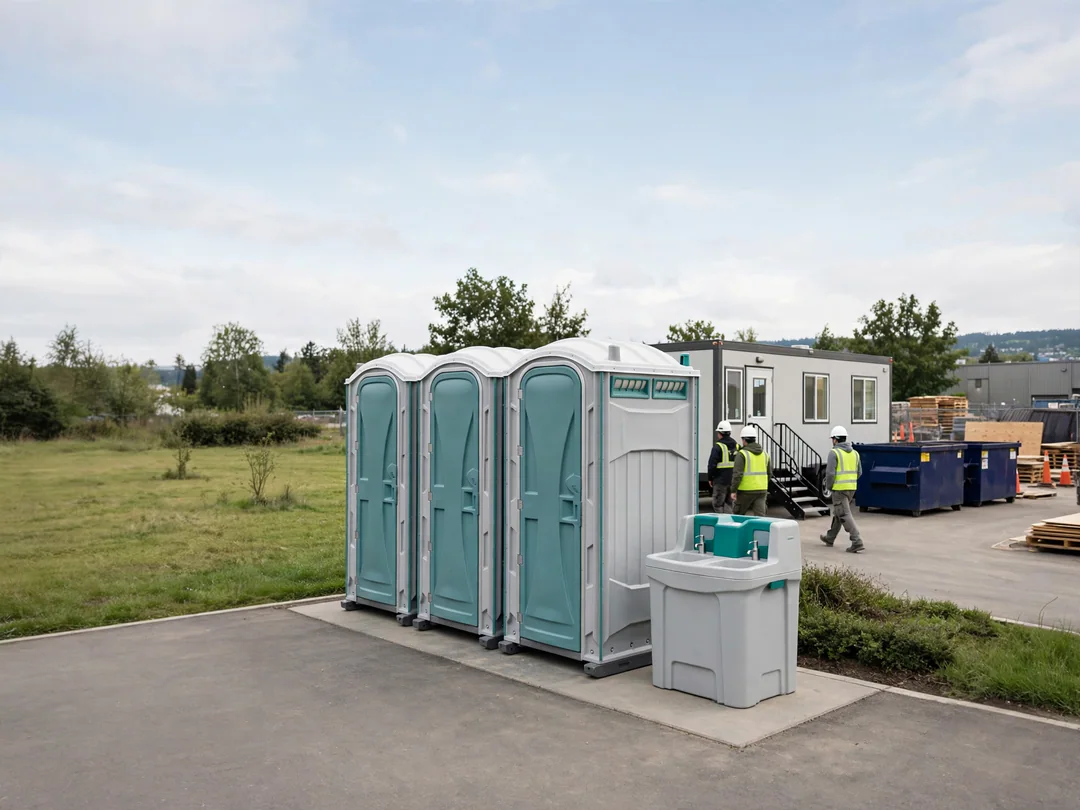
- Standard construction unit: the everyday choice for most residential and commercial sites.
- Units with a lifting hook: for high-rise or multi-level work where a crane moves units between floors.
- ADA accessible unit: for sites with employees or visitors who need an accessible facility.
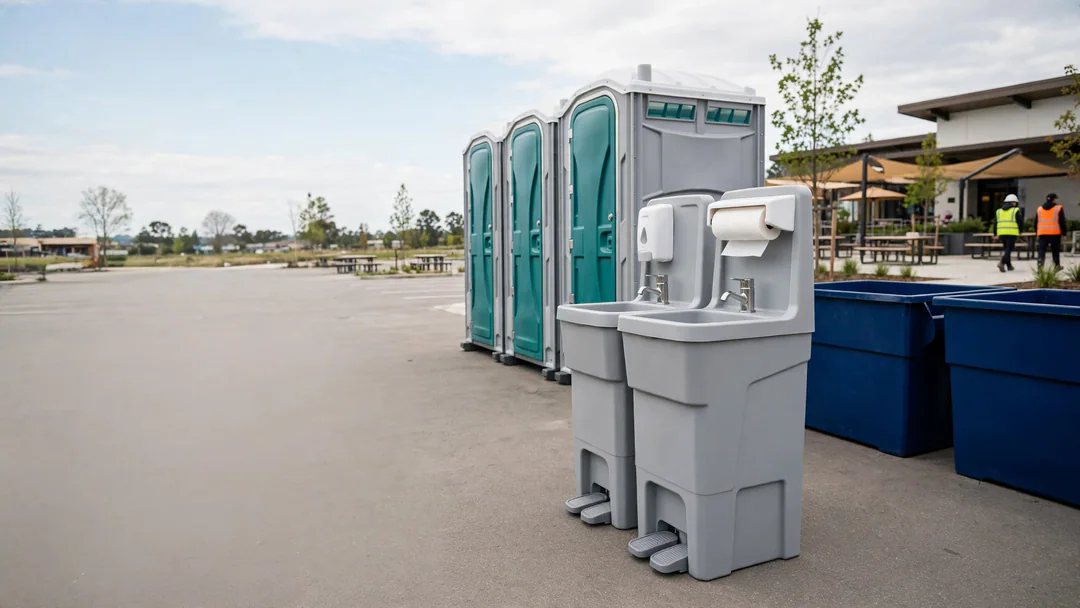
- Hand washing station: a freestanding sink unit placed near the toilets or break area.
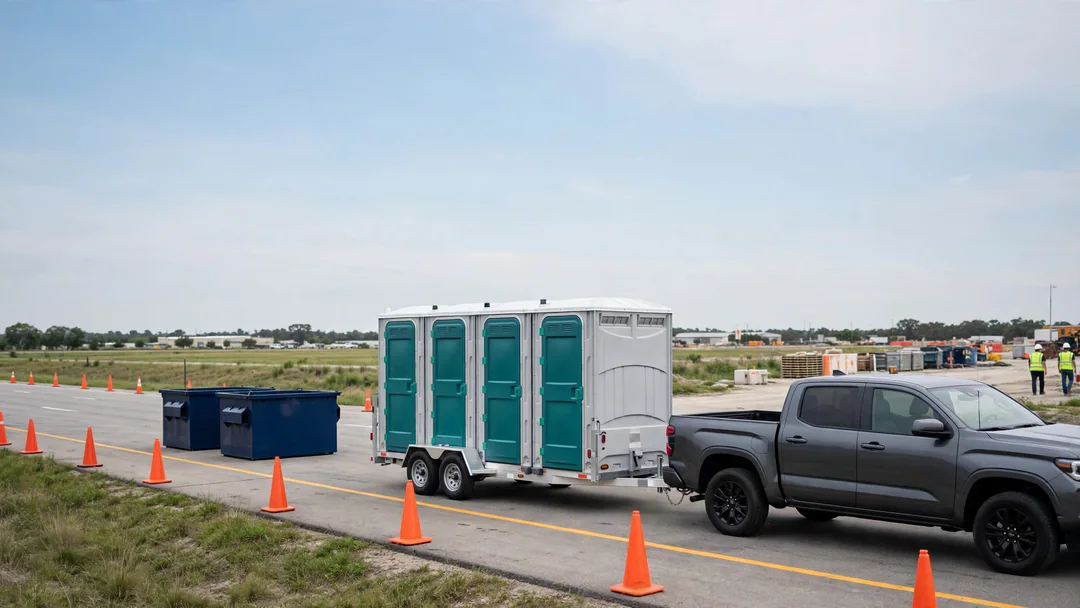
- Towable toilet trailer: for road crews or projects that move along a corridor; see portable toilet trailers.
Placement on an active site
Put units where crews can reach them quickly but where they will not get in the way of equipment, deliveries or grading. A common choice is near the site trailer or the main entrance, on a stable pad the service truck can reach every visit. Avoid low spots that collect water, and keep units well clear of excavations and swing radius of heavy equipment.
As the project progresses, units often need to move. Tell your provider when the site layout changes so the next service visit can include a relocation, and make sure the new spot still has truck access. On high-rise work, coordinate crane picks with the provider in advance.
Service schedules for crews
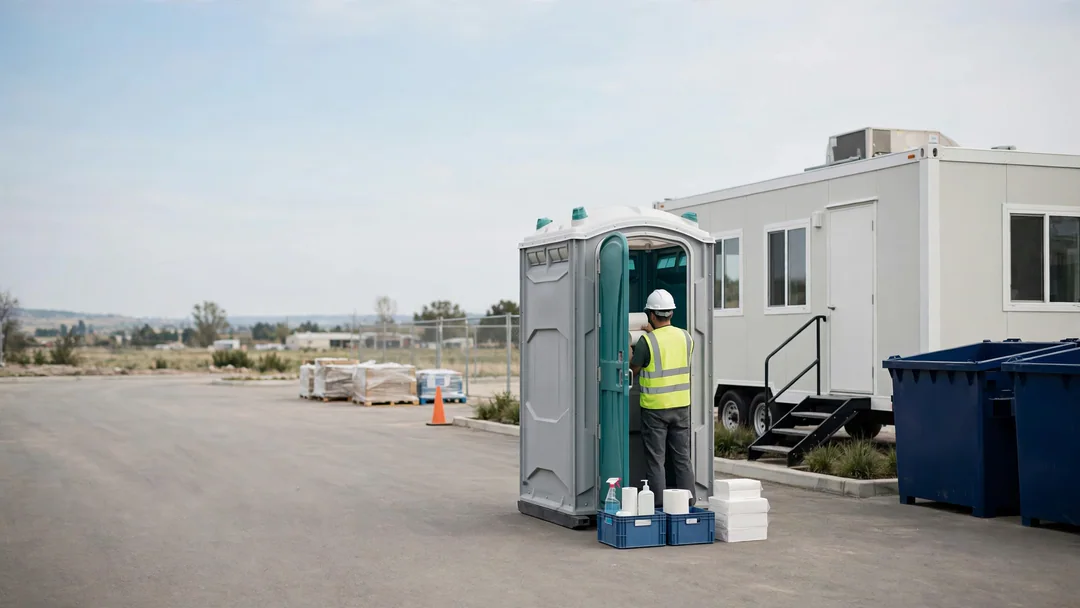
Weekly service is the norm for jobsite units, but a large crew, long shifts or hot weather can justify more frequent visits. Service includes pumping, cleaning, restocking and a quick check for damage. If a unit tips, gets damaged or is filling faster than expected, call the provider rather than waiting for the next scheduled visit.
Many contractors keep units for the full project and adjust count and frequency as crew size grows and shrinks. That is easier when the provider knows your schedule, so share the expected phases up front.
Winter, heat and other site conditions
Weather changes how a jobsite unit performs. In freezing conditions, providers may add a non-toxic antifreeze or brine to the tank and adjust the service schedule so waste does not freeze solid; some offer heated units in cold markets. Our winter rental guide goes deeper. In summer heat, odor builds faster, so shaded placement and more frequent pumping make a real difference to crew comfort.
Wind is another concern on open sites and upper floors. Ask your provider about anchoring or staking units, especially on exposed lots, near the coast or during storm season. After severe weather, check that units are upright and undamaged before crews return, and report any problem right away so the provider can replace or reset the unit.
Finally, think about security. Units near a public sidewalk or an unfenced lot can attract outside use or vandalism. Placing them inside the site fence and away from the street usually solves that, and it keeps the units cleaner for the crew that actually needs them.
Getting an accurate quote
Prices vary by market and provider, and we do not publish them. To get a useful quote, share the site address, start date, expected duration, peak crew size, shift length, any special placement like crane lifts and whether you need hand washing. These are the same factors listed on our pricing factors page.
Construction portable toilets vs. event portable toilets
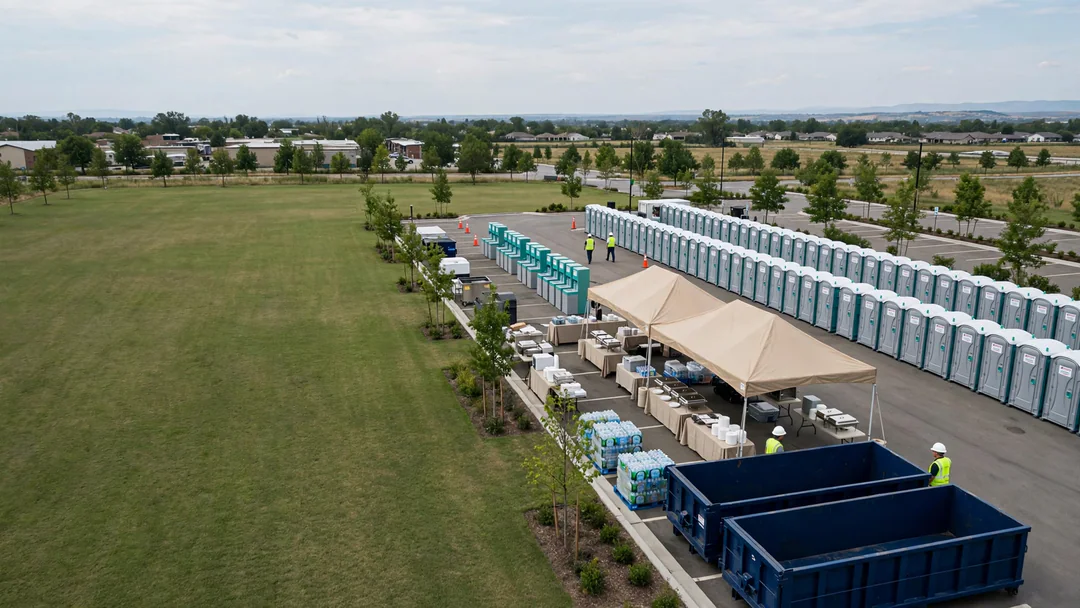
Construction portable toilets and event portable toilets are often the same basic unit, but they are planned differently. Construction units serve a steady crew for weeks or months, so the count follows OSHA's crew-size minimums (29 CFR 1926.51) and service is usually weekly. Event units serve a large crowd for hours or days, so the count follows attendance, event length and whether food and alcohol are served, and units are grouped in banks with handwashing stations.
| Planning factor | Construction site | Event |
|---|---|---|
| What sets the count | Crew size (OSHA minimums) | Attendance, hours, food and alcohol |
| Rental length | Weeks to months | Hours to a few days |
| Servicing | Usually weekly | Before the event; between days if multi-day |
| Extras | Handwashing station, lighting, winterizing | Handwashing stations, ADA units, restroom trailers |
| Placement | Near the work area and site office | In visible banks, near food areas, downwind of seating |
Construction Porta Potty FAQs
How often are construction porta potties serviced?
Weekly is typical. Large crews, long shifts or hot weather may call for more frequent service. Your provider will recommend a schedule based on crew size.
Do I need a separate unit for women on site?
OSHA counts total employees, and facilities must be usable by all workers. Many contractors add a dedicated unit for privacy; ask your provider about signage or lockable options.
Can units be lifted onto upper floors?
Some providers offer units with a built-in lifting hook for crane placement. Confirm availability and any rigging requirements before scheduling the lift.
Who is responsible if a unit is vandalized?
Terms vary by provider. Many rental agreements make the customer responsible for damage beyond normal wear, so read the agreement and secure the site when possible.
Can I add units as my crew grows?
Yes. Most providers will add units or service visits mid-project. Give them as much notice as possible.
Related pages
Need portable toilets on site?
Share your ZIP code and project details. We will route it to an available provider near you.