
Pricing
Porta Potty Prices and Cost Factors
Portable toilet pricing varies by market and provider, so we do not publish price lists. What we can do is explain exactly which factors move a quote, so you can plan and compare offers with confidence.
One quick call to a real person. You approve the price before anything ships.
- All 50 states + DC
- Price confirmed before delivery
- Pricing explained up front
How much does it cost to rent a porta potty?
It depends on your market and provider. The biggest cost drivers are the type of unit, how many you need, how long you keep them, how often they are serviced, delivery distance and timing, and add-ons like hand washing stations or attendants. Fuel, environmental or disposal surcharges may also apply. The most reliable number is a written quote based on your specific details.
Why we do not publish prices
Rental rates differ from one metro area to the next and from one provider to another. Fuel costs, labor, disposal fees at treatment facilities, local demand and the season all play a role. A figure that is accurate in one city can be badly misleading in another. Rather than post numbers that may not apply to you, we explain the factors and connect you with providers in our network who quote your actual job.
The main cost factors
Five factors move nearly every portable toilet quote. Each one is something you can influence when planning.
| Factor | Why it matters | How to manage it |
|---|---|---|
| Unit type | Deluxe, ADA units and trailers cost more to build, transport and service | Match unit type to users; mix types where it makes sense |
| Quantity | Each unit adds equipment and service time | Size correctly using a quantity guide |
| Rental length | Day, weekend, weekly and monthly terms are priced differently | Ask how billing cycles work |
| Service frequency | Each visit uses a truck, a technician and disposal capacity | Set frequency based on real usage |
| Delivery distance | Longer drives cost more for delivery, service and pickup | Request quotes from providers who serve your area |
| Delivery timing | Rush, after-hours or tight windows limit scheduling | Book early and allow a flexible window |
| Site access | Difficult placement, long carries or crane lifts take extra time | Choose an accessible spot and describe it clearly |
| Add-ons | Hand washing, attendants, lighting, generators and locks add cost | Include only what the event or site needs |
Unit type and quantity
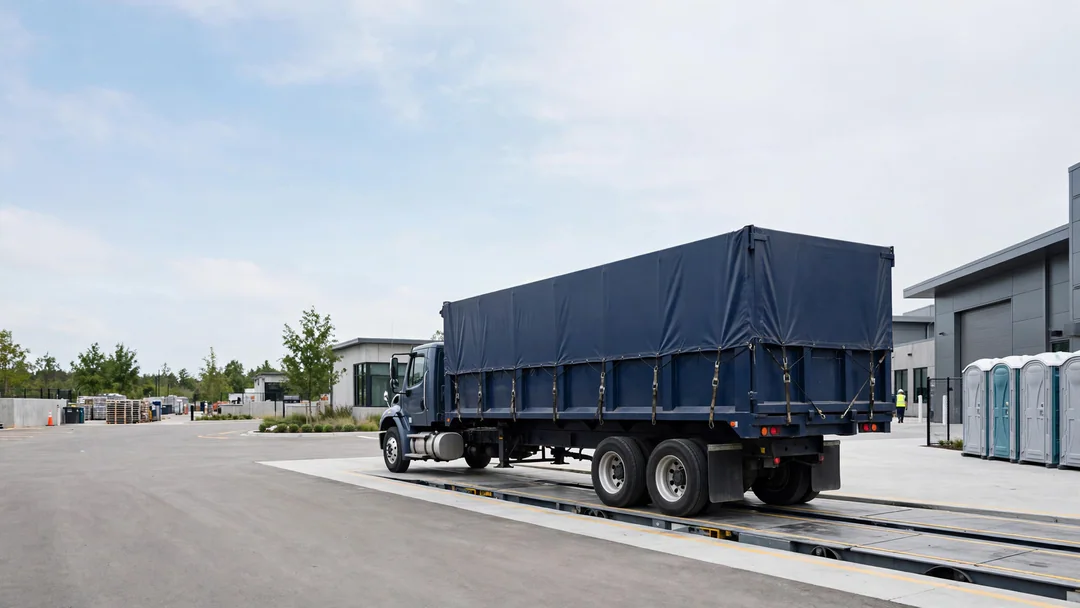
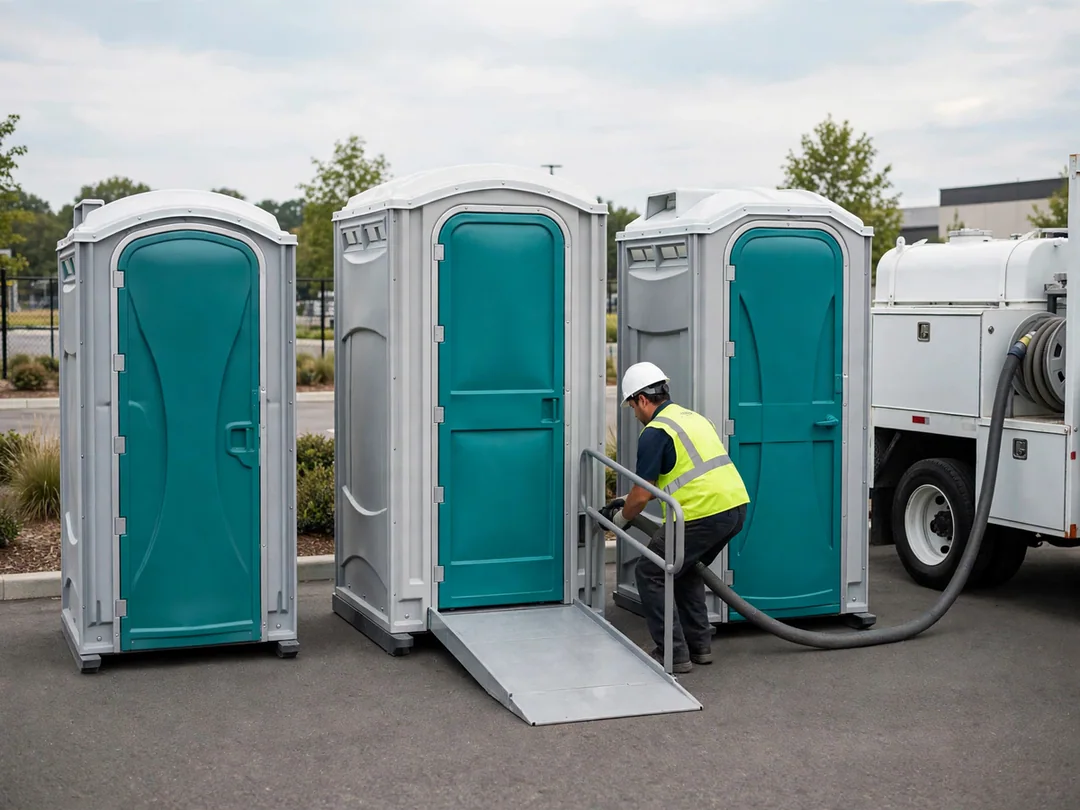
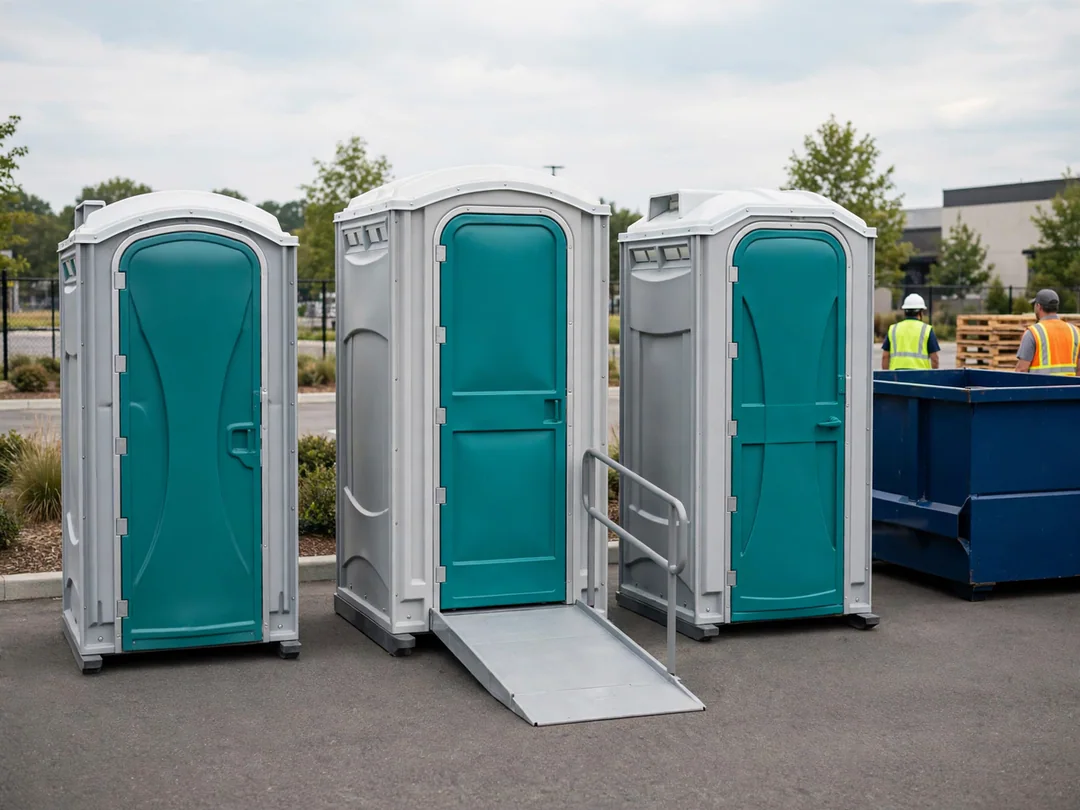
A standard unit is the baseline. Deluxe and flushable event units add features and service time. ADA accessible units are larger and take more room on the truck. Luxury restroom trailers sit at the top because they include plumbing, climate control and often power and water needs.
Quantity is where many budgets go wrong in both directions. Ordering too few leads to long lines, overflowing tanks and emergency service calls, which can cost more than an extra unit would have. Ordering too many wastes money. Our quantity guide helps you land in the right range.
Duration and service frequency
Short rentals for a single event are often priced as a package that includes delivery, the unit and pickup. Longer rentals usually run on a weekly or monthly cycle that includes a set number of service visits. Additional visits beyond the base schedule typically add cost.
Service frequency is tied directly to usage. A unit serviced too rarely fills up and becomes unusable; one serviced more often than needed adds cost without benefit. Share realistic user counts and hours so the provider can set the right schedule. Our maintenance page explains typical schedules.
Delivery, location and timing
Every rental includes at least two trips, delivery and pickup, plus any service visits in between. The farther the site is from the provider's yard, the more each trip costs. Remote and rural sites can carry higher delivery costs for that reason. Timing also matters. Weekend, holiday and after-hours deliveries, same-day requests and narrow delivery windows limit how providers can route trucks, which can raise the price.
Peak season is another factor. Spring and summer weekends, and the weeks after major storms, see high demand in many markets. Booking early gives you more options and more room to compare quotes.
Fees and surcharges to ask about
A clear quote should spell out what is included. Ask about these line items so you can compare offers on equal terms.
- Delivery and pickup charges
- Fuel or environmental surcharges
- Waste disposal or treatment fees
- Damage waivers or damage responsibility
- Extra service visits beyond the base schedule
- Rush, after-hours or weekend fees
- Taxes and permit costs, if the provider handles permits
Ways to keep costs reasonable
You can often trim cost without hurting the experience. Book early, especially for events in peak season. Choose a placement spot the truck can reach easily. Group units in banks so service is faster. Match unit types to users rather than upgrading everything. For events, ask whether a mid-event service visit is more cost-effective than adding units. For long projects, review unit count and service frequency whenever crew size changes.
Finally, give complete information up front. Quotes based on guesses tend to change after delivery, while a detailed request by calling us lets the provider price the job accurately the first time.
Porta Potty Prices FAQs
Why can I not find a price on this page?
Prices vary too much by market and provider for a single figure to be useful. We explain the factors and connect you with providers who quote your actual job.
Is servicing included in the rental price?
Often, for a set number of visits. Extra visits may cost more. Ask the provider exactly what the quote covers.
Do ADA units cost more than standard units?
They often do, because they are larger and take more space on the truck. Pricing varies by provider.
Are there hidden fees?
A good quote lists all charges. Ask about delivery, fuel or environmental surcharges, disposal fees, damage terms and extra service charges.
Does renting longer lower the per-day cost?
It can, depending on how the provider structures weekly and monthly terms. Ask how billing cycles work.
How can I compare quotes fairly?
Make sure each quote covers the same units, duration, service frequency, delivery and fees. Differences in any of these can make a quote look cheaper than it is.
Related pages
Need portable toilets on site?
Share your ZIP code and project details. We will route it to an available provider near you.