
Dumpster Use Cases
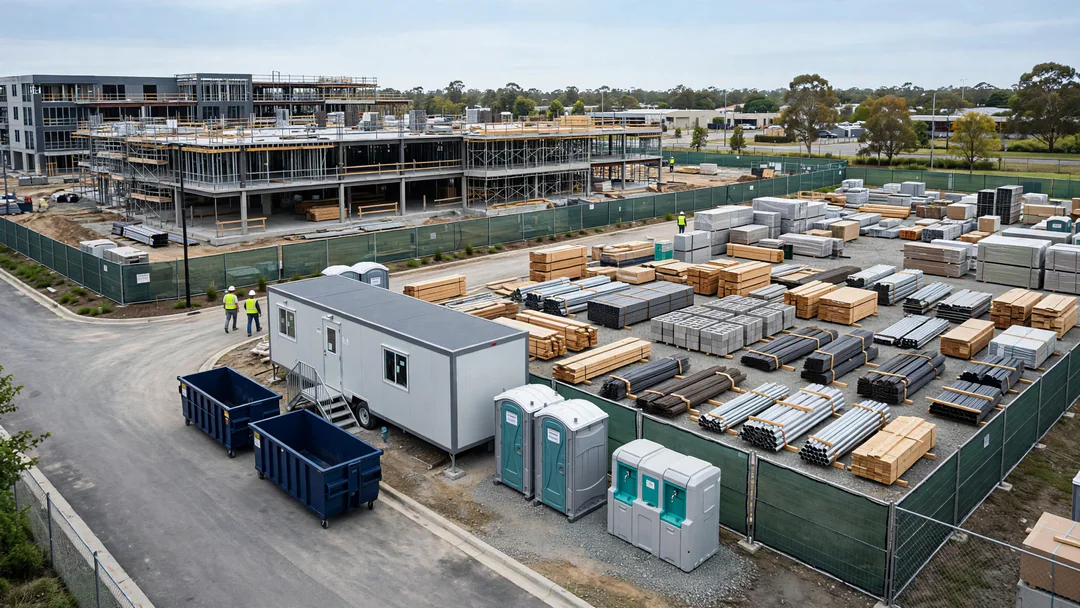
Dumpster Planning for Commercial Construction
On a commercial job, the waste plan is part of the schedule. Good coordination keeps trades working and paperwork ready for closeout.
One quick call to a real person. You approve the price before anything ships.
- All 50 states + DC
- Price confirmed before delivery
- Pricing explained up front
- 10–40 ydRoll-off sizes
- 50 + DCStates served
- 7–14 daysTypical rental period
- Same-dayDelivery when available
How should a general contractor plan dumpsters on a commercial project?
Build the waste plan into the project schedule: set container sizes and counts by phase, agree on a swap frequency with the hauler, assign who calls for service, and decide early whether materials will be separated for recycling. If the project tracks diversion, request weight tickets or reports from the hauler from day one. Options vary by provider and location.
Commercial Construction: dumpster sizes at a glance
| Size | Typical dimensions | Holds about |
|---|---|---|
| 10-yard | ~12 ft L × 8 ft W × 3.5 ft H | 3–4 pickup-truck loads |
| 20-yard | ~22 ft L × 8 ft W × 4.5 ft H | 6–8 pickup-truck loads |
| 30-yard | ~22 ft L × 8 ft W × 6 ft H | 9–12 pickup-truck loads |
- Weight: heavy debris like concrete, dirt or shingles reaches the weight allowance before the container is full, so it usually goes in a smaller container. See dumpster weight limits.
- Permits: a dumpster on your own driveway usually needs no permit; one on a street or sidewalk often does. See dumpster permits.
How this differs from a single construction dumpster
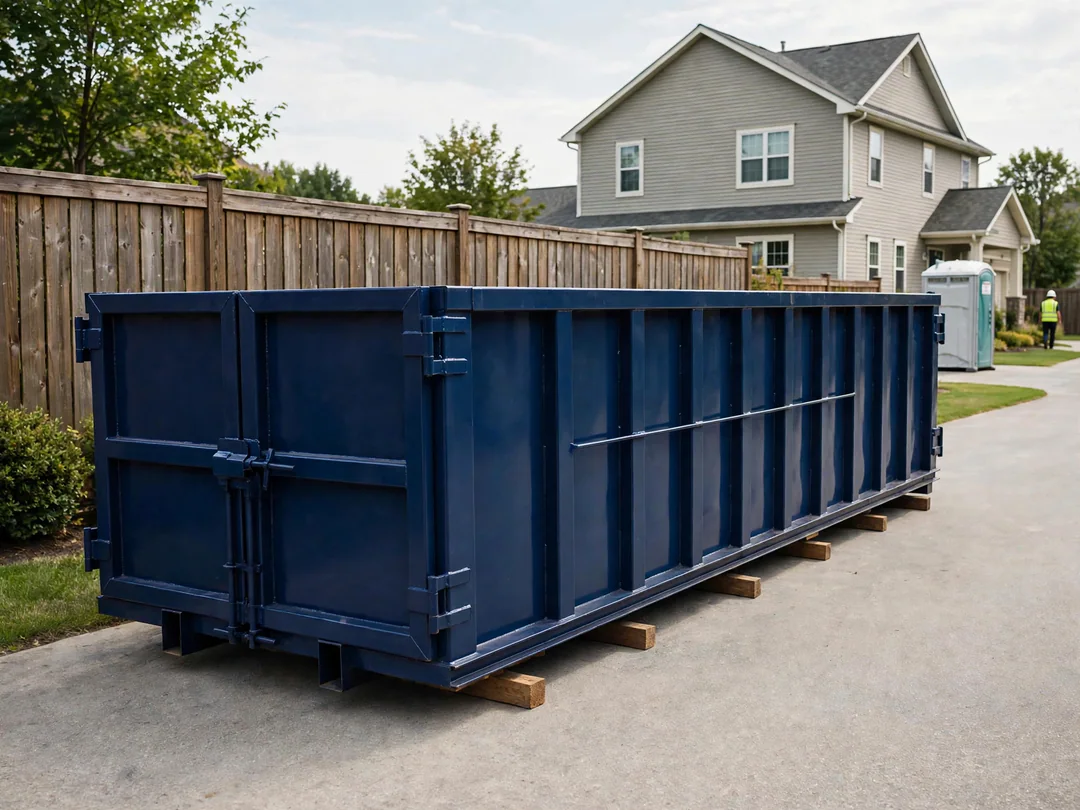
A small contractor may only need one container for a short job. Commercial projects involve multiple trades, phased work, limited laydown space, and owners or certification programs that may require waste reporting. This page covers that coordination. For container types and general details, see construction dumpsters.
Waste by project phase
Different phases produce different materials, which affects size, weight, and whether separate containers make sense.
| Phase | Common materials | Container considerations |
|---|---|---|
| Site work and demolition | Concrete, asphalt, soil, brick | Smaller, heavy-duty containers; clean loads may be recyclable |
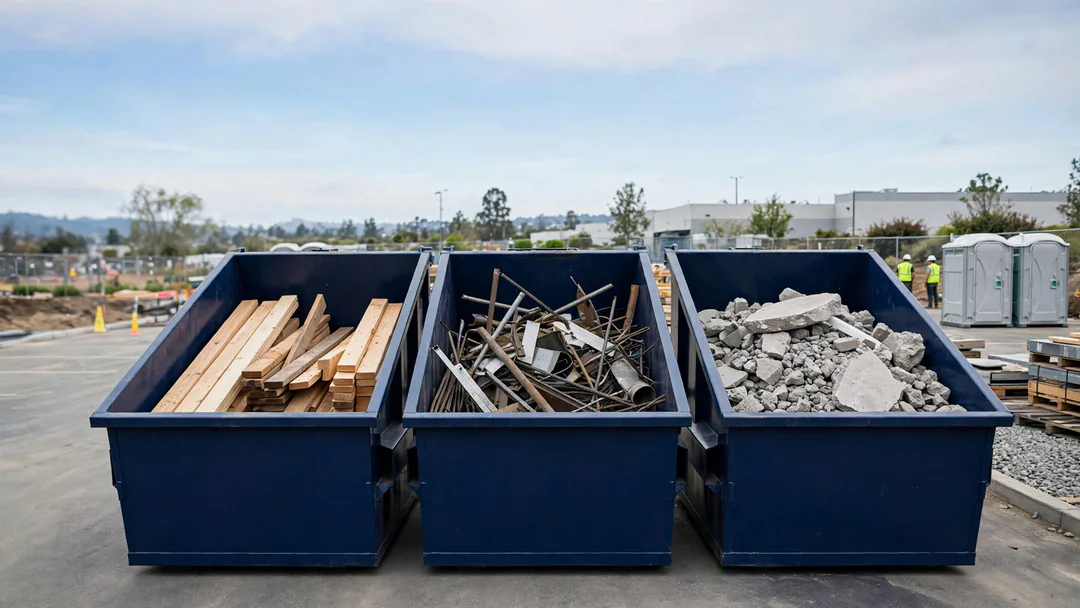
| Structure | Wood forms, steel scrap, rebar | Separate metal container may be worth it |
| Envelope and roofing | Roofing, sheathing, insulation, packaging | Plan for crane and lift locations |
| Interiors | Drywall, ceiling tile, cardboard, packaging | High volume, lighter weight; frequent swaps |
| Closeout | Mixed debris and cleanup | Downsize as trades finish |
Setting a swap schedule
Running out of space slows crews; paying for half-empty pulls wastes budget. Agree on a schedule with the hauler and adjust it as the project moves.
- Estimate volume by phase
Use past projects and the trade schedule to estimate how quickly containers will fill.
- Pick a baseline
Set standing swaps on fixed days, or on-call swaps with a named contact, depending on what the hauler offers.
- Assign responsibility
Name one person, usually the superintendent or project engineer, who calls for service.
- Review weekly
Check fill levels and upcoming work at the weekly meeting and change frequency before a busy phase starts.
Coordinating trades on site
Subcontract language should say who removes their own waste and who uses the GC's containers. Post clear signs on each container showing what goes in it, especially if you are separating materials. Keep container locations out of fire lanes, crane swing paths, and delivery routes, and plan for the hauler's truck to have room to approach and lift.
- Mark container locations on the site logistics plan.
- Keep a clear, level approach for the roll-off truck.
- Include waste rules in subcontractor orientation.
- Restrict hazardous or prohibited items like paints, solvents, and refrigerant equipment.
Diversion and recycling documentation
Owners, municipalities, and green building programs sometimes require proof of how much waste was recycled or diverted from landfill. Requirements vary, so check the project specs early. Ask the hauler what records they can provide, such as weight tickets, facility names, or monthly summaries, and keep them in one place for closeout. Our construction debris recycling guide and waste management guide go deeper.
Insurance and paperwork
GCs often require subcontracted haulers to provide a certificate of insurance naming the required parties. Share your COI requirements when requesting quotes so the provider can confirm before mobilization. If containers sit in the public right-of-way, a permit is usually needed; see the permits guide.
What to include in a quote request
Commercial quotes are easier to compare when every hauler sees the same information. Share the project address, gate and access hours, the expected duration, and a phase-by-phase estimate of container sizes and counts. Note any separation plan, such as a dedicated container for clean concrete or metal, and whether the specs call for diversion reporting. Include your COI requirements, billing contact, and job number so invoices are coded correctly from the first pull.
If the schedule changes, tell the hauler early. A delayed phase can leave a container sitting idle, while an accelerated one can leave crews without room. Treat the hauler as part of the project team and include them in schedule updates that affect site logistics.
Commercial Construction FAQs
Should we separate materials on site?
It depends on space, labor, and project requirements. Separation can help with diversion goals but needs room for extra containers and crew discipline.
Can the hauler give us diversion reports?
Some providers can, and the format varies. Ask before the project starts so you know what to expect.
Who should call for swaps?
Pick one person on the GC's team. Multiple callers lead to duplicate or missed pulls.
Do we need a porta potty plan too?
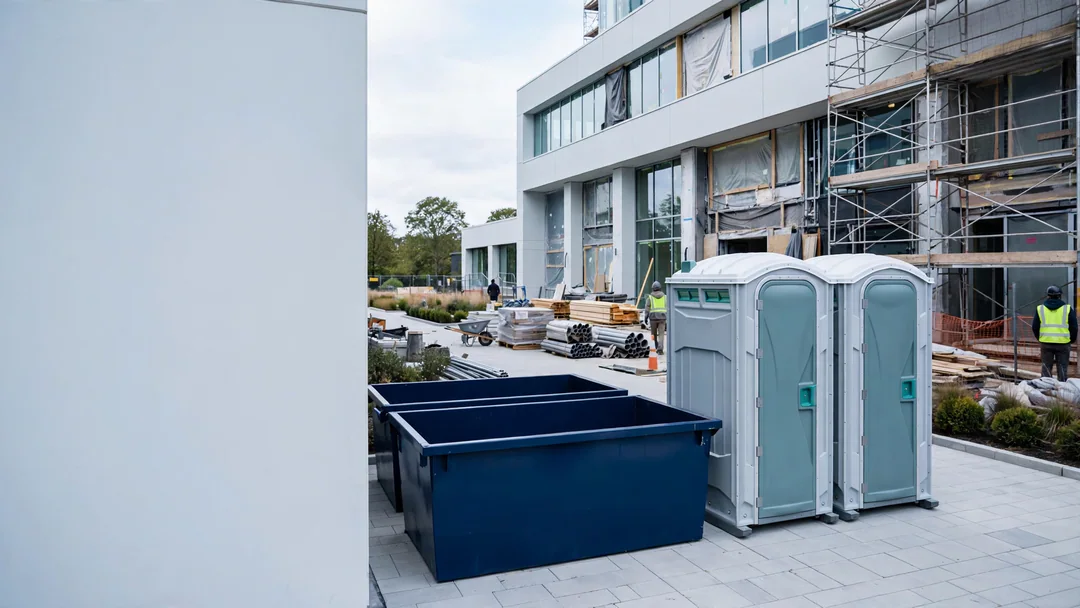
Most commercial sites need both. See commercial site restrooms for planning guidance.
Can one network handle several active projects?
You can submit requests for each project. We try to match each address with a provider in our network that serves that area.
Related pages
Ready to book a dumpster?
Share your ZIP code and project details. We will route it to an available provider near you.