
Texas · South
Dumpster & Porta Potty Rental in Texas
Plan a roll-off dumpster or portable toilet rental anywhere in Texas, with state-specific guidance on permits, disposal and seasons.
One quick call to a real person. You approve the price before anything ships.
- All 50 states + DC
- Price confirmed before delivery
- Pricing explained up front
Can I rent a dumpster or porta potty in Texas?
Yes. We coordinate roll-off dumpster and portable toilet rentals across Texas through independent local providers. Pricing, sizes and delivery windows depend on the provider serving your ZIP code, and permits are handled at the city or county level when equipment goes on a public street.
Dumpster and portable toilet rental in Texas
Texas is big enough that a rental plan in Houston can look nothing like one in El Paso. Distances are long, several metros are among the largest in the country, and conditions run from Gulf Coast humidity to West Texas desert.
Most demand comes from the Texas Triangle: Dallas–Fort Worth, Houston, San Antonio and Austin. These areas see constant home building, commercial projects and road work, plus routine remodels and cleanouts. The Gulf Coast adds storm cleanup, and rural areas bring ranch, farm and energy-related projects where a delivery may involve long drives on county roads.
Haul & Hygiene coordinates with independent local haulers and sanitation providers across Texas. Your provider confirms container sizes, delivery windows and site access for your address, since service areas and fleets vary from one metro to the next.
Dumpster rental in Texas: what to know
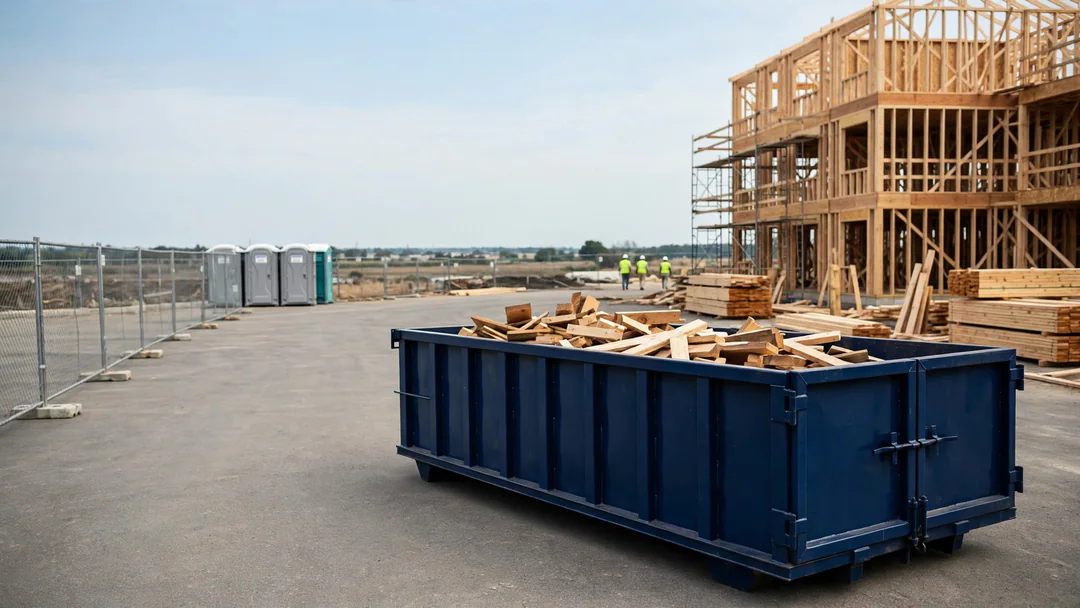
For suburban homes, 10- and 20-yard containers handle most remodels, garage cleanouts and smaller roofing jobs, while 30- and 40-yard containers are common on new construction and commercial sites. Sizes and weight allowances vary by provider, so compare options on our dumpster sizes page.
Hail season brings a rush of roofing dumpster demand in North Texas. Shingles are heavy, so a smaller container or a weight-appropriate size may be recommended.
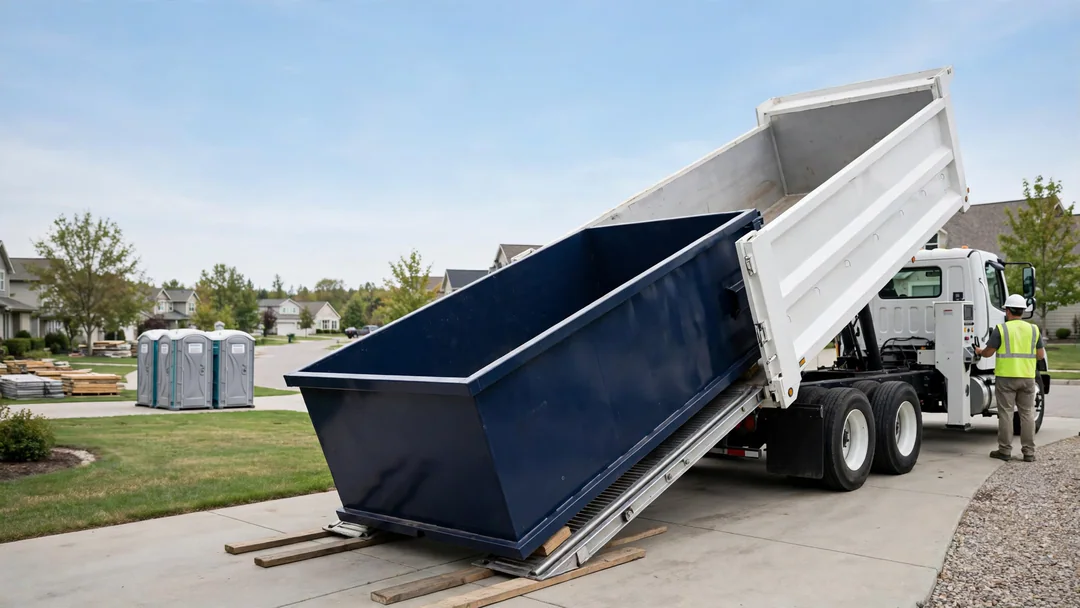
After flooding or a hurricane, wet drywall, carpet and furniture add weight fast, and availability can tighten across the region. Rural deliveries may require longer lead times and may involve extra distance charges, so ask up front. Lay boards under the wheels to protect hot driveways; see how to prepare your driveway.
Portable toilet rental in Texas
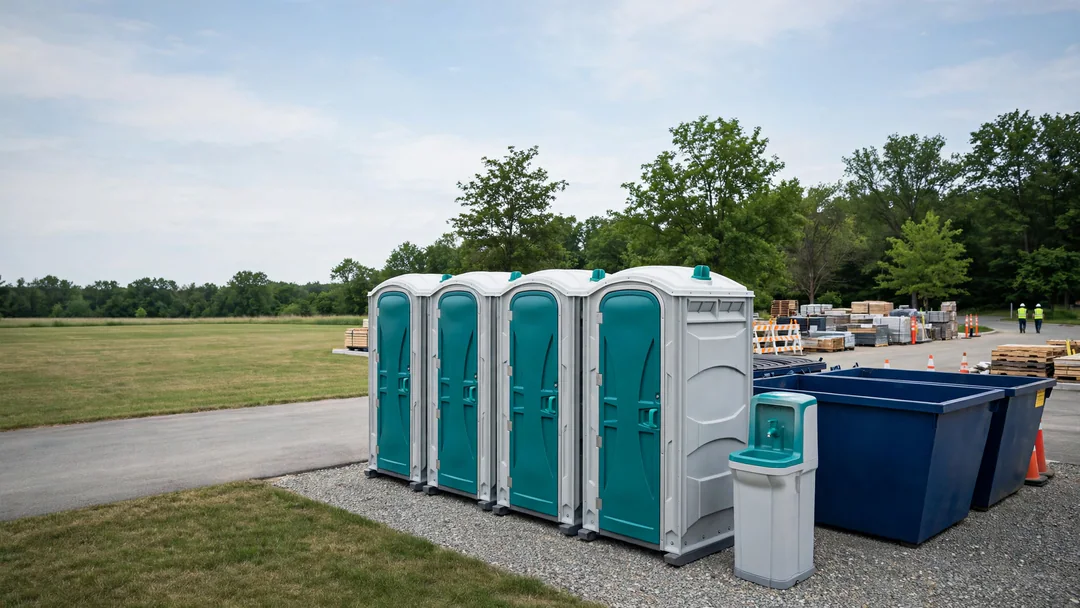
Heat is the biggest factor in Texas sanitation planning. Many providers recommend more frequent pumping during summer, shaded or north-facing placement where possible, and extra hand-wash stations on busy sites. Crews working in heat also need easy access to restrooms near their work area.
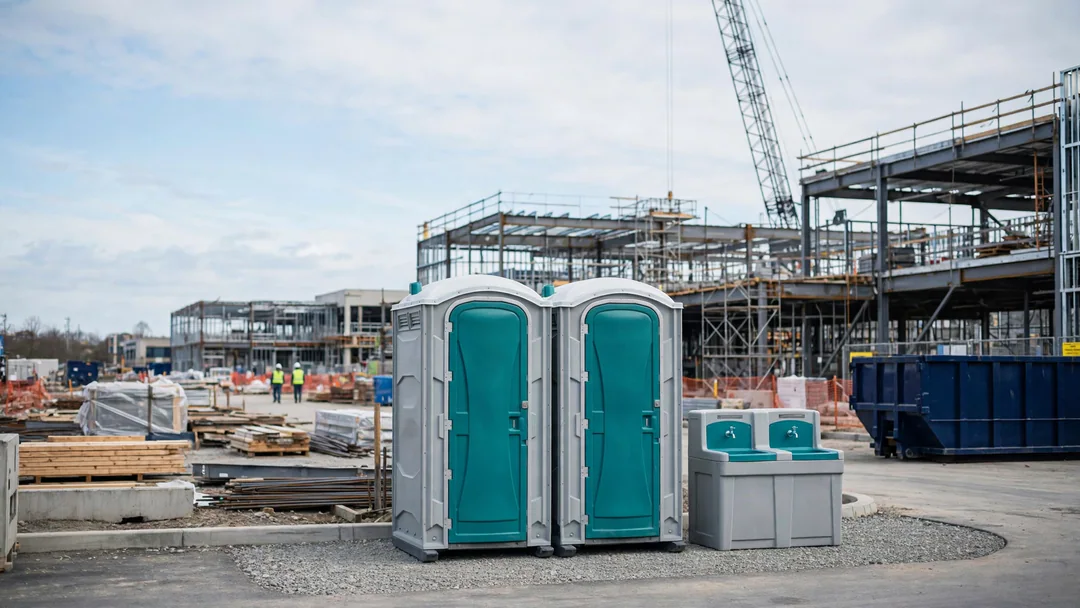
On construction sites, federal OSHA rules at 29 CFR 1926.51 set minimum toilet counts by crew size; see our OSHA jobsite toilet guide. Long builds commonly use long-term rentals with a set weekly service schedule.
Before a hurricane, units should be secured or removed, and emergency portable toilets are often needed after one. During rare hard freezes, ask about antifreeze. Include at least one ADA-accessible unit at public events.
Climate and seasonal considerations
Long, hot summers are the main factor for most of Texas. Extended heat increases odor and usage in portable toilets, so busy sites and events often need more frequent service and shaded placement. Hot asphalt is also softer, which makes boards under dumpster wheels a good idea on driveways.
The Gulf Coast, including Houston and Corpus Christi, is exposed to hurricanes and tropical storms during the Atlantic season, June 1 through November 30. Heavy rain and flash flooding can affect the coast and Central Texas, and North Texas sees severe thunderstorms and hail in spring.
Winter is usually mild, but occasional hard freezes reach much of the state and can affect portable toilet tanks and hand-wash water. Rain adds weight to open containers, so review dumpster weight limits and tarp loads before a storm.
Construction activity and common projects
Texas has been one of the most active construction markets in the country for years. Dallas–Fort Worth and Houston keep expanding outward with master-planned communities, warehouses and distribution centers, while Austin and its suburbs have seen heavy residential, office and technology-related building. San Antonio's growth extends north along the I-35 corridor toward New Braunfels.
The Houston area also has a large petrochemical and industrial base, which brings plant maintenance and turnaround work. Highway expansion projects run across the major metros.
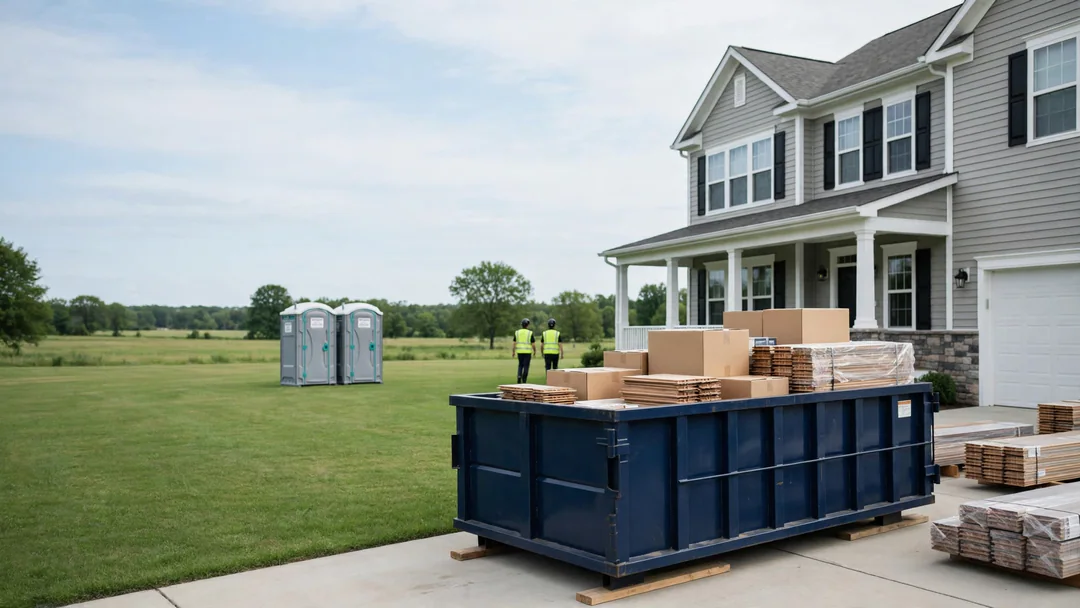
Homeowners drive steady demand for remodels, roof replacements after hail and wind, and move-out cleanouts. Larger jobs usually combine construction dumpsters with jobsite portable toilets, and industrial sites may need industrial project dumpsters with provider-specific handling rules.
- New home construction in master-planned communities
- Warehouse and distribution center buildouts
- Hurricane and flood debris cleanup on the Gulf Coast
- Roof replacement after hail and wind
- Industrial plant maintenance and turnarounds
- Kitchen, bath and whole-home remodels
- Ranch, farm and rural property cleanups
- Move-out and estate cleanouts
Disposal rules and restricted materials
The Texas Commission on Environmental Quality (TCEQ) regulates municipal solid waste facilities, including landfills and transfer stations, under state permits. Many cities operate their own landfills or transfer stations, while private operators run others, so the facility your load goes to depends on where you are.
Like many states, Texas restricts certain items from regular disposal. Whole tires, lead-acid batteries, used motor oil and appliances containing refrigerant typically need separate handling, and household hazardous waste such as paint thinners and pesticides should not go in a dumpster. Accepted materials and fees vary by facility.
Ask your hauler before loading anything unusual, and review what you cannot put in a dumpster. Clean concrete, brick and metal can often be recycled; see our construction debris recycling guide.
Permits in Texas
Permitting in Texas is local, and it depends heavily on whether your property is inside city limits. Cities typically regulate dumpsters and portable toilets placed on streets, sidewalks or other right-of-way, and Houston, Dallas, Austin and San Antonio each have their own process.
Texas counties generally have more limited regulatory authority than cities, so properties in unincorporated areas may face fewer placement rules, though county road departments can still restrict containers on county roads. A container fully on your own driveway usually does not need a permit, but confirm that locally.
HOAs are common in suburban master-planned communities and often limit how long a container can sit in view. Check with your city or county and HOA first. Our dumpster permit guide and portable toilet permit guide list what to ask.
Event sanitation planning
Texas events lean toward spring and fall, when the heat eases. The State Fair of Texas runs each fall in Dallas at Fair Park, and the Houston Livestock Show and Rodeo is held in late winter. Austin hosts major music and technology events, and San Antonio's Fiesta takes place each spring.
Beyond the big names, county fairs, rodeos, barbecue cook-offs, football tailgates, church festivals and outdoor weddings at Hill Country venues keep providers busy. Summer events need extra planning for heat: more frequent service, shaded placement and plenty of hand-washing.
Size units by headcount and duration with our porta potty calculator guide, add hand-washing stations near food, and consider restroom trailers for weddings. Our event sanitation checklist covers the rest.
Cities in Texas
- Houston
- Dallas
- Austin
- San Antonio
- Fort Worth
- El Paso
- Arlington
- Plano
- Corpus Christi
Major metro areas: Dallas–Fort Worth–Arlington · Houston–The Woodlands–Sugar Land · San Antonio–New Braunfels · Austin–Round Rock–Georgetown · El Paso · McAllen–Edinburg–Mission · Corpus Christi
Services in Texas
Texas rental FAQs
Do I need a permit for a dumpster in Texas?
There is no statewide dumpster permit. Cities typically require a permit for containers on streets or right-of-way, and rules differ between Houston, Dallas, Austin and San Antonio. Unincorporated county areas may have fewer rules. Confirm with your city or county and your HOA.
Can I get a dumpster delivered to a rural Texas property?
Often, yes, but long distances and county roads can affect scheduling and cost. Share your address, gate details and driveway surface with the provider so they can confirm truck access and whether a distance fee applies.
How does Texas heat affect portable toilet rentals?
Heat speeds up odor and increases usage, especially at summer events and busy jobsites. Many providers suggest more frequent servicing, shaded placement and extra hand-wash stations. Ask your provider to recommend a schedule for your site.
What should I do with dumpsters and portable toilets before a Gulf hurricane?
Contact your provider as soon as a storm is forecast. Units may need to be secured, emptied or picked up, and loose debris in open containers can become a hazard in high winds. After the storm, demand rises quickly, so book cleanup containers early.
Can I put shingles from a hail-damaged roof in a dumpster?
Asphalt shingles are generally accepted in roofing dumpsters, but they are heavy, so weight limits matter. Your provider may recommend a specific size and may restrict mixing shingles with other debris. Confirm before loading.
Who regulates landfills in Texas?
The Texas Commission on Environmental Quality (TCEQ) regulates municipal solid waste facilities. Day-to-day rules on what a specific landfill or transfer station accepts are set by the facility, so your hauler is the best source for what can go in your container.
Sources and official resources
Neighboring states
Ready to book a dumpster?
Planning a project in Texas? Share your ZIP code and dates to check provider availability.