
Loading Guide
What You Can Put in a Dumpster
Most everyday debris from homes and job sites is welcome in a roll-off. Here is what is typically accepted and which items need a quick check first.
One quick call to a real person. You approve the price before anything ships.
- All 50 states + DC
- Price confirmed before delivery
- Pricing explained up front
What can you put in a dumpster?
Most non-hazardous, dry debris is accepted: household junk, furniture, clothing, cardboard, construction and demolition debris like drywall and lumber, flooring, cabinets, roofing, and yard waste. Some items, such as mattresses, heavy debris, and certain electronics, may need approval or carry a fee. Rules come from the local hauler and disposal facility and vary by location.
Household items
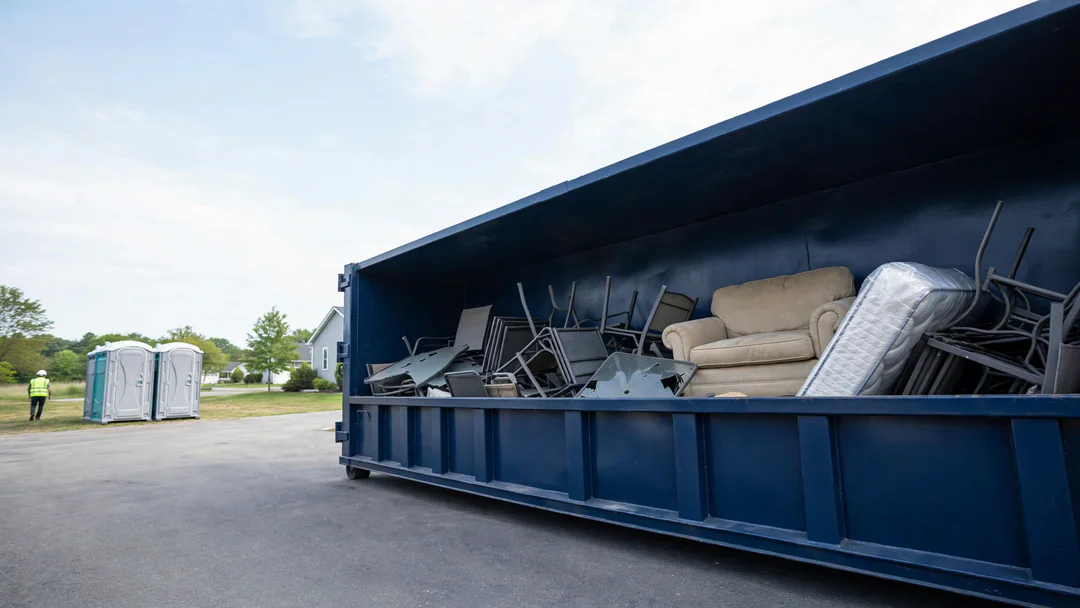
General household clutter is the most common dumpster load and is accepted almost everywhere.
- Furniture: couches, chairs, tables, dressers, bed frames
- Clothing, linens, toys, and books
- Cardboard, paper, and packaging
- Kitchenware, decor, and non-electronic household goods
- Rugs and carpet
- Small household trash, bagged
Construction and renovation debris
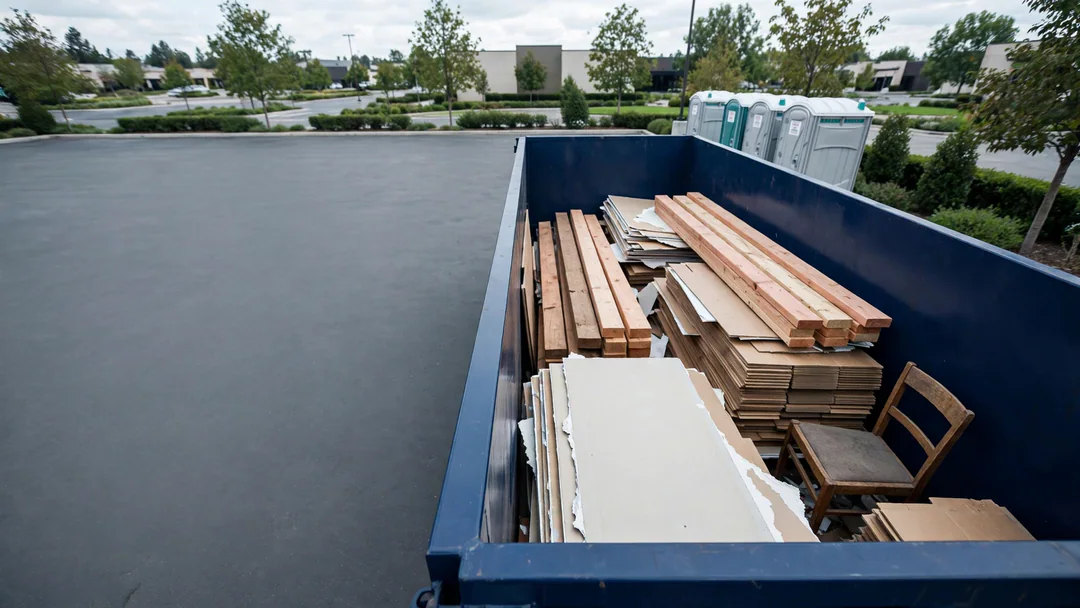
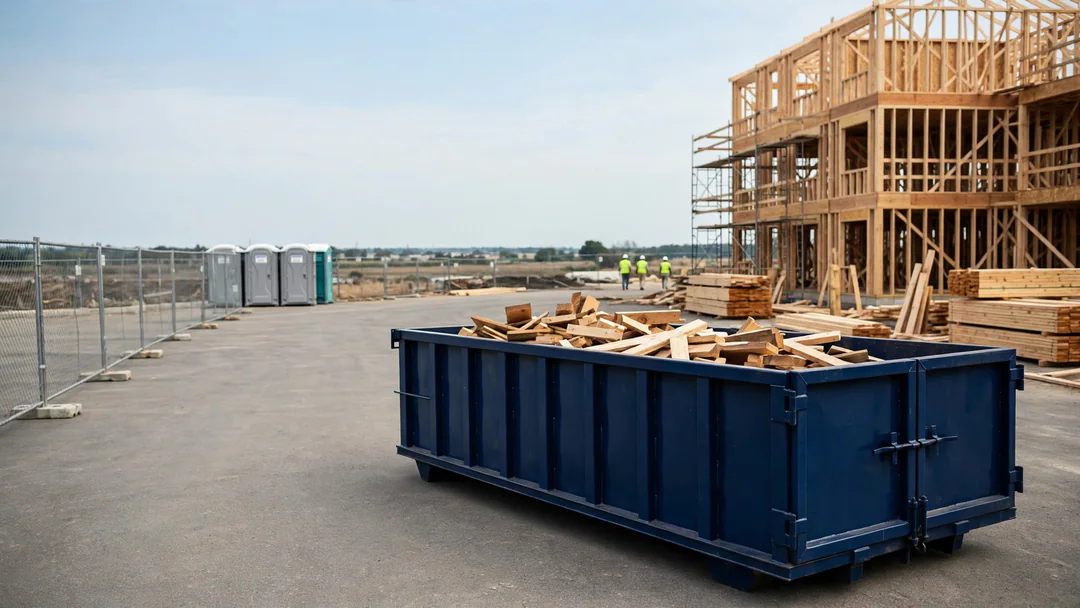
Most construction and demolition debris is accepted in mixed loads. Heavy materials may have size or fill limits. See construction dumpsters for job site planning.
- Drywall and plaster
- Lumber, plywood, trim, and doors
- Cabinets, countertops, and vanities
- Flooring: hardwood, laminate, vinyl, tile
- Windows and siding
- Roofing shingles and underlayment
- Fixtures such as sinks, tubs, and toilets
Yard and landscaping waste
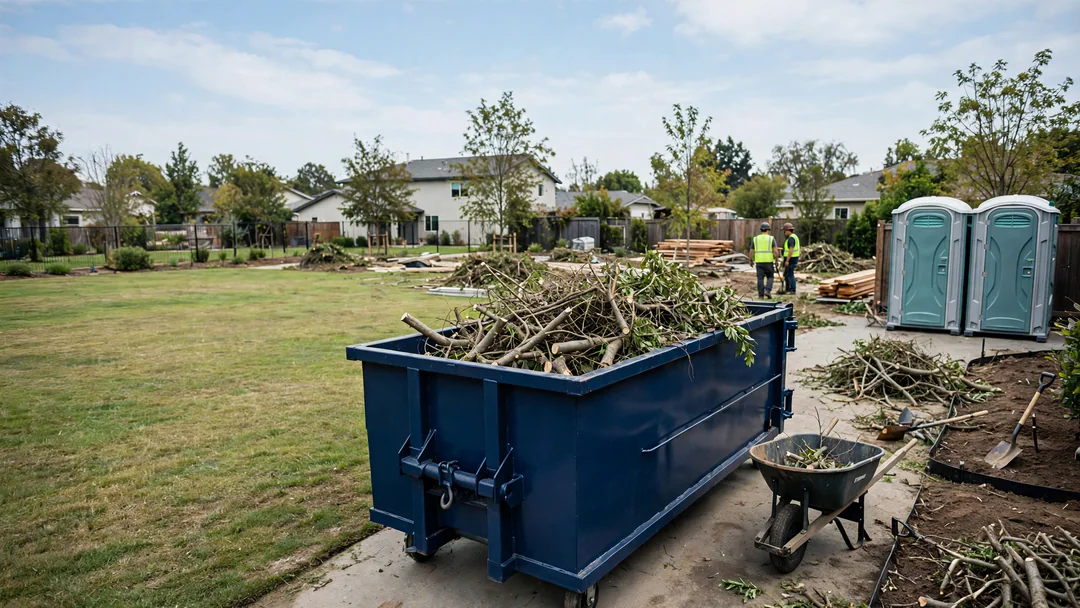
Branches, brush, leaves, grass clippings, shrubs, and untreated wood from fences or landscape timbers are usually accepted. Some areas keep green waste out of landfills and route it to compost, so your hauler may ask for clean loads. Stumps and soil may need approval. See yard waste dumpsters.
Heavy materials, with conditions
Concrete, brick, asphalt, dirt, and stone are typically accepted but often only in smaller containers, in clean single-material loads, and below a fill line. These rules exist because weight limits for trucks and roads are reached quickly. Always tell your provider about heavy debris in advance. Read more on concrete dumpster rental.
Gray-area items to confirm first
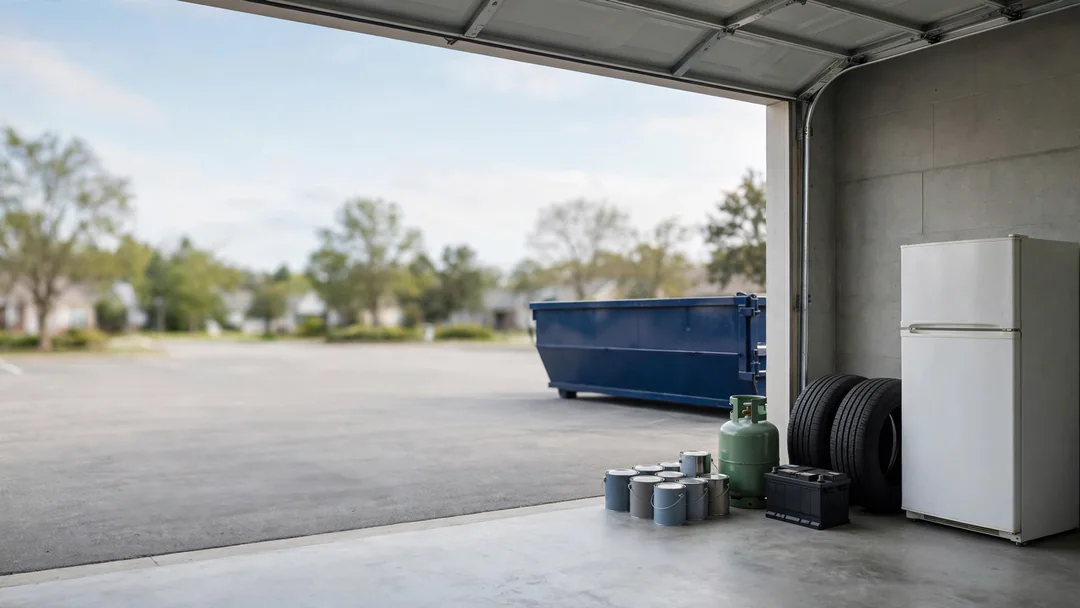
Some items are accepted by some providers and not others, or are accepted only with an added fee:
- Mattresses and box springs
- Appliances without refrigerant, such as washers, dryers, and stoves
- Electronics, which are restricted in many states
- Treated lumber and railroad ties
- Large stumps and root balls
- Fiberglass insulation, typically if bagged
- Empty paint cans that are fully dry
Tips for loading accepted items
Break down furniture and flatten boxes to save space. Put heavy, flat items on the bottom and fill gaps with smaller debris. Distribute weight evenly and keep everything level with the top of the walls. If you are unsure about an item, ask before it goes in; removing it later is harder. For items that should never go in, see what you cannot put in a dumpster.
Why accepted-item rules differ by location
There is no single national list of what a dumpster can hold. Each load ends up at a specific landfill, transfer station, or recycler, and that facility sets its own acceptance rules within state and local regulations. A material welcome in one county may be restricted in the next because of a state landfill ban, a local recycling mandate, or simply the type of facility nearby. Haulers also set their own policies based on equipment and safety. That is why the lists on this page describe what is typically accepted, and why the final word always comes from your provider. When you request a quote, describe your debris honestly and ask the hauler to confirm anything you are unsure about. A short conversation before loading is far easier than pulling an item back out of a full container.
Frequently asked questions
Can I put household trash in a dumpster?
Bagged household trash is generally accepted, but avoid food waste that can attract pests during a long rental.
Can I put a toilet in a dumpster?
Porcelain toilets, sinks, and tubs are typically accepted with renovation debris. Drain any water first.
Can I put a washing machine in a dumpster?
Many providers accept appliances without refrigerant, sometimes for a fee. Confirm with your hauler.
Can I put wood in a dumpster?
Untreated wood is almost always accepted. Treated or painted wood is usually fine too, but some facilities handle it differently.
Can I put dry paint cans in a dumpster?
Fully dried latex paint and empty cans are accepted in many areas. Wet paint and oil-based paint are typically restricted.
Related pages
Ready to book a dumpster?
Share your ZIP code and project details. We will route it to an available provider near you.