
Dumpster Services
Yard Waste Dumpster Rental
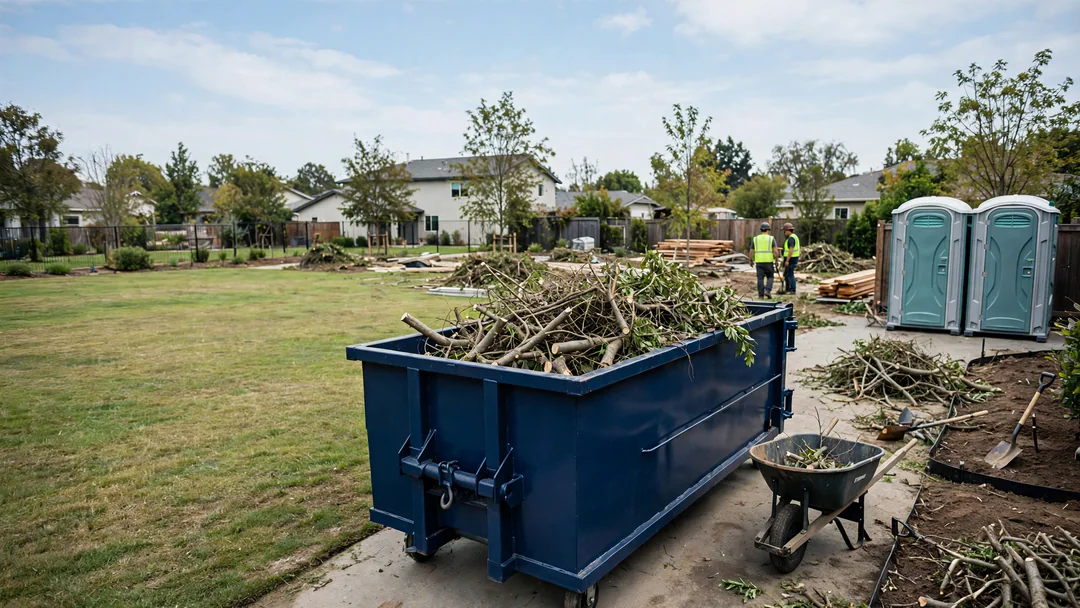
Storm cleanup, overgrown lots, and landscape makeovers produce more green waste than curbside carts can take. A roll-off clears it in one go.
One quick call to a real person. You approve the price before anything ships.
- All 50 states + DC
- Price confirmed before delivery
- Pricing explained up front
- 10–40 ydRoll-off sizes
- 50 + DCStates served
- 7–14 daysTypical rental period
- Same-dayDelivery when available
Can I put yard waste in a dumpster?
Usually yes. Branches, brush, leaves, grass clippings, shrubs, and small stumps are commonly accepted. Some areas restrict yard waste from landfills, so haulers may route clean green waste to compost facilities and ask that it not be mixed with trash. Soil, sod, and rock are heavier and may require a separate load. Rules vary by provider and location.
Yard Waste Dumpsters: dumpster sizes at a glance
| Size | Typical dimensions | Holds about |
|---|---|---|
| 15-yard | ~16 ft L × 8 ft W × 4 ft H | 4–6 pickup-truck loads |
| 30-yard | ~22 ft L × 8 ft W × 6 ft H | 9–12 pickup-truck loads |
- Weight: heavy debris like concrete, dirt or shingles reaches the weight allowance before the container is full, so it usually goes in a smaller container. See dumpster weight limits.
- Permits: a dumpster on your own driveway usually needs no permit; one on a street or sidewalk often does. See dumpster permits.
Yard debris that typically goes in a dumpster
Most organic material from yard work is accepted, but it is worth confirming large items like stumps.
- Tree limbs and branches
- Brush, vines, and hedge trimmings
- Leaves, pine needles, and grass clippings
- Shrubs and small trees with root balls
- Small stumps, depending on the provider
- Old landscape timbers and untreated fencing
Clean green waste vs. mixed loads
Several states and many local governments limit yard waste in landfills and encourage composting instead. Where that applies, your hauler may take clean green loads to a compost or mulch facility. Mixing in bagged trash, plastic pots, or construction debris can disqualify a load from composting. Ask your provider whether green waste must be kept separate and whether plastic bags are allowed.
Sizing for yard projects
Branches and brush are bulky and trap air, so a pile can look larger than it is once packed. Cut limbs into shorter lengths and lay them flat to save space. For a typical spring cleanup, a 10 or 15 yard box is often enough. A large storm cleanup or lot clearing may call for a 20 or 30 yard. If the project includes soil, sod, or rock, choose a smaller container for that portion because those materials are heavy. See concrete and heavy debris rules.
Placement for landscaping jobs
Keep the container on pavement whenever possible. Lawns that have been cleared or regraded are often soft, and a loaded truck can leave ruts. Place the box close to the work area but outside drip lines of trees you want to protect, since heavy loads can compact roots. Check for overhead branches the truck could hit. Our driveway prep guide covers what to check before delivery.
Storm and seasonal cleanup
After severe weather, demand for containers can spike quickly. Book as soon as it is safe to work. Separate storm-damaged building materials from vegetation if possible, since they may go to different facilities. Fall leaf cleanup and spring pruning are also common times to rent. Some cities run seasonal curbside yard waste collection, which may be enough for smaller jobs.
Items to keep out of a yard waste load
Treated lumber, railroad ties, fertilizer, pesticides, and fuel cans should not go in with green waste. Pesticides and fuel are hazardous, and treated wood is often handled differently from clean wood. Remove propane tanks from grills and fuel from mowers before discarding equipment. See what you cannot put in a dumpster.
Loading branches and brush efficiently
Green waste wastes space when it is tossed in loosely. Cut limbs to lengths shorter than the container is wide, and lay them in the same direction so they nest together. Put heavier logs and root balls on the floor first, then layer brush on top and step it down carefully from outside the box if you can do so safely. Fill gaps with leaves and clippings. Keep everything below the top of the walls, since springy branches that stick up can make the load unsafe to haul and may need to be trimmed before pickup.
Yard Waste Dumpsters FAQs
Can I put tree stumps in a dumpster?
Small stumps are often accepted, but large stumps with heavy root balls may be refused or count heavily toward weight. Ask your provider first.
Can I mix yard waste with household junk?
Some providers allow it, but mixed loads may not be eligible for composting. Ask whether green waste must be separate in your area.
Can I put dirt or sod in a yard waste dumpster?
Soil and sod are heavy and often require a separate, smaller container. Many haulers treat them as heavy debris.
Are bagged leaves okay?
Paper yard bags are usually fine. Plastic bags may need to be emptied if the load is going to a compost facility.
Is a dumpster better than burning brush?
Many communities restrict open burning. A dumpster avoids burn permits and smoke concerns. Check local burn rules if you are considering it.
Related pages
Ready to book a dumpster?
Share your ZIP code and project details. We will route it to an available provider near you.