
Colorado · Mountain West
Dumpster & Porta Potty Rental in Colorado
Plan a roll-off dumpster or portable toilet rental anywhere in Colorado, with state-specific guidance on permits, disposal and seasons.
One quick call to a real person. You approve the price before anything ships.
- All 50 states + DC
- Price confirmed before delivery
- Pricing explained up front
Can I rent a dumpster or porta potty in Colorado?
Yes. We coordinate roll-off dumpster and portable toilet rentals across Colorado through independent local providers. Pricing, sizes and delivery windows depend on the provider serving your ZIP code, and permits are handled at the city or county level when equipment goes on a public street.
Dumpster and portable toilet rental in Colorado
Colorado splits into very different service areas. Most people live along the Front Range urban corridor, from Fort Collins through Denver and Boulder to Colorado Springs and Pueblo. West of that, the Rocky Mountains bring high elevations, steep roads and resort towns, and the Western Slope centers on Grand Junction.
Altitude, snow and freeze-thaw cycles shape how dumpsters and portable toilets are delivered and serviced. A remodel in suburban Denver is usually straightforward, while a cabin project on a narrow mountain road may need a smaller truck, a smaller container and flexible timing.
Haul & Hygiene coordinates with independent local haulers and sanitation providers across Colorado. Your provider confirms container sizes, access and scheduling for your address, including whether a mountain site can be reached in the season you need.
Dumpster rental in Colorado: what to know
Along the Front Range, 10- and 20-yard containers handle most remodels, basement finishes and cleanouts, while 30- and 40-yard containers are common on new construction and large tear-offs. Specs vary by provider; compare them on our dumpster sizes page.
Roofing shingles are heavy, so a hail-season tear-off may need a specific size to stay within weight allowances. Snow and rain that collect in an open container also add weight.
Mountain sites are the hardest deliveries in the state. Steep grades, switchbacks, gravel drives and snowpack can limit truck access, and the closest disposal facility may be far away, which can affect scheduling. Smaller containers are often the practical choice. Tell your provider about grades and turns, and see how to prepare your driveway, including clearing snow and ice before delivery.
Portable toilet rental in Colorado
Cold is the main planning factor. From fall through spring, and year-round at higher elevations, many providers add antifreeze or brine to holding tanks and may adjust servicing during freezing weather. Hand-wash stations with water can freeze, so hand sanitizer dispensers are a common winter alternative.
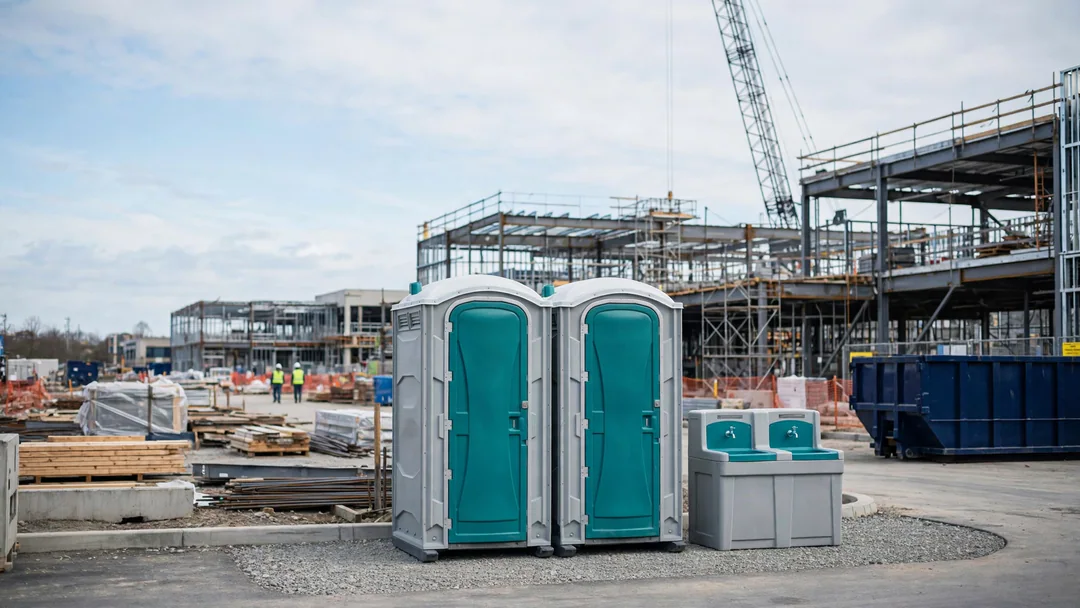
On construction sites, federal OSHA rules at 29 CFR 1926.51 set minimum toilet counts by crew size; see our OSHA jobsite toilet guide. Keep a clear, plowed path for the service truck so the unit can be pumped on schedule.
Mountain events and remote sites may need extra lead time and a firm, level spot reachable by the service truck. Strong winds on open terrain can tip units, so ask about anchoring. Include at least one ADA-accessible unit at public events.
Climate and seasonal considerations
Colorado's climate is dry and sunny, but it changes fast with elevation. The Front Range has warm summers, cold winters and frequent temperature swings, and snowstorms can arrive in fall and spring as well as winter. In the mountains, snow can cover roads for much of the year.
Freezing temperatures are the main concern for portable toilets. Many providers add antifreeze or brine to holding tanks and adjust service schedules in cold months; our winter portable toilet guide explains the options. Snow and ice can also delay dumpster swaps and pickups.
The Front Range is known for frequent summer hailstorms, which drive a large share of roof replacement work. Afternoon thunderstorms are common in summer, and snow or rain in an open container adds weight; see our dumpster weight limits guide.
Construction activity and common projects
The Front Range has grown steadily, with new subdivisions and apartment projects spreading across suburbs such as Aurora and along the I-25 corridor north toward Fort Collins and Greeley and south toward Colorado Springs. Denver itself sees infill homes, scrape-and-rebuild projects and renovations of older bungalows and Victorians.
Hail damage makes roofing one of the most common project types in Colorado. After a major storm, demand for roofing dumpsters can spike across entire neighborhoods.
Mountain resort communities generate cabin remodels, new custom homes and commercial work at lodges and restaurants, often on compressed schedules during warmer months. Larger jobs usually pair construction dumpsters with jobsite portable toilets. Wildfire mitigation and defensible-space clearing also produce brush and tree debris.
- Hail-damage roof replacement
- New subdivision construction along the Front Range
- Denver infill, scrape-and-rebuild and older-home remodels
- Mountain cabin and custom home construction
- Wildfire mitigation and tree removal
- Basement finishing and remodels
- Estate cleanouts and move-outs
- Ski-season and resort property renovations
Disposal rules and restricted materials
The Colorado Department of Public Health and Environment (CDPHE) oversees solid waste management in Colorado, including landfill and facility regulation. Counties and municipalities operate some landfills and transfer stations, and private companies run others, so the closest facility can be far away for mountain and rural sites.
Like many states, Colorado restricts certain items from regular disposal. Whole tires, lead-acid batteries, used motor oil and appliances containing refrigerant typically need separate handling, and electronics are also subject to disposal restrictions in Colorado. Household hazardous waste should go to a local collection program.
Rules and accepted materials vary by facility, so ask your hauler before loading anything uncertain. Review what you cannot put in a dumpster, and consider construction debris recycling for clean concrete, metal and wood.
Permits in Colorado
Colorado has no statewide dumpster permit. Cities typically regulate containers placed on streets, sidewalks or other right-of-way, and Denver, Aurora, Colorado Springs, Boulder and Fort Collins each have their own process. A container fully on your own driveway usually does not need a permit, but confirm locally.
In winter, some cities restrict street parking on snow routes, which can affect where a container is allowed. HOAs are common in Front Range suburbs and mountain communities, and they often limit how long a container or portable toilet can stay visible. Resort towns and historic districts may have added rules.
Mountain properties in unincorporated areas may follow county rules, and private roads may have their own restrictions. Check before delivery with our dumpster permit guide and portable toilet permit guide.
Event sanitation planning
Colorado's outdoor event season peaks from late spring through early fall. Summer brings music festivals, outdoor concerts, trail runs, cycling events, rodeos and county fairs, and the Colorado State Fair is held in Pueblo each summer. Mountain towns host food, film, music and arts festivals in summer, and fall foliage draws visitors in September.
Mountain weddings are especially popular, but venues may be remote, at high elevation and subject to sudden afternoon storms. Winter events at ski areas need freeze-ready sanitation.
Size units by headcount and duration with our porta potty calculator guide, add hand-washing stations near food, and consider restroom trailers for weddings, confirming that the trailer can reach the venue. See our event sanitation checklist.
Cities in Colorado
- Denver
- Colorado Springs
- Aurora
- Fort Collins
- Lakewood
- Boulder
- Pueblo
- Greeley
- Grand Junction
Major metro areas: Denver–Aurora–Centennial · Colorado Springs · Boulder · Fort Collins–Loveland · Greeley · Pueblo · Grand Junction
Services in Colorado
Colorado rental FAQs
Will portable toilets freeze in Colorado?
They can in cold weather, especially in the mountains. Many providers add antifreeze or brine to holding tanks and may change the service schedule in winter. Ask about winter options and keep a clear path for the service truck.
Can a dumpster be delivered to a mountain property?
Often, but steep grades, tight turns, gravel drives and snow can limit access. A smaller container on a shorter truck is sometimes the only practical option, and deliveries may depend on weather. Describe your road and driveway to the provider in advance.
What size dumpster do I need for a hail-damaged roof in Colorado?
It depends on roof size, pitch and the number of shingle layers. Shingles are heavy, so weight limits often matter more than volume. Your provider can recommend a size based on your roof details; also see our roofing dumpster page.
Do I need a permit for a dumpster in Denver?
A container fully on private property usually does not need one, but placement on a street or right-of-way typically requires a city permit. Rules vary by city across the metro, and winter snow-route restrictions can also apply. Confirm with your city and HOA.
Can I throw away electronics in a Colorado dumpster?
Colorado restricts landfill disposal of many electronics, so items like TVs and computers generally should not go in a dumpster. Use an electronics recycling program instead, and check with your hauler about anything you are unsure of.
Who regulates solid waste in Colorado?
The Colorado Department of Public Health and Environment (CDPHE) oversees solid waste management. Individual landfills and transfer stations set their own accepted-materials rules, so your hauler is the best source for what can go in your container.
Sources and official resources
Neighboring states
Ready to book a dumpster?
Planning a project in Colorado? Share your ZIP code and dates to check provider availability.