
Wyoming · Mountain West
Dumpster & Porta Potty Rental in Wyoming
Plan a roll-off dumpster or portable toilet rental anywhere in Wyoming, with state-specific guidance on permits, disposal and seasons.
One quick call to a real person. You approve the price before anything ships.
- All 50 states + DC
- Price confirmed before delivery
- Pricing explained up front
Can I rent a dumpster or porta potty in Wyoming?
Yes. We coordinate roll-off dumpster and portable toilet rentals across Wyoming through independent local providers. Pricing, sizes and delivery windows depend on the provider serving your ZIP code, and permits are handled at the city or county level when equipment goes on a public street.
Dumpster and portable toilet rental in Wyoming
Wyoming is the least populous state in the country, and its towns are spread across high plains, basins and mountain ranges with long highway miles between them. That distance is the biggest planning factor for any dumpster or portable toilet rental here. A provider based in one town may cover a wide surrounding area, but a ranch or remote job site can add real travel time.
Most demand clusters along Interstate 80 in the south (Cheyenne, Laramie and Rock Springs), around Casper in the center of the state, and in the energy towns of the northeast such as Gillette. Sheridan and the Bighorn Mountain foothills add residential and recreation work.
Haul & Hygiene coordinates with independent local haulers and sanitation providers in Wyoming. Your provider confirms sizes, access and scheduling for your address. Call us with your ZIP code and dates to get started.
Dumpster rental in Wyoming: what to know
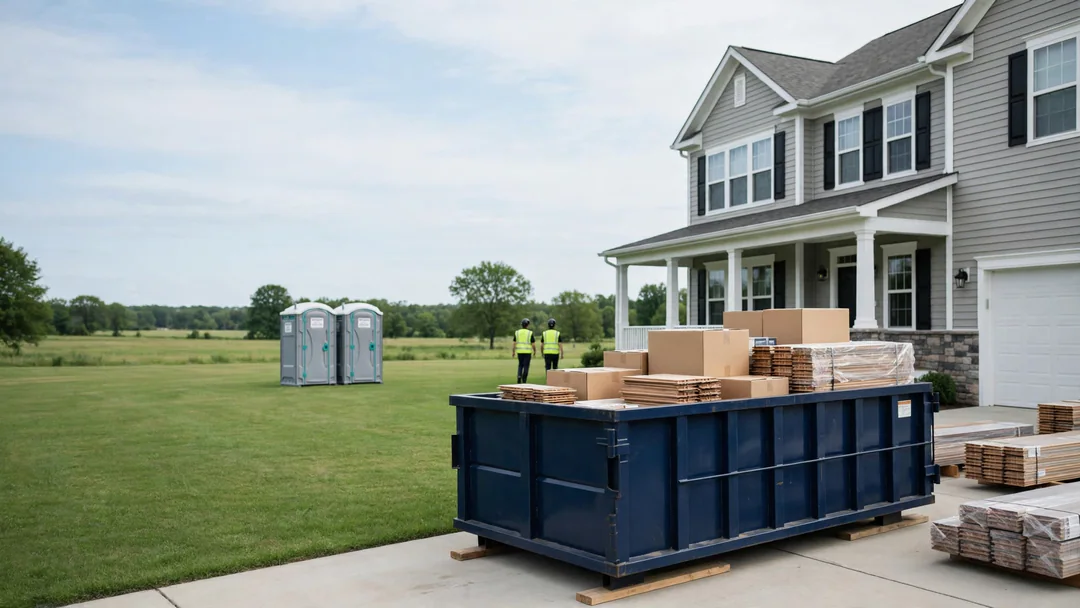
For home projects in Cheyenne, Casper and Laramie, 10- and 20-yard containers handle most remodels, garage cleanouts and roof tear-offs. Larger 30- and 40-yard containers are common on commercial builds, energy sites and big ranch cleanups. Compare options on our dumpster sizes page.
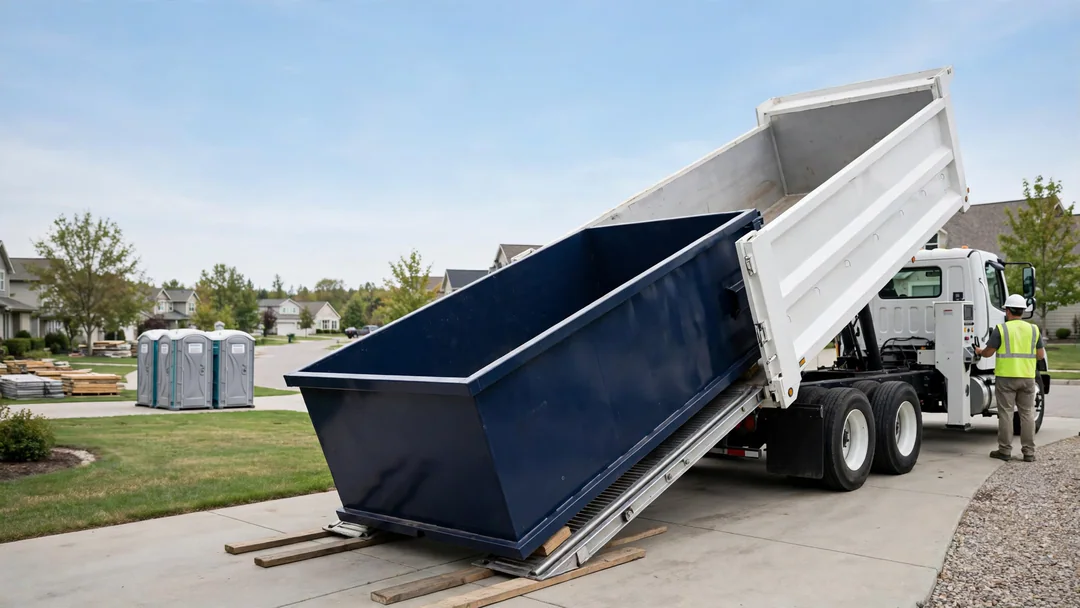
Rural properties often have gravel or dirt drives, cattle guards and soft ground during spring thaw. Tell your provider about grades, gates and turnaround space so the truck can place and retrieve the box safely. Frozen ground in winter is firm, but snow and ice need to be cleared from the drop area.
Because of long distances, consider a size that avoids extra swaps. Wind can lift loose material, so load heavy items on top of light debris and cover the load. See how to prepare your driveway.
Portable toilet rental in Wyoming
Cold is the defining issue for portable toilets in Wyoming. Freezing nights can occur in almost any month at higher elevations, so ask about antifreeze, insulated or heated options where available, and a service schedule that fits winter conditions.
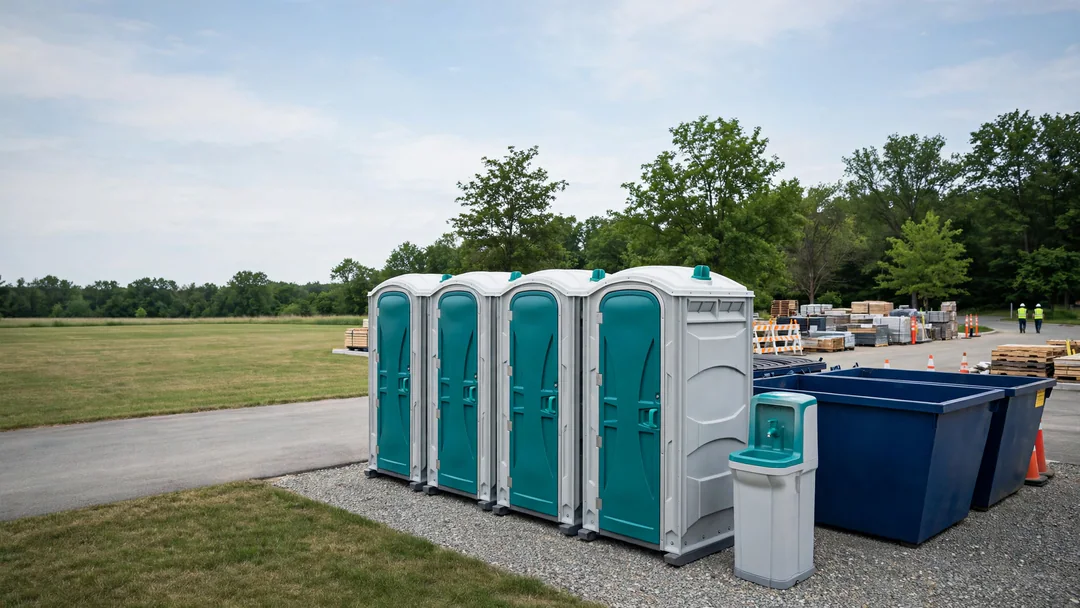
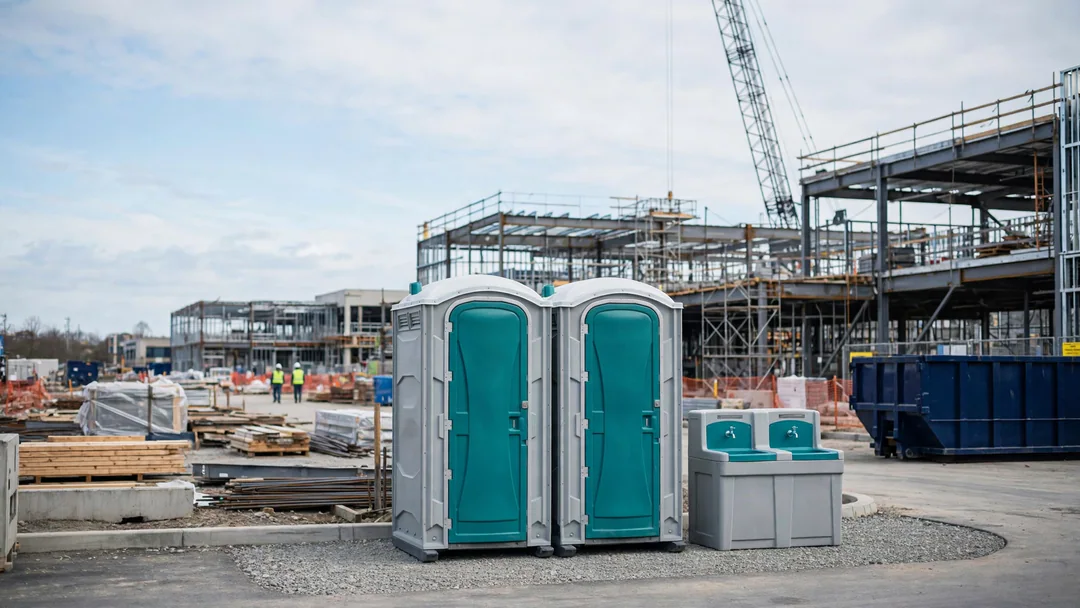
Wind is the second issue. On open plains and ridgelines, units should be staked, tied down or placed in the lee of a building or trailer. For energy and construction sites, federal OSHA rules at 29 CFR 1926.51 set minimum toilet counts by crew size; our OSHA jobsite toilet guide explains them, and remote sites often use long-term rentals.
For rodeos, fairs and ranch weddings, include at least one ADA-accessible unit and plan access for the service truck on gravel or grass.
Climate and seasonal considerations
Wyoming is semi-arid, high and windy. Much of the state sits above 4,000 feet, and Laramie and Cheyenne are above 6,000 feet, so winters are long and cold and snow can fall from early fall into late spring. Ground blizzards and road closures on Interstate 80 can delay deliveries even when little new snow has fallen.
Wind is the factor renters most often underestimate. Strong gusts can scatter light debris from an open container, so a tarp or net is worth asking about, and portable toilets are often staked or secured on exposed sites.
Freezing temperatures affect holding tanks and hand-wash water for much of the year. Many providers add antifreeze or adjust service in cold months; see our winter portable toilet guide. Summers are short, dry and comfortable, which is when most construction and events are packed in.
Construction activity and common projects
Energy shapes much of Wyoming's economy. The Powder River Basin around Gillette is a major coal-producing region, oil and natural gas operations run across several basins, and wind energy projects have grown in the southern part of the state. Those industries drive demand for jobsite sanitation, roll-off containers at field offices and industrial cleanups.
Cheyenne, the capital, adds government, military and rail-related work, with F.E. Warren Air Force Base on its west side. Laramie is home to the University of Wyoming, and Casper serves as a regional hub for central Wyoming.
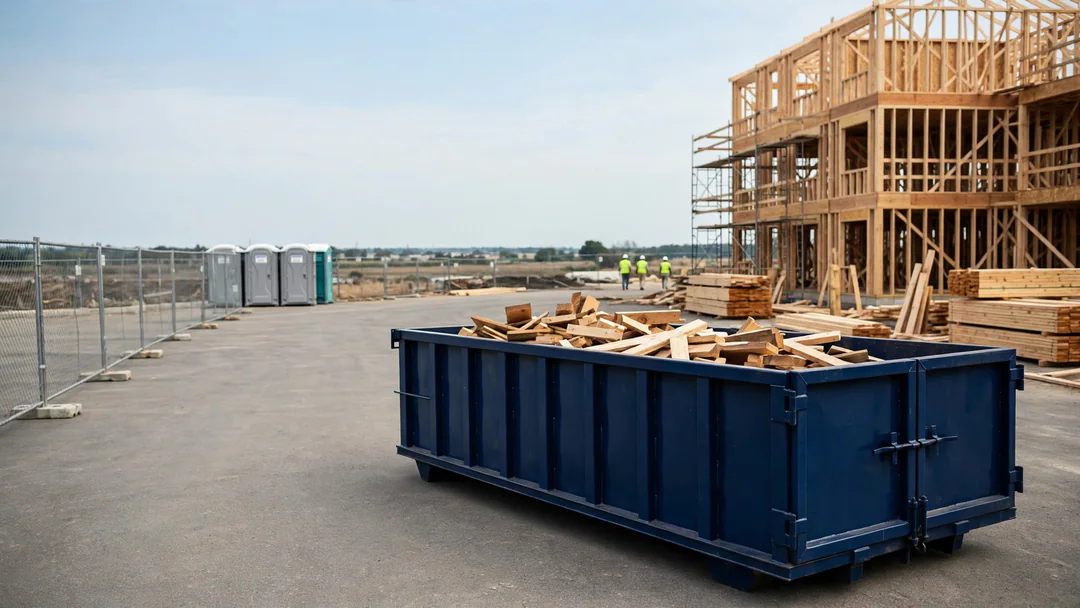
Residential work leans toward remodels, roof replacements after hail and wind, garage and outbuilding cleanouts, and ranch property projects. Larger commercial and energy sites typically pair construction dumpsters with jobsite portable toilets.
- Hail and wind roof replacement
- Oil, gas and coal field sanitation
- Wind energy project sites
- Ranch and outbuilding cleanouts
- Rodeo, fair and summer event sanitation
- Home remodels and basement finishing
- Estate and home cleanouts
Disposal rules and restricted materials
Solid waste facilities in Wyoming are permitted and overseen by the Wyoming Department of Environmental Quality (DEQ), Solid and Hazardous Waste Division. Cities and counties operate many of the landfills and transfer stations, and in rural areas the nearest permitted facility can be a long drive, which affects hauling time.
As in most states, certain materials are restricted or handled separately. Hazardous waste, tires, lead-acid batteries, used oil, paint and appliances containing refrigerant are commonly refused in a standard roll-off. Accepted materials differ by facility, and some landfills have separate areas or rules for construction and demolition debris, so ask your hauler before loading anything unusual.
Review what you cannot put in a dumpster, and consider construction debris recycling for clean metal and concrete where a local option exists.
Permits in Wyoming
Wyoming does not issue a statewide dumpster permit. Placement rules are local. A container on your own driveway or private lot usually does not need a permit, while placing one on a city street, sidewalk or other public right-of-way typically requires approval from the city.
Cheyenne, Casper, Laramie and smaller towns each set their own process, and some ask about reflectors or barricades for street placement. Outside city limits, county roads and state highways have their own rules, so keep containers and toilets well off the road shoulder.
Newer subdivisions, especially around Cheyenne and Casper, may have HOA covenants that limit how long a container can sit in view. Confirm with your city or county and HOA before delivery. Our dumpster permit guide and portable toilet permit guide list the questions to ask.
Event sanitation planning
Wyoming's event season is compressed into the warmer months. Cheyenne Frontier Days, held each July, is one of the best-known rodeo and western celebrations in the country. The Wyoming State Fair takes place in Douglas in August, and county fairs and rodeos fill the summer calendar in nearly every county.
University of Wyoming football games in Laramie draw tailgating crowds in the fall, and mountain towns host summer music, outdoor recreation and ranch-country events. Outdoor weddings at ranches and mountain venues often sit far from permanent restrooms, so planners need to bring sanitation in.
Wind and sudden weather changes are part of event planning here. Plan units by headcount and duration with our porta potty quantity guide, add hand-washing stations near food, and use the event sanitation checklist.
Cities in Wyoming
- Cheyenne
- Casper
- Laramie
- Gillette
- Rock Springs
- Sheridan
Major metro areas: Cheyenne · Casper · Laramie · Gillette · Rock Springs · Sheridan
Services in Wyoming
Wyoming rental FAQs
Do I need a permit for a dumpster in Wyoming?
There is no statewide dumpster permit. A container on your own driveway usually does not need one, but street or right-of-way placement typically requires city approval. Cheyenne, Casper and Laramie each have their own process, so confirm locally and check any HOA rules.
Can a dumpster be delivered to a rural Wyoming ranch?
Often, yes, but distance and access matter. Describe your road, gates, cattle guards and turnaround space when you call. Remote addresses may need more scheduling lead time, and travel distance can affect your quote.
Will portable toilets freeze in Wyoming winters?
They can. Many providers add antifreeze or brine to holding tanks in cold weather and may change the service schedule. Ask about winter options, and remember that freezing nights are possible well into spring at higher elevations.
How does Wyoming wind affect a rental?
Strong gusts can blow light debris out of an open dumpster and can tip unsecured portable toilets. Ask your provider about tarps, staking or tie-downs, and place units where buildings or vehicles offer some shelter.
What cannot go in a dumpster in Wyoming?
Hazardous waste, tires, lead-acid batteries, used oil, paint and refrigerant appliances are commonly refused. Accepted materials vary by landfill, so check with your hauler before loading anything unusual.
When should I book portable toilets for a summer event in Wyoming?
Summer is short and busy with rodeos, fairs and weddings, and July is especially crowded around Cheyenne. Book several weeks ahead, particularly if you need restroom trailers or ADA units.
Sources and official resources
Neighboring states
Ready to book a dumpster?
Planning a project in Wyoming? Share your ZIP code and dates to check provider availability.