
Kansas · Midwest
Dumpster & Porta Potty Rental in Kansas
Plan a roll-off dumpster or portable toilet rental anywhere in Kansas, with state-specific guidance on permits, disposal and seasons.
One quick call to a real person. You approve the price before anything ships.
- All 50 states + DC
- Price confirmed before delivery
- Pricing explained up front
Can I rent a dumpster or porta potty in Kansas?
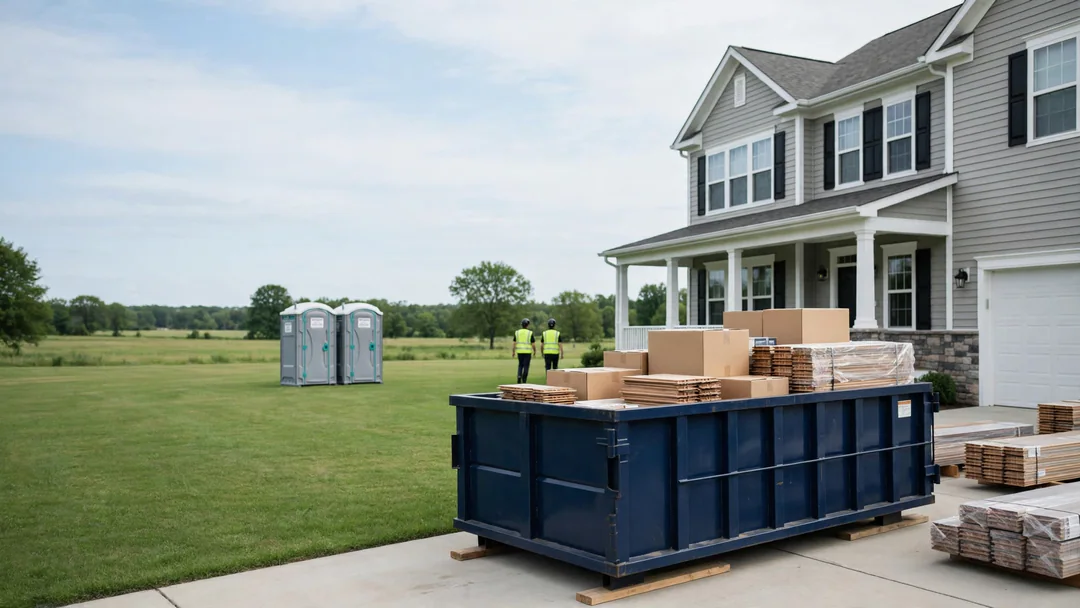
Yes. We coordinate roll-off dumpster and portable toilet rentals across Kansas through independent local providers. Pricing, sizes and delivery windows depend on the provider serving your ZIP code, and permits are handled at the city or county level when equipment goes on a public street.
Dumpster and portable toilet rental in Kansas
Kansas rises gradually from east to west. The eastern third has rolling hills, river valleys and the Kansas City suburbs; the Flint Hills cross the state's middle with some of the largest remaining tallgrass prairie in North America; and the High Plains of western Kansas are flat, dry and given over to wheat, cattle and wind farms.
Most rental demand is concentrated in the northeast, where Johnson and Wyandotte counties form the Kansas side of the Kansas City metro, along with Topeka and Lawrence. Wichita, the state's largest city, anchors south-central Kansas. Rural jobs tend to involve farmsteads, outbuildings and long gravel roads.
Haul & Hygiene coordinates with independent local haulers and sanitation providers across Kansas. Call us with your ZIP code and dates, and your provider will confirm sizes, access and scheduling.
Dumpster rental in Kansas: what to know
Roof replacements after hail are common statewide, and a 10- to 20-yard container handles most single-family re-roofs. Remodels, basement finishing and garage cleanouts usually fit a 15- or 20-yard box, while new construction and large cleanouts lean toward 30- or 40-yard containers. See dumpster sizes.
Many Kansas homes have basements, and finished-basement tear-outs after water problems produce heavy, wet debris. Keep weight in mind and ask your provider about limits before filling.
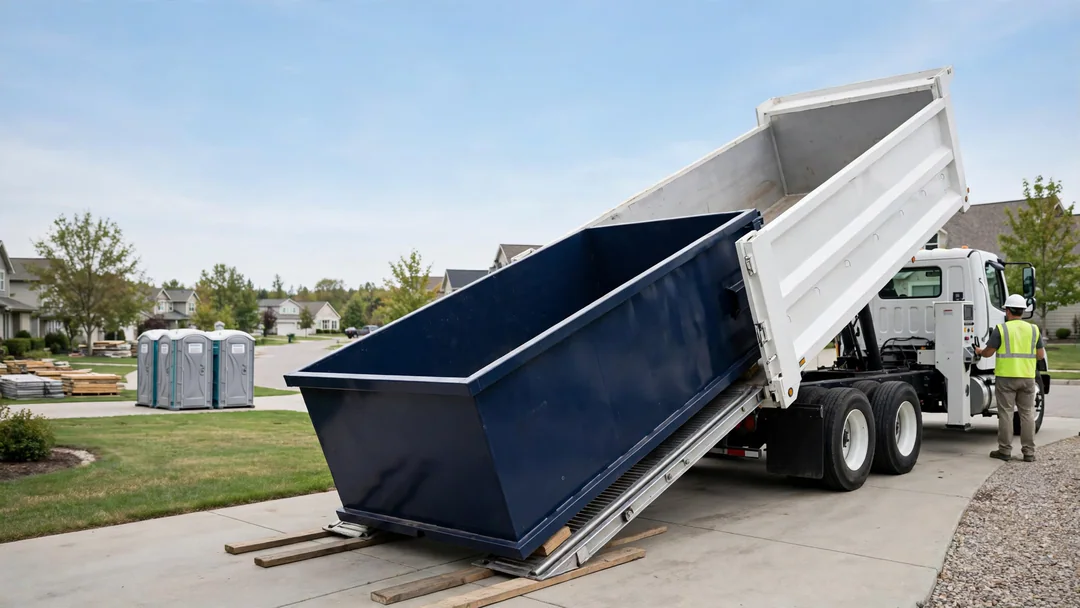
On rural properties, long gravel drives and soft field edges can stall trucks after rain, so give clear directions and pick a firm spot. In winter, clear snow from the placement area. Boards under the rails protect pavement; see how to prepare your driveway and roll-off dumpsters.
Portable toilet rental in Kansas
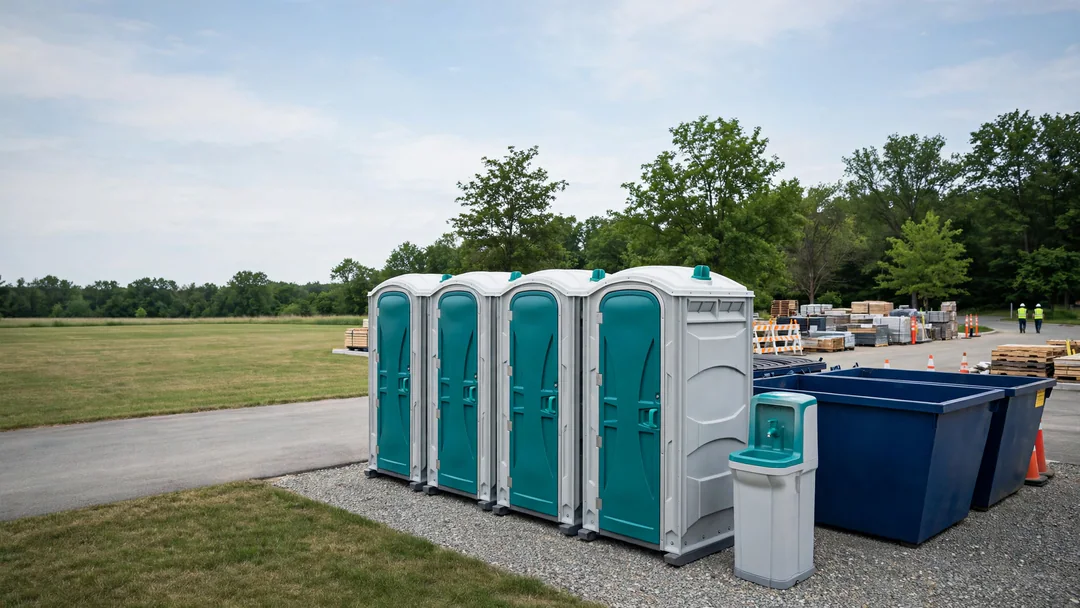
Kansas wind makes anchoring important for portable toilets on open jobsites, farm events and fairgrounds. Ask your provider how units are secured and place them away from tents, structures and parked vehicles.
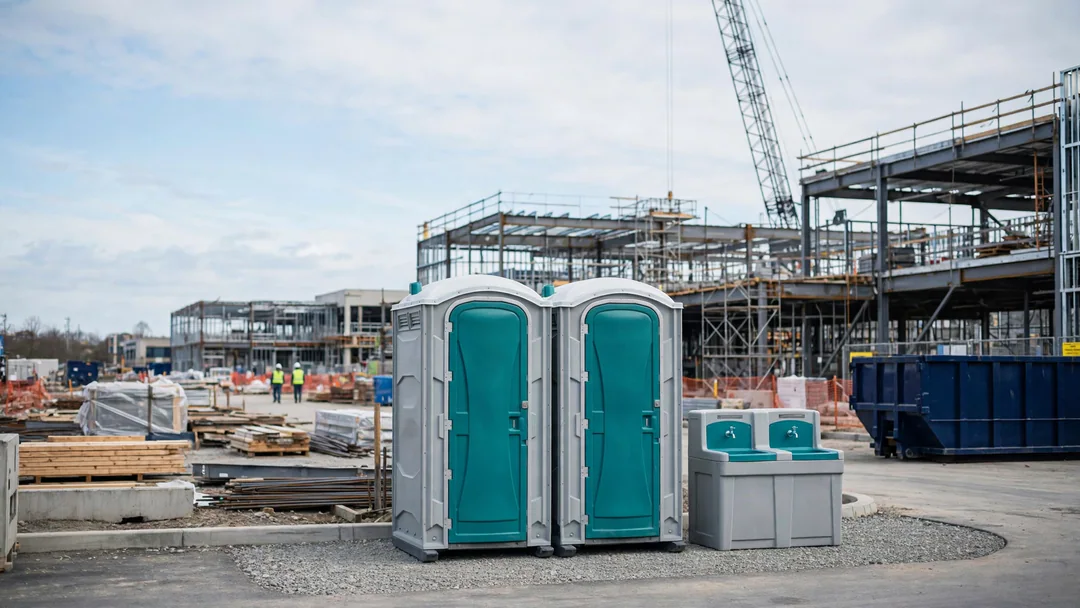
For construction, OSHA's 29 CFR 1926.51 sets minimum toilet counts by crew size; our OSHA jobsite toilet guide covers the details. Long Johnson County and Wichita builds often use long-term portable toilet rentals with weekly service.
Winters are cold enough that holding tanks may need antifreeze and service routes can be delayed by snow and ice. Summer heat increases usage at events. After storms, emergency portable toilets support cleanup crews, and public events should include ADA-accessible units.
Climate and seasonal considerations
Kansas has a continental climate with hot summers, cold winters and big swings between them. Spring and early summer bring severe thunderstorms, large hail and tornadoes, and hail damage to roofs and siding is a major source of rental demand in Wichita, Topeka and the Kansas City suburbs alike.
Wind is steady across much of the state, especially on the open plains, which matters for loose debris in containers and for securing portable toilets. Winters bring snow, ice and sub-freezing stretches; ice storms can bring down limbs, and snowpack can make driveways and side streets difficult for heavy trucks.
Plan for the season you are working in. Tarp open containers on windy days, keep an eye on dumpster weight limits after rain or snow, and read our winter portable toilet guide before booking units from late fall through early spring.
Construction activity and common projects
Wichita is known as the Air Capital of the World, and aircraft manufacturing remains central to its economy, with large aviation plants and suppliers across the area. That industrial base supports plant maintenance, warehouse and facility projects that need industrial-scale containers.
Johnson County, including Overland Park, Olathe, Lenexa and Shawnee, is the fastest-developing part of the state, with new subdivisions, office parks and retail. Kansas City, Kansas, has seen major commercial development in the Village West area, while Topeka and Lawrence see government, university and residential work.
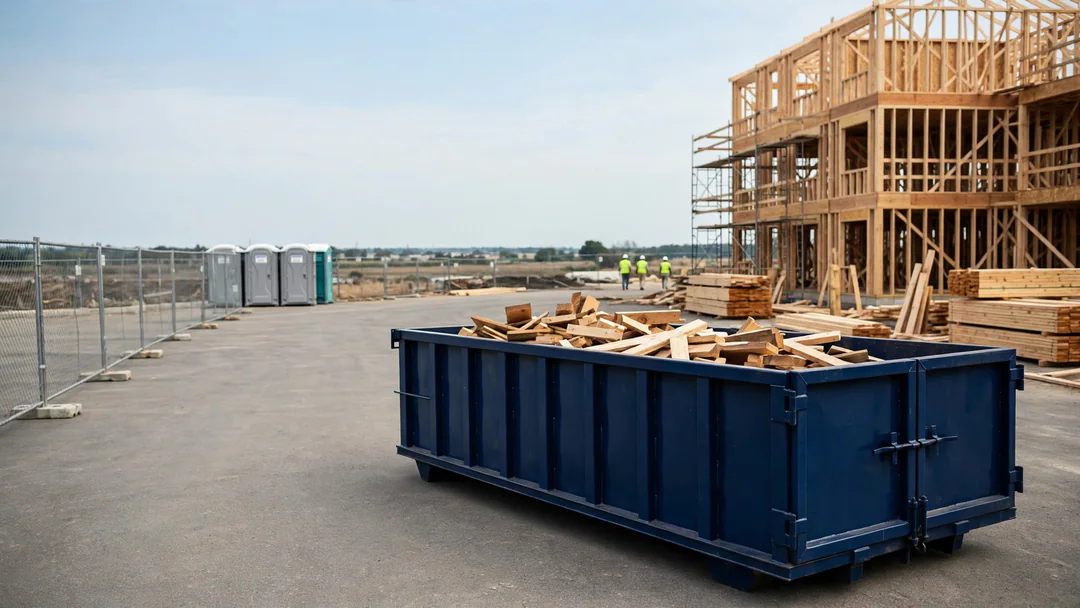
Rural Kansas brings agricultural projects such as barn and grain bin repairs, farmstead cleanouts and fence replacement. Builders typically pair construction dumpsters with jobsite portable toilets.
- Hail-damaged roof and siding replacement
- Tornado and wind damage cleanup
- New residential construction in Johnson County
- Aviation plant and warehouse maintenance
- Farmstead, barn and grain bin cleanouts
- Basement remodels and finishing
- Estate and home cleanouts
Disposal rules and restricted materials
Solid waste in Kansas is regulated by the Kansas Department of Health and Environment (KDHE), which permits landfills, transfer stations and construction and demolition landfills. Counties generally plan solid waste management locally, and many operate their own landfills, transfer stations or household hazardous waste programs.
Some materials are restricted from regular landfill disposal or need special handling. Whole tires, lead-acid batteries, used motor oil, hazardous chemicals and appliances containing refrigerant are commonly restricted, and many facilities handle yard waste or brush separately. Accepted materials vary from one facility to another.
Ask your hauler before loading anything uncertain, and read what you cannot put in a dumpster. Many contractors separate concrete, metal and clean wood for recycling; see construction debris recycling for ideas.
Permits in Kansas
Kansas does not have a statewide dumpster permit. A container on your own driveway or private lot usually does not need one. Placing it on a public street, sidewalk or right-of-way typically requires city approval, and cities often attach conditions such as reflectors, barricades or time limits.
Rules differ between Wichita, Overland Park, Topeka and Kansas City, Kansas, which is governed by the Unified Government of Wyandotte County and Kansas City. Johnson County suburbs commonly have HOAs with rules on how long containers or portable toilets can sit in view, and rural properties may answer to county rules.
Confirm with your city or county and your HOA before delivery. Our dumpster permit guide and portable toilet permit guide explain the questions to ask and how to plan placement ahead of time.
Event sanitation planning
The Kansas State Fair is held each September in Hutchinson, and county fairs, rodeos and harvest festivals take place across the state from midsummer into fall. Small-town celebrations often happen in parks or on closed downtown streets, which can require city approval.
Wichita hosts Riverfest along the Arkansas River each year, and college athletics draw big crowds in Lawrence for the University of Kansas and Manhattan for Kansas State. Kansas Speedway in Kansas City, Kansas, hosts NASCAR race weekends, and Flint Hills events draw visitors to the prairie.
Spring and summer events need a plan for wind, heat and storms. Size orders with our porta potty quantity guide, place hand-washing stations near food and work through the event sanitation checklist early.
Cities in Kansas
- Wichita
- Overland Park
- Kansas City
- Topeka
- Olathe
- Lawrence
- Shawnee
- Manhattan
Major metro areas: Kansas City (Kansas side) · Wichita · Topeka · Lawrence · Manhattan
Services in Kansas
Kansas rental FAQs
Do I need a permit for a dumpster in Kansas?
There is no statewide permit. Driveway placement usually does not need one, while street or right-of-way placement typically requires city approval. Wichita, Overland Park, Topeka and Kansas City, Kansas, each set their own rules.
What size dumpster fits a Kansas hail roof replacement?
Most single-family re-roofs fit a 10- to 20-yard container, depending on roof size and layers. Shingles are heavy, so confirm the weight allowance with your provider before you book.
Will portable toilets freeze in a Kansas winter?
They can during hard freezes. Many providers add antifreeze or brine to holding tanks and adjust service schedules in cold months. Ask about winter options when you book.
Can a dumpster be delivered to a rural farm in Kansas?
Often, yes. Share clear directions and describe the road and placement spot, since soft field edges and long gravel drives can be difficult after rain. Coverage depends on the provider serving your county.
What items are restricted from Kansas dumpsters?
Hazardous chemicals, tires, lead-acid batteries, used oil and appliances with refrigerant are commonly restricted. Each facility sets its own accepted list, so confirm with your hauler.
Is Haul & Hygiene a Kansas company?
We are a nationwide coordination network that connects you with independent haulers and sanitation providers serving your Kansas address. Call us with your ZIP code and dates.
Sources and official resources
Neighboring states
Ready to book a dumpster?
Planning a project in Kansas? Share your ZIP code and dates to check provider availability.