Porta Potty Rental Guide
Winter Portable Toilet Rental
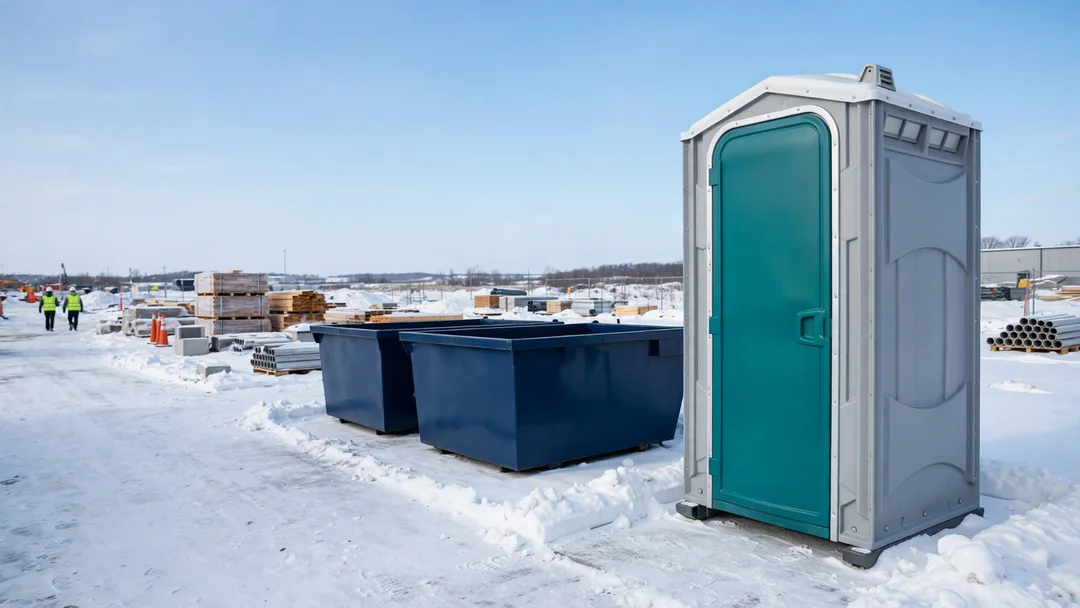
Cold weather does not stop job sites or winter events, but it changes how portable toilets are set up, serviced, and used.
One quick call to a real person. You approve the price before anything ships.
- All 50 states + DC
- Price confirmed before delivery
- Pricing explained up front
How do portable toilets work in winter?
In freezing weather, providers typically add a salt brine or other freeze-resistant solution to the holding tank, adjust service schedules, and may offer heated units or restroom trailers with climate control. Sites need cleared, safe paths and truck access through snow. Hand washing stations with water may need freeze protection. Options vary by provider and region.
What changes when temperatures drop
A standard portable toilet holds liquid waste and a deodorizing solution. When temperatures fall below freezing, that tank can freeze, making the unit unusable and harder to service. Cold also affects the people using the unit: icy floors, frozen seats, and dark early evenings all become comfort and safety issues.
Providers in cold regions plan for this routinely. The key is to tell your provider about winter conditions up front so they can set up and service units accordingly.
Freeze prevention
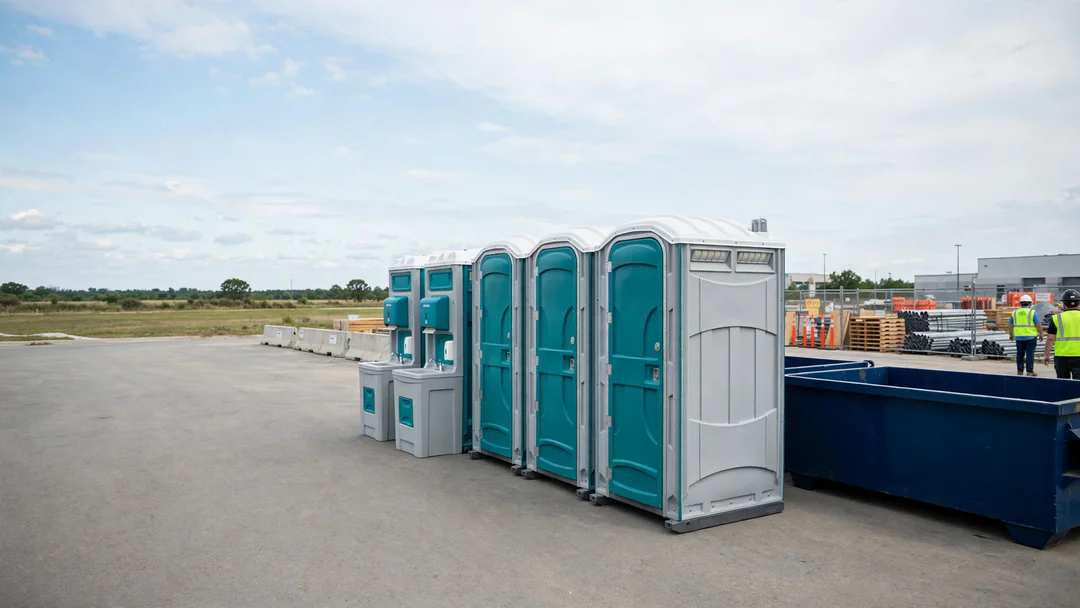
The most common approach is adding a salt brine or similar freeze-resistant mix to the holding tank in place of, or in addition to, the standard deodorizer. Providers may adjust the mix as temperatures change. Units with water-based features, such as flushing models, sinks, and hand washing stations, are harder to protect and may be swapped for sanitizer dispensers or heated options during deep cold. Ask how your provider handles each unit type.
Heated units and trailers
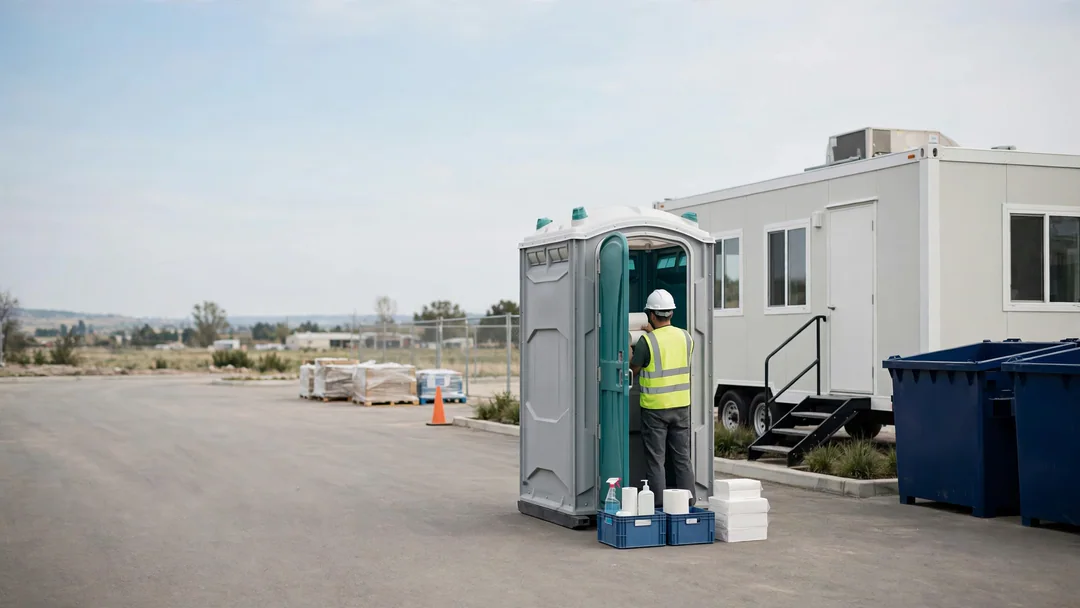
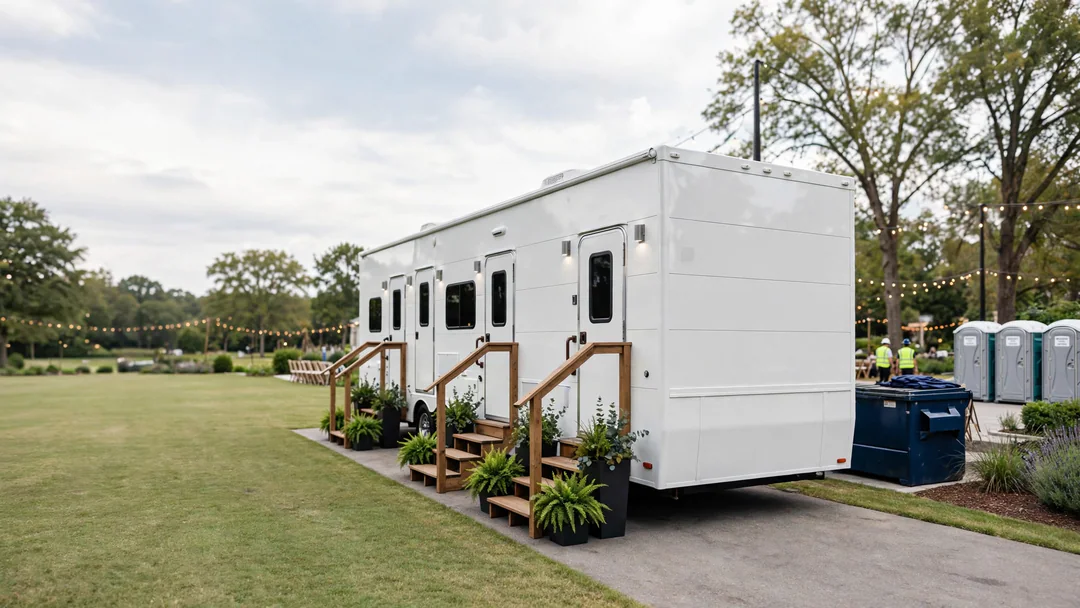
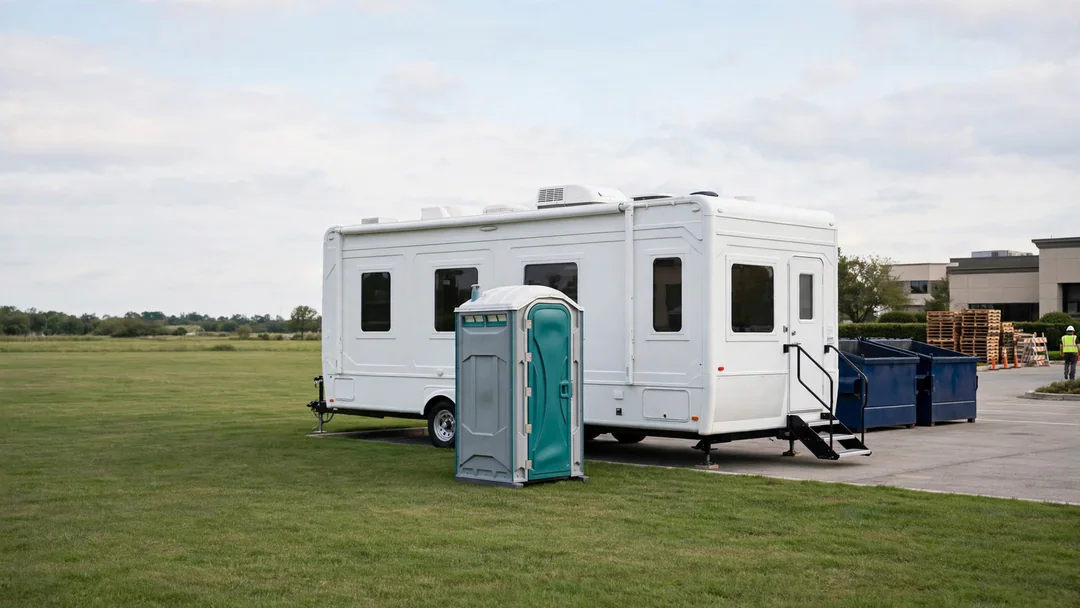
Some providers offer heated portable toilets with small heaters, often powered by propane or electricity, and some offer insulated units. Restroom trailers with heating are popular for winter weddings, holiday markets, and VIP areas, though they typically need power and freeze protection for water lines. Availability varies widely, so book early if heated options matter.
- Ask what heat source a unit uses and whether it needs power on site
- Confirm safety features and placement rules for any fuel-fired heater
- Ask how water lines in trailers are protected from freezing
- Plan for extra servicing if units are heavily used
Placement in snow and ice
Winter placement is about safety and access:
- Set units on firm, level ground that will not heave or shift as it freezes and thaws
- Keep a cleared, sanded, or salted path to the door
- Keep units clear of roof edges and areas where snow is piled or plowed
- Maintain a plowed route for the service truck
- Anchor or stake units against winter wind
- Add lighting near units for short winter days
Servicing schedules in winter
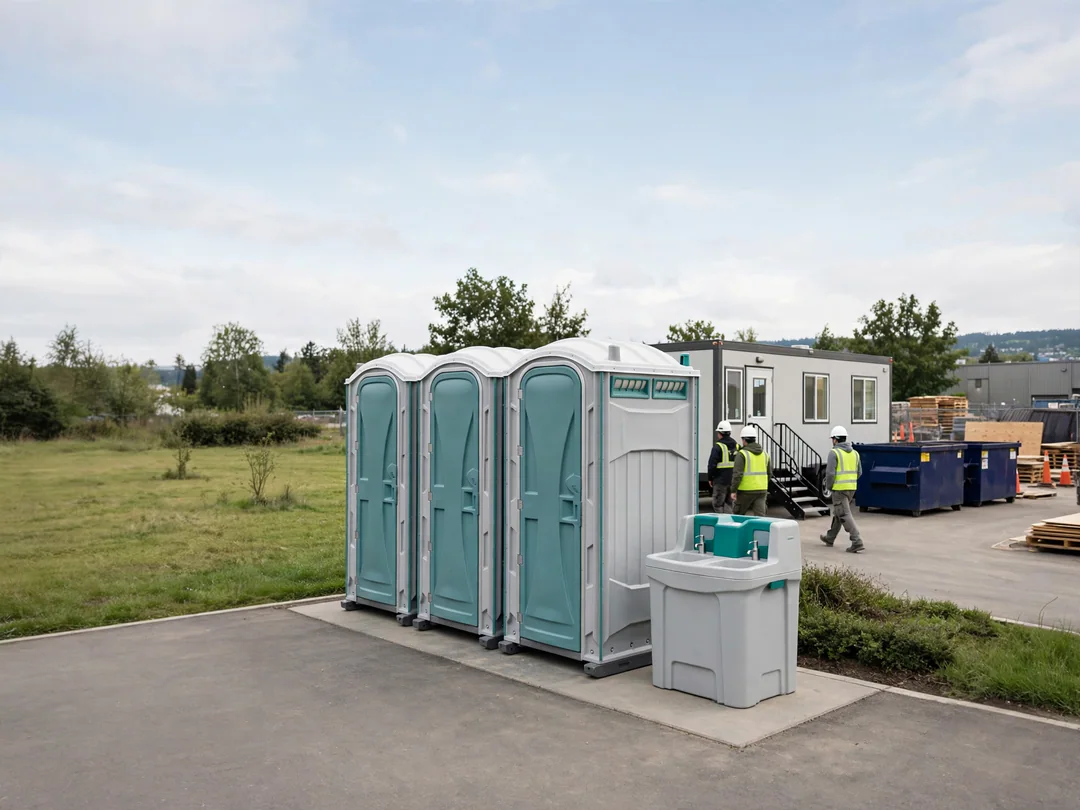
Service in winter can be slower and more weather-dependent. Storms may delay visits, and frozen tanks are harder to pump. Some providers increase frequency in cold weather to keep the freeze-resistant mix effective and tanks from filling with slush. Ask how storms affect the schedule and what happens if a visit is missed. The portable toilet maintenance page covers standard service.
Construction sites in winter
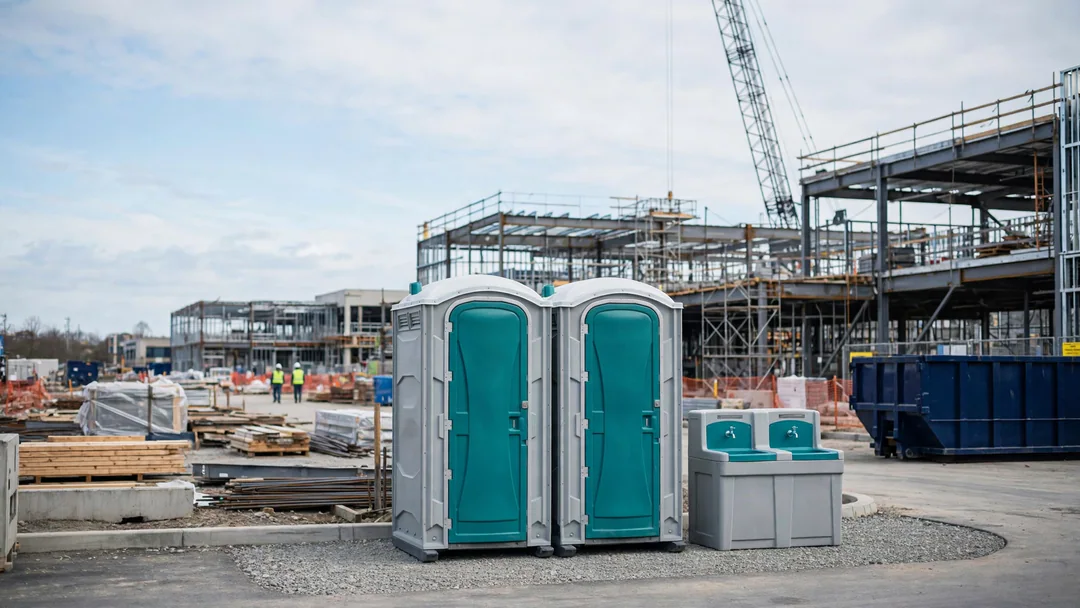
Federal OSHA toilet requirements under 29 CFR 1926.51 apply year-round, and winter does not reduce them. Crews still need facilities they can reach promptly and use safely. Many contractors move units closer to the work in winter and keep paths cleared. See OSHA jobsite toilet requirements and the construction porta potty page. For long winter projects, long-term rental agreements usually spell out cold-weather service.
Winter events
Holiday markets, ski races, ice festivals, and winter weddings all need restrooms. Guests in heavy coats take longer in units, so lines can build faster than in summer. Place units close to activity, light the area, and consider heated trailers for formal or long events. Our event sanitation checklist covers the rest of the planning.
Emergencies and storm recovery
Winter storms sometimes create sudden sanitation needs, such as a power or water outage at a facility, a burst pipe that closes building restrooms, or a recovery crew working in the cold. In those cases, speed and access matter most. Tell the provider about road conditions, where units can safely be placed, and how long you expect to need them. Emergency porta potty service is designed for these short-notice situations, though availability can tighten when a storm affects a whole region at once.
Questions to ask your provider
- Freeze protection
What do you add to tanks, and at what temperatures?
- Unit options
Do you offer heated or insulated units or heated trailers?
- Water features
How are sinks and hand washing stations handled in deep cold?
- Storm policy
What happens to service visits during snowstorms?
- Access needs
What do you need from me to keep the route open for your truck?
Plan your winter sanitation
Compare standard units, heated trailers, and emergency porta potties for storm-related needs on our porta potty rental page, and find providers on the locations page.
Winter Portable Toilet Rental FAQs
Do porta potties freeze in winter?
They can. Providers commonly add salt brine or another freeze-resistant solution to holding tanks and adjust service in cold weather. Tell your provider about expected temperatures when you book.
Can I rent a heated porta potty?
Some providers offer heated or insulated units, and many restroom trailers have heat. Availability varies by area, so ask early.
Are hand washing stations available in winter?
Sometimes, but water can freeze. Providers may use heated stations, add freeze protection, or substitute sanitizer during very cold periods.
Does service change in snowy weather?
Storms can delay visits, and some providers service more often in cold weather. Keeping a plowed route to the units helps service stay on schedule.
Do OSHA toilet rules apply in winter?
Yes. The construction sanitation standard applies year-round, so jobsite toilets must remain available and usable in cold weather.
Related pages
Ready to book a dumpster?
Whatever the project, start with your ZIP code. We will check provider availability for your dates.