
Nebraska · Midwest
Dumpster & Porta Potty Rental in Nebraska
Plan a roll-off dumpster or portable toilet rental anywhere in Nebraska, with state-specific guidance on permits, disposal and seasons.
One quick call to a real person. You approve the price before anything ships.
- All 50 states + DC
- Price confirmed before delivery
- Pricing explained up front
Can I rent a dumpster or porta potty in Nebraska?
Yes. We coordinate roll-off dumpster and portable toilet rentals across Nebraska through independent local providers. Pricing, sizes and delivery windows depend on the provider serving your ZIP code, and permits are handled at the city or county level when equipment goes on a public street.
Dumpster and portable toilet rental in Nebraska
Nebraska stretches roughly 400 miles from the Missouri River bluffs in the east to the high plains and Pine Ridge country of the Panhandle. Most of the population lives in the eastern third, where Omaha, Lincoln and the fast-growing Sarpy County suburbs generate the bulk of dumpster and portable toilet requests.
West of Lincoln, the Platte River valley and Interstate 80 tie together a string of regional hubs, including Grand Island, Kearney and North Platte. Farther out, ranches, feedlots and small towns are spread thinly, and the distance between a job and the nearest hauler matters more than almost anything else.
Haul & Hygiene coordinates with independent local haulers and sanitation providers across the state. Your provider confirms container sizes, delivery windows and service schedules for your specific address, whether that is a midtown Omaha bungalow or a farmstead off a gravel county road.
Dumpster rental in Nebraska: what to know
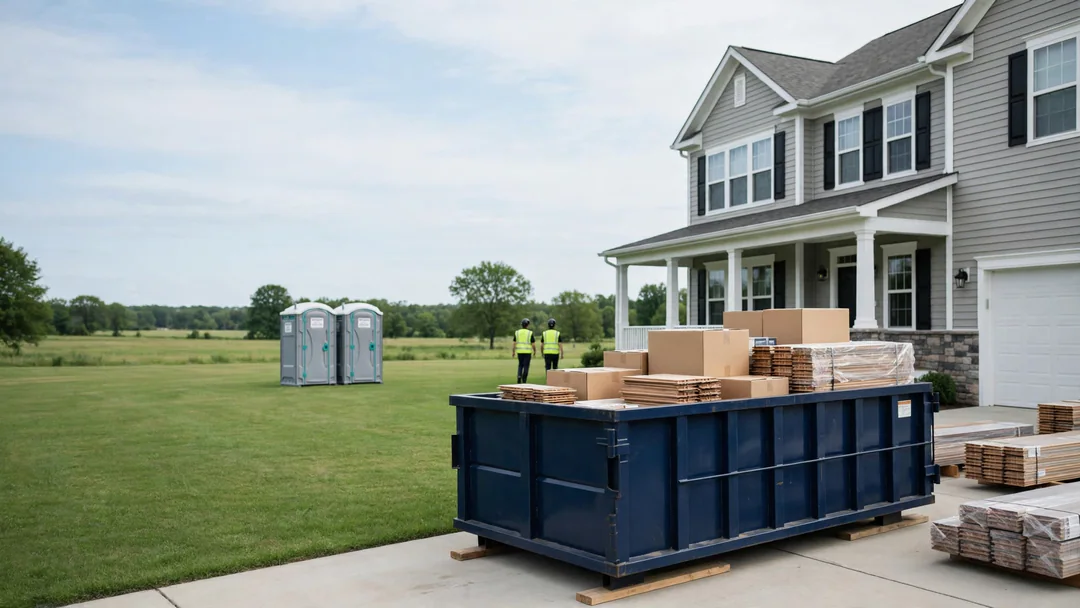
In Omaha and Lincoln neighborhoods, 10- and 20-yard containers cover most roof tear-offs, bathroom and kitchen remodels and garage cleanouts. A roof replacement on a typical one- or two-story house often fits a 20-yard, though heavy layered shingles can reach weight limits before volume. Compare options on our dumpster sizes page.
New construction and commercial projects commonly use 30- and 40-yard roll-off dumpsters. On farms and acreages, the larger sizes are popular for outbuilding cleanouts, but confirm that the truck can reach the spot on a gravel lane, especially during spring thaw when unpaved surfaces soften.
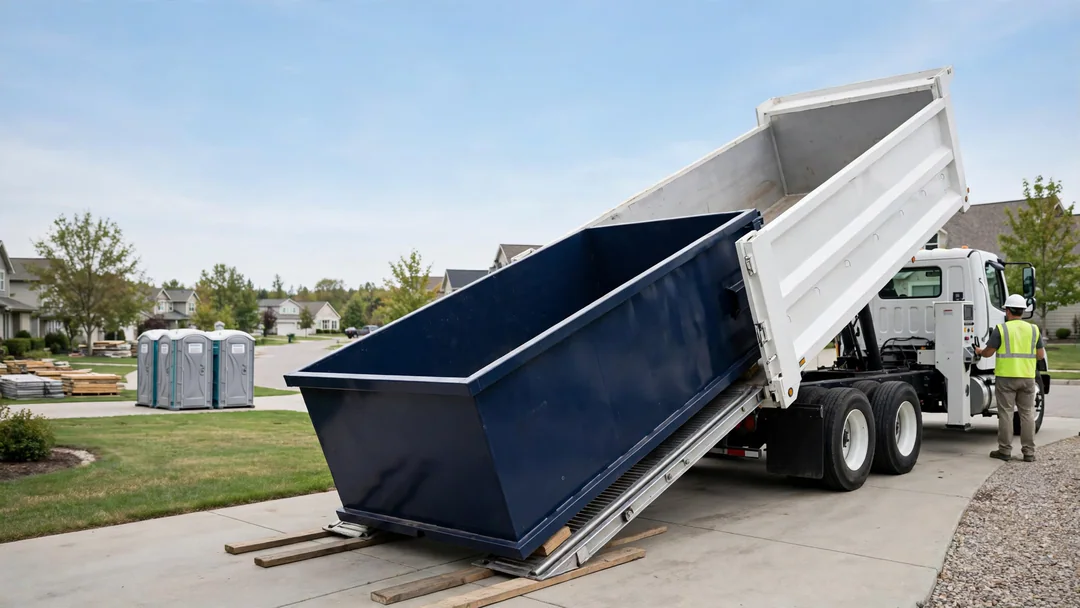
In winter, clear snow from the placement area and mark the spot so the driver can set the container squarely. Boards under the rails help protect concrete; see how to prepare your driveway.
Portable toilet rental in Nebraska
Nebraska's temperature range is the biggest planning factor for portable toilets. Summer heat increases odor and usage, so busy jobsites and multi-day events often add service visits. Winter cold can freeze holding tanks and hand-wash water, so ask your provider about antifreeze, heated options or swapping hand-wash stations for sanitizer dispensers.
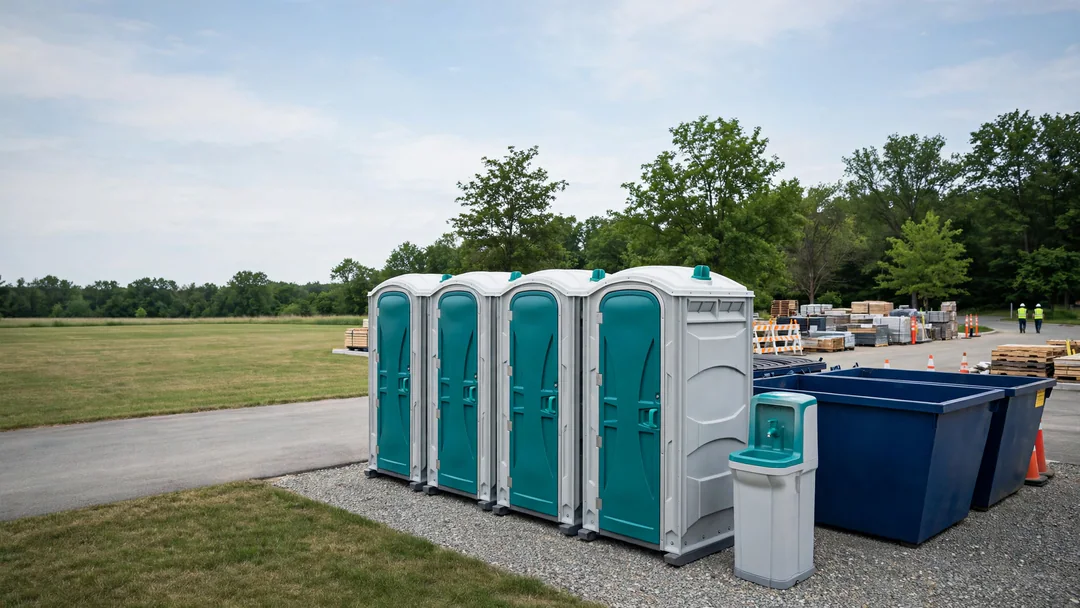
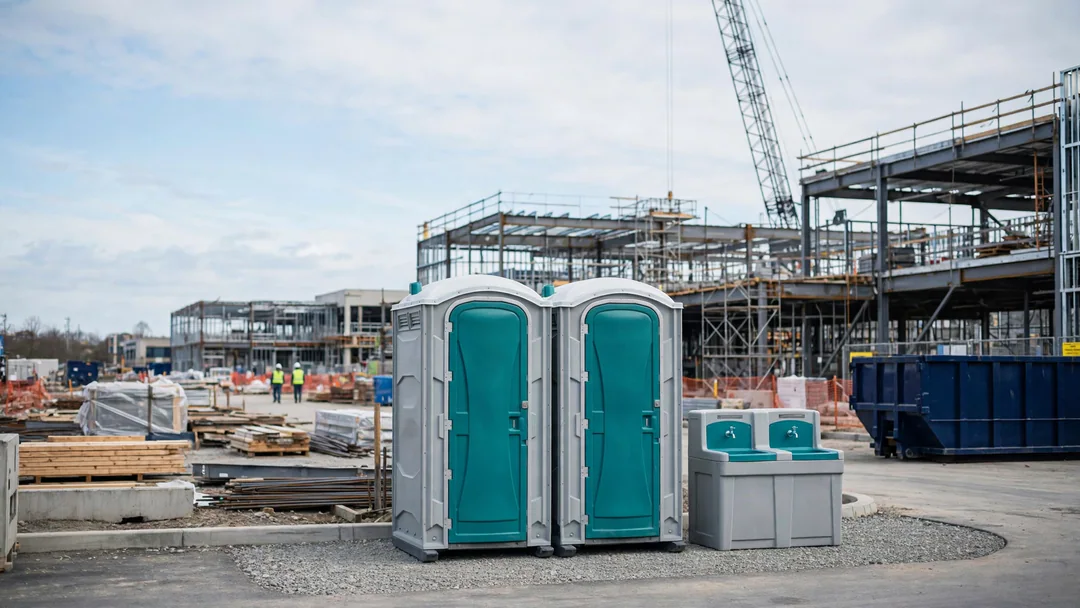
Wind is a real concern on open prairie sites. Ask whether units can be staked or tied down, and keep them away from the edge of excavations. For construction, OSHA 29 CFR 1926.51 sets minimum toilet counts by crew size; see our OSHA jobsite toilet guide.
Rural sites may sit far from the provider's base, which affects service frequency. Long projects usually work best as long-term rentals with a set service day. Include an ADA-accessible unit at public events and fairs.
Climate and seasonal considerations
Nebraska has a continental climate with sharp swings between seasons. Summers are hot, often humid in the east and drier toward the west, while winters bring hard freezes, wind chills well below zero and periodic blizzards that can close stretches of Interstate 80.
Spring and early summer are severe-weather season. Thunderstorms with large hail, damaging straight-line winds and tornadoes are common across the state, and hail-driven roof replacement is one of the most frequent reasons homeowners rent a container. Book quickly after a big storm, because demand can spike across an entire metro.
Frozen ground in winter can make placement on lawns or gravel easier but leaves pavement icy, and portable toilet tanks can freeze without treatment. Ask about antifreeze or brine and read our winter portable toilet guide. Wet spring snow and rain also add weight to open loads; see dumpster weight limits.
Construction activity and common projects
Eastern Nebraska drives most construction activity. Omaha is home to several large corporate headquarters, insurance and financial firms, health systems and a growing data center sector, and western Douglas County and Sarpy County continue to add subdivisions, apartments and commercial strips. Lincoln adds steady university, state government and residential work.
Agriculture shapes the rest of the state. Grain storage, livestock facilities, ethanol plants, meat processing and farm equipment dealers all generate demolition, expansion and maintenance projects, and many farm families tackle machine shed and outbuilding cleanouts between seasons.
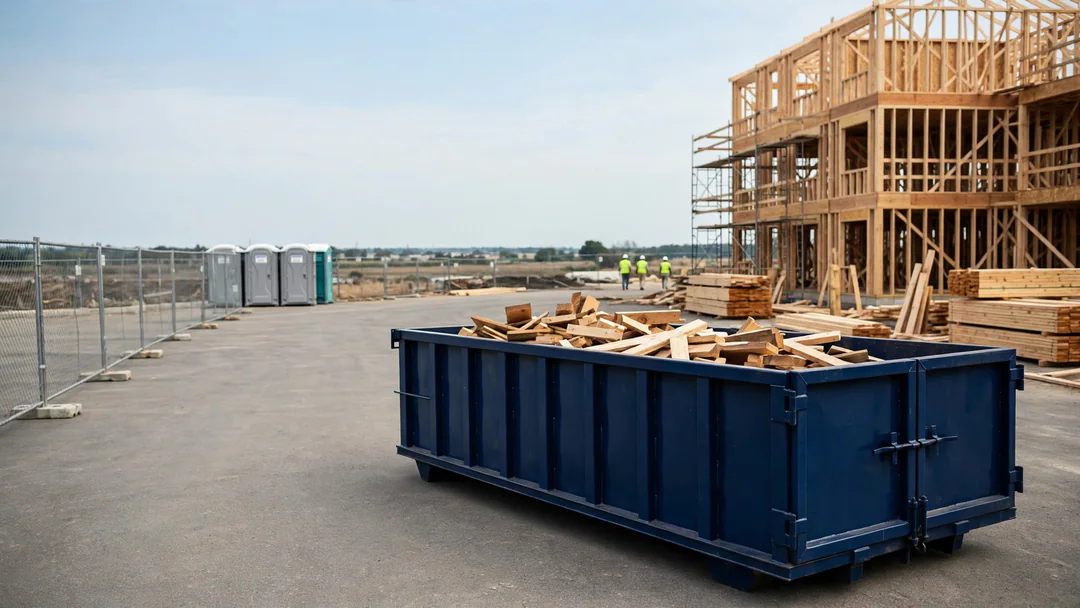
Across older neighborhoods in Omaha, Lincoln and smaller towns, basement finishing, kitchen remodels and storm-related roofing are everyday work. Larger jobs typically pair construction dumpsters with jobsite portable toilets, and rural crews often need units placed well away from the nearest town.
- Hail and wind roof replacement
- Basement finishing and waterproofing
- New subdivisions in Sarpy and western Douglas counties
- Farm outbuilding, grain bin and machine shed cleanouts
- Agricultural processing and ethanol plant maintenance
- Data center and commercial construction around Omaha
- Estate and farmhouse cleanouts
- County fairs, rodeos and tailgate events
Disposal rules and restricted materials
Solid waste in Nebraska is regulated by the Nebraska Department of Environment and Energy (NDEE), which permits municipal landfills, construction and demolition (C&D) landfills, transfer stations and compost sites. Many rural counties rely on transfer stations that consolidate waste and send it to regional landfills, which can add haul distance to a rental.
Like many states, Nebraska restricts certain items from ordinary landfill disposal, including whole tires, lead-acid batteries, used motor oil and appliances that still contain refrigerant. Nebraska also restricts yard waste such as grass clippings and leaves from landfills during the growing season, so large brush and yard loads may need to go to a compost site. Accepted materials vary by facility.
Check what you cannot put in a dumpster and consider construction debris recycling for clean concrete, metal and wood.
Permits in Nebraska
Nebraska does not have a single statewide dumpster permit. A container placed entirely on a private driveway or lot usually does not need one, but placement on a public street, alley or sidewalk typically requires approval from the city, and rules differ between Omaha, Lincoln, Bellevue and smaller communities.
Outside city limits, county roads and their ditches are public right-of-way, so do not assume a rural roadside spot is fine. Newer subdivisions in Sarpy County, western Omaha and south Lincoln often have HOA covenants limiting how long a container or portable toilet can stay visible from the street.
Confirm with your city or county and HOA before delivery. Our dumpster permit guide and portable toilet permit guide list what to ask, and providers in our network can tell you what they typically see in your area.
Event sanitation planning
Nebraska's outdoor event season runs from late spring through early fall. The Nebraska State Fair is held in Grand Island in late summer, and county fairs, rodeos and threshing shows fill July and August across the state. Small-town celebrations often take over a main street or park for a weekend.
Omaha hosts the NCAA Men's College World Series each June, which brings crowds, tailgates and watch parties around the downtown ballpark. In Lincoln, Husker football Saturdays in the fall generate tailgating and private gatherings well beyond the stadium. The Sandhill crane migration along the central Platte each spring also brings visitors to the Kearney and Grand Island area.
For any gathering, size the order with our porta potty quantity guide, add hand-washing stations near food and work through the event sanitation checklist.
Cities in Nebraska
Major metro areas: Omaha–Council Bluffs · Lincoln · Grand Island · Kearney · North Platte · Scottsbluff
Services in Nebraska
Nebraska rental FAQs
Do I need a permit for a dumpster in Nebraska?
There is no statewide dumpster permit. A container on your own driveway usually does not need one, while placement on a street, alley or sidewalk typically requires city approval. Omaha, Lincoln and other towns set their own rules, so confirm with your city or county and your HOA.
How quickly can I get a dumpster after a hailstorm in Nebraska?
It depends on demand. After a large hail event, roofers and homeowners across a metro often book at once, and availability can tighten for several weeks. Call as soon as your roofing contract is set, and ask your roofer whether they are arranging the container.
Can I put yard waste in a dumpster in Nebraska?
Often not with general trash. Nebraska restricts grass clippings and leaves from landfills during the growing season, so many haulers ask you to keep yard waste separate or send it to a compost site. Brush and tree limbs may be handled differently, so ask your provider.
Can a dumpster be delivered to a farm or acreage?
Usually, as long as the truck can reach a firm, level spot. Gravel lanes, soft ground during spring thaw and low overhead wires can limit placement. Describe the route to your provider, and expect distance from town to factor into the quote.
Will portable toilets freeze during a Nebraska winter?
They can. Many providers add antifreeze or brine to holding tanks in cold months and may adjust the service schedule. Hand-wash stations with water are especially prone to freezing, so ask about winter alternatives.
When should I book portable toilets for a county fair or College World Series event?
Book early. Summer is the busiest season for fairs, rodeos and festivals, and units in Omaha can be in high demand during the College World Series in June. Several weeks of lead time is wise, especially for ADA units or restroom trailers.
Sources and official resources
Neighboring states
Ready to book a dumpster?
Planning a project in Nebraska? Share your ZIP code and dates to check provider availability.