
Ohio · Midwest
Dumpster & Porta Potty Rental in Ohio
Plan a roll-off dumpster or portable toilet rental anywhere in Ohio, with state-specific guidance on permits, disposal and seasons.
One quick call to a real person. You approve the price before anything ships.
- All 50 states + DC
- Price confirmed before delivery
- Pricing explained up front
Can I rent a dumpster or porta potty in Ohio?
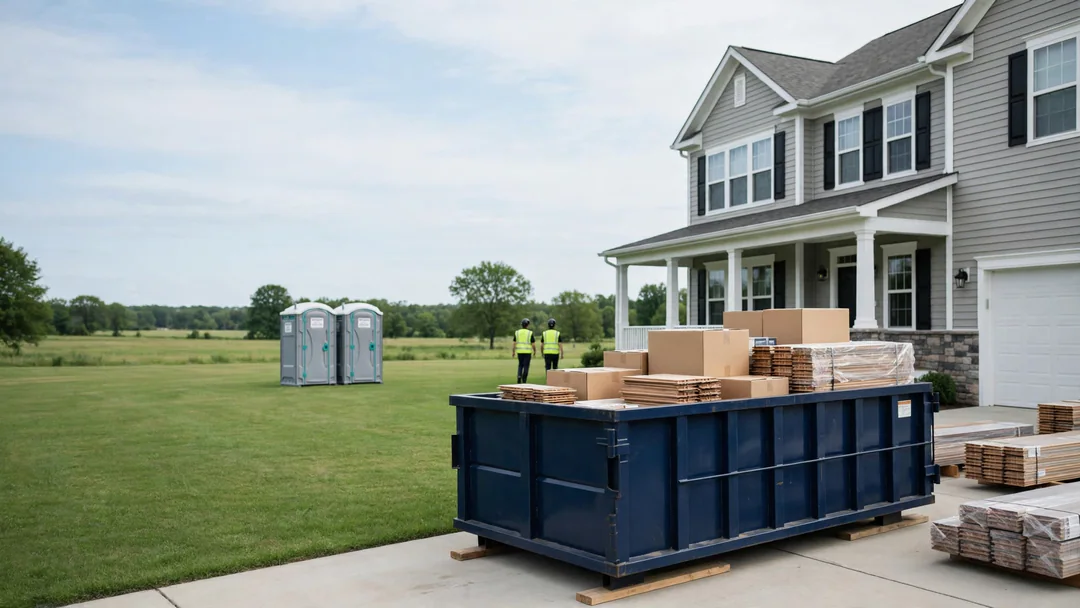
Yes. We coordinate roll-off dumpster and portable toilet rentals across Ohio through independent local providers. Pricing, sizes and delivery windows depend on the provider serving your ZIP code, and permits are handled at the city or county level when equipment goes on a public street.
Dumpster and portable toilet rental in Ohio
Ohio is unusual in having several mid-size and large metros rather than one dominant city. Columbus, Cleveland, Cincinnati, Dayton, Akron, and Toledo each have their own building stock, permit offices, and disposal options, and smaller cities and farm counties fill in between. That spread means the right rental plan often depends as much on which county you are in as on the project itself.
Haul & Hygiene coordinates with independent haulers and sanitation providers in our network throughout Ohio. Your provider delivers, services, and removes the equipment; we help you match the container or restroom setup to the job and flag what to confirm with your city. Our how it works page walks through the steps.
Dumpster rental in Ohio: what to know
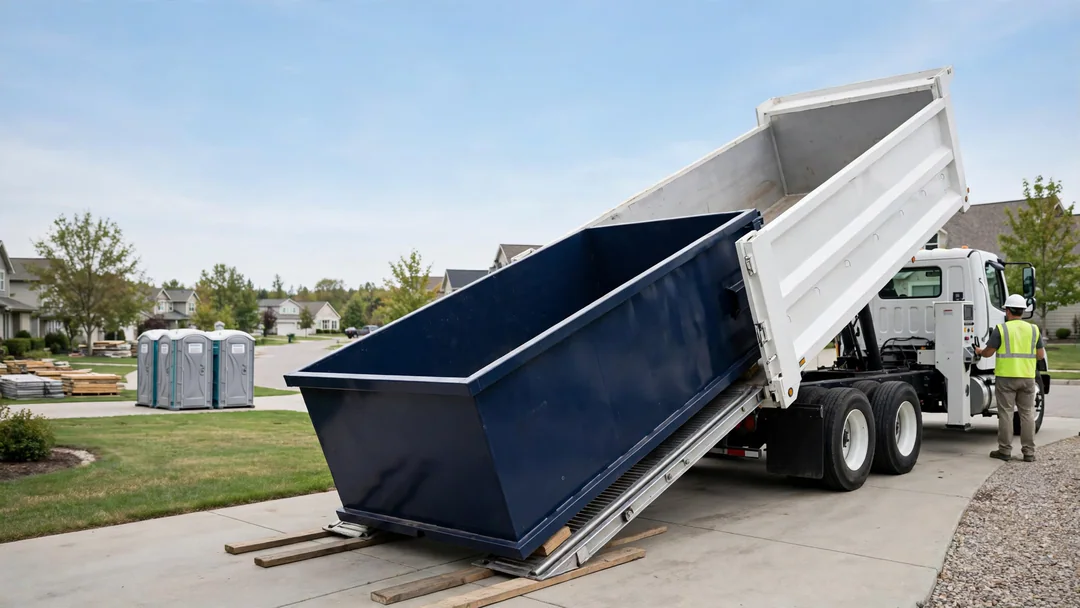
Ohio projects use the full range of roll-off sizes. A 10-yard container is often enough for a bathroom remodel or concrete and dirt, 20-yard containers are a common choice for roofing and mid-size cleanouts, and 30- or 40-yard containers suit large renovations, commercial work, and industrial cleanouts. Dimensions and weight allowances vary by provider and location.
Older housing in many Ohio cities often means plaster, lath, and masonry, which are heavy, so check weight limits before filling. Narrow driveways and detached rear garages are common in older neighborhoods, so measure clearance before delivery. In winter, plan for snow removal around the container. Compare sizes in our dumpster size guide and our driveway prep guide.
Portable toilet rental in Ohio
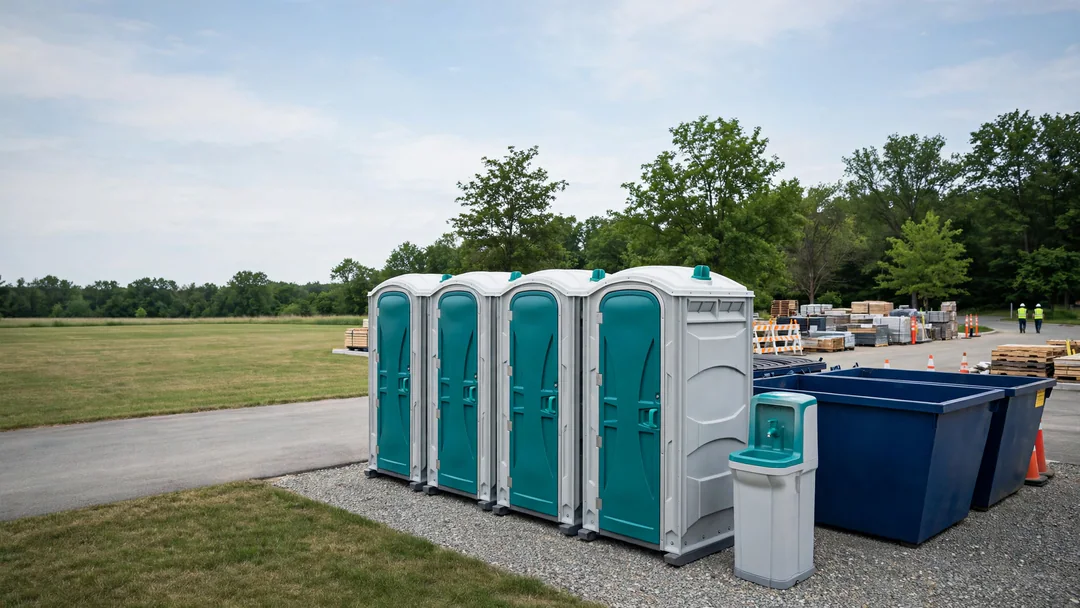
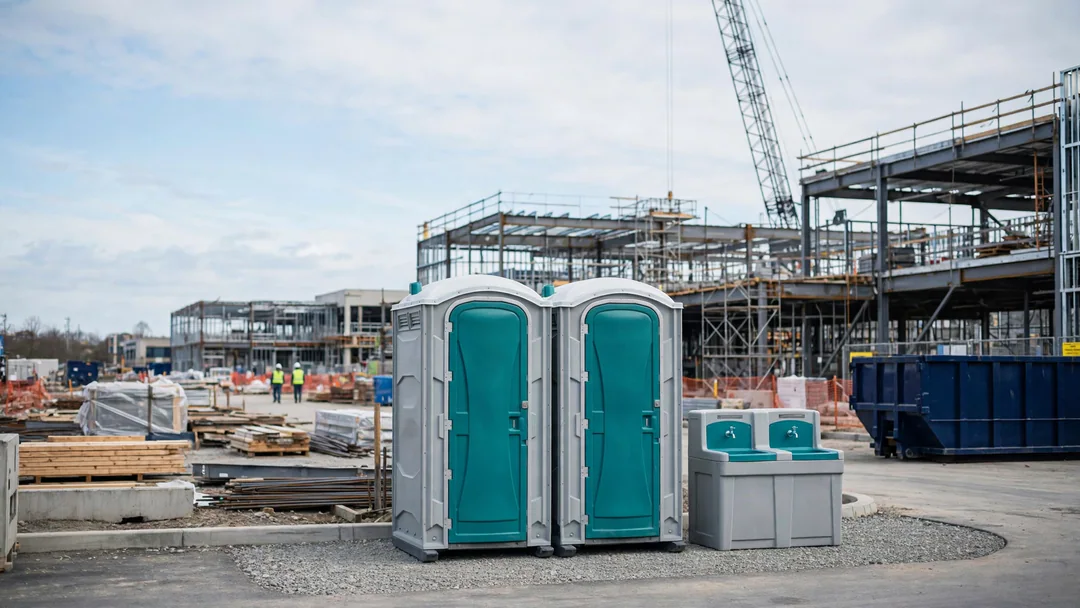
Ohio construction crews work year-round, so restroom plans need to cover both humid summers and freezing winters. Federal OSHA rules (29 CFR 1926.51) set minimum toilet counts by crew size; see our OSHA jobsite toilet guide. In winter, ask your provider about antifreeze treatments, how they handle service during snow, and whether hand-washing stations will be available in freezing weather.
Long industrial or plant projects often use long-term rentals with a set service schedule. For fairs and festivals, place units on firm, level ground, add accessible units, and keep service lanes clear. Quantities depend on attendance and duration, so use our quantity guide as a starting point.
Climate and seasonal considerations
Ohio has four distinct seasons. Summers are warm and humid, and winters bring snow and cold, with heavier lake-effect snow possible in the northeast near Lake Erie. The bigger issue for many projects is the freeze-thaw cycle: repeated freezing and thawing damages roofs, gutters, driveways, and foundations, which drives steady spring repair work.
Winter affects placement. Frozen or snow-covered driveways may need clearing before delivery, and boards under a container can help protect pavement. Spring thaw softens yards, so avoid placing heavy containers on lawns then. For portable toilets, cold weather can freeze waste tanks, so ask about winterizing treatments and plan clear, salted access. See our winter portable toilet guide for more.
Construction activity and common projects
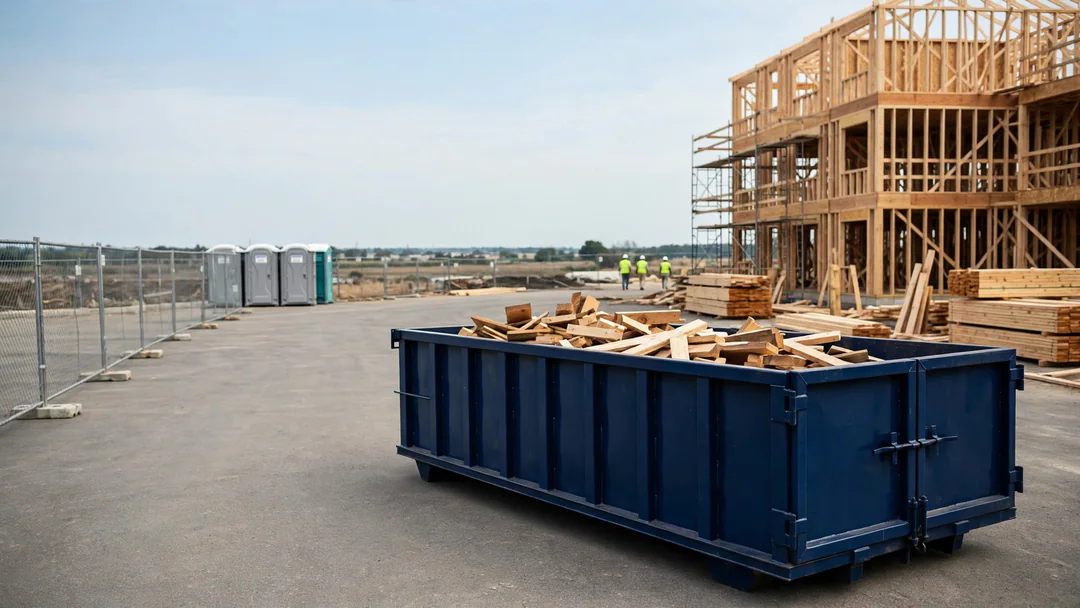
Ohio has a long manufacturing history, and industrial work remains a large part of the construction picture: plant upgrades, equipment changes, warehouse and logistics buildings, and facility cleanouts. The Columbus region has seen notable growth in housing, offices, and large technology and data-related facilities, while older cities such as Cleveland, Akron, Toledo, and Youngstown see redevelopment, rehab, and demolition of aging structures.
For homeowners, common projects include roof and siding replacement, basement waterproofing and finishing, kitchen remodels, and cleanouts of older houses. Our industrial projects and home renovation pages cover planning for each, and the debris recycling guide explains sorting options.
- Freeze-thaw roof, gutter, and driveway repairs
- Basement waterproofing and finishing
- Manufacturing plant upgrades and cleanouts
- Warehouse and logistics construction
- Older home rehab and demolition
- County fairs and community festivals
- College game day and tailgate events
- Estate and rental property cleanouts
Disposal rules and restricted materials
The Ohio Environmental Protection Agency (Ohio EPA) regulates solid waste facilities at the state level. Ohio also organizes waste planning through county and multi-county solid waste management districts, which often run recycling programs and household hazardous waste collection, so local options can differ from one county to the next.
Construction and demolition debris may go to facilities licensed specifically for that material rather than to a municipal landfill, depending on the load. Items such as tires, lead-acid batteries, used oil, and appliances containing refrigerant typically require separate handling, and hazardous chemicals should never go in a rental container. Confirm accepted materials with your provider and your district. See what you cannot put in a dumpster.
Permits in Ohio
Ohio dumpster permits are handled locally. A container on your own driveway generally does not need a permit, but placing one on a street, tree lawn, sidewalk, or alley usually requires approval from the city, often through a public service, engineering, or building department. Some cities require reflective markings or limit how long a container can stay.
Suburbs and townships may have their own rules separate from the nearby big city, and HOAs or condo associations can add restrictions on placement and duration. Portable toilets for public events may fall under a special event permit. Because requirements vary and change, confirm with your city or township before delivery. Our dumpster permits guide and portable toilet permits guide list what to ask.
Event sanitation planning
Ohio has a busy warm-weather calendar. County fairs run through summer in many counties, and the state also has college football tailgating, community festivals, food and craft fairs, outdoor concerts, races, and weddings at barns and parks. Events in the Lake Erie region and river towns often cluster in summer, while fall brings harvest festivals.
Planning depends on crowd size, event length, alcohol service, and whether guests stay overnight. Include ADA-accessible units, put hand-washing stations near food vendors, and plan service access that will not be blocked once the crowd arrives. Early spring and late fall events may need cold-weather precautions. See our municipal events and event porta potty pages.
Cities in Ohio
- Columbus
- Cleveland
- Cincinnati
- Toledo
- Akron
- Dayton
- Canton
- Youngstown
Major metro areas: Columbus · Cleveland–Elyria · Cincinnati · Dayton–Kettering · Akron · Toledo · Youngstown–Warren–Boardman
Services in Ohio
Ohio rental FAQs
Do I need a permit to put a dumpster on the street in Ohio?
Usually yes. Placing a container on a street, tree lawn, sidewalk, or alley typically requires approval from your city or village. Containers on your own driveway generally do not. Rules vary between cities, suburbs, and townships, so check locally first.
Can I rent a dumpster in an Ohio winter?
Yes. Providers deliver year-round, but clear snow and ice from the placement area first and consider boards under the container to protect pavement. Frozen debris can stick inside, so avoid letting wet material freeze in place when possible.
Which agency oversees solid waste in Ohio?
The Ohio Environmental Protection Agency regulates solid waste facilities statewide. County and multi-county solid waste management districts also run local recycling and household hazardous waste programs, so check yours for local options.
What items are typically not allowed in Ohio rental dumpsters?
Tires, lead-acid batteries, used oil, appliances containing refrigerant, and hazardous chemicals such as solvents and some paints are commonly restricted. Accepted materials vary by provider and disposal facility, so confirm before you load.
How do I keep a portable toilet from freezing on an Ohio job site?
Ask your provider about winterizing treatments added during service, place units out of direct wind when possible, and keep access paths cleared. Service schedules may change in severe weather, so stay in touch with your provider.
What size dumpster do I need for a roof in Ohio?
It depends on the roof area, number of layers, and material. Many single-family tear-offs fit in a 10- to 20-yard container, but shingles are heavy, so share the roof details with your provider to match both volume and weight.
Sources and official resources
Neighboring states
Ready to book a dumpster?
Planning a project in Ohio? Share your ZIP code and dates to check provider availability.