
Michigan · Midwest
Dumpster & Porta Potty Rental in Michigan
Plan a roll-off dumpster or portable toilet rental anywhere in Michigan, with state-specific guidance on permits, disposal and seasons.
One quick call to a real person. You approve the price before anything ships.
- All 50 states + DC
- Price confirmed before delivery
- Pricing explained up front
Can I rent a dumpster or porta potty in Michigan?
Yes. We coordinate roll-off dumpster and portable toilet rentals across Michigan through independent local providers. Pricing, sizes and delivery windows depend on the provider serving your ZIP code, and permits are handled at the city or county level when equipment goes on a public street.
Dumpster and portable toilet rental in Michigan
Michigan is split into two peninsulas and touches four of the five Great Lakes, which gives it an exceptionally long freshwater shoreline dotted with harbors, beaches and lake towns. Most residents live in the Lower Peninsula, especially in metro Detroit and the southeast, along the I-96 corridor through Lansing to Grand Rapids, and in college towns such as Ann Arbor, East Lansing and Kalamazoo.
The Upper Peninsula and the northern Lower Peninsula are lightly populated, with forests, lake cottages and small towns where seasonal homes create spring and fall projects. Older industrial cities, with their aging housing stock, generate a steady flow of renovation and demolition debris.
Haul & Hygiene coordinates with independent haulers and sanitation providers across Michigan. Your provider confirms sizes, access, scheduling and local rules. Call us with your ZIP code and dates to get matched.
Dumpster rental in Michigan: what to know
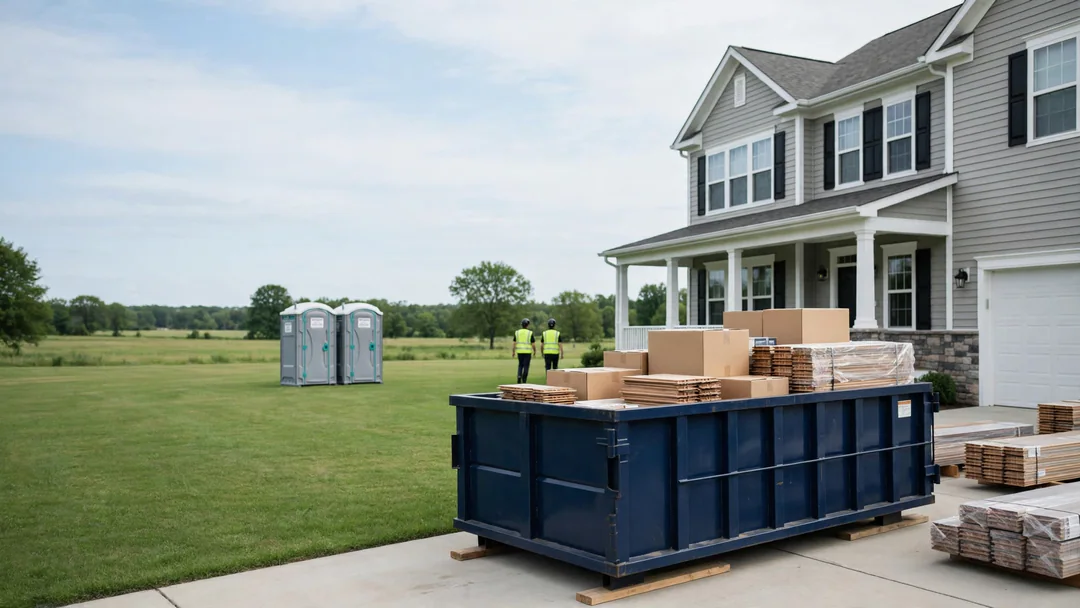
In Michigan, 10- and 15-yard containers are popular for roofing, plaster and concrete jobs, since heavy debris reaches the weight limit before the box fills. A 20-yard is a common choice for kitchen and bath remodels, basement cleanouts and flooring work in older homes.
Larger 30- and 40-yard containers suit whole-house renovations, estate cleanouts, demolition and commercial projects. Lake cottages and northern properties with long, narrow drives may need a smaller container or a careful site check.
Keep yard waste, tires, batteries and appliances out of the load, and in winter, clear the drop zone and avoid adding snow to the container. Compare options in our dumpster size guide.
Portable toilet rental in Michigan
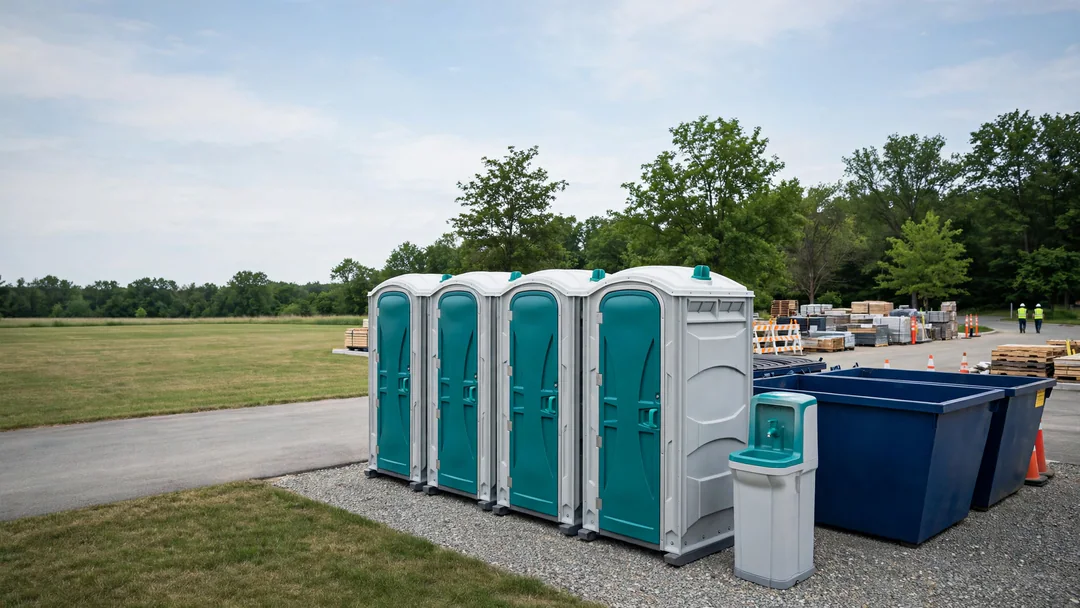
Portable restroom planning in Michigan centers on a busy summer and fall event season and year-round construction. For festivals, weddings and football gatherings, book standard and ADA units plus handwashing stations early, and consider restroom trailers for upscale or multi-day events.
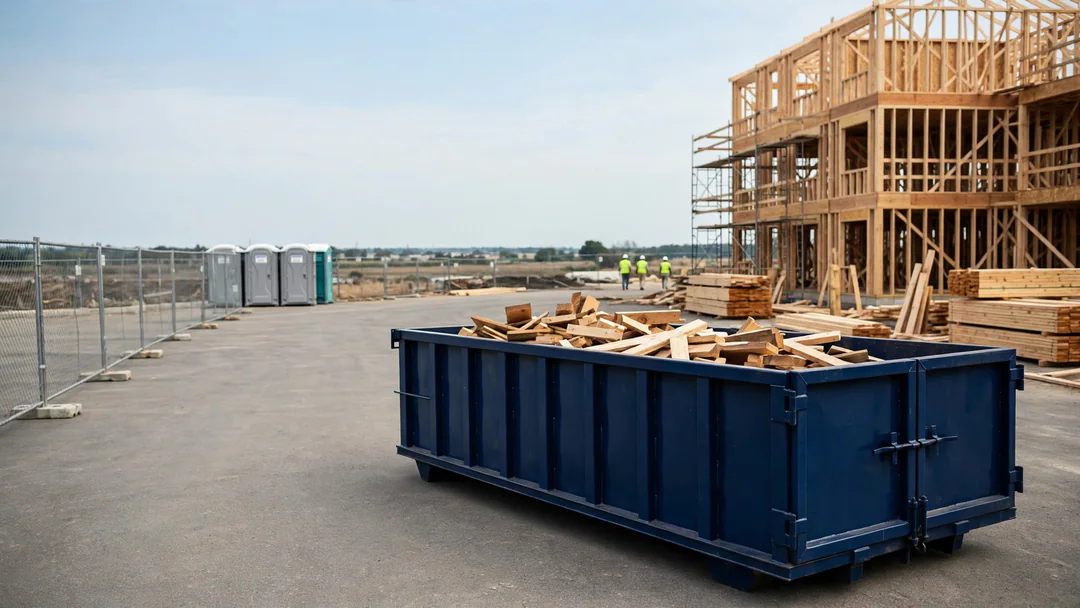
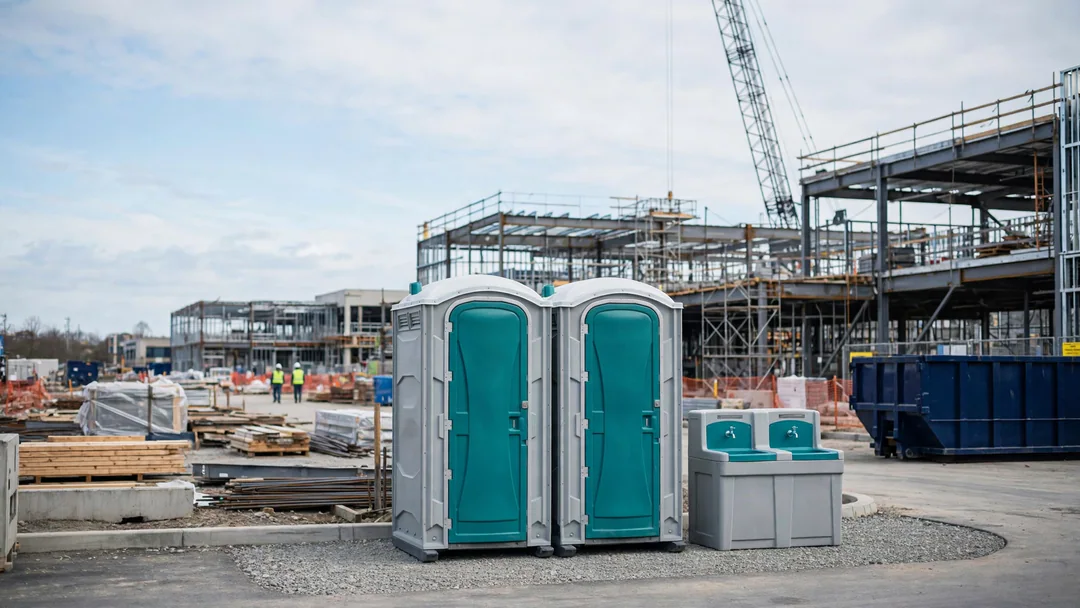
Construction sites need winter-ready service from roughly November through March, with antifreeze and a cleared service path. Jobsite toilet counts should follow OSHA 29 CFR 1926.51 ratios, and large plant shutdowns may need extra units for short periods.
Sandy lakeshore sites and spring mud both call for careful placement on level, firm ground. See how many porta potties you need for sizing help.
Climate and seasonal considerations
Michigan has cold, snowy winters and warm, humid summers. West Michigan and much of the northern state get lake-effect snow off Lake Michigan and Lake Superior, which can drop heavy bands of snow in a short time. Southeast Michigan sees less lake-effect snow but still deals with ice storms, freezing rain and frequent thaw-and-freeze cycles.
For dumpster rentals, that means planning for plowed driveways, snowbanks at the curb and debris that freezes to the container floor. Portable toilets need antifreeze and sometimes more frequent service in deep cold; see our winter portable toilet guide.
Spring thaw brings soft ground and seasonal weight restrictions on many local and county roads, which can limit heavy truck traffic for weeks. Summer thunderstorms and occasional severe storms add storm-cleanup demand. Late spring through early fall is the peak season for both remodeling and outdoor events.
Construction activity and common projects
Michigan's construction market is shaped by the auto industry and its suppliers, along with health care, universities and logistics. Plant retooling, battery and electric-vehicle investments and warehouse construction drive large commercial and industrial projects, especially in southeast and west Michigan.
On the residential side, much of the housing in Detroit, Flint, Lansing, Saginaw and inner-ring suburbs was built before 1960. Renovations there often involve plaster, old wiring, multiple roof layers and basement work, while vacant-home demolition and rehab programs keep crews busy in several cities.
Fast-growing areas around Grand Rapids, Ann Arbor and the outer Detroit suburbs add new subdivisions and multifamily buildings. Lakeshore and northern cottage country brings cabin remodels and second-home builds. For larger work, see construction dumpsters and construction porta potties.
- Older-home plaster and lath renovations
- Basement waterproofing and flood cleanup
- Vacant-home rehab and demolition
- Roof replacement after ice dams or storms
- Lake cottage remodels and cleanouts
- Auto plant and warehouse projects
- College move-out and rental turnovers
- Summer festival and fair sanitation
Disposal rules and restricted materials
Solid waste in Michigan is regulated by the Department of Environment, Great Lakes, and Energy (EGLE). Debris goes to licensed landfills, transfer stations and recycling facilities, and your hauler chooses the destination based on the material and location.
Michigan restricts several items from landfill disposal. Yard clippings are generally banned from landfills and should go to composting, and whole tires, lead-acid batteries and used oil also need separate handling. Refrigerators, freezers and air conditioners must have refrigerant recovered before disposal, which is why haulers ask you to keep them out of a standard load.
Paint, solvents, pesticides and other household hazardous waste should go to county or municipal collection programs. Electronics are best taken to a recycler. Tell your provider about these items before loading. Our list of items you cannot put in a dumpster explains the general rules.
Permits in Michigan
Michigan leaves dumpster and portable toilet permits to local governments. Cities, villages and townships each set their own rules, and the responsible office may be public works, engineering, building or the clerk. A container on a private driveway usually does not need a permit.
Placing a container on a public street, sidewalk or alley typically does require approval, and some cities require reflectors, barricades or a limit on how long the container can stay. Winter snow-emergency rules can also restrict street placement.
Many subdivisions and condominium associations, especially in the suburbs, have rules about containers, toilets and visible equipment. Confirm with your local government and any association before delivery. Our dumpster permit guide and portable toilet permit guide explain the typical process.
Event sanitation planning
Michigan's event season runs from Memorial Day through the fall color season. Detroit hosts the Detroit Auto Show, the Detroit Jazz Festival over Labor Day weekend and riverfront fireworks. Grand Rapids is known for ArtPrize, Ann Arbor for its summer Art Fair, and Traverse City for the National Cherry Festival.
College football in Ann Arbor and East Lansing brings large crowds and tailgating every fall. Beyond those, county fairs, lakeside festivals, fishing tournaments, weddings at barns and orchards, and races of every size fill summer weekends across the state.
Many venues are outdoors on grass or sand, so placement and service access matter. Book early for summer weekends and football Saturdays. Our event sanitation checklist and festival restroom page help with planning.
Cities in Michigan
- Detroit
- Grand Rapids
- Warren
- Ann Arbor
- Lansing
- Sterling Heights
- Flint
- Kalamazoo
- Traverse City
Major metro areas: Detroit–Warren–Dearborn · Grand Rapids–Kentwood · Lansing–East Lansing · Ann Arbor · Flint · Kalamazoo–Portage · Saginaw · Traverse City
Services in Michigan
Michigan rental FAQs
Can I put yard waste in a dumpster in Michigan?
Generally no. Michigan restricts yard clippings from landfills. Use a compost site or curbside yard-waste program, or ask your provider about a separate brush container.
Do I need a permit for a dumpster in Michigan?
Not usually for a private driveway. Street, sidewalk or alley placement typically needs approval from your city, village or township. Check local rules before delivery.
Can I rent a dumpster in a Michigan winter?
Yes. Providers deliver year-round. Keep the driveway plowed, cover the container when possible and avoid adding snow, which adds weight.
What do I do with old tires and batteries?
Keep them out of the dumpster. Tires and lead-acid batteries need separate handling. Retailers, scrap yards and county programs often accept them.
Do seasonal road limits affect deliveries?
They can. Many Michigan roads have spring weight restrictions while the frost comes out, which may affect when heavy trucks can deliver or pick up. Your provider will know the local rules.
How early should I book restrooms for a football weekend?
As early as possible. Demand near Ann Arbor and East Lansing on game weekends is high, so several weeks ahead is a good minimum.
Sources and official resources
Neighboring states
Ready to book a dumpster?
Planning a project in Michigan? Share your ZIP code and dates to check provider availability.