Connecticut · Northeast
Dumpster & Porta Potty Rental in Connecticut
Plan a roll-off dumpster or portable toilet rental anywhere in Connecticut, with state-specific guidance on permits, disposal and seasons.
One quick call to a real person. You approve the price before anything ships.
- Lower 48 states + DC
- Price confirmed before delivery
- Pricing explained up front
Can I rent a dumpster or porta potty in Connecticut?
Yes. Haul & Hygiene coordinates roll-off dumpster and portable toilet rentals across Connecticut, including the Bridgeport-Stamford-Norwalk (Fairfield County), Hartford and the Capitol Region, New Haven and the Shoreline, Waterbury and the Naugatuck Valley areas, through independent local providers. Pricing, container sizes and delivery windows depend on the provider serving your ZIP code, and a permit is usually needed only when equipment goes on a public street.
Dumpster and portable toilet rental in Connecticut
Connecticut runs on town government. There are 169 towns and cities, and county government was abolished in 1960, so almost every local rule that affects a dumpster or a portable toilet, from street permits to transfer-station hours, is set by the individual town. Two neighboring towns a few minutes apart can handle the same request very differently.
The state packs a lot of variety into a small area: dense Fairfield County suburbs tied to the New York City job market, the insurance and government center of Hartford, the university and hospital economy of New Haven, the old brass and mill towns of the Naugatuck Valley, and quieter rural towns in the Litchfield Hills and the northeast "Quiet Corner".
Haul & Hygiene is a free referral service. We connect you with independent haulers and sanitation contractors who work in Connecticut. Call with your town, ZIP code and dates, and the contractor that serves your area confirms container sizes, placement and pricing directly with you.
Dumpster rental in Connecticut: what to know
Many Connecticut homes sit on narrow, sloped or ledge-filled lots with long, curving driveways and stone walls along the road. Describe the access when you call: a smaller 10- or 15-yard container often fits where a 30-yard box will not, and a driver may need room to back in straight.
Plaster, tile and concrete are dense, so a full container of renovation debris can exceed its weight allowance quickly. For whole-house cleanouts, a 20-yard box is a common middle ground; the size guide compares typical dimensions.
Set boards under the rails on asphalt driveways, especially in summer heat, and follow our driveway prep guide.
Portable toilet rental in Connecticut
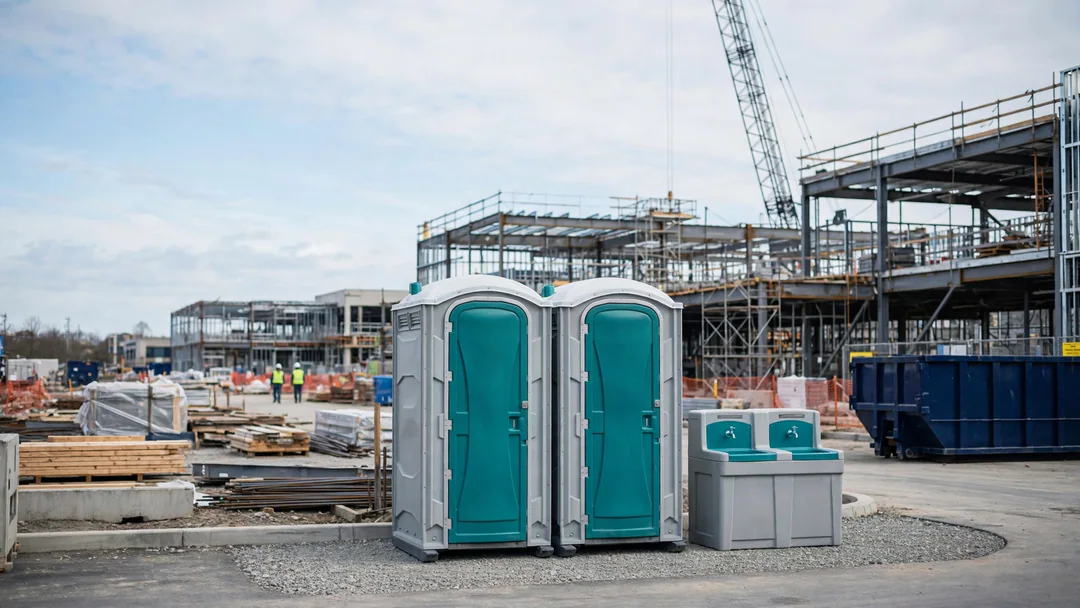
Construction sites must meet the federal OSHA sanitation standard, 29 CFR 1926.51, which sets toilet counts by crew size; our OSHA jobsite toilet guide walks through the numbers. Long renovation and foundation jobs usually work best on a long-term rental with weekly service.
In winter, ask whether the contractor adds antifreeze to the holding tank and how service will work during a snowstorm. Keep a clear, shoveled path to each unit.
For weddings and fairs, many hosts add restroom trailers and at least one ADA-accessible unit on a firm, level route.
How climate affects dumpster and portable toilet rentals in Connecticut
Connecticut has four distinct seasons. Winters bring regular snow and ice, heavier in the northwest hills than along Long Island Sound, and nor'easters can drop a foot or more in a single storm. Plows and parking bans can delay a delivery or pickup for a day or two after a big snowfall.
The shoreline is exposed to tropical storms and hurricanes. Storms such as Irene in 2011 and Sandy in 2012 flooded coastal neighborhoods from Greenwich to Stonington and left large parts of the state without power, followed by weeks of tree, roofing and water-damage cleanup.
The state's dense tree cover means wind and ice storms produce a lot of limb and brush debris. Many haulers price yard waste separately, so ask before you mix it with household trash. For winter jobs, see our winter portable toilet guide, and keep wet loads within the weight allowance.
Construction activity and common dumpster projects in Connecticut
Much of Connecticut's housing was built before 1978, and many neighborhoods date to the 1800s. Renovation work often turns up plaster and lath, old windows and painted trim, which can contain lead paint, and older pipe insulation or flooring that may contain asbestos. Those materials have their own handling rules and generally cannot go in a standard roll-off without testing and approval.
In parts of northeastern and north-central Connecticut, some homes built from the 1980s onward have concrete foundations that are cracking because of the mineral pyrrhotite in the aggregate. Foundation replacement jobs, where a house is lifted and a new foundation is poured, generate heavy concrete loads and usually need a dedicated concrete or heavy-debris container.
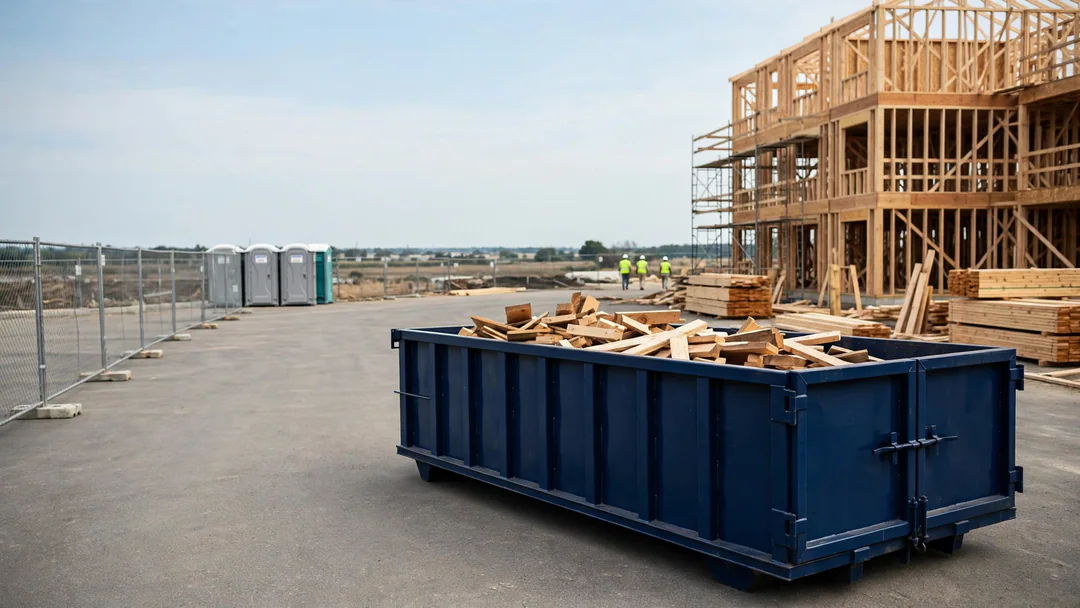
Elsewhere, demand comes from Fairfield County remodels and teardowns, multifamily redevelopment in Stamford, New Haven and Hartford, university and hospital projects, and shipbuilding-related work around Groton. Pair construction dumpsters with jobsite toilets on larger builds.
- Foundation replacements in northeastern Connecticut
- Older-home renovations with plaster and lath tear-out
- Fairfield County remodels and teardowns
- Storm cleanup after nor'easters and tropical storms
- Multifamily redevelopment in Stamford, New Haven and Hartford
- Estate cleanouts in long-held family homes
- Agricultural fairs and town festivals
Dumpster disposal rules and restricted materials in Connecticut
Connecticut has very little landfill space and has long relied on waste-to-energy plants, which burn trash to make electricity. Since the large trash-to-energy plant in Hartford closed in 2022, a growing share of the state's trash has been trucked to landfills in other states. That long haul is one reason disposal costs here tend to run higher than in many parts of the country.
The Connecticut Department of Energy and Environmental Protection (DEEP) regulates solid waste and recycling. Connecticut also runs product stewardship programs for items such as paint, mattresses and electronics, which are commonly kept out of regular trash and taken to participating drop-off sites instead.
Before you load, read what you cannot put in a dumpster. Clean concrete, brick, metal and some lumber can often be recycled; our debris recycling guide explains how to keep loads separate.
Permits in Connecticut
There is no statewide dumpster permit in Connecticut. A container on your own driveway usually needs no approval, while a container on a town street or sidewalk normally requires a permit from that town, often through the public works department or police for traffic control.
Many state routes, including stretches of Route 1 and other numbered highways that run through town centers, are maintained by the Connecticut Department of Transportation (CTDOT), which handles encroachment on its roads. Downtown blocks in New Haven, Hartford and Stamford have little curb space, so a street permit and a short rental window are common.
Shoreline towns and lake communities may have seasonal restrictions, and condominium associations and historic districts often set their own rules for how long a container can stay. Check with your town hall and association first; see our dumpster permit guide and portable toilet permit guide.
Event sanitation planning in Connecticut
Connecticut's outdoor event season runs from May through October. The Travelers Championship, a PGA Tour event in Cromwell each June, draws large daily crowds, and Yale and UConn commencements, homecomings and football games fill New Haven, Storrs and East Hartford.
Agricultural fairs are a big part of the calendar, with long-running town fairs held across the state from summer into early fall. Mystic, Essex and the shoreline host maritime festivals, and barns, vineyards and estates in the Litchfield Hills and along the coast are popular for outdoor weddings.
Size your order with our porta potty quantity guide, add hand-washing stations near food, and work through the event sanitation checklist.
Cities in Connecticut
- BridgeportDumpster rental · Porta potty rental
- New HavenDumpster rental · Porta potty rental
- HartfordDumpster rental · Porta potty rental
- StamfordDumpster rental · Porta potty rental
- Waterbury
- Norwalk
- Danbury
- New London
Major metro areas: Bridgeport-Stamford-Norwalk (Fairfield County) · Hartford and the Capitol Region · New Haven and the Shoreline · Waterbury and the Naugatuck Valley · Norwich-New London (Southeastern Connecticut)
Services in Connecticut
Connecticut rental FAQs
Who issues dumpster permits in Connecticut?
The town or city where the container will sit, because Connecticut has no county government. Private driveways usually need no permit. Streets and sidewalks usually do, and CTDOT handles state-maintained roads.
Can I put concrete from a foundation replacement in a regular dumpster?
Usually not mixed with other debris. Concrete is very heavy, so contractors typically supply a smaller, dedicated heavy-debris container that is filled only partway. Describe the job when you call so the right container is sent.
Why is dumpster disposal expensive in Connecticut?
The state has little landfill capacity, and since the Hartford trash-to-energy plant closed in 2022 more trash is hauled to out-of-state landfills. Longer hauls and higher tipping fees usually show up in the rental price.
Can I throw out old plaster, windows or insulation from an older home?
Plain plaster and wood usually can, but materials that may contain lead paint or asbestos need testing and special handling. Ask your contractor before loading anything you suspect, and do not hide it under other debris.
How many portable toilets does a Connecticut town fair need?
It depends on daily attendance, hours open, and whether food and alcohol are served. Use our quantity guide as a starting point and confirm the count and service schedule with the contractor.
Is Haul & Hygiene a Connecticut company?
No. Haul & Hygiene is a free nationwide referral service. Independent local contractors provide the equipment, delivery, service and pickup, and they set the final price.
Connecticut sources and official resources
States neighboring Connecticut
Ready to book a dumpster?
Planning a project in Connecticut? Share your ZIP code and dates to check provider availability.