
Vermont · Northeast
Dumpster & Porta Potty Rental in Vermont
Plan a roll-off dumpster or portable toilet rental anywhere in Vermont, with state-specific guidance on permits, disposal and seasons.
One quick call to a real person. You approve the price before anything ships.
- All 50 states + DC
- Price confirmed before delivery
- Pricing explained up front
Can I rent a dumpster or porta potty in Vermont?
Yes. We coordinate roll-off dumpster and portable toilet rentals across Vermont through independent local providers. Pricing, sizes and delivery windows depend on the provider serving your ZIP code, and permits are handled at the city or county level when equipment goes on a public street.
Dumpster and portable toilet rental in Vermont
Vermont is a small, rural state where the Green Mountains run north to south through the middle, Lake Champlain forms much of the western border and the Connecticut River marks the line with New Hampshire. Towns are compact, roads are often narrow and winding, and many properties sit at the end of gravel drives.
The largest concentration of rental demand is in Chittenden County around Burlington, South Burlington, Essex and Colchester. Rutland anchors the southwest, Montpelier and Barre sit in the center, and ski areas such as Killington and Stowe bring steady second-home and lodging work.
Haul & Hygiene coordinates with independent local haulers and sanitation providers who already work these roads. Your provider confirms container sizes, truck access and timing for your address, which matters more in Vermont than in flat, gridded states.
Dumpster rental in Vermont: what to know
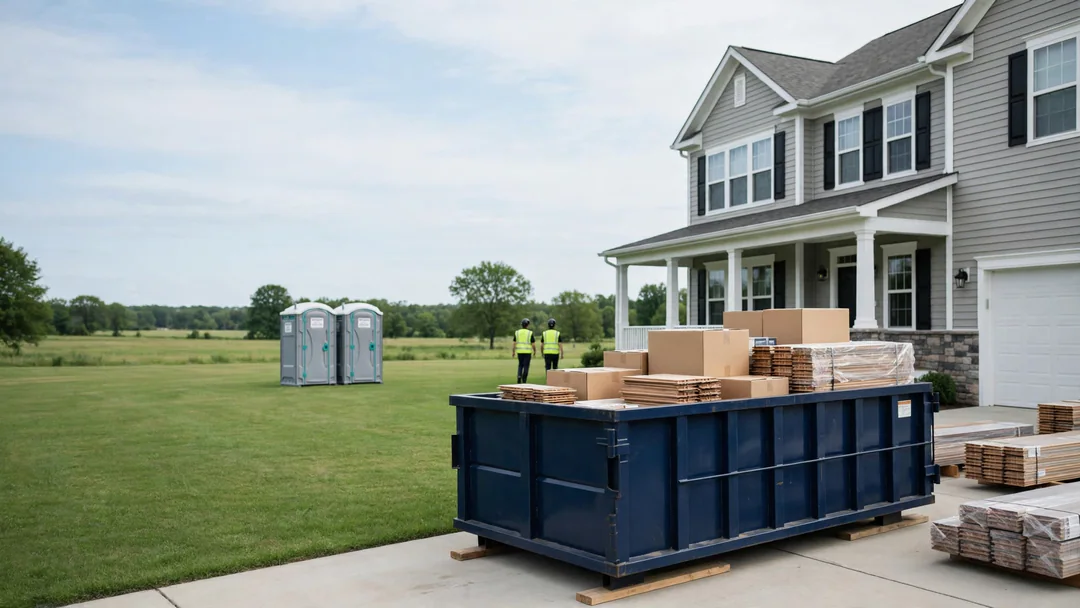
Smaller containers are popular in Vermont. A 10- or 15-yard box fits many village driveways and handles bathroom remodels, plaster tear-outs and attic cleanouts. A 20-yard container is common for roofs and whole-floor renovations, while 30- and 40-yard boxes show up mostly on construction sites and barn demolitions. Compare options on our dumpster sizes page.
Plaster, slate and wet flood debris are dense, so weight limits are reached quickly. Because of the Universal Recycling Law, sort clean brush, metal and cardboard out when you can.
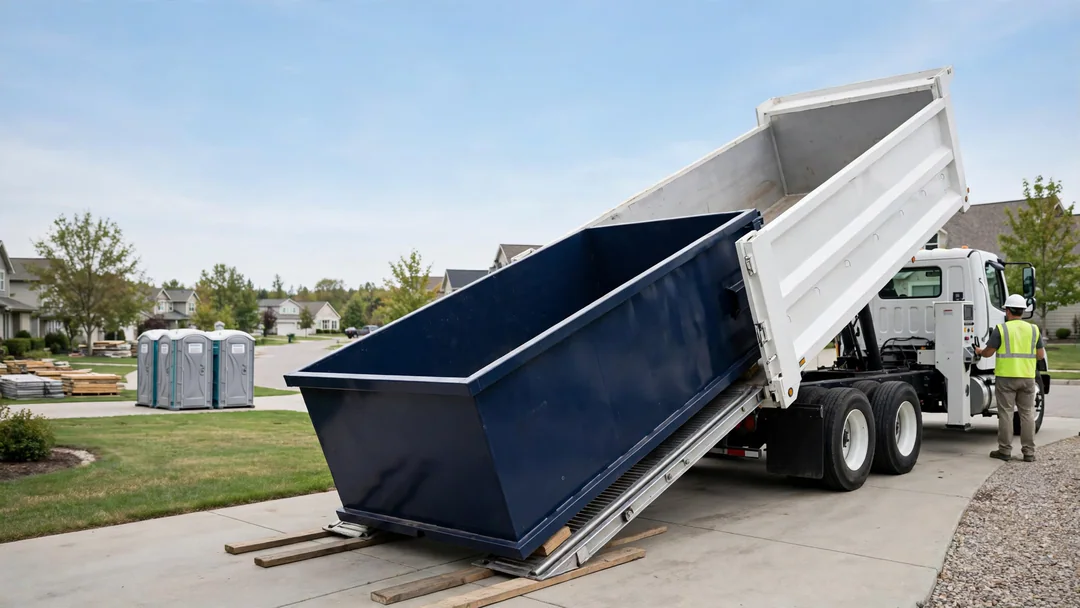
Driveway access is the biggest variable. Steep gravel drives, tight turns and soft spring ground can stop a roll-off truck. Describe your site in detail, and see how to prepare your driveway.
Portable toilet rental in Vermont
Cold is the main sanitation challenge in Vermont. From roughly November through April, providers commonly add antifreeze or brine to holding tanks and may adjust service schedules after storms. Keep a plowed path to each unit so service trucks and users can reach it.
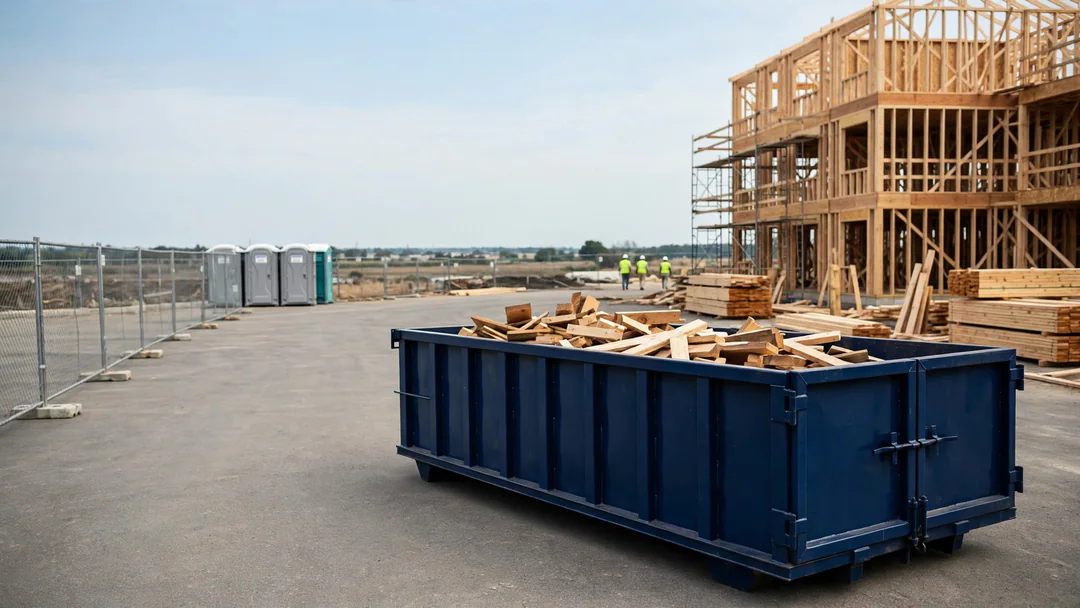
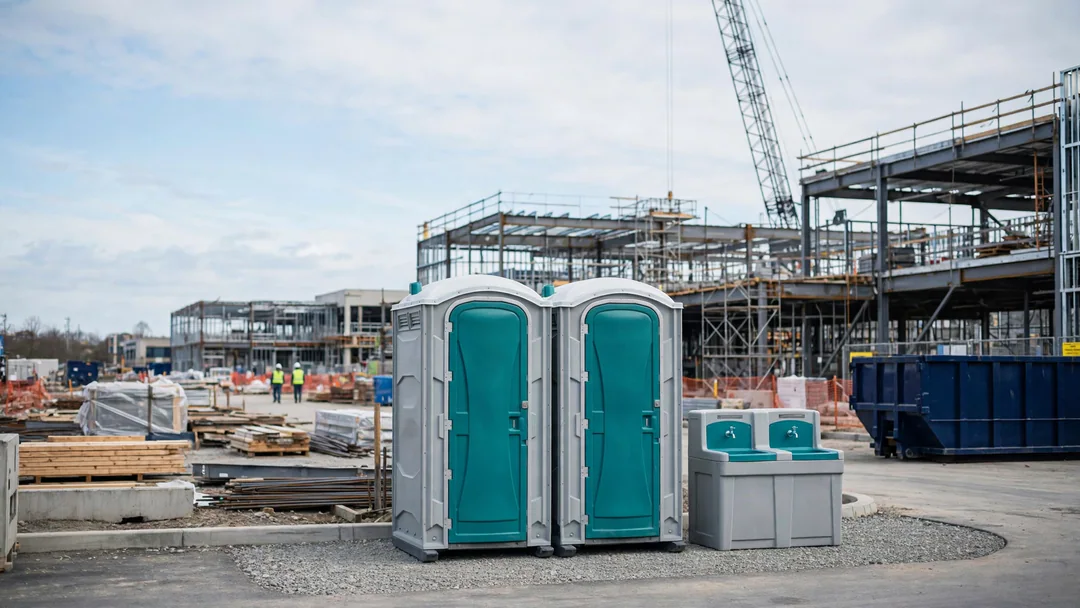
For construction, federal OSHA rules at 29 CFR 1926.51 set minimum toilet counts based on crew size; see our OSHA jobsite toilet guide. Multi-season builds often use long-term rentals with a set service day.
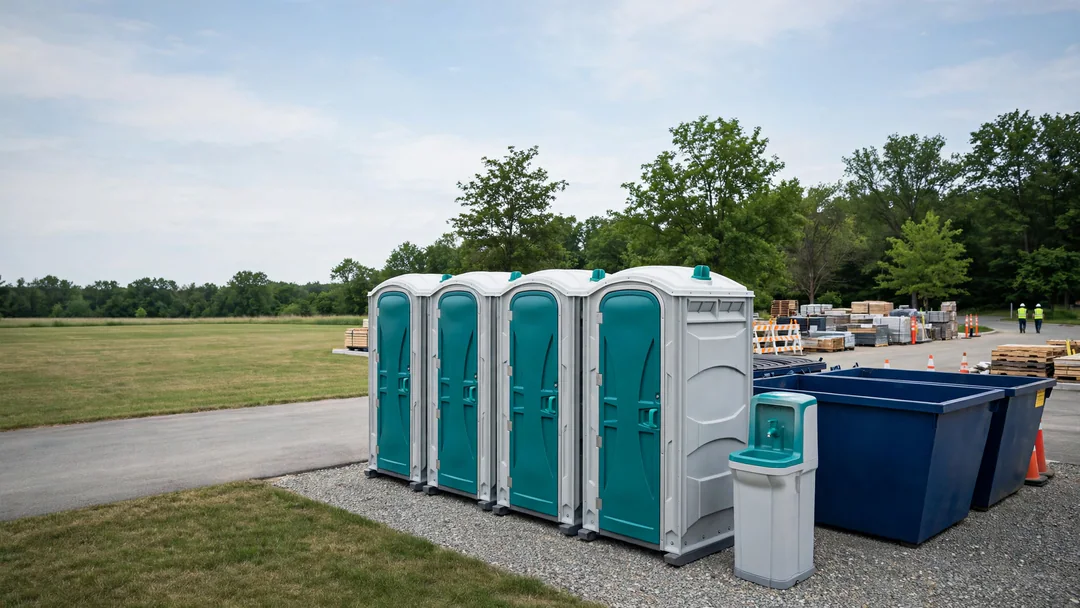
For summer and fall events, a farm or field venue may be far from paved roads, so confirm the service truck can reach the site in wet weather. Include an ADA-accessible unit at public events and plan extra capacity during peak foliage weekends.
Climate and seasonal considerations
Vermont winters are long, cold and snowy, especially at higher elevations and in the Northeast Kingdom. Snowbanks shrink usable driveway space, plows need room to pass, and a container left uncovered can fill with snow and ice that adds weight. Portable toilets need winter treatment so holding tanks do not freeze; see our winter portable toilet guide.
Spring brings mud season, when thawing dirt roads and gravel driveways turn soft. Some towns post weight limits on unpaved roads during the thaw, which can delay heavy deliveries, so ask your provider about timing.
Summers are mild and fall is short and busy. Vermont has also seen serious river flooding, including Tropical Storm Irene in 2011 and the July 2023 floods, which drove large cleanup efforts. Wet debris is heavy, so review dumpster weight limits before a flood tear-out.
Construction activity and common projects
Much of Vermont's housing stock is old: farmhouses, Victorian homes in town centers, converted barns and camps. Renovation is the dominant rental driver, from gutting plaster and lath to replacing roofs, windows and heating systems. Older homes may contain lead paint or asbestos, which must be handled under specific rules rather than tossed in a dumpster.
Chittenden County sees the most new construction, including apartments, infill housing and commercial work tied to the University of Vermont, the UVM Medical Center and semiconductor manufacturing in Essex Junction. Ski towns generate lodge, condo and vacation-home projects, often timed for the off-season.
The region around Rutland has a long history of marble and slate quarrying, and slate roofs remain common in that area. For larger jobs, crews typically pair construction dumpsters with jobsite portable toilets.
- Old farmhouse and Victorian home renovations
- Plaster and lath tear-outs
- Flood cleanup along rivers and low-lying towns
- Ski-area condo and vacation home remodels
- Barn and outbuilding demolition
- Slate and asphalt roof replacement
- Estate and camp cleanouts
Disposal rules and restricted materials
Solid waste in Vermont is overseen by the Department of Environmental Conservation, part of the Agency of Natural Resources. Much of the day-to-day system runs through regional solid waste districts and town transfer stations, which set their own accepted-materials lists.
Vermont's Universal Recycling Law (Act 148) bans common recyclables, leaf and yard debris, and food scraps from the trash. That affects how a container should be loaded: clean brush, cardboard and metal may need to be kept out or handled separately. The state also restricts disposal of electronics, mercury-containing items and paint, and, as in most states, tires, lead-acid batteries and refrigerant appliances need special handling.
Ask your hauler what they can accept, and review what you cannot put in a dumpster and our construction debris recycling guide.
Permits in Vermont
Vermont has no statewide dumpster permit. A container on your own driveway or private lot usually does not need one. Placing it on a public street, sidewalk or town right-of-way typically requires permission from the city or town, and dense downtowns such as Burlington, Montpelier and Rutland tend to have clearer rules than small rural towns.
Winter adds a twist: many municipalities enforce overnight parking bans for snow removal, and a container in the road can interfere with plowing. Condominium associations and HOAs, common in Chittenden County and ski areas, may limit where and how long containers or portable toilets can sit.
Confirm with your town clerk or public works office before delivery. Our dumpster permit guide and portable toilet permit guide list the questions to ask.
Event sanitation planning
Vermont's outdoor event season is compressed into late spring through mid-October, so dates fill quickly. The Champlain Valley Fair in Essex Junction runs in late summer, and the Vermont State Fair is held in Rutland. Agricultural fairs, maple celebrations and town festivals appear throughout the season.
Burlington's waterfront hosts concerts and the Discover Jazz Festival, and fall foliage draws visitors to craft fairs, harvest dinners and farm events statewide. Barn and farm weddings are extremely popular, and many of those sites have no permanent restrooms.
Plan unit counts with our porta potty quantity guide, consider restroom trailers for weddings, and add hand-washing stations where food is served. The event sanitation checklist covers the rest.
Cities in Vermont
- Burlington
- South Burlington
- Rutland
- Essex Junction
- Colchester
- Montpelier
- Barre
- Winooski
- Brattleboro
Major metro areas: Burlington–South Burlington · Rutland · Barre–Montpelier · Brattleboro
Services in Vermont
Vermont rental FAQs
Do I need a permit for a dumpster in Vermont?
Not at the state level. A container on your own driveway usually needs no permit, but street or right-of-way placement typically requires approval from your city or town. Winter parking bans can also apply, so check with your town clerk or public works office.
How does the Universal Recycling Law affect my dumpster?
Vermont bans recyclables, yard debris and food scraps from the trash. Your hauler may ask you to keep clean brush, cardboard and scrap metal out of a mixed debris container. Ask what the provider accepts before you load.
Can I get a dumpster delivered during mud season?
Often, but soft gravel driveways and posted weight limits on some dirt roads can delay delivery. Your provider may suggest a smaller container, a paved placement spot or waiting until the ground firms up.
Will a porta potty freeze in a Vermont winter?
It can without treatment. Providers commonly add antifreeze or brine to holding tanks in cold months and may change the service schedule. Ask about winter options when you book.
How early should I book portable toilets for a Vermont fall wedding?
Book as early as you can. Foliage season is short and busy, and restroom trailers and ADA units can be reserved months ahead. Your provider will confirm availability and site access.
Does Haul & Hygiene have an office in Vermont?
No. We are a nationwide coordination network that matches you with independent local haulers and sanitation providers serving your town.
Sources and official resources
Neighboring states
Ready to book a dumpster?
Planning a project in Vermont? Share your ZIP code and dates to check provider availability.