Washington · West
Dumpster & Porta Potty Rental in Washington
Plan a roll-off dumpster or portable toilet rental anywhere in Washington, with state-specific guidance on permits, disposal and seasons.
One quick call to a real person. You approve the price before anything ships.
- All 50 states + DC
- Price confirmed before delivery
- Pricing explained up front
Can I rent a dumpster or porta potty in Washington?
Yes. We coordinate roll-off dumpster and portable toilet rentals across Washington through independent local providers. Pricing, sizes and delivery windows depend on the provider serving your ZIP code, and permits are handled at the city or county level when equipment goes on a public street.
Dumpster and portable toilet rental in Washington
Washington splits sharply at the Cascade Range. West of the mountains, the Puget Sound region holds most of the state's population, from Everett and Seattle down through Bellevue, Tacoma and Olympia, with Vancouver across the Columbia River from Portland. East of the Cascades, the landscape opens into farmland, high desert and the Spokane area near the Idaho border.
The two sides differ in weather, terrain and the projects people take on, which affects container sizes, delivery access and portable toilet servicing. Hilly Seattle streets and tight urban lots are a different job from a rural lot outside Yakima or a new subdivision in Spokane Valley.
Haul & Hygiene coordinates with independent local haulers and sanitation providers across Washington. Your provider confirms sizes, access, scheduling and terms for your address. Call us with your ZIP code and dates to get started.
Dumpster rental in Washington: what to know
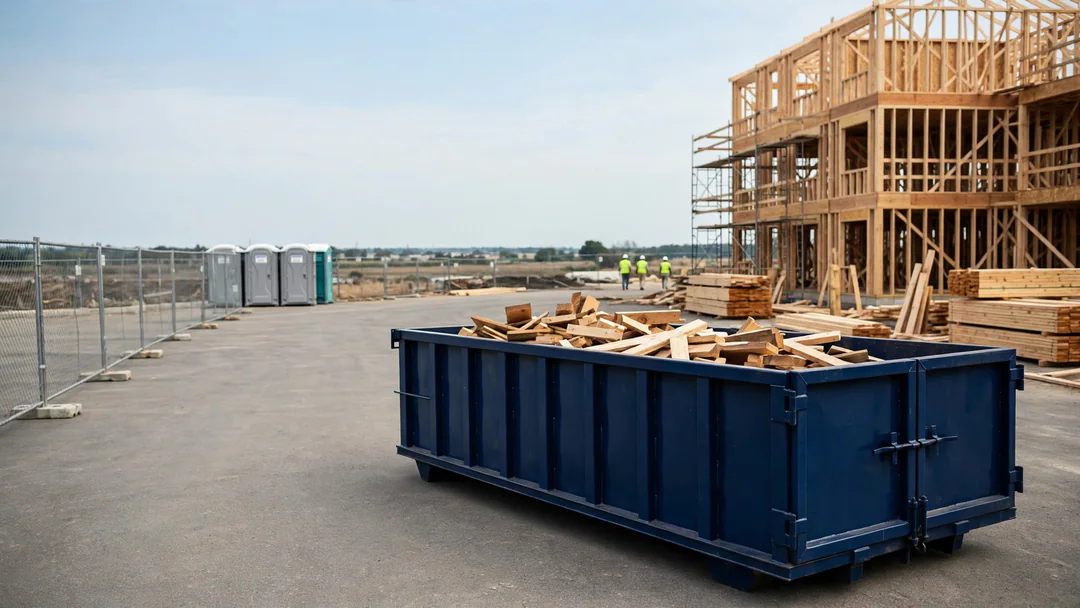
In Puget Sound cities, 10- and 20-yard containers are common because lots are tight, alleys are narrow and many homes sit on hills. Larger 30- and 40-yard boxes are typical on commercial sites and suburban new construction. Compare typical dimensions on our dumpster sizes page.
Steep driveways, retaining walls and street parking limits often decide placement in Seattle, Tacoma and Bellevue. Describe slope, overhead wires and trees to your provider in advance, and consider preparing your driveway with boards.
Because many jurisdictions emphasize recycling, ask whether separating clean wood, metal or concrete into its own container makes sense. In Eastern Washington, rural properties with gravel drives and open lots often have room for larger containers, but winter snow can affect access.
Portable toilet rental in Washington
On the wet side of the state, choose firm, well-drained ground for units and avoid low spots that collect water. Gravel or a pad helps on muddy jobsites through the rainy months. In Eastern Washington, summer heat increases odor and usage, while winter cold calls for antifreeze.
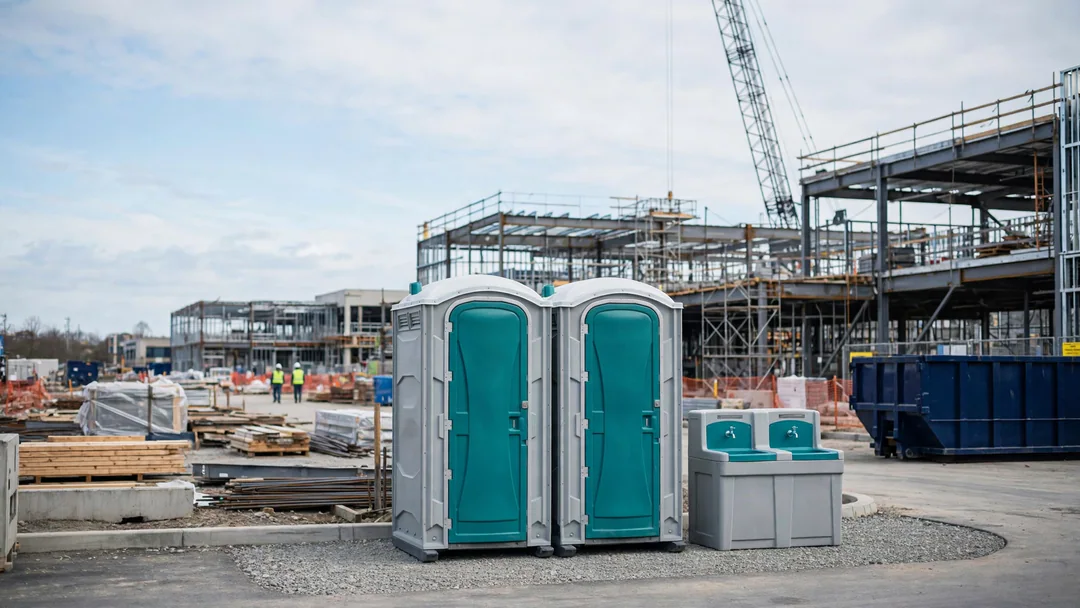
For construction, federal OSHA rules at 29 CFR 1926.51 set minimum toilet counts by crew size, and Washington runs its own state-plan workplace safety program that may add requirements; our OSHA jobsite toilet guide explains the federal ratios. Many long builds use long-term rentals.
Summer events and weddings book quickly in the Puget Sound region. Include at least one ADA-accessible unit at public events and consider restroom trailers for weddings.
Climate and seasonal considerations
Western Washington has a marine climate: mild temperatures, cloudy skies and long stretches of light rain from fall through spring, with drier, pleasant summers. Rain adds weight to open dumpsters, so covering a load with a tarp between uses can help you stay within the hauler's limits. Read about dumpster weight limits.
Eastern Washington is much drier, with hot summers and cold, sometimes snowy winters. Spokane and higher areas see regular snow and freezing temperatures, which can affect delivery timing and freeze portable toilet tanks unless the provider adds antifreeze. See our winter portable toilet guide.
Wildfire smoke can affect outdoor work and events in late summer on both sides of the state. Mountain passes such as Snoqualmie Pass can close or require chains in winter, which matters for any equipment moving across the Cascades.
Construction activity and common projects
Washington's economy is anchored by technology, aerospace, trade and agriculture. Microsoft and Amazon are headquartered in the Puget Sound region, Boeing has major operations around Everett and Renton, and the ports of Seattle and Tacoma are among the busiest on the West Coast. That mix produces steady office, warehouse, multifamily and infrastructure construction.
Housing pressure in King, Pierce, Snohomish and Clark counties drives townhome and apartment building, accessory dwelling units and remodels of older homes. Many Seattle and Tacoma houses date from the early twentieth century, so tear-outs often involve plaster, old roofing and dense lumber.
East of the Cascades, agriculture, food processing and the Tri-Cities' energy and research sector support industrial and residential projects. Pair construction dumpsters with jobsite portable toilets on larger sites.
- Older home remodels in Seattle and Tacoma
- Accessory dwelling unit and townhome construction
- Office, warehouse and multifamily builds
- Roof replacement after wet winters
- Yard waste and tree cleanup
- Estate and home cleanouts
- Agricultural and rural property cleanups
Disposal rules and restricted materials
Solid waste in Washington is overseen by the Washington State Department of Ecology, while counties and cities plan and run local systems through comprehensive solid waste plans. Many cities contract or run their own collection, and transfer stations move waste to regional landfills, some located east of the Cascades.
Washington places a strong emphasis on recycling and diversion. Many jurisdictions encourage or require sorting construction and demolition debris, and clean wood, metal, concrete and cardboard often go to recycling facilities rather than landfills. Electronics such as TVs and computers can be recycled through the state's E-Cycle Washington program.
Hazardous waste, tires, lead-acid batteries, used oil and appliances containing refrigerant are commonly restricted. Accepted materials vary by facility, so confirm with your hauler. Review what you cannot put in a dumpster and our debris recycling guide.
Permits in Washington
Washington has no statewide permit for placing a dumpster. A container on your own driveway or private property usually does not need one, though that is a local decision. If the container or a portable toilet will sit on a public street, sidewalk or planting strip, most cities typically require a right-of-way or street use permit.
Requirements differ between Seattle, Tacoma, Bellevue, Spokane, Vancouver and smaller cities, and some cities restrict placement on busy arterials or in business districts. Many newer subdivisions and condominium communities have HOA rules about containers and how long they may stay visible.
Confirm with your city or county and your HOA before delivery. Our dumpster permit guide and portable toilet permit guide cover the questions to ask.
Event sanitation planning
Washington's main outdoor season runs from late spring through early fall, when the rain eases west of the Cascades. Seattle hosts Seafair each summer, along with music festivals and major league sports. The Washington State Fair in Puyallup is one of the largest fairs in the region and runs in late summer and early fall.
Spokane's Lilac Bloomsday Run draws large crowds each May, and the Skagit Valley Tulip Festival fills farm fields north of Seattle each April. County fairs, farmers markets, wine events in the Yakima Valley and Walla Walla, and outdoor weddings at farms and waterfront venues keep demand high through summer.
Plan units by headcount and duration with our porta potty planning guide, add hand-washing stations near food and use our event sanitation checklist. Summer weekends book early.
Cities in Washington
- Seattle
- Spokane
- Tacoma
- Vancouver
- Bellevue
- Everett
- Kent
- Renton
- Olympia
- Yakima
Major metro areas: Seattle–Tacoma–Bellevue · Spokane–Spokane Valley · Portland–Vancouver–Hillsboro · Olympia–Lacey–Tumwater · Bremerton–Silverdale · Kennewick–Richland · Yakima · Bellingham
Services in Washington
Washington rental FAQs
Do I need a permit for a dumpster in Washington State?
There is no statewide permit. A container on private property usually does not need one, but placement on a street, sidewalk or planting strip typically needs a city right-of-way or street use permit. Rules vary by city, so confirm locally.
Does rain affect dumpster rentals in Western Washington?
Yes. Rain soaks into debris and adds weight, which can push a load past the hauler's limit. Covering the container with a tarp between uses helps. Soft ground in wet months can also affect placement.
Can I recycle construction debris in Washington?
Often, yes. Many Washington jurisdictions encourage sorting clean wood, metal, concrete and cardboard for recycling. Ask your provider whether separate containers or mixed-debris recycling are available in your area.
Will portable toilets freeze in Eastern Washington?
They can during cold winters around Spokane and higher areas. Providers commonly add antifreeze to tanks and may adjust service. Ask about winter options when you book.
Are there extra jobsite sanitation rules in Washington?
Washington operates its own state workplace safety plan, which covers sanitation and may include requirements beyond federal OSHA. Check current state rules for your jobsite, and plan at least the federal 29 CFR 1926.51 minimums.
How early should I book portable toilets for a summer event in Washington?
Summer is peak season, especially around large festivals and the state fair, so booking several weeks ahead is wise. Restroom trailers and ADA units can be in high demand.
Sources and official resources
Neighboring states
Ready to book a dumpster?
Planning a project in Washington? Share your ZIP code and dates to check provider availability.