North Dakota · Midwest
Dumpster & Porta Potty Rental in North Dakota
Plan a roll-off dumpster or portable toilet rental anywhere in North Dakota, with state-specific guidance on permits, disposal and seasons.
One quick call to a real person. You approve the price before anything ships.
- All 50 states + DC
- Price confirmed before delivery
- Pricing explained up front
Can I rent a dumpster or porta potty in North Dakota?
Yes. We coordinate roll-off dumpster and portable toilet rentals across North Dakota through independent local providers. Pricing, sizes and delivery windows depend on the provider serving your ZIP code, and permits are handled at the city or county level when equipment goes on a public street.
Dumpster and portable toilet rental in North Dakota
North Dakota has three distinct working areas for rental planning. The Red River Valley along the Minnesota border is very flat, fertile farmland and holds Fargo and Grand Forks. The central part of the state follows the Missouri River, where Bismarck and Mandan face each other across the water. The west, including Williston and the Bakken oil region, is rougher country shaped by energy development.
Each area brings different jobs. The valley sees steady home building and flood-related work, the capital region adds government and commercial projects, and the oil patch produces industrial and crew-camp demand. Long rural distances apply everywhere.
Haul & Hygiene coordinates with independent local haulers and sanitation providers in North Dakota. Your provider confirms container sizes, access and timing for your address. Call us with your ZIP code and dates.
Dumpster rental in North Dakota: what to know
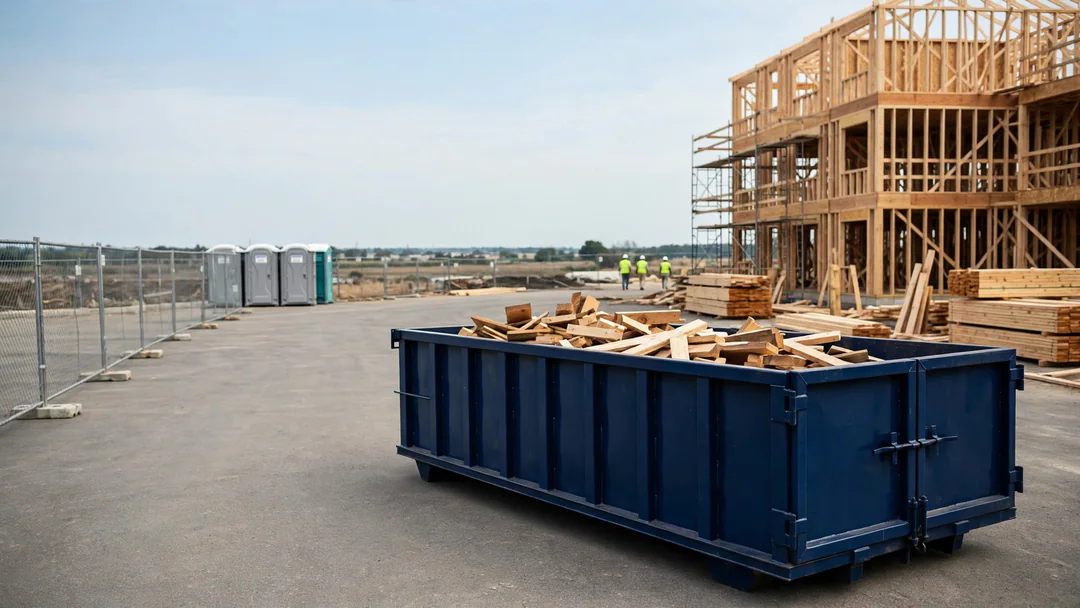
For homes in Fargo, Bismarck and Grand Forks, 10- and 20-yard containers handle most basement tear-outs, remodels and roof jobs. Larger 30- and 40-yard containers are typical on new construction, commercial sites and farm cleanups. Compare options on the dumpster sizes page.
Timing matters more here than in many states. In winter, the drop area must be cleared of snow and ice, and a container in the street may conflict with plowing. In spring, soft yards and thawing gravel can rut under a loaded truck, so a paved driveway is the safest spot.
In the oil region, industrial sites may have their own safety and access rules for delivery drivers. Share site requirements early. See how to prepare your driveway and industrial project dumpsters.
Portable toilet rental in North Dakota
Cold-weather planning is essential for portable toilets in North Dakota. Ask about antifreeze, winter service schedules and heated or insulated options where providers offer them, especially on jobsites that run from fall through spring.
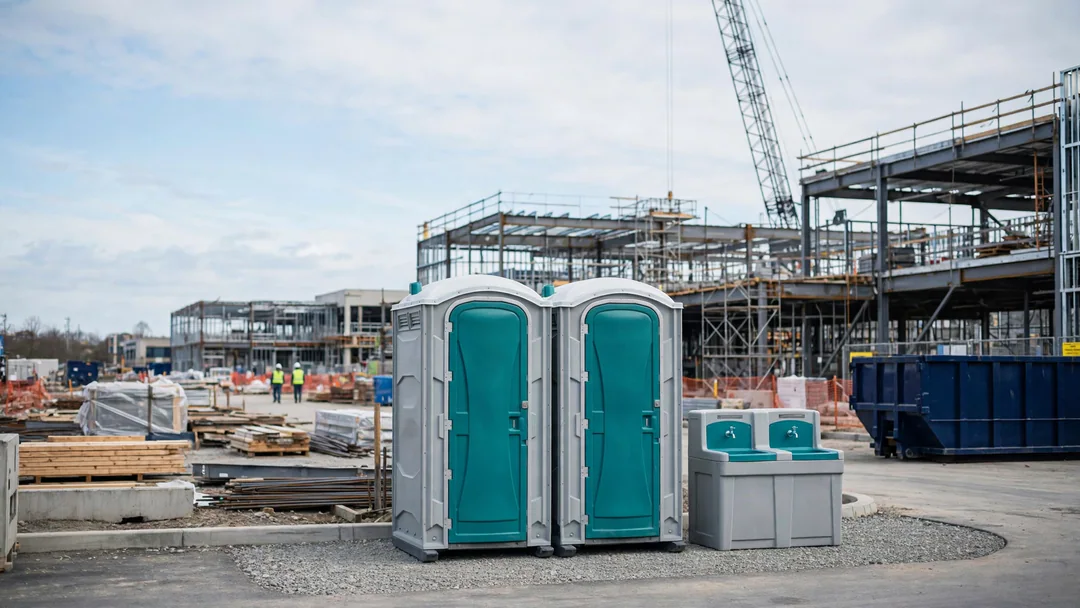
For construction and energy sites, OSHA 29 CFR 1926.51 sets minimum toilet counts by crew size; our OSHA jobsite toilet guide explains them. Remote oil-region sites often need long-term rentals, and service frequency may depend on route distance.
Open prairie wind can tip unsecured units, so stake or anchor them. During spring floods, units may be needed for sandbagging volunteers and crews; see emergency portable toilets. Include at least one ADA-accessible unit at public events.
Climate and seasonal considerations
North Dakota winters are among the coldest in the lower 48 states, with long stretches below freezing, strong winds and blowing snow that can close highways. Frozen holding tanks and hand-wash water are a real risk, so many providers add antifreeze and adjust service through the season. See our winter portable toilet guide.
Spring is often the hardest season for access. Snowmelt can flood the north-flowing Red River and its tributaries, and frost coming out of the ground leaves yards and rural roads soft. Some roads carry seasonal weight restrictions during thaw, which can affect heavy trucks.
Summers are warm and fairly short, with thunderstorms that can bring hail and high wind. Covering an open container before rain helps it stay within the hauler's weight limits.
Construction activity and common projects
Fargo and West Fargo form the state's largest and fastest-growing area, with new subdivisions, apartment buildings and commercial projects spreading south and west. North Dakota State University in Fargo and the University of North Dakota in Grand Forks add campus and student-housing work.
In the west, the Bakken oil formation around Williston and Watford City supports drilling, pipeline and industrial work, along with housing and service businesses tied to the industry. Bismarck adds state government, health care and retail construction.
Agriculture remains central statewide, so farm cleanouts, machine shed projects and grain-site work are common. Many homes in the Red River Valley have basements, which leads to basement finishing and water-damage tear-outs. Larger jobs pair construction dumpsters with jobsite portable toilets.
- Spring flood and basement water-damage cleanup
- New residential construction in Fargo and West Fargo
- Oil field and pipeline crew sanitation
- Hail and wind roof replacement
- Farm, machine shed and grain-site cleanouts
- Fair, powwow and festival sanitation
- Estate and home cleanouts
Disposal rules and restricted materials
Solid waste in North Dakota is regulated by the North Dakota Department of Environmental Quality, which permits municipal landfills, inert waste sites and special waste facilities. Cities such as Fargo, Bismarck and Grand Forks operate their own landfills, and smaller towns often rely on regional sites or transfer arrangements.
The oil industry generates specialized wastes that do not belong in a standard roll-off and are handled through separate permitted facilities. For household and construction loads, hazardous waste, tires, lead-acid batteries, used oil, paint and refrigerant appliances are commonly refused. Some sites separate inert debris like concrete and brick. Accepted materials vary, so check with your hauler.
Review what you cannot put in a dumpster and consider construction debris recycling for clean concrete and metal.
Permits in North Dakota
North Dakota does not have a statewide dumpster permit. A container on your own driveway or private lot usually does not need one, while placement on a public street, boulevard or sidewalk typically requires approval from the city.
Fargo, Bismarck, Grand Forks and Minot each manage right-of-way use differently. In winter, snow emergency and street-parking rules can make street placement impractical, since plows need clear lanes. During spring flood fights, some low-lying streets may be restricted.
Many newer neighborhoods in Fargo, West Fargo and Bismarck have HOA rules about containers and portable toilets. Confirm with your city or county and HOA before delivery. Our dumpster permit guide and portable toilet permit guide explain the typical questions.
Event sanitation planning
North Dakota packs much of its outdoor event calendar into summer and early fall. The North Dakota State Fair is held in Minot each July, and Minot also hosts Norsk Høstfest, a Scandinavian heritage festival, in the fall. Bismarck is home to the United Tribes International Powwow in September.
County fairs, rodeos, threshing bees and small-town celebrations run throughout the summer. NDSU football in Fargo and UND athletics in Grand Forks draw tailgating crowds in the fall, and outdoor weddings at farms and lake properties are popular during the warm months.
Because the season is short, popular dates fill quickly. Plan units by headcount and duration with our porta potty quantity guide, add hand-washing stations where food is served, and follow the event sanitation checklist.
Cities in North Dakota
- Fargo
- Bismarck
- Grand Forks
- Minot
- West Fargo
- Williston
- Mandan
Major metro areas: Fargo–Moorhead · Bismarck–Mandan · Grand Forks–East Grand Forks · Minot · Williston
Services in North Dakota
North Dakota rental FAQs
Do I need a permit for a dumpster in North Dakota?
There is no statewide permit. Private driveway placement usually does not need one, but street or boulevard placement typically requires city approval. Fargo, Bismarck and Grand Forks each set their own rules, so check locally and with your HOA.
Can I rent a dumpster in a North Dakota winter?
Yes. Clear snow and ice from the placement area, avoid blocking plow routes, and expect occasional delays during blizzards and road closures. Frozen ground is usually firm enough for delivery once it is cleared.
Is spring a difficult time for dumpster delivery?
It can be. Thawing ground gets soft, and some rural roads carry seasonal weight limits. A paved driveway is the safest spot, and flexible delivery dates help if conditions change.
Can I get portable toilets for an oil field site in western North Dakota?
Providers in our network serve the region, though remote sites may need longer lead times and route-based service schedules. Share crew size, site access rules and expected duration when you call.
Will portable toilets freeze in North Dakota?
Without winter treatment, yes. Many providers add antifreeze or brine and adjust service in cold months. Ask about winter options before booking.
What cannot go in a North Dakota dumpster?
Hazardous waste, tires, lead-acid batteries, used oil, paint, refrigerant appliances and oil field special wastes are commonly refused. Accepted materials vary by landfill, so confirm with your hauler.
Sources and official resources
Neighboring states
Ready to book a dumpster?
Planning a project in North Dakota? Share your ZIP code and dates to check provider availability.