
Tennessee · South
Dumpster & Porta Potty Rental in Tennessee
Plan a roll-off dumpster or portable toilet rental anywhere in Tennessee, with state-specific guidance on permits, disposal and seasons.
One quick call to a real person. You approve the price before anything ships.
- All 50 states + DC
- Price confirmed before delivery
- Pricing explained up front
Can I rent a dumpster or porta potty in Tennessee?
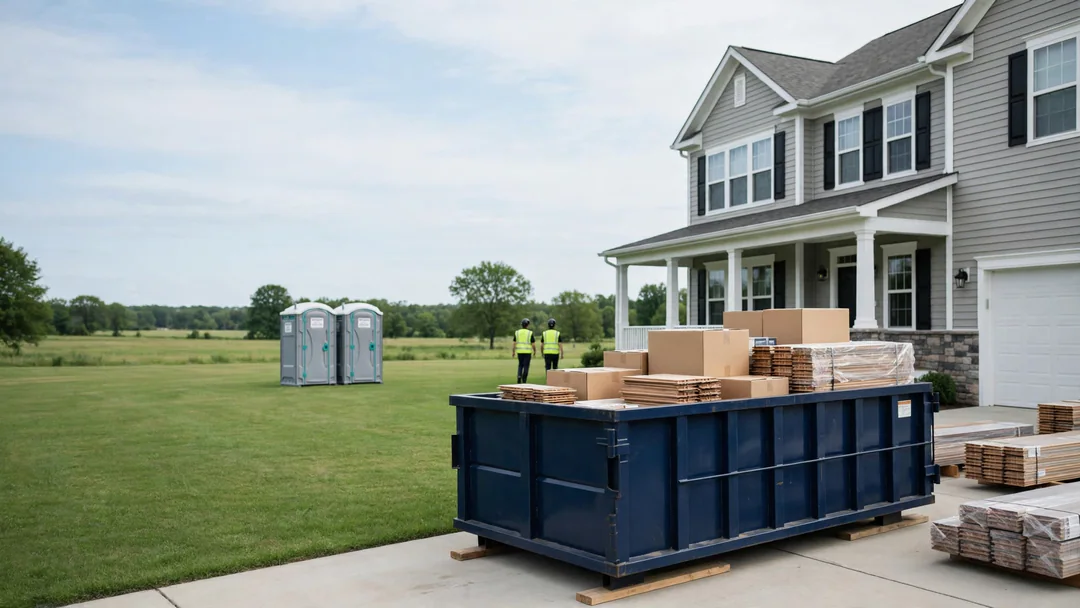
Yes. We coordinate roll-off dumpster and portable toilet rentals across Tennessee through independent local providers. Pricing, sizes and delivery windows depend on the provider serving your ZIP code, and permits are handled at the city or county level when equipment goes on a public street.
Dumpster and portable toilet rental in Tennessee
Tennessee stretches from the Mississippi River at Memphis to the Appalachian ridges east of Knoxville, and rental needs change a lot along the way. Middle Tennessee, led by Nashville and its surrounding counties, has seen sustained residential and commercial growth, while Memphis, Chattanooga, and the Tri-Cities each have their own mix of older housing stock, industry, and outdoor recreation.
Haul & Hygiene coordinates with independent haulers and sanitation providers in our network across the state. Your provider handles delivery, pickup, servicing, and disposal; we help you choose the right container or restroom setup and know what to confirm locally before delivery. If you are new to renting, start with our dumpster rental process overview.
Dumpster rental in Tennessee: what to know
Across Tennessee, 10- and 20-yard roll-off containers are common choices for single-room remodels, garage cleanouts, and smaller roofing jobs, while 30- and 40-yard containers suit larger renovations, new construction, and commercial work. Exact sizes, dimensions, and weight allowances vary by provider and location.
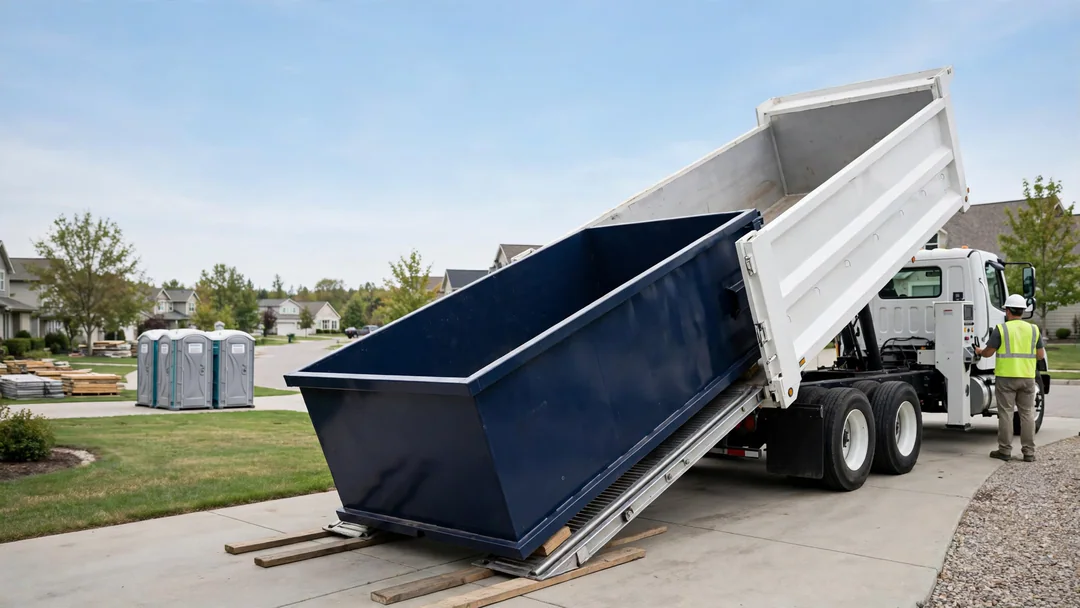
Roofing is a frequent use, since asphalt shingles are dense and can reach a weight limit before the container looks full. Rain adds weight too, so covering a container between loads can help. In hilly areas around Knoxville, Chattanooga, and the eastern counties, steep driveways may limit where a roll-off truck can safely place a container. Share photos of the site with your provider. Compare options in our dumpster size guide and weight limits guide.
Portable toilet rental in Tennessee
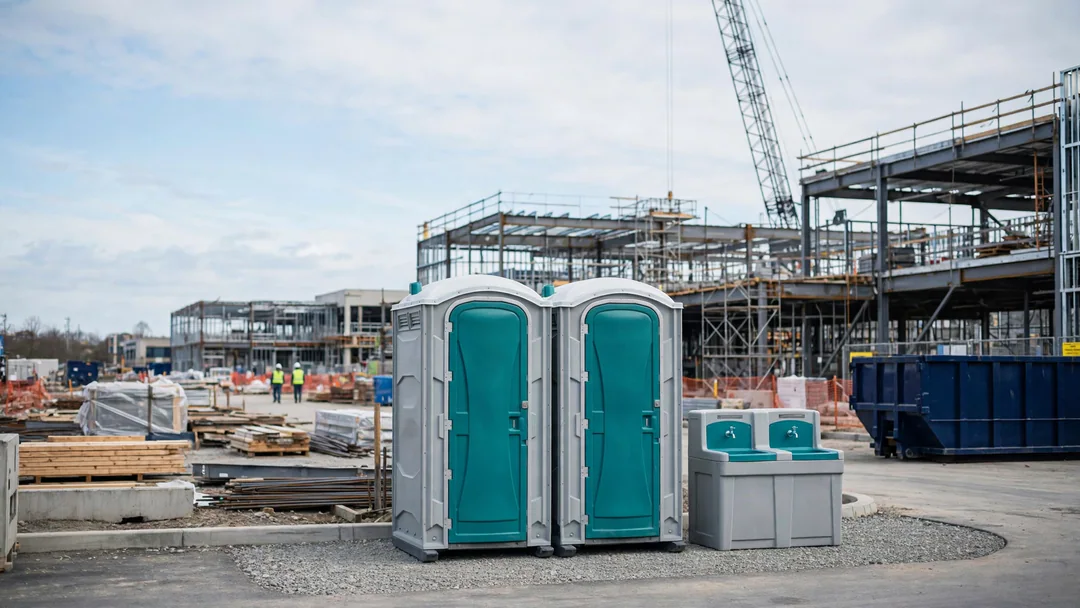
For Tennessee job sites, federal OSHA rules (29 CFR 1926.51) set minimum toilet counts based on crew size, and contractors usually plan servicing at least weekly, more often in summer heat. Our OSHA jobsite toilet guide explains the basics.
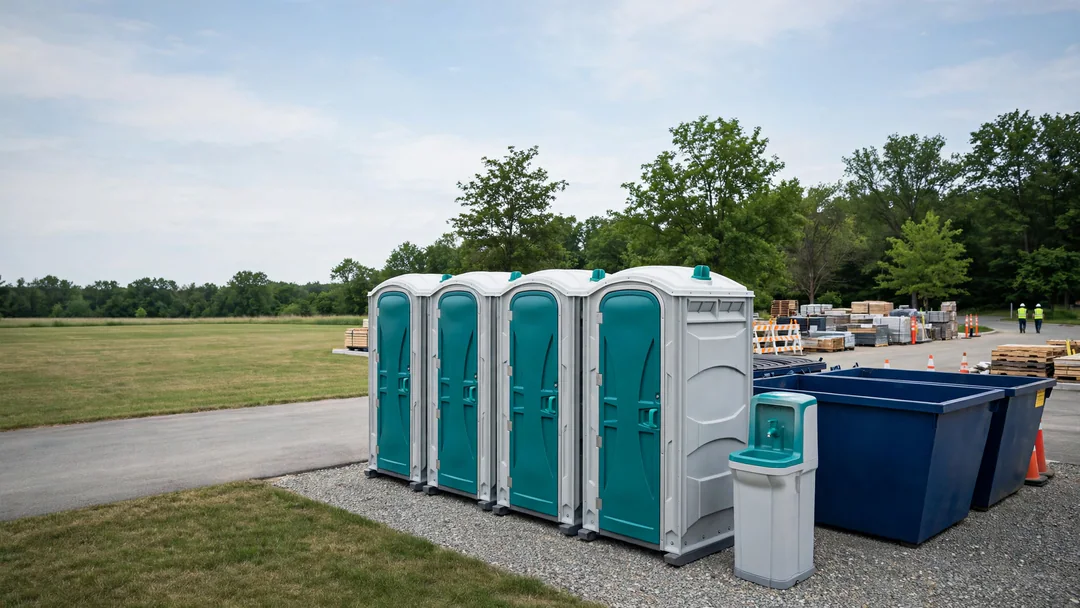
For events, plan ADA-accessible units where the public will attend, add hand-washing stations near food areas, and place restrooms on level ground with a clear path for the service truck. After severe storms, providers may see a surge in demand for emergency units, so lead times can stretch. In rare winter cold snaps, ask about freeze protection. Use our porta potty calculator guide to estimate quantities.
Climate and seasonal considerations
Tennessee has hot, humid summers and generally mild winters, with occasional ice and snow that can be heavier on the Cumberland Plateau and in the eastern mountains. Spring is the most active stretch for severe weather, and tornadoes can occur across the state, including in late fall and winter. After a storm, demand for debris containers and emergency restrooms can rise quickly, so book early and expect schedules to tighten.
Frequent rain affects both product lines. Wet debris weighs more and can push a load toward its weight allowance, and soft yards make placement harder. For portable toilets, summer heat and humidity usually call for more frequent servicing, shaded placement where possible, and hand-washing or sanitizer stations for crews and guests. Ask your provider how they schedule service during heat waves.
Construction activity and common projects
Construction in Tennessee is broad. The Nashville area has steady demand for multifamily buildings, subdivisions, infill homes, offices, and hospitality projects, and the growth extends into surrounding suburbs. Memphis has a large logistics and distribution sector, so warehouse and industrial work is common there. Knoxville and Chattanooga see a mix of university, healthcare, residential, and manufacturing projects, and rural counties have farm buildings, storm repairs, and land clearing.
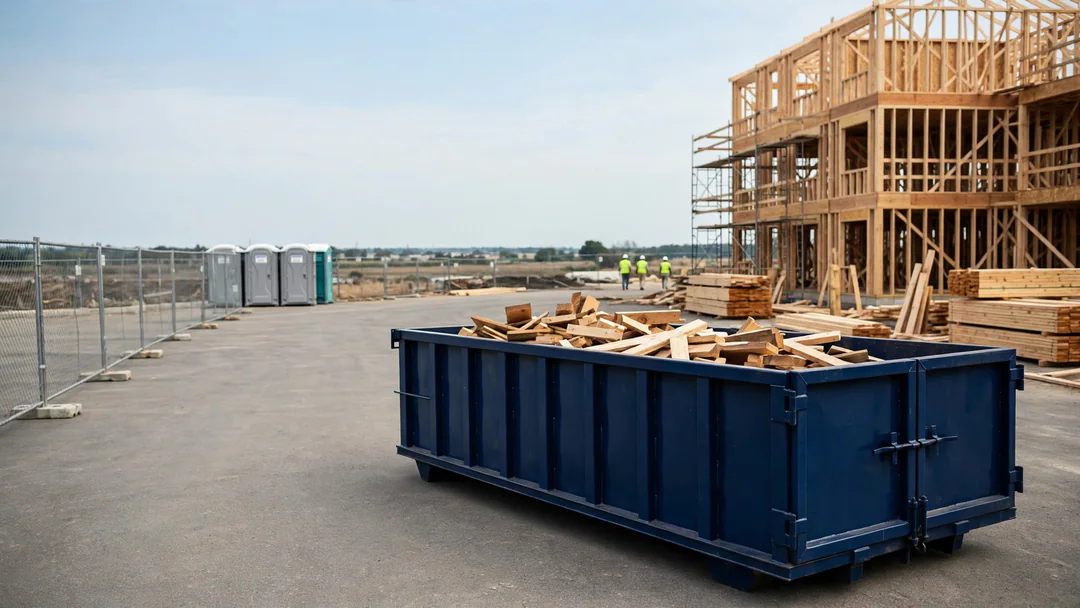
For homeowners, the common jobs are roof replacements, kitchen and bath remodels, basement finishing, and estate cleanouts. Commercial contractors often need recurring swaps and several restrooms on one site. Our construction dumpster and construction porta potty pages explain how to plan for both.
- Tornado and storm debris cleanup
- Roof replacement after hail or wind damage
- New subdivision and multifamily construction
- Kitchen, bath, and basement remodels
- Warehouse and distribution center projects
- Music festivals and outdoor concerts
- Farm and barn weddings
- Estate and rental property cleanouts
Disposal rules and restricted materials
Solid waste in Tennessee is overseen at the state level by the Tennessee Department of Environment and Conservation (TDEC), while counties and cities run or contract many landfills, transfer stations, and convenience centers. Which facility your load goes to depends on where the job is, what the debris is, and which hauler you use.
Like many states, Tennessee restricts certain items from regular landfill disposal. Tires, lead-acid batteries, used oil, and appliances that contain refrigerant usually need separate handling, and household hazardous waste such as paint, solvents, and chemicals should not go in a rental dumpster. Rules and accepted materials vary by facility, so confirm with your provider and your county. See what you cannot put in a dumpster for general guidance.
Permits in Tennessee
In most Tennessee communities, a dumpster on your own driveway or private lot does not need a city permit. Placing a container or portable toilet on a street, sidewalk, or other public right-of-way usually does, and the rules are set locally. Larger cities typically handle this through their public works or transportation departments, sometimes requiring reflectors, barricades, or a time limit.
Homeowners associations in many newer subdivisions, especially around Nashville, may limit how long a container can stay, where it can sit, or whether it must be screened. Event restrooms on public property may also fall under a special event permit. Requirements change, so check with your city or county and your HOA before delivery. Our dumpster permits guide covers the questions to ask.
Event sanitation planning
Music is a big part of Tennessee life, from Nashville honky-tonks and outdoor concerts to Memphis blues and barbecue traditions and bluegrass gatherings in the east. Throughout the warmer months, the state hosts music festivals, county fairs, food events, races, church gatherings, and outdoor weddings at farms and barns.
Sanitation planning for these events depends on the expected crowd size, how long the event runs, whether alcohol is served, and how far the site is from a water hookup. Heat and humidity make hand-washing stations and regular servicing more important. Rural venues may need restroom trailers or units placed with truck access in mind. Start with our festival restroom planning page and the event sanitation checklist.
Cities in Tennessee
Major metro areas: Nashville–Davidson–Murfreesboro–Franklin · Memphis · Knoxville · Chattanooga · Clarksville · Kingsport–Bristol · Johnson City
Services in Tennessee
Tennessee rental FAQs
Do I need a permit for a dumpster in Nashville or other Tennessee cities?
Usually not if the container sits on your own driveway or private property. Placing it on a street, sidewalk, or other public right-of-way typically requires local approval. Rules differ by city, so check with your local public works department before delivery.
Can I get a dumpster quickly after a tornado or severe storm?
Often, but demand rises sharply after major storms and availability can tighten. Contact us as soon as it is safe, describe the debris, and your local provider will confirm timing. Some storm debris may need to be sorted for separate handling.
What can I not put in a dumpster in Tennessee?
Common restricted items include tires, lead-acid batteries, used oil, appliances containing refrigerant, and household hazardous waste such as paint and chemicals. Accepted materials vary by provider and disposal facility, so confirm with your hauler first.
Which state agency regulates solid waste in Tennessee?
The Tennessee Department of Environment and Conservation (TDEC) oversees solid waste at the state level. Counties and cities manage many local disposal facilities and convenience centers, so local rules also apply.
How often should portable toilets be serviced in Tennessee summers?
Weekly service is a common starting point for job sites, but hot, humid weather and heavy use often justify more frequent visits. For multi-day events, providers may service daily. Your provider will recommend a schedule based on usage.
Will my HOA allow a dumpster in my driveway?
Many do, but some subdivisions set limits on how long a container can stay or where it can be placed. Check your HOA rules before booking and share any restrictions with your provider so they can plan placement.
Sources and official resources
Neighboring states
Ready to book a dumpster?
Planning a project in Tennessee? Share your ZIP code and dates to check provider availability.