
Maine · Northeast
Dumpster & Porta Potty Rental in Maine
Plan a roll-off dumpster or portable toilet rental anywhere in Maine, with state-specific guidance on permits, disposal and seasons.
One quick call to a real person. You approve the price before anything ships.
- All 50 states + DC
- Price confirmed before delivery
- Pricing explained up front
Can I rent a dumpster or porta potty in Maine?
Yes. We coordinate roll-off dumpster and portable toilet rentals across Maine through independent local providers. Pricing, sizes and delivery windows depend on the provider serving your ZIP code, and permits are handled at the city or county level when equipment goes on a public street.
Dumpster and portable toilet rental in Maine
Maine is the largest New England state by area and one of the most rural, with a long, rocky coastline, thousands of lakes and ponds, and vast northern forests. It borders only one other state, New Hampshire, plus the Canadian provinces of Quebec and New Brunswick.
Most rental demand sits in southern and coastal Maine. Greater Portland, including South Portland, Westbrook and Scarborough, is the largest population center. Lewiston and Auburn form a twin-city hub on the Androscoggin River, and Bangor serves as the gateway to central, eastern and northern Maine. Coastal towns from York to Bar Harbor add a large seasonal and second-home market.
Haul & Hygiene coordinates with independent local haulers and sanitation providers across the state. Distances between towns can be long, so your provider confirms coverage, sizes and timing for your exact address.
Dumpster rental in Maine: what to know
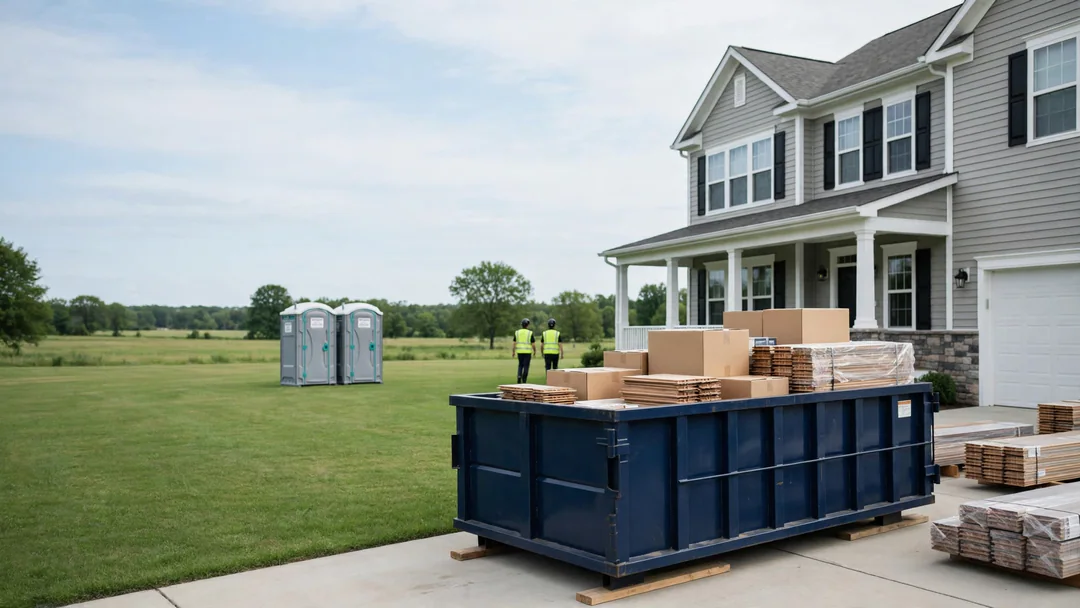
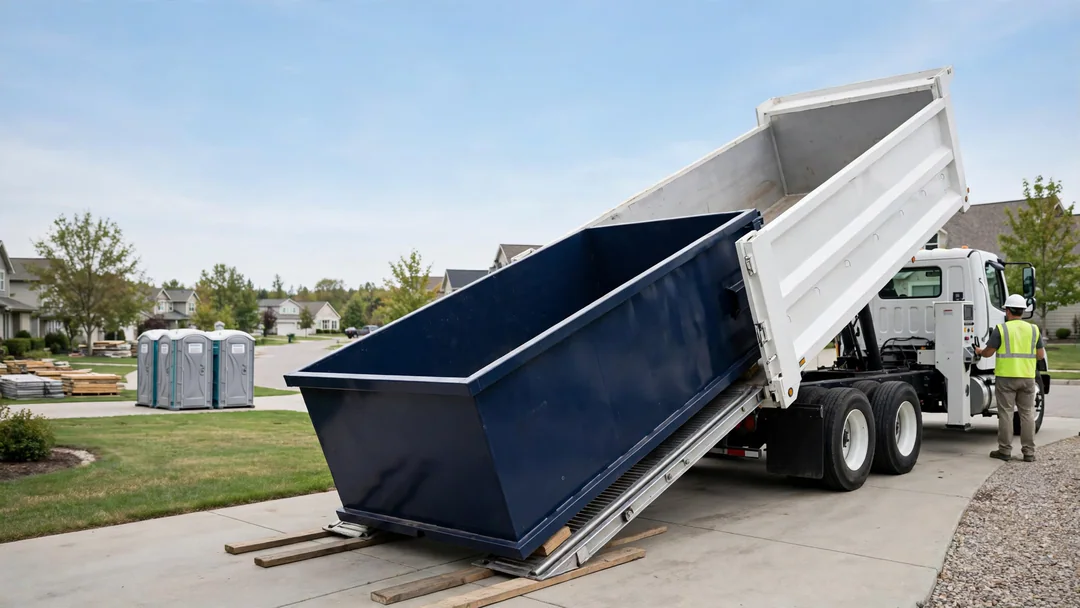
In Maine, 10- and 15-yard containers handle many bathroom remodels, attic and basement cleanouts, and small roofs, and they fit better on narrow city lots and short driveways. A 20-yard is a common choice for full roof tear-offs and kitchen remodels, while 30- and 40-yard containers are used on construction sites and large cleanouts. Compare options on our dumpster sizes page.
Access is the main constraint. Island properties, camps on private roads and steep shorefront lots may not be reachable by a roll-off truck at all, so describe your site carefully.
In winter, clear snow from the placement area and keep the container covered when possible. Boards under the rails help protect pavement; see how to prepare your driveway.
Portable toilet rental in Maine
Winter servicing is the biggest planning factor in Maine. Providers commonly treat holding tanks with antifreeze or brine in cold months, and service may be delayed after a nor'easter. Keep a plowed, sanded path to each unit for users and trucks.
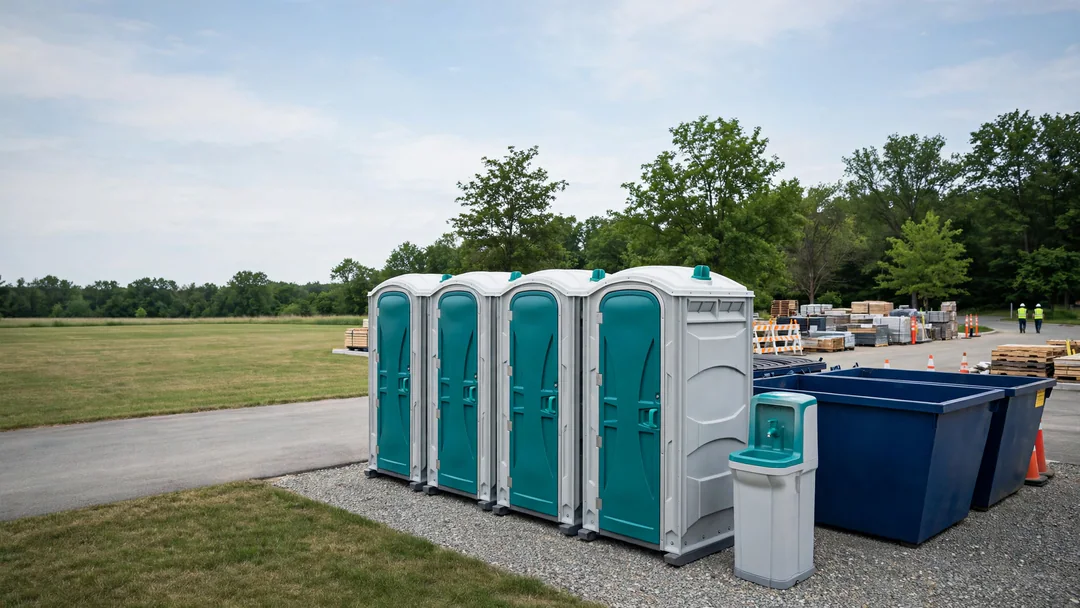
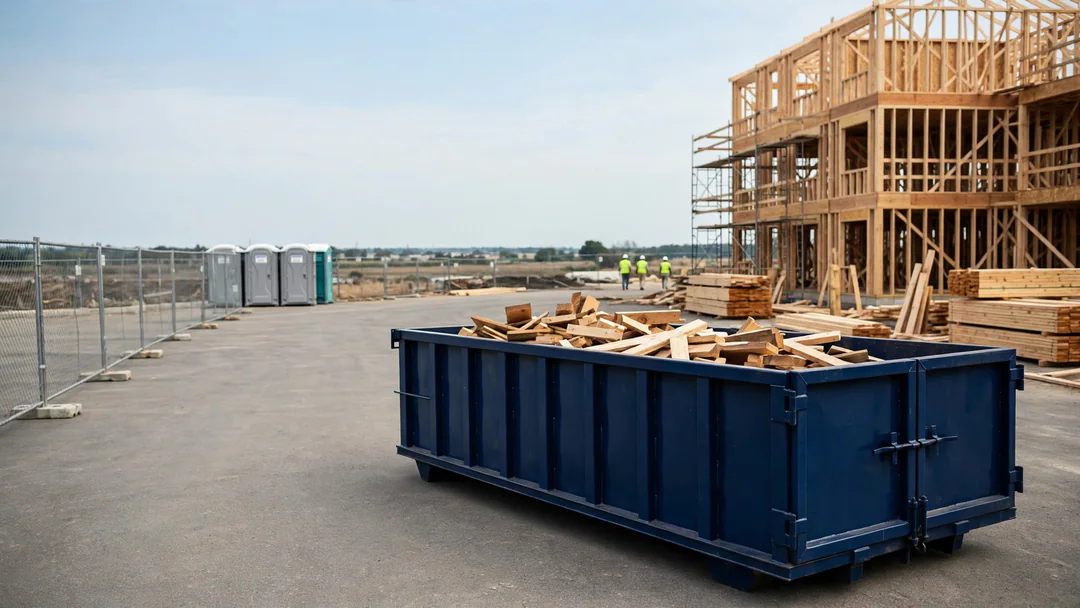
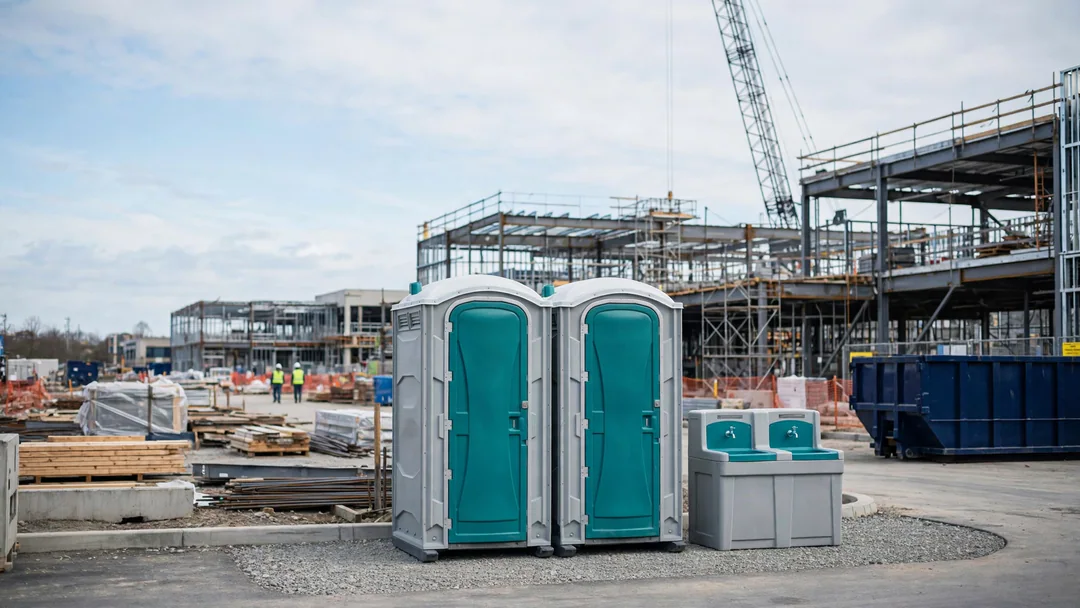
For construction, federal OSHA rules at 29 CFR 1926.51 set minimum toilet counts based on crew size; see our OSHA jobsite toilet guide. Year-long builds often use long-term rentals on a fixed service day.
For summer events, distance matters. Rural fairgrounds, coastal venues and lake properties can be a long drive from a provider's base, which affects scheduling and mid-event service. Include an ADA-accessible unit at public events, and confirm a service truck can reach the site on grass or gravel.
Climate and seasonal considerations
Maine has cold, snowy winters and short, mild summers, with conditions varying sharply between the coast and the interior. Nor'easters can bring heavy snow, high wind and coastal flooding, and inland areas such as Aroostook County see some of the coldest weather in the Northeast.
Snowbanks narrow driveways and streets, and many towns enforce winter parking bans so plows can work. A container left open can fill with snow and ice, adding weight, and portable toilets need antifreeze or brine to keep tanks from freezing. See our winter portable toilet guide.
Spring thaw softens dirt roads and gravel drives, and some towns post weight limits on local roads during that period. Summer is the peak season for both construction and events. Wet debris from storm or basement cleanups is heavy, so check dumpster weight limits first.
Construction activity and common projects
Maine's housing stock skews older, with capes, farmhouses, New Englanders and mill-era triple-deckers in cities like Lewiston, Biddeford and Portland. Renovation work, including roof replacements, kitchen and bath remodels, heating system upgrades and insulation retrofits, drives a large share of rental demand.
Greater Portland sees steady infill housing, apartment and commercial construction. Former textile and shoe mill buildings along rivers in Lewiston, Biddeford and Saco have been redeveloped into housing and offices. Shipbuilding at Bath Iron Works, healthcare, tourism, forestry and fishing are well-known parts of the state economy.
Along the coast and on the lakes, cottage and camp renovations are often scheduled between the summer rental season and winter. Larger projects typically pair construction dumpsters with jobsite portable toilets, and remote sites may need extra planning for access.
- Older home and triple-decker renovations
- Roof replacements after winter and storm damage
- Coastal cottage and lake camp remodels
- Mill building redevelopment
- Basement and storm cleanups
- Estate and seasonal-home cleanouts
- Infill housing and apartment construction
Disposal rules and restricted materials
The Maine Department of Environmental Protection regulates solid waste facilities, including landfills, transfer stations and construction and demolition debris processors. Many residents use town transfer stations, and accepted materials and rules differ from one municipality to the next.
Maine has specific programs for certain products. Televisions, computer monitors and some other electronics are handled through a state e-waste program rather than ordinary trash, and mercury-added products such as thermostats and fluorescent lamps also need separate handling. As in most states, tires, lead-acid batteries, used oil and appliances with refrigerant are commonly restricted.
Older homes may contain asbestos or lead paint, which must be managed under specific rules. Confirm accepted items with your hauler, and review what you cannot put in a dumpster and our debris recycling guide.
Permits in Maine
Maine has no statewide dumpster permit. A container on your own driveway or private lot usually does not require one, but placing it on a public street, sidewalk or town right-of-way typically needs permission from the city or town. Dense neighborhoods in Portland, Lewiston and Bangor are where street permits come up most often.
Winter parking bans are common, and a container in the road can block plows. Condominium associations, HOAs and lake associations may also set rules about placement and duration, and some coastal and shoreland properties have additional local restrictions on site work.
Check with your municipal code office or public works department before delivery. Our dumpster permit guide and portable toilet permit guide explain what to ask.
Event sanitation planning
Maine's outdoor event season runs mainly from Memorial Day through mid-October. Agricultural fairs are a long tradition, including the Fryeburg Fair in early fall, the Common Ground Country Fair in Unity and the Bangor State Fair. The Maine Lobster Festival in Rockland is a well-known summer event.
Lewiston and Auburn host the Great Falls Balloon Festival, and Portland holds waterfront concerts and street festivals in the Old Port. Coastal and lakeside weddings are popular all summer, and many of those venues, from farms to private shorefront properties, lack permanent restrooms.
Use our quantity guide to size an order, consider restroom trailers for weddings, and add hand-washing stations near food. The event sanitation checklist covers permits and layout.
Cities in Maine
Major metro areas: Portland–South Portland · Lewiston–Auburn · Bangor · Augusta–Waterville
Services in Maine
Maine rental FAQs
Do I need a permit for a dumpster in Maine?
Not at the state level. Driveway placement usually needs no permit, while street or right-of-way placement typically requires municipal approval. Winter parking bans and HOA or lake association rules may also apply, so check locally first.
Can I throw an old TV or computer monitor in a Maine dumpster?
Usually not. Maine runs a program for televisions, monitors and some other electronics, and many transfer stations collect them separately. Ask your hauler or town transfer station how to handle electronics.
Can a dumpster be delivered to a lake camp or coastal cottage?
Often, if a roll-off truck can reach the site. Private camp roads, soft ground, steep lots and low branches can block access. Describe the road and driveway to your provider in advance.
Do portable toilets work in a Maine winter?
Yes, with winter treatment. Providers commonly add antifreeze or brine to tanks and may adjust service around storms. Keep the path to each unit plowed.
When should I book portable toilets for a Maine summer wedding?
Book early. Summer weekends are busy across coastal and lake towns, and restroom trailers and ADA units can be reserved well in advance.
Does Haul & Hygiene have a yard or trucks in Maine?
No. We are a nationwide coordination network that connects you with independent local haulers and sanitation providers serving your area.
Sources and official resources
Neighboring states
Ready to book a dumpster?
Planning a project in Maine? Share your ZIP code and dates to check provider availability.