Service & Upkeep
Portable Toilet Maintenance and Servicing
Servicing is what keeps a portable toilet usable. Here is how often units are typically serviced, what technicians do on each visit and what you can do between visits.
One quick call to a real person. You approve the price before anything ships.
- All 50 states + DC
- Price confirmed before delivery
- Pricing explained up front
How often are porta potties serviced?
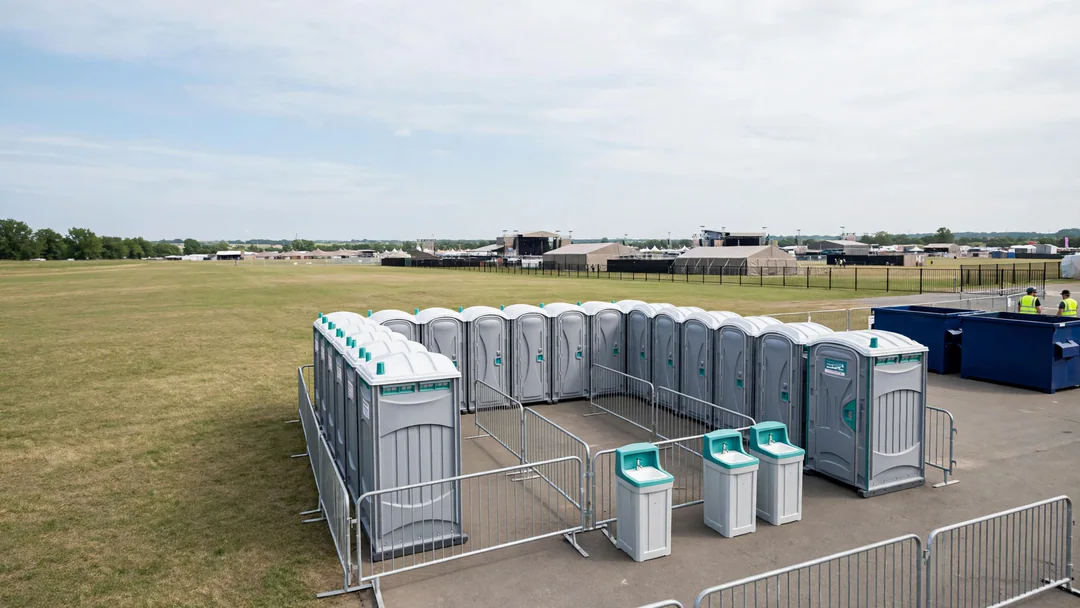
Weekly service is the most common schedule for construction sites and long-term rentals. Heavier use, larger crews, public access or hot weather can call for twice-weekly or more frequent service. Single-day events are usually delivered clean and picked up after, while multi-day events typically need daily service. The right schedule depends on users, hours and unit capacity, so confirm with your provider.
Typical service schedules
There is no single schedule that fits every rental. Providers set frequency based on how many people use a unit, how long they use it each day and the unit's tank capacity. The table shows common starting points; your provider will recommend a schedule for your situation.
| Situation | Typical schedule |
|---|---|
| Construction site, small to mid crew | Weekly |
| Construction site, large crew or long shifts | Twice weekly or more, or add units |
| Single-day event | Delivered clean, picked up after |
| Long single-day event or large crowd | Service or attendant during the event |
| Multi-day festival | Daily, often overnight or early morning |
| Park, trailhead or seasonal site | Weekly, more often in peak season |
| Emergency outage at home or business | Weekly or as usage requires |
What happens during a service visit
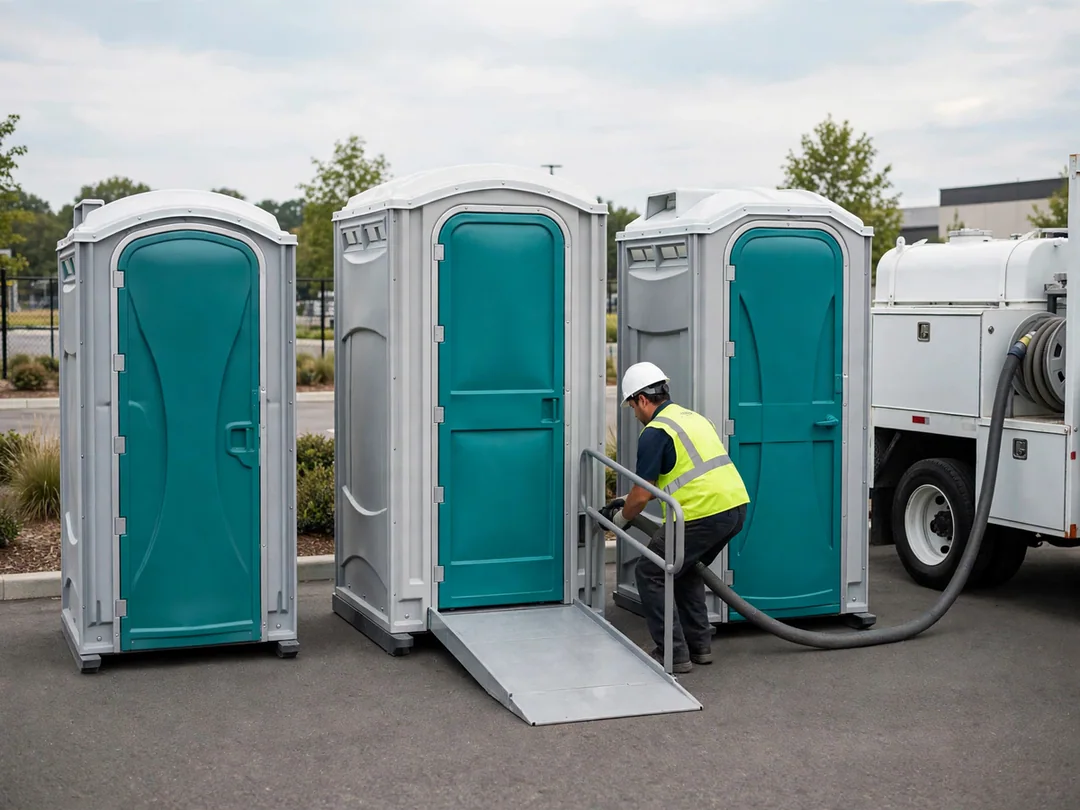
A standard service visit follows a consistent routine. Technicians arrive with a vacuum truck that carries waste tanks, fresh water and supplies.
- Pump the tank
The technician vacuums waste from the holding tank into the truck.
- Recharge
Fresh water and deodorizing solution are added to the tank.
- Clean surfaces
The seat, walls, floor, urinal and door are scrubbed and sanitized.
- Restock
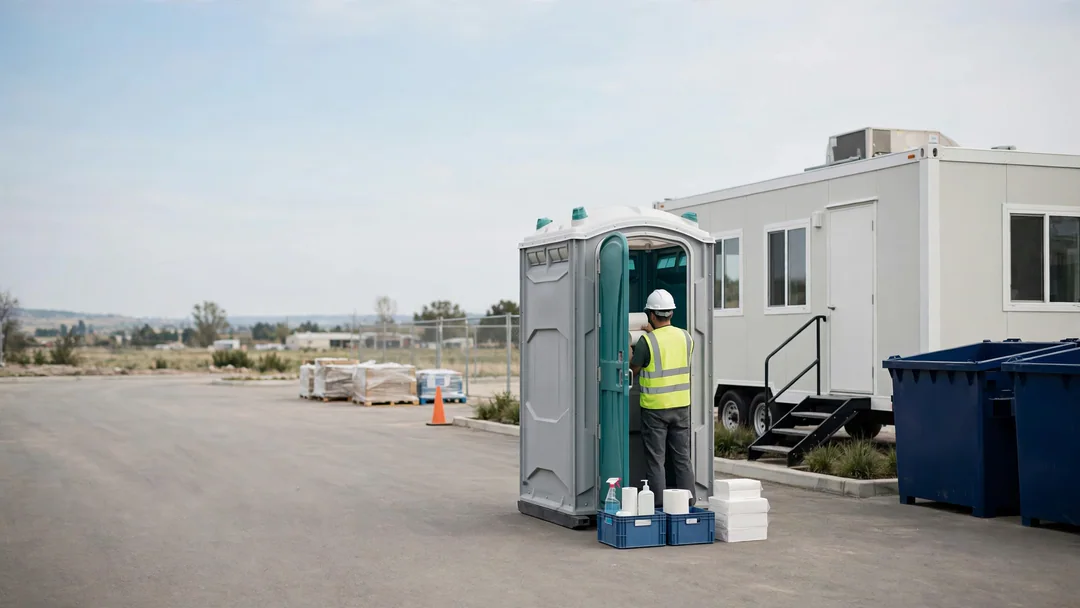
Toilet paper, hand sanitizer and, where present, soap and towels are refilled.
- Inspect
The technician checks doors, latches, vents and dispensers and notes any damage.
Signs a unit needs service sooner
Do not wait for the scheduled visit if a unit is clearly struggling. Contact your provider if you see any of the following.
- Waste level visibly near the seat
- Strong odor that the vent is not handling
- Toilet paper or sanitizer running out
- Unit tipped, damaged or not latching
- More users than you originally planned
- Hot weather causing faster odor buildup
Keeping units clean between visits
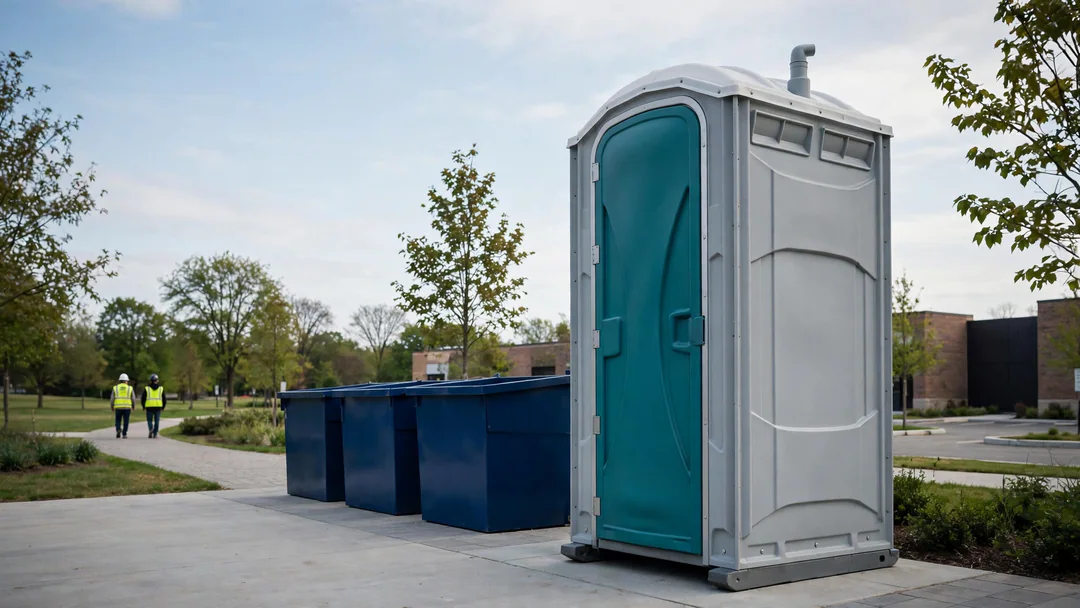
Simple habits make a big difference to how a unit holds up between service visits. Put a trash can near the units so paper towels, cups and wrappers do not end up in the tank. Post a sign asking users to dispose of only waste and toilet paper. Place units in shade where possible to slow odor buildup. On jobsites, ask crews to report problems rather than working around them.
Avoid adding household cleaners or chemicals to the tank. They can interfere with the deodorizer and complicate disposal at the treatment facility. If a unit needs attention, call the provider.
Placement helps as well. Units on level, firm ground stay cleaner because the tank sits evenly and the door closes properly. Keep the area around the door free of mud and debris, and add a mat or gravel if the ground is soft, since dirt tracked inside is one of the main reasons units look worn between visits. Lighting near units at night discourages misuse and helps users keep them tidy.
Finally, make it easy for users to report problems. A provider phone number posted inside the door lets a crew member or guest flag a full tank or broken latch before it becomes a complaint. Quick reports lead to quick fixes, and a provider who knows about recurring problems can adjust the schedule rather than reacting each time.
Seasonal maintenance
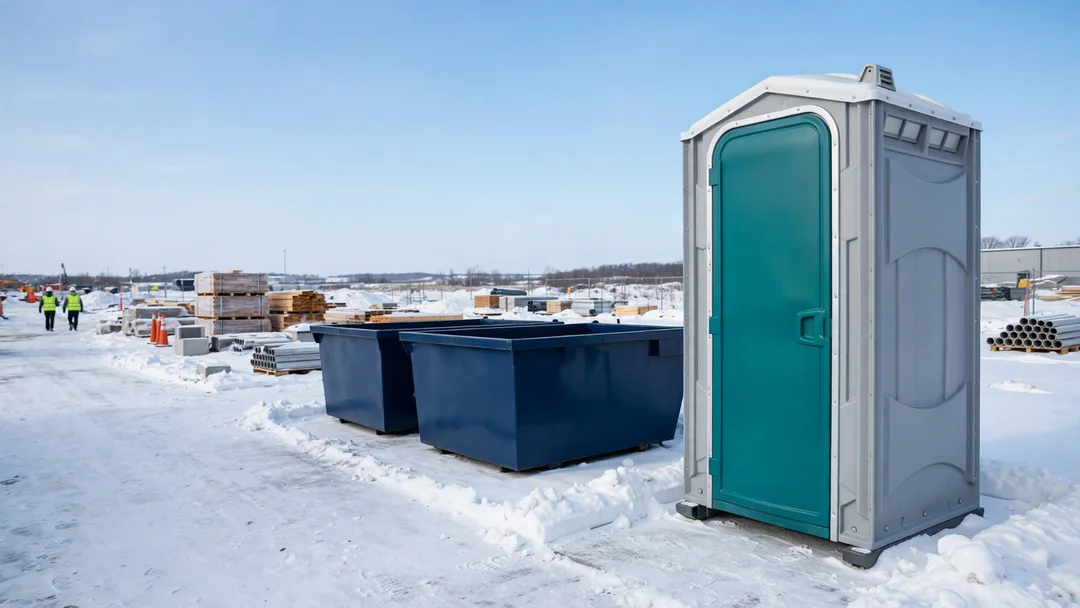
Weather changes how units perform. In summer, odor builds faster and units may need more frequent service. In freezing weather, providers may add antifreeze or brine to the tank, and hand washing stations may need heated models or winter procedures. Our winter rental guide covers cold-weather planning. In storm season, ask about anchoring units against high winds and check them after severe weather.
Hand washing stations and trailers
Hand washing stations need fresh water refilled, gray water emptied, soap replaced and towels restocked, usually on the same visits as toilet service. Restroom trailers need fresh water tanks filled and waste tanks pumped, and many larger events use an attendant to keep them stocked during use. Ask your provider how their schedule covers each type of unit on your order.
Setting the right schedule
When you request a quote, share realistic numbers: users, hours per day and any peak times. That helps the provider set a schedule that keeps units usable without paying for visits you do not need. Revisit the schedule if your crew or event grows. For how servicing affects cost, see porta potty prices; for quantity planning, see how many porta potties you need.
Servicing ADA-accessible portable toilets
ADA-accessible portable toilets are serviced on the same schedule as standard units, but they need a few extra checks: the ground-level entry and the route to it stay firm, level and clear; grab bars are secure; and the door closes and latches without force. On multi-day events, ask the provider to service accessible units first so they are ready when guests arrive. See ADA portable toilets.
Portable Toilet Maintenance FAQs
Is weekly service enough for a construction site?
For most small to mid crews, yes. Large crews, long shifts or hot weather may need more frequent service or more units.
Do event units get serviced during the event?
For long or crowded events, often yes, either by a mid-event visit or an attendant. Short events usually get units delivered clean and picked up after.
Can I clean the unit myself?
Light tidying is fine, but avoid adding chemicals to the tank. Pumping and sanitizing should be left to the provider.
What if the unit fills up before the next service?
Call the provider for an extra visit. If it keeps happening, increase service frequency or add a unit.
Where does the waste go?
Providers take it to permitted treatment facilities. It is never dumped on site.
Related pages
Need portable toilets on site?
Share your ZIP code and project details. We will route it to an available provider near you.