
Guide Category
Construction Waste Guides
Planning resources for contractors, builders, and site managers who need to keep debris moving.
One quick call to a real person. You approve the price before anything ships.
- All 50 states + DC
- Price confirmed before delivery
- Pricing explained up front
What do the construction waste guides cover?
They cover how to plan debris handling across a project: estimating waste streams, staging containers, separating recyclable materials, and coordinating swaps. Disposal rules and recycling options vary by location and provider, so the guides flag what to confirm locally.
What the construction waste guides cover
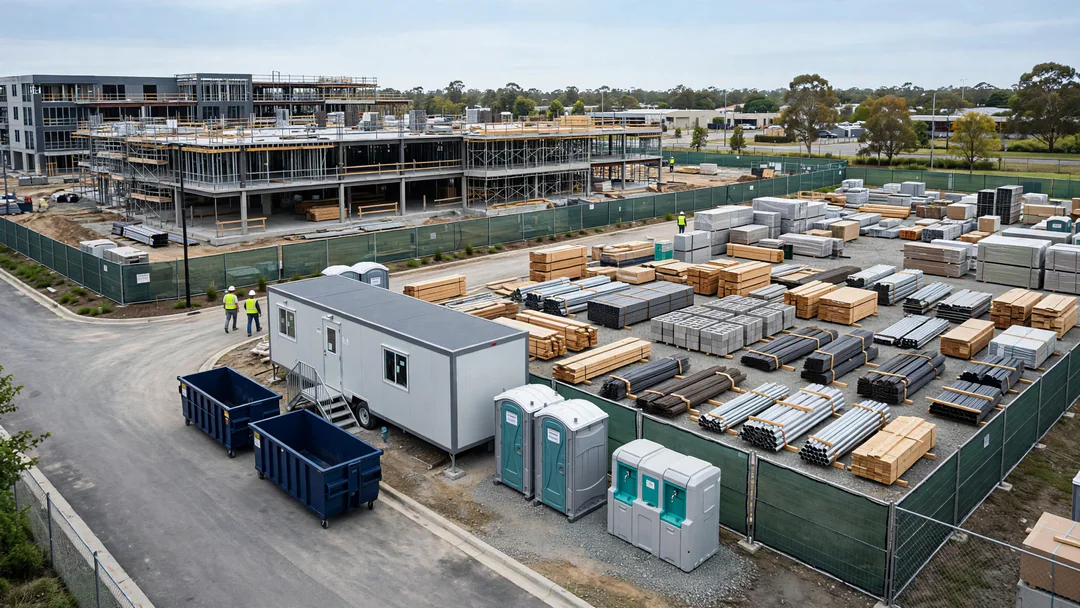
Construction waste is a scheduling problem as much as a disposal problem. A full container that sits too long can stall trades; a mixed load can cost more than a separated one; and some materials are restricted or banned from landfills in many states. These guides help you set up a waste plan that matches the phases of your job.
For container options, start with construction dumpsters, concrete dumpsters, and demolition dumpsters. Larger commercial jobs may also want commercial construction planning.
Construction Waste articles
Start with the article closest to your question. Each one ends with links to the matching service pages and to local coverage.
- Construction Site Waste Management: A simple waste plan keeps a site safer, keeps crews moving, and makes recycling and disposal easier to manage.
- Construction Debris Recycling: Much of what leaves a jobsite can be recovered if it is kept clean and sorted. Here is how to set up recycling that actually works.
- OSHA Jobsite Toilet Requirements: Federal OSHA sets minimum toilet facilities for construction sites based on crew size. Here is what the standard says and how to plan for it.
Do not forget sanitation
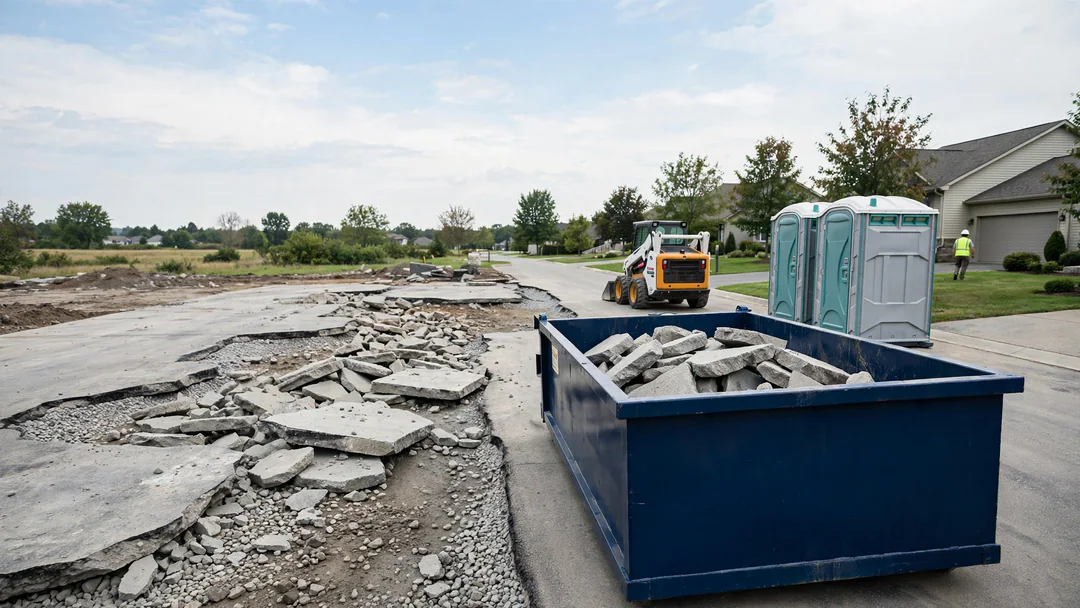
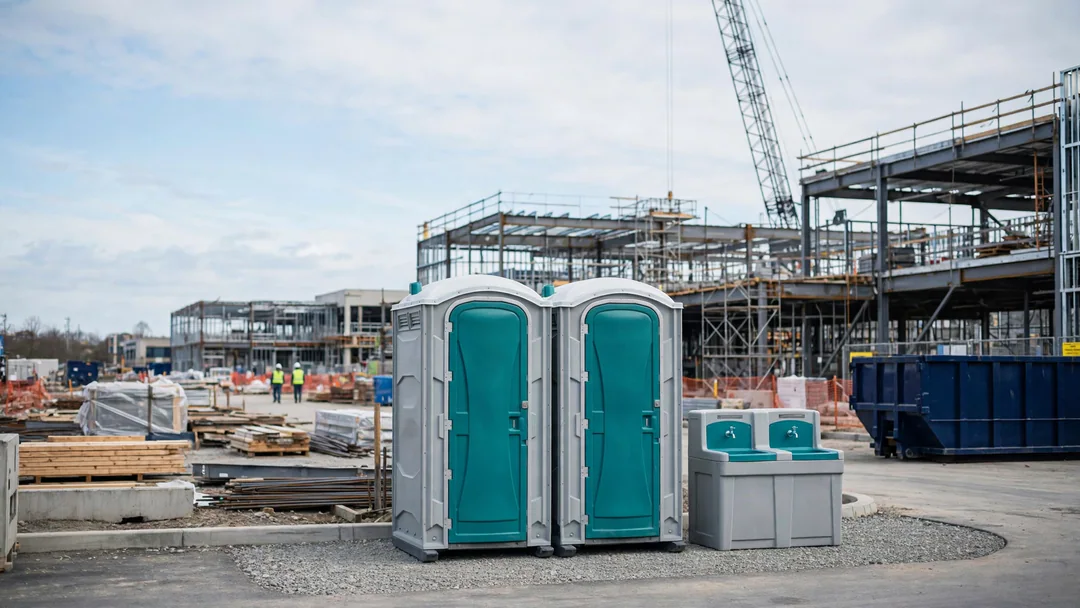
Waste planning and jobsite sanitation usually get scheduled together. See construction porta potties for crew restrooms, then find your area on the locations page.
Waste by project phase
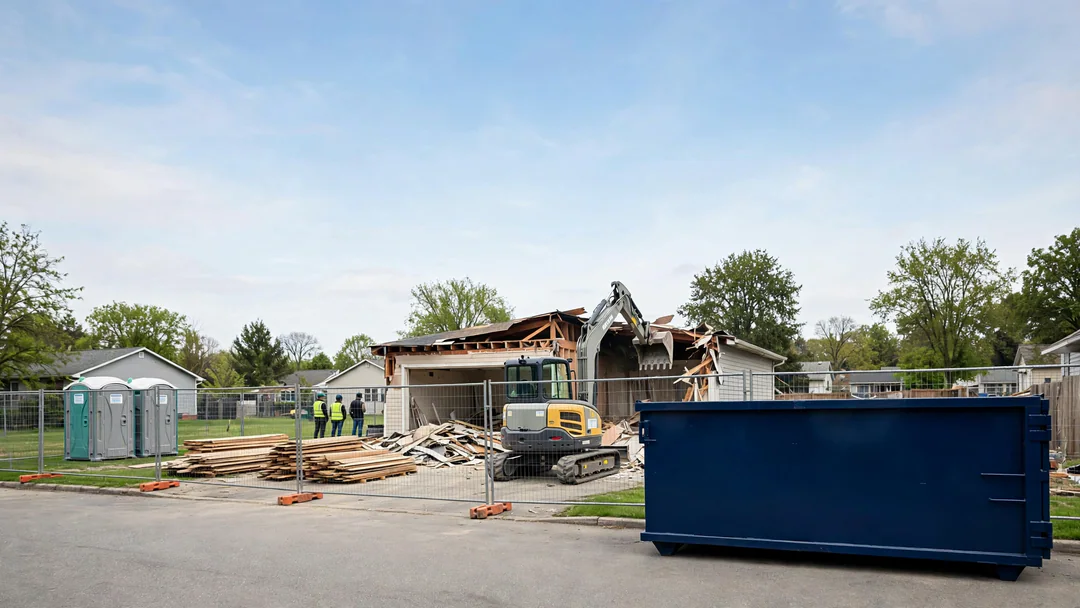
| Phase | Typical debris | Container tip |
|---|---|---|
| Demolition and site prep | Concrete, brick, asphalt, dirt, mixed demo debris | Use smaller containers for heavy material and keep clean loads separate |
| Framing and roofing | Lumber offcuts, sheathing, shingles, packaging | Larger containers for bulky wood; size roofing loads by weight |
| Mechanical and drywall | Drywall scraps, metal, wire, pipe, cardboard | Separate metal and cardboard where recycling is available |
| Finishes and cleanup | Flooring, trim, packaging, paint-free mixed debris | Schedule a final swap before the punch list |
Plan swaps before the container is full
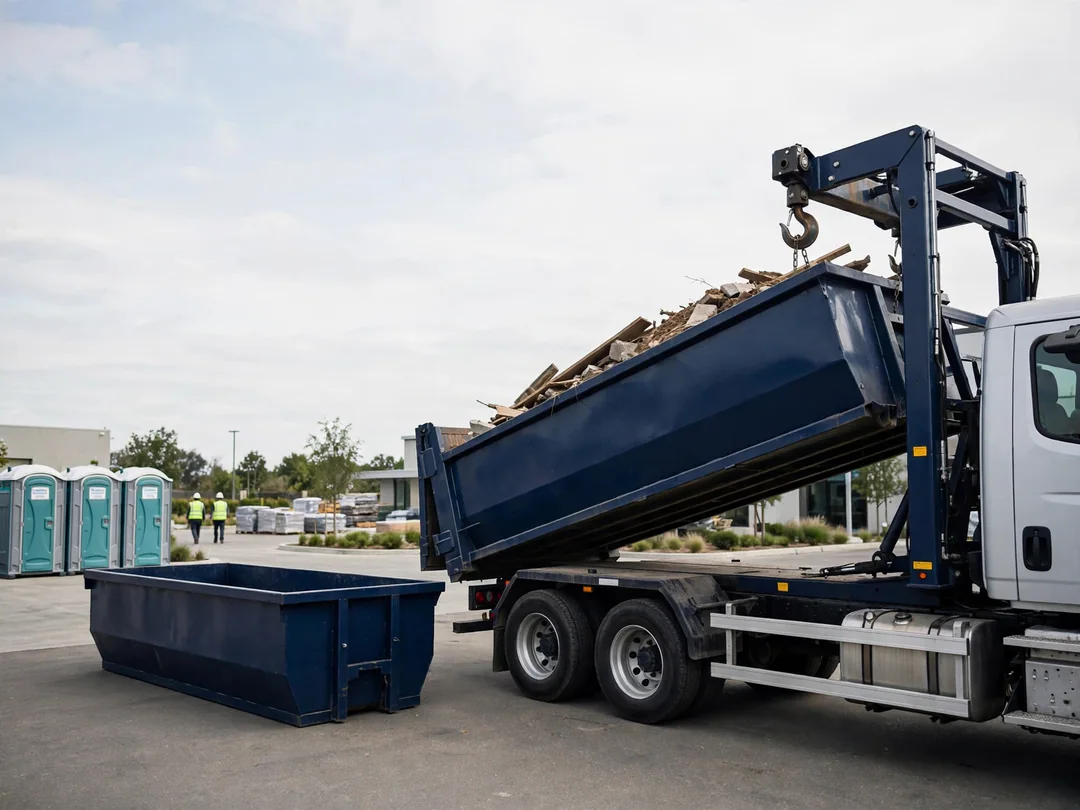
A full container that waits for pickup stops trades from cleaning up. Set a swap schedule around your busiest phases, keep the approach clear for the truck, and call for a swap when a container is about three-quarters full. On tight sites, two smaller containers that alternate can work better than one large one.
Separating materials
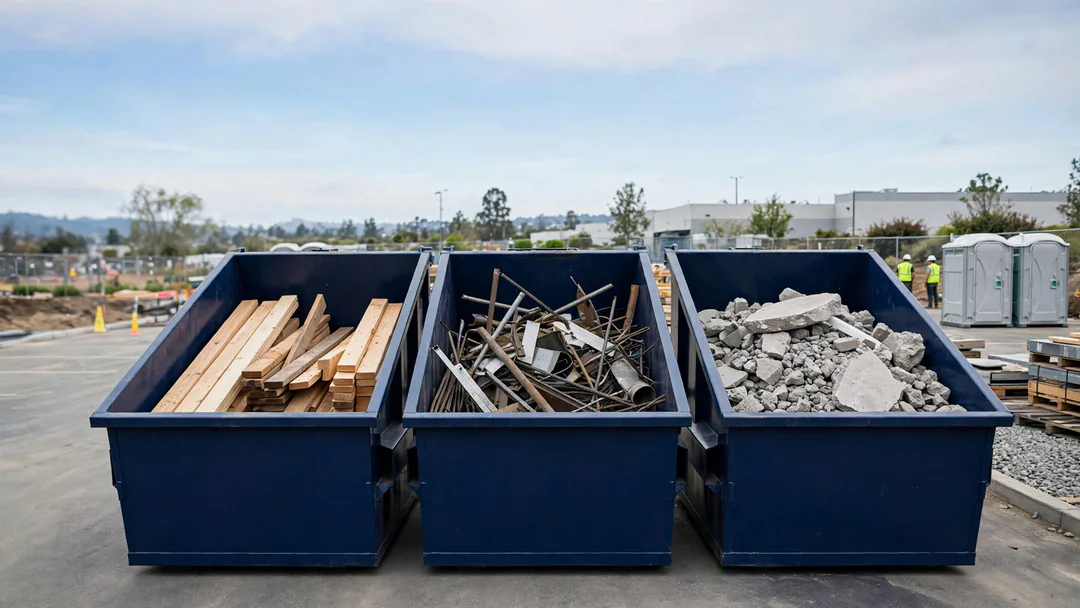
Separating clean loads such as concrete, wood or metal can lower disposal costs where recycling facilities accept them, and some projects require separation for green-building documentation. Recycling options vary by market, so ask your provider what they accept as a clean load. The debris recycling guide and jobsite waste management guide cover the details.
Construction Waste
Construction Waste Guides FAQs
What size dumpster does a construction site need?
It depends on the phase and material. Framing and bulky debris often call for 30- or 40-yard containers, while concrete, dirt and roofing need smaller containers because of weight limits.
Can I put concrete in a regular construction dumpster?
Many providers ask for heavy materials like concrete to go in a dedicated, smaller container and may offer a clean-load rate. Mixing it into a large container can exceed the weight limit.
How do swap-outs work?
The provider removes the full container and leaves an empty one on the same trip. Schedule swaps ahead during busy phases so work is not held up.
Do construction sites need portable toilets?
Yes. OSHA 29 CFR 1926.51 sets minimum toilet counts by crew size. Plan restrooms and waste containers together when you set up the site.
Related pages
Ready to book a dumpster?
Whatever the project, start with your ZIP code. We will check provider availability for your dates.