
New Jersey · Mid-Atlantic
Dumpster & Porta Potty Rental in New Jersey
Plan a roll-off dumpster or portable toilet rental anywhere in New Jersey, with state-specific guidance on permits, disposal and seasons.
One quick call to a real person. You approve the price before anything ships.
- All 50 states + DC
- Price confirmed before delivery
- Pricing explained up front
Can I rent a dumpster or porta potty in New Jersey?
Yes. We coordinate roll-off dumpster and portable toilet rentals across New Jersey through independent local providers. Pricing, sizes and delivery windows depend on the provider serving your ZIP code, and permits are handled at the city or county level when equipment goes on a public street.
Dumpster and portable toilet rental in New Jersey
New Jersey is the most densely populated state in the country, and that density shapes almost every dumpster and portable toilet rental here. North Jersey sits inside the New York metro, with older cities such as Newark, Jersey City, Paterson and Elizabeth built tight to the street. Central Jersey along the Route 1 and Turnpike corridors mixes suburbs, office parks and warehouses. South Jersey looks toward Philadelphia, and the Jersey Shore runs roughly 130 miles down the Atlantic coast.
In the middle of the state, the Pine Barrens cover a large protected area with sandy soil and scattered towns, while the northwest rises into the Highlands and the Kittatinny Ridge.
Haul & Hygiene coordinates with independent haulers and sanitation providers in our network across New Jersey. We do not operate local yards or trucks. Call us with your ZIP code and dates, and we will match you with a provider that serves your address.
Dumpster rental in New Jersey: what to know
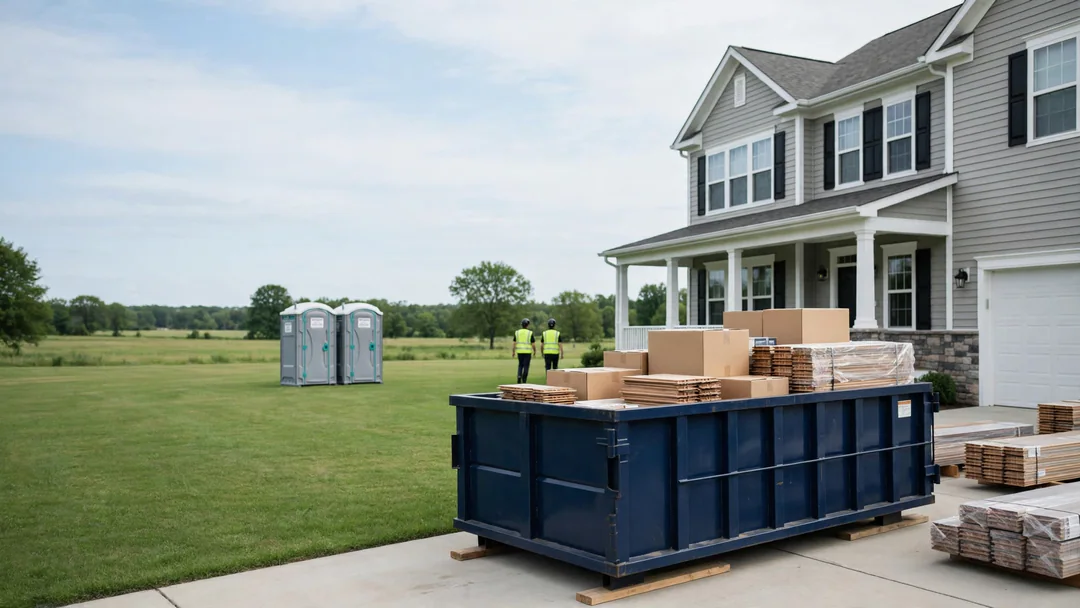
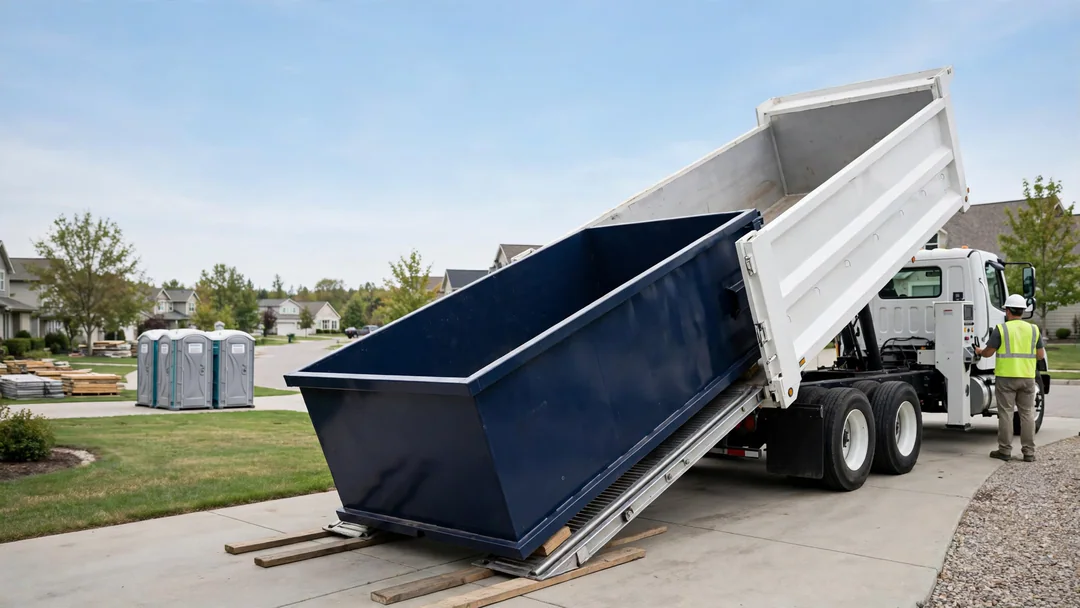
Space is the defining issue for New Jersey dumpsters. In dense cities, many homes have no driveway, so a 10- or 15-yard container on the street, with a permit, is common. In the suburbs, 20-yard roll-offs handle most kitchen remodels and cleanouts, while 30- and 40-yard containers serve new construction, teardowns and commercial work. Sizes and dimensions vary by provider.
Because of county disposal rules and recycling requirements, providers may ask you to keep certain materials separate, such as concrete, metal or clean wood. Heavy debris like plaster, tile and masonry from older homes fills weight allowances quickly. See our dumpster sizes guide, weight limit guide and small dumpster options for tight streets.
Portable toilet rental in New Jersey
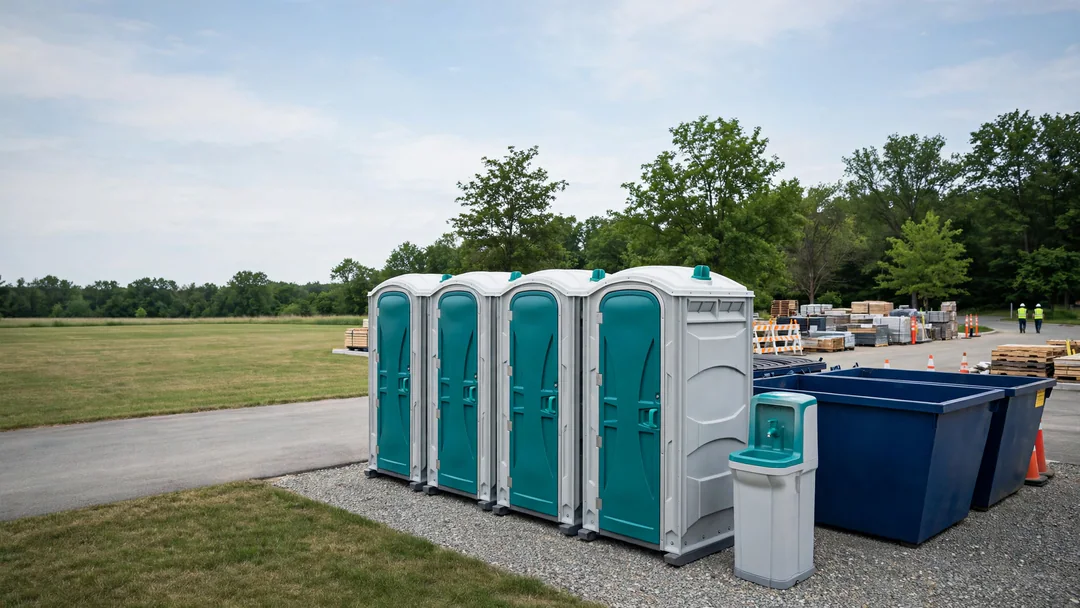
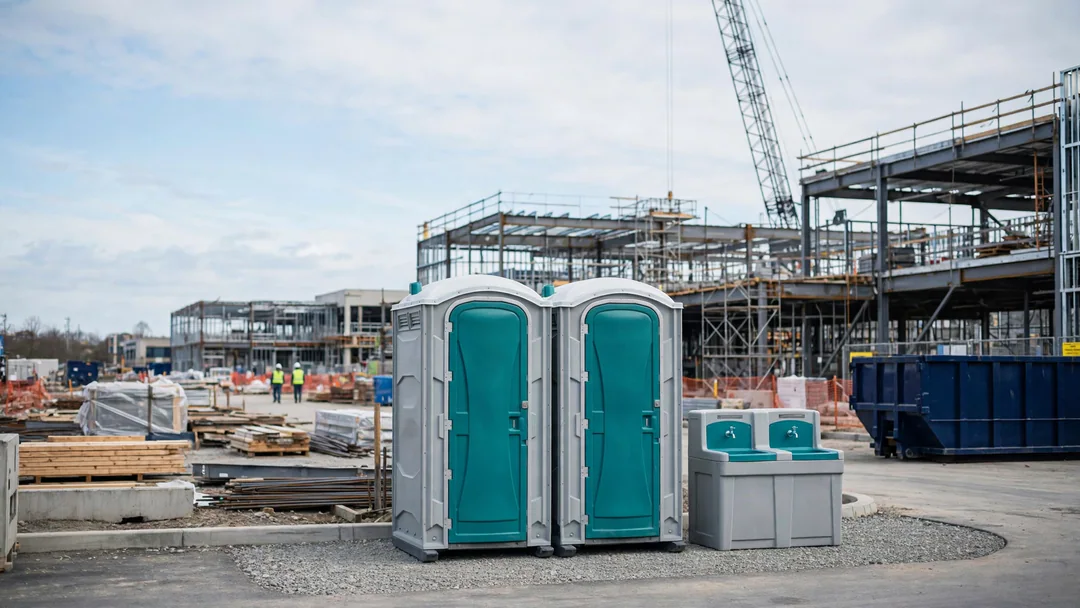
For New Jersey job sites, the OSHA sanitation standard, 29 CFR 1926.51, sets the baseline number of toilets per worker. In dense neighborhoods, units often need to fit in a narrow side yard, a corner of a lot or a curb space, which may require municipal permission. Provide a clear path for the service truck and consider units with a smaller footprint.
Summer events at the Shore and in parks typically combine standard units, ADA units and hand-washing stations. In winter, ask about freeze protection and plan for service delays after snowstorms; our winter rental guide covers the basics. Weddings often use restroom trailers, which need level ground and sometimes power. Use our unit planning guide to estimate counts.
Climate and seasonal considerations
New Jersey has four distinct seasons. Summers are warm to hot and humid, especially in the urban north and inland south, which means portable toilets at busy sites and events may need more frequent servicing from June through August. Winters bring snow and ice, more so in the northwest hills than along the coast, and snowbanks can narrow streets and block the space a container would normally use.
Coastal storms are a major factor. Nor'easters hit the Shore most winters, and tropical systems occasionally reach the state in late summer and fall. Superstorm Sandy in 2012 caused widespread flooding along the coast and in low-lying parts of the north, and it still shapes how many shore homes are elevated and rebuilt. Plan for weather delays on deliveries in winter, and give providers a firm, plowed spot when snow is on the ground.
Construction activity and common projects
Construction in New Jersey leans heavily on renovation and redevelopment because so much of the state is already built out. Older housing stock, including two- and three-family homes, brownstones and rowhouses in the cities and postwar Cape Cods and split-levels in the suburbs, keeps remodelers and roofers busy year-round.
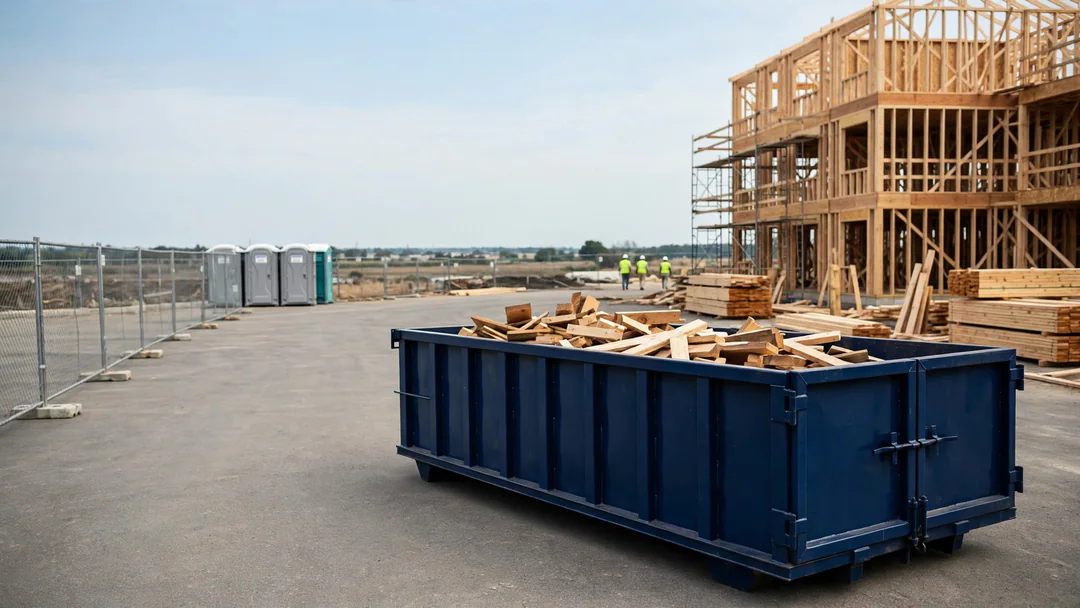
Waterfront redevelopment along the Hudson in Jersey City and Hoboken has added high-rise towers, while former industrial land in Newark, Elizabeth and the Meadowlands has turned into warehouses and distribution centers serving the Port of New York and New Jersey. Central Jersey's Route 1 corridor adds offices, labs and retail. Along the Shore, home elevations, teardowns and new beach houses are common. Each of these project types calls for different container sizes, placement plans and job-site sanitation.
- Multi-family and rowhouse renovations
- Shore home elevations and rebuilds
- Roof replacements
- Warehouse and distribution center construction
- Estate and basement cleanouts
- Coastal storm and flood cleanup
- Summer festivals and shore events
Disposal rules and restricted materials
New Jersey takes a county-based approach to solid waste. Each county operates under a solid waste management plan that directs where certain waste goes, and some counties run their own landfills, transfer stations or resource recovery facilities. Your provider handles the routing, but disposal rules can differ from one county to the next.
The state also has a long-standing mandatory recycling law, and counties designate materials that must be separated. Covered electronics such as televisions and computers are banned from regular trash in New Jersey and go through take-back programs instead. Like most states, New Jersey restricts tires, lead-acid batteries, used oil and appliances containing refrigerant from ordinary disposal, and household hazardous waste belongs at county collection days. Ask your provider before loading electronics, concrete or anything unusual. The New Jersey Department of Environmental Protection oversees the program statewide.
Permits in New Jersey
Dumpster permits in New Jersey are handled by each municipality, and the state has more than 500 of them, so rules vary widely. The general pattern holds: a container on your own driveway usually does not need a permit, while one on a public street, sidewalk or right-of-way often does. Many dense cities limit how long a container can stay on the street and may require reflectors or barricades.
Some towns also ask for a permit or a notice even for driveway placement, especially during construction that already has a building permit. Condo associations and HOAs, common in central and south Jersey, may restrict placement and duration. Shore towns may have seasonal limits during summer. Always confirm with your municipal office before delivery. Our dumpster permit guide explains what to ask.
Event sanitation planning
New Jersey's event season peaks from late spring through early fall. Shore towns host boardwalk festivals, concerts and seafood events throughout the summer, and Atlantic City draws conventions and beach concerts. The State Fair Meadowlands runs in early summer, and county fairs appear across the state through July and August. Fall brings harvest festivals at farms and orchards in Hunterdon, Monmouth and Burlington counties.
Weddings at farms, vineyards and shore venues often need restroom trailers. Youth sports tournaments, block parties in the cities and town-wide street fairs add steady demand for standard units and hand-washing stations. Large public events typically go through a municipal special-event process. See our event sanitation checklist for planning steps.
Cities in New Jersey
- Newark
- Jersey City
- Paterson
- Edison
- Elizabeth
- Trenton
- Camden
- Toms River
- Atlantic City
Major metro areas: New York–Newark–Jersey City (North Jersey) · Philadelphia–Camden (South Jersey) · Trenton–Princeton · Atlantic City–Hammonton · Ocean City · Vineland–Bridgeton
Services in New Jersey
New Jersey rental FAQs
Do I need a permit for a dumpster in New Jersey?
It depends on your municipality. Street placement usually requires a permit, and some towns require one even for driveways. Check with your local municipal office before delivery.
Can I throw a TV or computer in a dumpster in New Jersey?
No. Covered electronics are banned from regular trash in New Jersey. Use a municipal, county or retailer take-back program instead.
Why does my provider ask me to separate materials?
New Jersey counties have recycling requirements and disposal plans, so some materials such as concrete, metal or clean wood may need to be kept separate. Your provider will explain what applies.
What size dumpster fits on a city street?
Many urban rentals use a 10- or 15-yard container to fit a curb space. Your provider can confirm dimensions and whether a street permit is needed.
Does snow affect dumpster delivery?
Yes. Snowbanks and icy streets can delay delivery or reduce available space. Clear a spot ahead of time and expect possible weather delays.
How do I book a rental in New Jersey?
Call us with your ZIP code, project details and dates. We will match you with an independent provider in our network that serves your town.
Sources and official resources
Neighboring states
Ready to book a dumpster?
Planning a project in New Jersey? Share your ZIP code and dates to check provider availability.